
 By Culture Expert
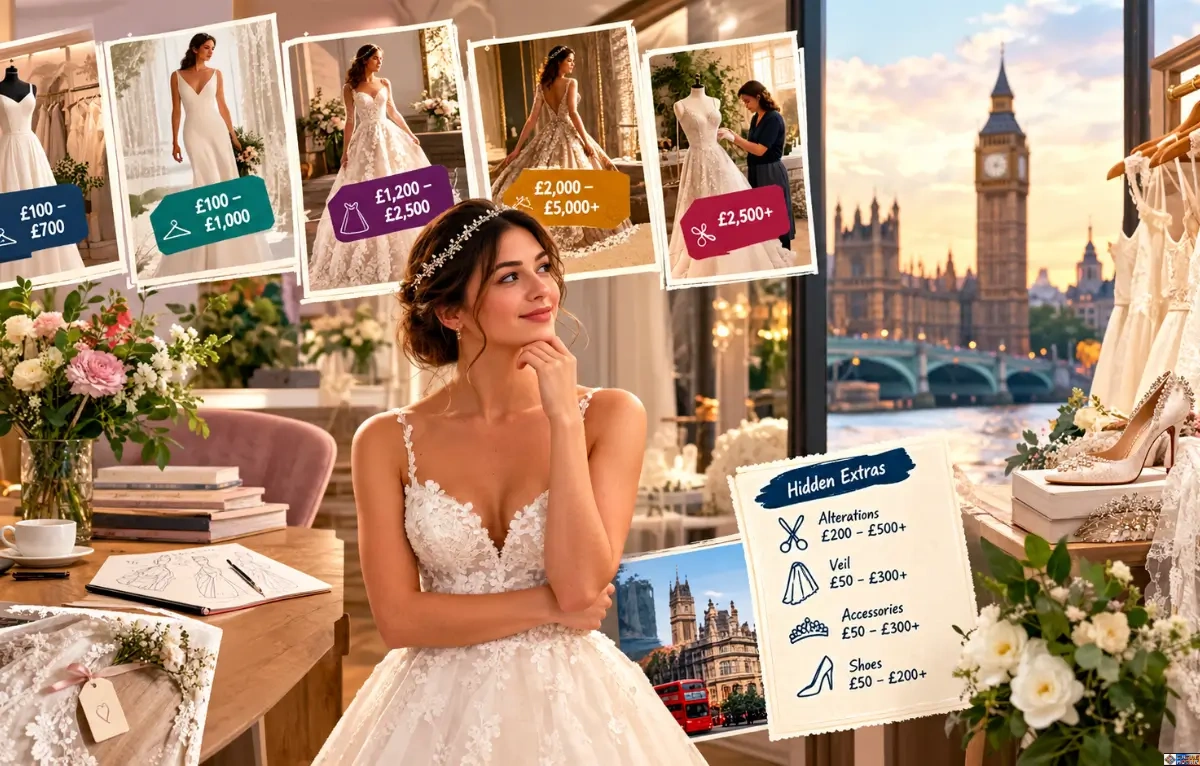
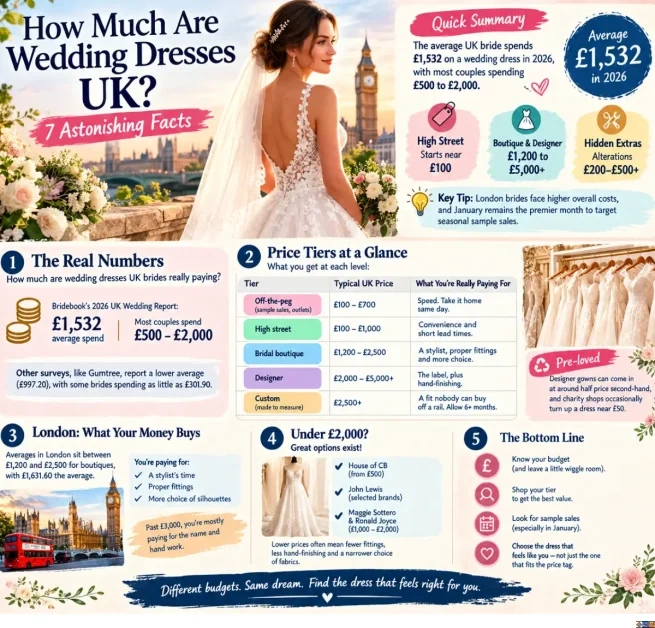
How much are wedding dresses UK brides pay in 2026? The average is £1,532, according to Bridebook’s 2026 UK Wedding Report, and most couples spend £500 to £2,000.
💡 Key Tip: London brides face higher overall costs, and January remains the premier month to target seasonal sample sales.
It’s midnight. You type the question into Google and get forty answers that refuse to agree. One site says £300. Another says £3,000. A third says “it depends”, which is true and useless.
I know that feeling is more than irritation. A wedding dress arrives wrapped in family opinion, Pinterest boards and a date you can’t move. Nobody wants to fall for a gown they can’t afford. Nobody wants to feel silly for wanting one.
So, the straight answer first. How much are wedding dresses UK shoppers pay in 2026? About £1,532 on average, according to Bridebook’s 2026 UK Wedding Report, though most couples land between £500 and £2,000. The rest of this guide shows you where your own budget sits, what quietly inflates the bill, and how to spend less without feeling short-changed. If you want to know why this one garment carries so much weight in the first place, our guide to traditional wedding dress symbolism explains it, and the home page of Culture mosaic shows where this piece sits among our heritage coverage.
1. How Much Are Wedding Dresses UK Brides Really Paying?
Bridebook’s £1,532 comes with a useful range attached. Prices run from about £100 for an off-the-peg dress to £5,000 and above for designer or custom work, and most people stay between £500 and £2,000.
Other surveys sit lower, and that gap deserves an explanation rather than a shrug. A Gumtree study reported by EC1 Echo in August 2025 found a UK average of £997.20 for the ceremony dress. That survey reached brides of every generation, and baby boomers in it reported spending just £301.90. Bridebook’s figures lean towards recent couples. Different samples, different answers. Both are honest.
My view: treat £1,532 as a midpoint, not a target. An average squashes a £150 dress and a gown costing several thousand into one tidy number that almost nobody actually paid. Look at the tier you’re shopping in instead.
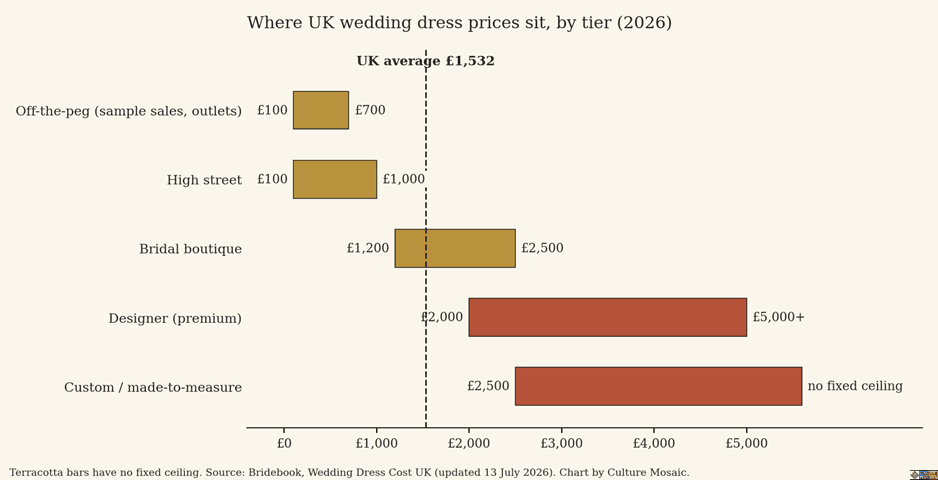
Figure 1. UK wedding dress price ranges by tier. Data: Bridebook (updated 13 July 2026).
2. Every Price Tier Buys Something Different
So how much are wedding dresses UK-wide at each level? Here is the market in one table. The prices are Bridebook’s 2026 guide figures; the last column is my reading of what the money is actually paying for.
| Tier | Typical UK Price | Where You’ll Find It | What You’re Really Paying For |
|---|---|---|---|
| Off-the-peg (sample sales, outlets) | £100 to £700 | Boutique sample sales, outlets | Speed. You can often take the dress home the same day. |
| High street | £100 to £1,000 | ASOS, Reiss, Coast, Monsoon, Phase Eight, John Lewis (selected brands) | Convenience and short lead times. |
| Bridal boutique | £1,200 to £2,500 | Independent bridal boutiques | A stylist, a fitting room and real choice of silhouettes. |
| Designer | £2,000 to £5,000+ | Suzanne Neville, Jenny Packham, Caroline Castigliano, Vera Wang and others | The label, plus hand-finishing. |
| Custom (made to measure) | £2,500 and above | Independent designers and dressmakers | A fit nobody can buy off a rail. Allow at least six months. |
Pre-loved sits outside the table. Bridebook suggests designer gowns can come in at around half price second-hand, and says charity shops occasionally turn up a dress near £50.
Wedding Dresses in London from £1,000 to £3,000: What the Money Buys
This is the band where most London boutique shopping happens. Bridebook’s boutique tier runs £1,200 to £2,500 and its designer tier starts at £2,000. Inside that window you’re paying for a stylist’s time, proper fittings and the chance to try shapes in person. Gumtree’s research puts the average Londoner at £1,631.60, which sits comfortably inside it. Past £3,000 you’re mostly paying for the name and for hours of hand work.
If luxury wedding dresses London houses are the brief, expect the designer tier. Suzanne Neville, Jenny Packham, Caroline Castigliano and Vivienne Westwood all sit at £2,000 and above in Bridebook’s guide.
Bridal Gowns From £599 to £1,199: Where I’d Send Most People First
Bridebook lists House of CB and selected John Lewis brands between £500 and £1,000, with Maggie Sottero, Ronald Joyce and some Pronovias styles between £1,000 and £2,000. John Lewis wedding dresses make an easy first stop because you can compare several brands side by side, though ranges shift by season, so check live listings. You pay less because there’s less service attached: fewer fittings, less hand-finishing, a narrower choice of fabric. For plenty of brides that’s a fair trade. For a look at what’s selling at these prices, see What Wedding Dresses Are in Style.
What Can You Buy for Under $2,000?
Many readers search in dollars. Two thousand dollars comes to roughly £1,500, give or take the day’s exchange rate, so check a converter before you shop. That lands almost exactly on the UK average. In practice it buys a boutique-tier gown, a designer sample at a reduced price, or a high-street dress with a generous alterations budget. Keep £200 to £500 aside for the fit.
3. Labour, Fabric and Name Drive the Price
Six things move the number, and Bridebook’s guide agrees on all of them: the designer’s name, the fabric, the amount of hand work, the complexity of the design, the shop’s postcode, and the alterations you’ll need afterwards.
Fabric is the one people overlook. Bridebook notes that materials made in Asia typically cost less than half the price of European ones, and the few fabrics still milled in Britain are among the dearest anywhere. Silk organza with hand-applied beading will always outrun a polyester satin, even in the identical silhouette. A cathedral train costs more than a slip dress. Obvious? Maybe. But it explains the gap between £400 and £4,000 better than any brand name does.
None of this is new. In 1840 Queen Victoria married in white satin woven in Spitalfields, trimmed with a deep flounce of Honiton lace made in Beer, Devon. The Royal Collection Trust records that she commissioned that lace to revive a flagging local industry. A contemporary newspaper account, quoted by the Textile Research Centre in Leiden, put the lace alone at £1,000, and the same source says the Beer lacemakers worked from March to November 1839 to finish the flounce. The Victoria and Albert Museum adds that white was the best colour to show handmade lace off. Labour is the price. It was then, and it is now. For the full story of the colour, read Why Wedding Dresses Are White.
If you like the idea that cloth carries its birthplace, Geographic Fingerprinting of Heritage Fibers follows that thread, and What is Heritage Fashion sets the wider scene. Where embroidery is the expensive part, it usually carries meaning too. That is the subject of our piece on cultural wedding dress motifs, and Traditional Clothing Styles maps the garments around them. Culture and Fashion pulls the economics and the symbolism together.
4. London Brides Pay More, and So Does Gen Z
How much are wedding dresses UK buyers in the capital face? More, and the gap is bigger than I expected. Gumtree’s research found Londoners spend an average of £1,631.60 on the dress, 64% above its UK figure, and wear it for 3.7 hours against a national 5.1. Bridebook gives the reasons: higher boutique overheads and a concentration of premium designers. Alterations follow the pattern. Bridebook says many London couples pay £300 to £600 for them, against £200 to £500 elsewhere.
Age matters as much as postcode. In the same Gumtree study, millennial brides reported £1,356 on dress and alterations together, and Gen Z brides £2,256. Gumtree’s consumer expert pointed to inflation and social media pressure as possible drivers. I’d add the sheer volume of images. Scroll for an hour and £1,500 starts to feel ordinary.
One honest gap. I couldn’t find a current, dress-only price breakdown for Scotland, Wales, Northern Ireland or the English regions. Older whole-wedding surveys, such as a 2017 Hitched survey reported by Refinery29, put London well ahead and the Midlands, Scotland and Northern Ireland lower, but they measure entire weddings, not dresses. Use them as a direction, not a price list.
5. Hidden Costs Can Add Hundreds
How much are wedding dresses UK shops charge once the extras land? More than the sticker says. The sticker price is the opening bid. Almost every gown needs some alteration, and the extras arrive one small invoice at a time.
| Extra | Typical UK Cost | Worth Knowing |
|---|---|---|
| Alterations (overall) | £200 to £500+ | London couples often pay £300 to £600. |
| Altering the hem | £100 to £200+ | Each extra layer can add £20 to £40. |
| Taking in or letting out the sides | £60 to £150 | More if there is beading or structure. |
| Adding a bustle | £50 to £150 | Depends on the style and the train. |
| Swapping a zip for lace-up | £150 to £300+ | A structural change, so it costs more. |
| Veil | £30 to £300+ | £30 high street; £300 or more from a boutique. |
| Shoes, jewellery, cover-up, hair pieces | Often £500+ combined | Easy to underestimate. |
| Cleaning and preservation | £100 to £300 | Use a specialist bridal cleaner. |
Ask whether alterations cost less as a package at the boutique that sold the dress. Bridebook says they sometimes do. And I’d rather see a bride spend £1,200 on the gown and £300 on a perfect fit than £1,500 on a dress that never quite sits right.
6. Where You Buy Matters as Much as What You Buy
Online. How much are wedding dresses UK online brands charging? Usually less, because online-only bridal brands skip boutique overheads, as Bridebook explains. Wedding dresses online UK shoppers find can still vary wildly. The cost is buying without trying on, so sizing needs care, and home try-on schemes are worth asking about. Bridebook places Meshki, Monsoon and Phase Eight at £100 to £500 and House of CB at £500 to £1,000. I won’t crown a single “best” among the best online wedding dresses UK lists you’ll see. Judge any seller on returns, size range and fabric content, in that order.
Boutiques and sample sales. The boutique route buys service. Sample gowns buy designer cut at mid-range prices, but in limited sizes, and they can’t be ordered in your measurements. If you’re buying for a different body shape, Plus Size Wedding Dresses offers fit-first advice.
Pre-loved and hire. This is the biggest 2026 shift. Gumtree reported a 94% rise in enquiries on wedding dress listings over the year to August 2025, and found that half of Gen Z brides bought or considered buying second-hand, against 13% of boomers. Yet only 2% of all brides actually did. A University of Derby study published in 2025 describes second-hand bridalwear as still a niche, held back by the emotional weight of the dress. That tension is the whole story: brides want the saving, and many still want the first-wearer magic. Giving cloth a second life is older than any resale app, and Regenerative Textile Traditions traces that history. Hire is the other route, and Where Can I Rent Wedding Dresses covers it as a lower-waste option.
Further afield. If you’re willing to look abroad, Affordable Wedding Dresses Europe covers cheaper options across the continent.
What 2026 trends do to prices. Retailer commentary for 2026, such as Showpo’s UK bridal trends roundup and Club L London’s trend piece, points towards minimalist cuts, soft lace and visible craft, with the bridal mini moving from reception to ceremony. That is retailer marketing, so read it as a signal, not proof. But simplicity saves money. A clean crepe gown costs less to make than a beaded ballgown, and I think it ages better too. For the full run-down, see Latest Trends in Bridal Wear and Fashion 2026. Colour of the Season 2026 helps if you’d rather skip ivory, and if neckline drama is the brief, Best Sexy Wedding Dresses has you covered. Brides blending traditions will find Modern Cultural Wedding Dresses, multicultural wedding attire and Global bridal wear traditions useful, and Traditional Wedding Dress Cultural Meaning explains what you’d be wearing.
7. Timing Can Cut the Bill: January Is the Cheapest Month
January is the month I’d circle. UK bridal press has reported winter sample sales at designers such as Sassi Holford and Pronovias with reductions of up to 60 to 70 per cent, as in Hello!’s 2020 round-up. That reporting is dated, so I’d treat the percentages as a ceiling, not a promise. The pattern is consistent, though: boutiques clear samples when new collections arrive. A VoucherCodes savings expert said in 2024 that sample sales tend to happen only once or twice a year, which is why mailing lists matter. I should be plain about the evidence. It is trade-press reporting and retail advice, not a government dataset.
Then there’s the clock. Bridebook advises starting 9 to 12 months before the wedding, and made-to-order gowns take at least six months to make before fittings begin. That is the honest urgency in this topic. Leave it late and the cheap options shrink to whatever is already on a rail.
How to spend less without feeling short-changed
Set your ceiling before the first appointment and say it out loud to the stylist. Join sample-sale mailing lists now, not in December. Ask whether alterations cost less as part of a package.
Wildcard: find a theatre costume maker or a good local dressmaker and ask what a simple silk gown would cost to make, or to rebuild from a family dress. I can’t promise it’s cheaper. That depends on fabric and hours. But you’d get a fit that nobody can buy off a rail.
Pick a plainer design, since Bridebook notes simple styles cost less. Consider a non-bridal white, ivory or champagne dress from labels such as Ghost or Reformation. Try a pre-loved gown. And if the total feels heavy, ask about payment plans, which spread the cost without reducing it.
Second wildcard: buy two modest outfits instead of one expensive one, a plain ceremony dress and a short party dress. Wedding-trend roundups now describe that multi-look approach for 2026.
Your price-tier cheat sheet
How much are wedding dresses UK-wide, and how long do you wait for each? Here is the short version.
| Tier | Typical Price | When to Start | The Trade-Off |
|---|---|---|---|
| Off-the-peg | £100 to £700 | Whenever a sample sale lands | Limited sizes; alterations still needed. |
| High street / online | £100 to £1,000 | Weeks, not months (shorter lead times) | Less hand-finishing; online means no try-on. |
| Boutique | £1,200 to £2,500 | 9 to 12 months before the wedding | More service, higher price. |
| Designer | £2,000 to £5,000+ | 9 to 12 months before the wedding | You pay for the label as well as the craft. |
| Custom | £2,500 and above | At least 6 months to make, plus fittings | Best fit, longest wait, no price ceiling. |
Gumtree’s survey found the average wedding outfit gets 5.1 hours of wear, and that 68% of dresses then spend an average of 12.5 years in storage. Five hours. Twelve years. Spend where you’ll feel it, and let the rest go.
Frequently Asked Questions
1. How much is the average wedding dress in 2026?
Bridebook’s 2026 UK Wedding Report puts the average UK wedding dress at £1,532, and most couples spend between £500 and £2,000. A Gumtree study reported in 2025 found a lower national figure of £997.20, because it surveyed brides of every generation, including older ones who spent far less. Treat the average as a midpoint, and budget £200 to £500 or more for alterations on top.
2. What is the average price of a bridal dress?
It depends on the tier. Bridebook’s 2026 guide gives roughly £100 to £1,000 on the high street, £1,200 to £2,500 at a standard bridal boutique, £2,000 to £5,000 or more for designer gowns, and £2,500 and above for custom work. Gumtree’s research puts the average Londoner at £1,631.60. None of these figures include alterations, a veil, shoes or specialist cleaning.
3. What are some good wedding dresses under $2,000?
Two thousand dollars is roughly £1,500, depending on the day’s exchange rate. In Bridebook’s price guide, that budget covers House of CB and selected John Lewis brands (£500 to £1,000) and Maggie Sottero, Ronald Joyce, some Pronovias styles and Vera Wang White (£1,000 to £2,000). Pre-loved designer gowns and boutique sample-sale dresses can stretch it further. Check current prices and sizes before you book.
4. What month is the cheapest to buy a wedding dress?
January is the month most often reported as cheapest. UK bridal press has covered winter sample sales from designers such as Sassi Holford and Pronovias, with reductions of up to 60 to 70 per cent in past years. Those reports are dated, so treat the percentages as a ceiling. Join boutique mailing lists early, because sample sales usually happen only once or twice a year.
5. Is it cheaper to buy a wedding dress online in the UK?
Often, yes. Bridebook notes that online-only bridal brands cut boutique overheads, and it lists Meshki, Monsoon and Phase Eight in the £100 to £500 bracket. The trade-off is buying without trying on, so measure carefully, ask about home try-on schemes and returns, and still allow for alterations. A dress that arrives cheap and fits badly is not a saving.
Sources and Further Reading
- Bridebook. Wedding Dress Cost UK: How Much Does a Wedding Dress Cost? (updated 13 July 2026; cites Bridebook’s 2026 UK Wedding Report). https://bridebook.com/uk/article/wedding-prices-the-dress
- EC1 Echo. Wedding dresses cost Londoners 64% more than the UK average (reporting Gumtree research), 22 August 2025. https://www.ec1echo.co.uk/wedding-dresses-cost-londoners-64-more-than-the-uk-average-as-costs-soar-and-half-consider-going-second-hand/
- Royal Collection Trust. Queen Victoria’s wedding dress, 1840 (RCIN 71975). https://col.rct.uk/collection/71975
- Textile Research Centre, Leiden. Queen Victoria’s Wedding Lace (quoting The Western Times, 15 February 1840). https://trc-leiden.nl/trc-needles/individual-textiles-and-textile-types/secular-ceremonies-and-rituals/queen-victorias-wedding-lace
- Victoria and Albert Museum. The Victoria connection (wedding dress colour). https://www.vam.ac.uk/articles/the-victoria-connection
- Hello! Wedding dress sample sales UK 2020, 10 January 2020. https://www.hellomagazine.com/brides/376957/wedding-dress-sample-sales-uk-2020
- County Wedding. VoucherCodes advises on how to save on your dress shopping, 3 May 2024. https://www.county.wedding/fashion-news/27814/vouchercodes-advises-on-how-to-save-on-your-dress-shopping
- Thomas et al. (2025). Theorising intention to buy second-hand wedding dresses: a ZMET study. University of Derby repository. https://repository.derby.ac.uk/download/9e47ae7396942ce2526748a8d7d1283a12b00af35378a30f669544e49d848929/961815/thomas-et-al-2025-theorising-intention-to-buy-second-hand-wedding-dresses-a-zmet-study.pdf
- Showpo UK. Bridal, Bridesmaid and Wedding Guest Trends 2026 (retailer commentary). https://www.showpo.com/uk/blog/Events/bridal-trends-2026
- Club L London. The Wedding Dress Trends Dominating 2026 (retailer commentary). https://clubllondon.com/blogs/journal/the-wedding-dress-trends-dominating-2026
- Refinery29 UK. This Is Now The Average Cost Of A Wedding In The UK (Hitched survey, 2017; whole-wedding costs). https://refinery29.com/en-gb/2017/09/171506/average-wedding-cost-uk-2017