
 By Culture Expert
Why is Oral Storytelling Important? The Breath of Human History.
Beyond the written word, the spoken narrative remains our most resilient cultural infrastructure.
Before papyrus, before the printing press, before the server farm, there was the voice. Not a particularly original observation. But I think most people genuinely underestimate what it means. The voice is not a precursor to better communication technologies. In many ways it is the technology, and everything else is an approximation of what it can do.
At Culture Mosaic, we spend considerable time examining what connects people across geography and generation. Almost every time, the thread leads back to the same thing: a voice, a room, a story told aloud. Understanding why is oral storytelling important is not an exercise in nostalgia. It is a question about how societies hold themselves together.
The Biological Anchor: We Are Wired for Voice
Ask yourself when you last felt something real while reading a brand newsletter. Now think of the last time a voice, cracked with age or lit with something like joy, pulled you into a room you had never entered before. That gap is not sentiment. It is neuroscience.
Neural Coupling and the Synchronised Brain
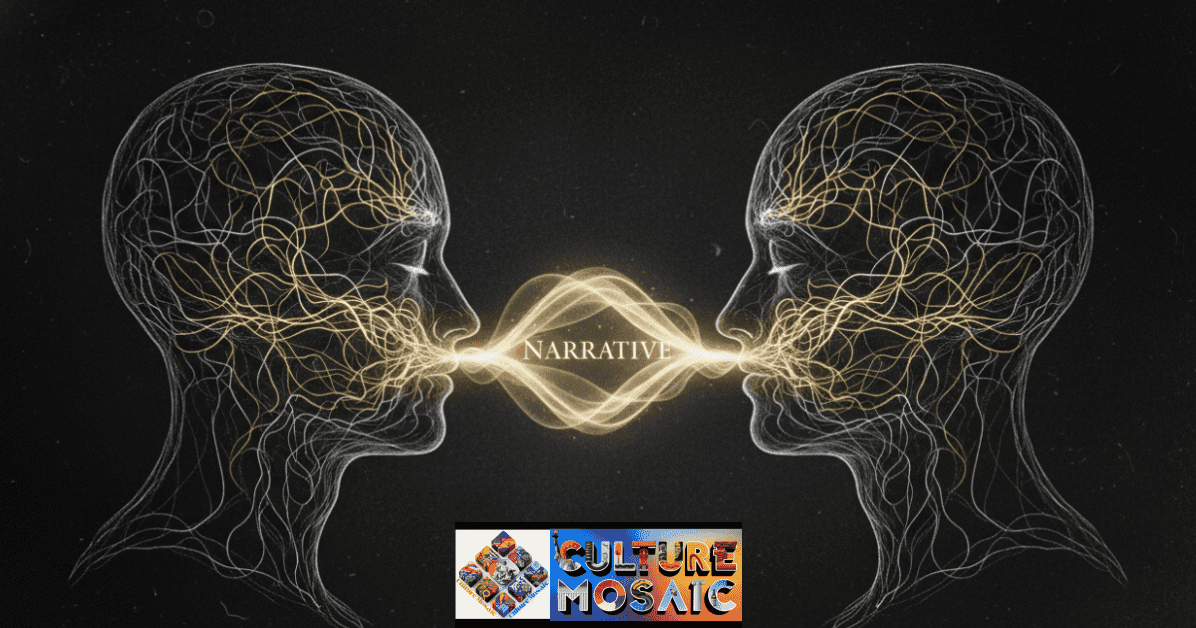
Research from Princeton neuroscientist Uri Hasson produced a result that genuinely unsettled the field: when a speaker tells a story, the listener’s brain activity begins to mirror the speaker’s own neural patterns. Not metaphorically. Measurably, on a scanner. Scientists call it neural coupling. The listener does not merely receive information; their brain actively reconstructs the experience as if living it themselves.
Tone is doing enormous work here. A pause before a weighty word. A drop in pitch that signals grief without naming it. A quickening pace that pulls the breath shorter. These are emotional data points that text, however precisely crafted, transmits imperfectly. Why is oral storytelling important begins in biology, in what happens to a human body when it listens.
2025 Trends: The Resurgence of the Spoken Word
Here is what I find genuinely striking: as AI-generated text floods the internet, human audiences are moving decisively toward audio. Not because audio is newer. Because it is human. They want the roughness of an actual person thinking in real time, the catch in the throat, the slight hesitation before a hard word. That texture is irreproducible by machine.
The Podcast as a Modern Fire
The podcast, for all its digital infrastructure, is an ancient act. One person talks. Another person listens. That is exactly what happened around fires for tens of thousands of years. What has changed is distribution, not the fundamental transaction. The April Events Around the World calendar is dense with live storytelling events and spoken word festivals this year, confirmation that audiences are willing to leave their houses specifically to hear someone speak without a script.
Vocal Authenticity as a Premium Asset
Luxury brands and craft producers have noticed this shift acutely. The ones growing fastest are not the ones with the most polished content strategy. They are the ones with what you might call a founder voice: an actual human being, speaking plainly about what they made and why, tolerating the imperfections of genuine speech. When why is oral storytelling important becomes a business question, the answer is always the same. Trust. And trust is built through the audible reality of a living voice, not the frictionless surface of edited copy.
Cultural Resilience: Protecting Indigenous Infrastructure
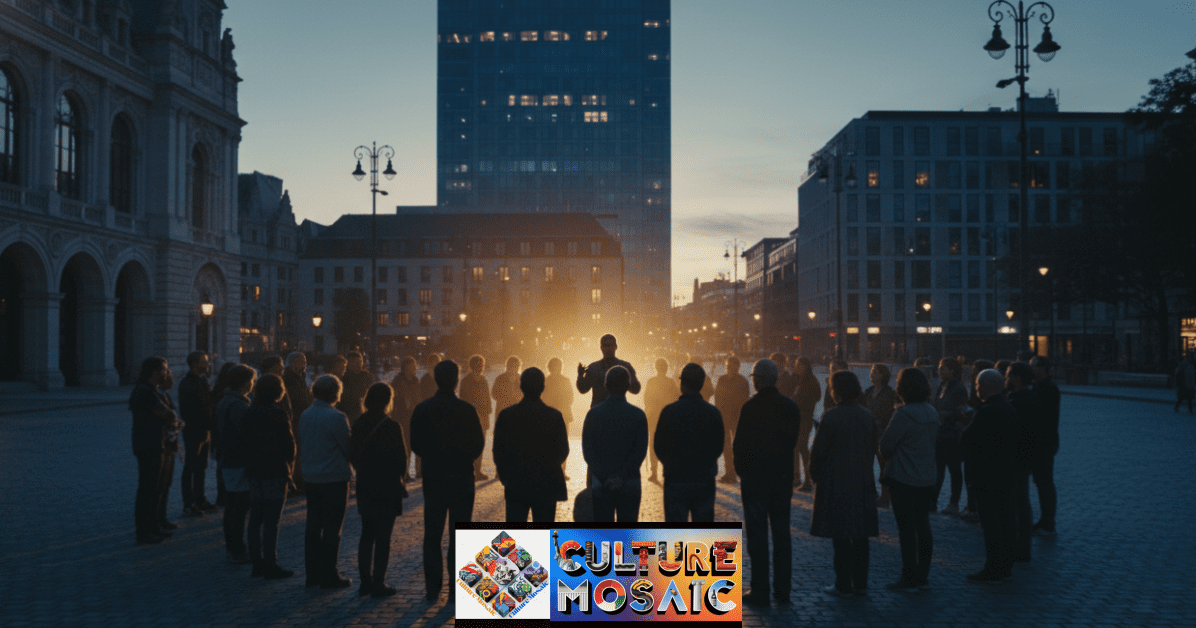
There are roughly 7,000 languages spoken on earth right now. Linguists estimate one disappears approximately every two weeks. Most of the languages under greatest pressure were never written down. They live entirely in the mouths of their speakers, and when those speakers are gone, the language goes with them. Permanently.
The Living Archive
For many communities, oral storytelling is not a supplement to recorded history. It is the only history there is. The griots of West Africa carry genealogies and legal precedents in memory. Aboriginal songline practitioners in Australia navigate territory through verse. Gaelic storytelling traditions held entire cosmologies before a single word was transcribed. The UK Culture and Traditions page traces how British folk traditions, many passed orally through dozens of generations, survived precisely because communities treated the spoken word as something worth actively protecting, not archiving.
This is why is oral storytelling important as infrastructure: it holds knowledge that formal institutions were never designed to hold. When the voice goes silent, the archive closes. There is no recovery.
“The voice is not a precursor to better technologies. In many ways, it is the technology.”
The Civic Voices Framework: What Oral Tradition Actually Does
The History of the Communal Meal traces how shared food and shared story have functioned as the same civic act across cultures. You sit down together, someone speaks, and everyone else has to be present. Not scrolling. Not producing. Listening. What sounds simple is one of the most sophisticated social technologies our species ever developed.
| Function | What It Actually Does |
|---|---|
| Language Preservation | Keeps “mother tongues” alive without formal scripts or institutional backing. |
| Community Bonding | Creates a shared “Civic Room” through the discipline of active listening. |
| Emotional Literacy | Teaches empathy through the nuance of vocal delivery: pause, pitch, and silence. |
| Cognitive Memory | Strengthens neural pathways through rhythmic repetition and narrative structure. |
Global Oral Tradition Festivals and Events in 2026
If you want to understand why is oral storytelling important in civic practice, look at what communities choose to celebrate publicly. The Upcoming National Events in USA page documents how spoken word gatherings, from indigenous narrative festivals to town hall oral history projects, are being woven into America250 commemorations. These are not heritage exhibits behind glass. They are live demonstrations of a functioning civic technology.
Globally, spoken word events draw audiences that rival conventional theatre. The Edinburgh Storytelling Festival. The National Storytelling Network’s annual gathering. Swahili oral poetry competitions across East Africa. Each one treats the voice as both art form and civic infrastructure. I think that distinction, between art and infrastructure, is exactly the one worth insisting on.
Oral Storytelling and the Development of Emotional Intelligence
Learning to Listen as a Civic Skill
When we hear a story rather than read it, we are forced into a different kind of attention. The pace is set by the teller, not the reader. You cannot skim. You cannot jump to the end. You have to be present, and sustained, embodied presence is something that atrophies fast in a scroll-and-swipe culture.
Children raised in households where stories are told aloud show measurably stronger empathy scores and more sophisticated vocabulary than those raised in predominantly screen-based environments. That is not a brief against screens. It is an argument for maintaining the older infrastructure alongside the newer one, not as a heritage gesture, but as a developmental necessity.
The Wildcard: Story as a Body Practice
Here is the one that does not make the listicle. Oral storytelling is a physical act. Full stop. The diaphragm engages. The face moves. The hands articulate in ways that are not decorative but cognitively integrated: research in embodied cognition shows that hand gestures during speech are not accompaniment, they are part of the thinking itself.
Performers in the West African djeli tradition describe voicing a genealogy as something felt in the chest wall, not just produced by the mouth. The sound resonates physically before it is heard socially. Somatics researchers studying trauma recovery have found that vocalising an experience aloud produces physiological changes that silent reading and even silent recall do not. Your nervous system responds differently to a story spoken than to a story read. The body is not a passive vessel in this transaction.
I have been in rooms where a single voice held sixty people completely still for twenty minutes. No slides. No production. Just cadence, and the particular gravity that a human voice acquires when it is telling the truth about something. That is not a soft observation. It is a measurable neurological event.
Preparing for 2026: From Broadcasting to Storytelling
The America250 moment will generate an enormous volume of institutional communication. Press releases, branded campaigns, curated content. The overwhelming majority of it will be forgotten before the next news cycle ends. What will actually land, what people will carry with them, are the pieces told by a human voice about a specific, grounded experience. The The 2026 Ritual Economy explores how ceremonial and narrative moments are becoming genuine economic anchors for communities planning around that milestone.
The Shift in Intent
Broadcasting sends information outward. Storytelling invites someone into an experience. One is efficient. The other is sticky. The distinction matters enormously if you are building something meant to last. Whether that is a brand, a community, a commemoration, or a family, the question of why is oral storytelling important resolves into something practical: because it is the only communication form that requires, and rewards, genuine presence from both parties.
Even traditions as seasonally bounded as those examined in Christmas Culture Traditions demonstrate this truth: the stories told aloud at gatherings are what those gatherings actually mean to the people inside them. The ceremony is not the candles or the table. It is the telling.
Why Oral Storytelling Matters in a Digital Age
I have spent time in communities where electricity is intermittent and smartphones are shared. The stories still move. They move with more fidelity and more speed than most content achieves on a fibre connection. That durability is worth naming clearly.
Platforms fail. Algorithms change. Servers go dark. The voice does not. Understanding why is oral storytelling important is ultimately an argument for keeping something genuinely irreplaceable in active circulation. Not preserved in an archive. Not exhibited. Spoken. In a room. Between people. Right now.
Frequently Asked Questions
Why is oral storytelling important for cultural preservation?
For many communities, oral storytelling is the only historical record that exists. Languages and traditions that were never written down live entirely in the act of being spoken. When that practice ends, the knowledge it carries is gone permanently. It is a living archive that no institution can fully replicate.
How does oral storytelling affect the brain differently from reading?
Neuroscience research on neural coupling shows that listening to a spoken story causes the listener’s brain activity to mirror the speaker’s own patterns. Spoken narrative also activates sensory, motor, and limbic regions simultaneously, in ways that written text alone does not reliably produce. Listening is, neurologically speaking, a form of shared experience.
Is oral storytelling still relevant in a digital age?
Demonstrably yes. The sustained growth of podcasts, live storytelling festivals, and audio-first media formats reflects audiences actively seeking vocal authenticity in an environment saturated with machine-generated content. The spoken word is becoming a premium format, not a legacy one.
What is the role of oral storytelling in community building?
Oral storytelling creates what researchers call a shared acoustic space: a temporary civic room where participants adopt a common frame of attention. This shared listening generates trust and social cohesion in ways that broadcast media, which distributes content without requiring presence, cannot match.
How can individuals and organisations use oral storytelling more effectively?
The most productive shift is moving from broadcasting information to inviting an audience into a specific, grounded experience. Use a real voice. Tolerate imperfection. Build the narrative around a particular moment, a person, or a decision, rather than a general claim.
“In an age of instant text, when was the last time a story told aloud truly moved you? We invite you to share your voice and preserve the narrative thread below.”
ⓘ Cultural Transparency Note: This exploration was developed by the Culture Mosaic Editorial Team to celebrate the diversity of human narrative.