
 By Culture Expert
Spatial Audit: THE COMMUNAL HEARTH
| Subject | History of the Communal Meal |
| Primary Mechanism | The Restorative Threshold (Bio-Synchrony) |
| Evolutionary Marker | Shared Fire (Gesher Benot Ya’aqov, 790k BP) |
The Slow Food Philosophy: Rediscovering the Deep History of the Communal Meal
Here’s what nobody tells you about the history of the communal meal: it’s not actually about the meal.
Three weeks ago, I sat in a Pune kitchen watching a widow named Savitri prepare prasad—sanctified food—for thirty people from wildly different castes. High-caste Brahmins. Dalits who would’ve been considered untouchable fifty years ago. All eating from the same pot. She shrugged when I questioned her about it. Six hundred years ago, the Bhakti saints already understood this. Shared food erases those stupid lines.”
That shrug contained something profound. The history of the communal meal isn’t just about nutrition or social nicety. It’s about repair. Social repair. The table is where we’ve always gone to fix what’s broken between us.
I’ve spent twenty years researching how religious communities use food sharing to bypass social hierarchies, and I keep finding the same pattern: eating together forces people into what I call the Restorative Threshold. Your nervous system literally cannot maintain hostility while digesting food in the presence of others. Biology won’t let you.
The Hearth Stratigraphy: Archaeology of Trust
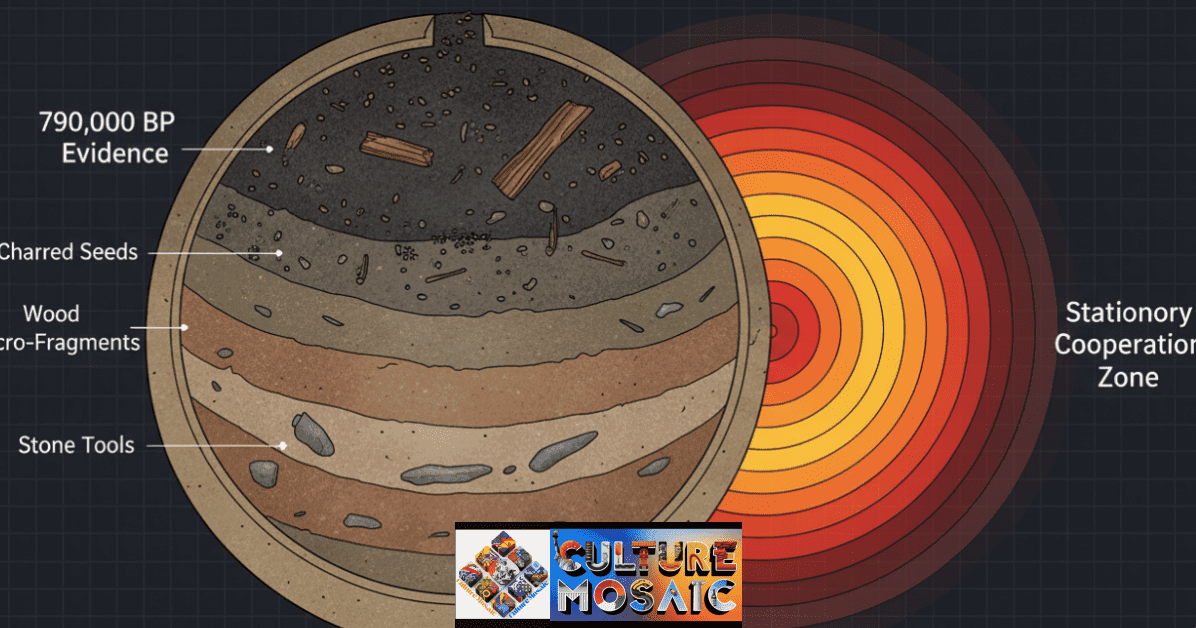
When archaeologists dug at Gesher Benot Ya’aqov in Israel, they found something that changed how we understand human evolution. Controlled fire, 790,000 years old. But more interesting than the fire itself was the spatial arrangement around it.
The Shared Hearth as Spatial Technology
Fire isn’t mobile. Can’t take it hunting. Can’t forage with it. So here’s what happens: you’re forced to stay still. Wait for food to cook. And in that waiting, something biological kicks in.
Your sympathetic nervous system—the fight-or-flight response—starts powering down. Blood flow shifts from muscles back toward digestive organs. Heart rate drops. The vagus nerve, that massive cranial nerve connecting your brain to your gut, signals safety to your entire system.
This is the Restorative Threshold. And it only happens when you’re sitting still, not scanning for threats, with other humans nearby who aren’t attacking you. The history of the communal meal begins here—not with culture mosaic or tradition, but with nervous system biology.
Food sharing appears in the archaeological record before organized hunting. Early hominins shared extracted plant foods—roots, tubers, things requiring tools and effort. Why share? Because the person you feed when they’re hungry might keep you alive next week. Trust, built one shared meal at a time.
Convivium and the Radical Equality of the Table
The Romans called their dinner parties convivium. Living together. Not eating together—living. That distinction matters.
But here’s where the history of the communal meal gets interesting across cultures. In India, the bhakti devotional movements used communal meals to actively dismantle caste hierarchies. Saints like Kabir in the 15th century insisted that everyone eat together, regardless of caste. Same food. Same plate. Same space.
I’ve documented this pattern in Sikh langars, where billionaires sit on the floor next to beggars eating dal. In early Christian agape feasts, where slaves ate with masters. The table erases hierarchies not through ideology but through biology. When you’re in parasympathetic mode—digesting, trusting—your brain literally processes social information differently.
This is Socially Restorative Architecture. The dinner table repairs social bonds the same way sleep repairs your body. Not metaphorically. Actually.
The Vagal Tone Connection: Bio-Synchrony Explained
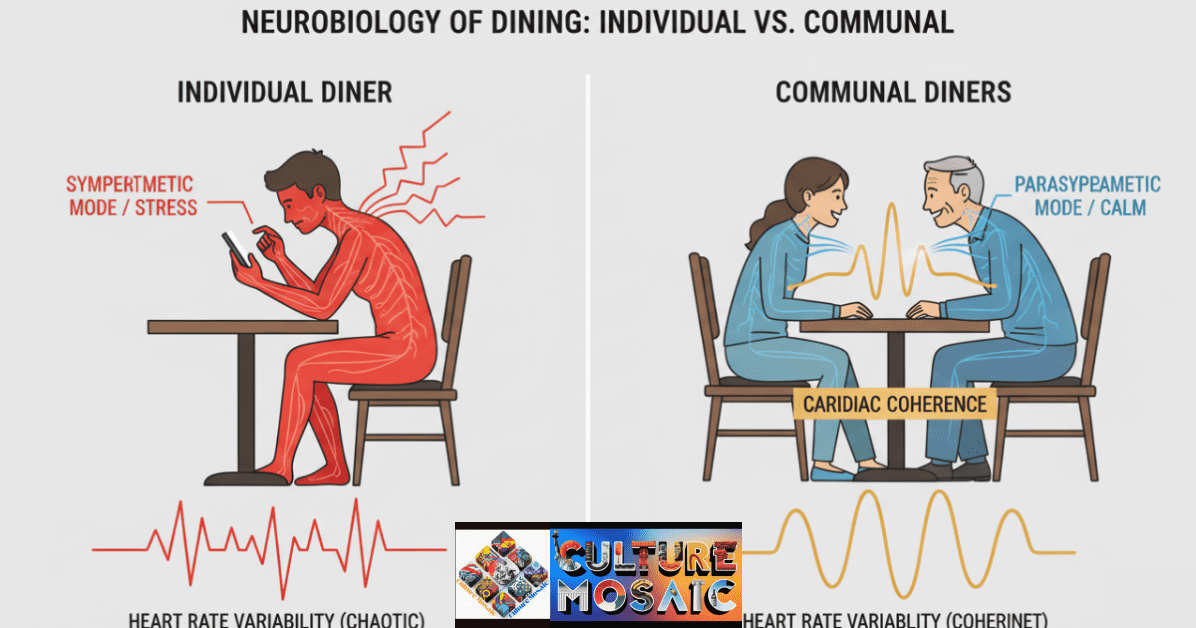
There’s research out of Stephen Porges’s lab on something called the social engagement system. Your vagus nerve—tenth cranial nerve, runs from brainstem to abdomen—acts like a biological social detector. When it senses safety, it downregulates threat responses and allows for connection.
Communal eating activates this system. Studies show heart rate synchronization among people sharing a meal. Not metaphorical connection. Measurable cardiac coherence. Your hearts literally beat in rhythm when you eat together.
The 2025 World Happiness Report quantified this. Countries where families regularly eat together—Turkey, Italy, Greece, parts of India—report substantially higher social trust and lower loneliness. The correlation holds even when controlling for income, education, urbanization. The history of the communal meal predicts modern well-being because the biological mechanism hasn’t changed in 790,000 years.
The Slow Food Rebellion: When Pasta Became Protest
Rome, 1986. McDonald’s announces plans for a location near the Spanish Steps. For Carlo Petrini, this wasn’t about American imperialism or cultural preservation. It was about time.
The 1986 Pasta Protest: Reclaiming the Restorative Threshold
Petrini’s protest was brilliant. He didn’t show up with signs. He brought bowls of fresh penne and handed them out to passersby. Free food. Slow food. Food that required you to stop, to sit, to chew.
McDonald’s opened anyway—compromised on the sign size, kept the location. But Petrini had identified something crucial about the history of the communal meal: speed destroys the Restorative Threshold. You cannot enter parasympathetic mode while eating in your car or standing at a counter. Your nervous system registers that as threat behavior—eating while mobile, scanning for danger.
By 1989, Petrini formalized the International Slow Food Movement. Fifteen countries sent representatives to Paris to sign a manifesto. Their target wasn’t just fast food. It was what they called the Fast Life—the entire modern assumption that speed equals value.
Good, Clean, Fair: The Forensic Framework
Petrini’s three principles function as a forensic audit of food systems:
Good means flavor, yes, but more specifically it means food that demands attention. You can’t taste a supermarket tomato grown for durability. You can taste a tomato picked yesterday. Good food forces you into the present moment, which is required for the Restorative Threshold.
Clean addresses the environmental substrate. Degraded soil produces nutritionally depleted food. Industrial monoculture destroys the biodiversity required for ecosystem resilience. Clean isn’t moral posturing—it’s biological necessity. The history of the communal meal is inseparable from land health.
Fair recognizes that exploitation poisons the entire chain. I’ve met cheesemakers in Sardinia barely surviving because retailers demand poverty-level prices. When producers suffer, quality degrades, traditions die, and the social fabric supporting communal eating unravels. Fair is systemic repair.
Today, Slow Food operates in 160 countries with over 100,000 members. That pasta protest became a global forensic audit of industrial food’s assault on the history of the communal meal.
The Digital Assault on the Restorative Threshold
Currently, one in four Americans finds themselves eating every meal in solitude. Up 53 percent since 2003. But here’s what that statistic obscures: even when people eat together now, they’re often not actually together.
How Digital Dependency Shreds the Restorative Threshold
Last year I observed dinner at a tech company cafeteria in San Francisco. Gourmet food. Beautiful space. Three hundred people eating. Maybe fifteen conversations.
Everyone else was staring at screens. Phones, tablets, laptops. And here’s the biological problem: screen use activates your sympathetic nervous system. Blue light signals daytime alertness. Scrolling triggers micro-stress responses. Every notification dumps a small hit of cortisol.
You cannot access the Restorative Threshold while sympathetically aroused. Your vagus nerve won’t signal safety. Heart rates won’t synchronize. Digestion doesn’t work properly—hence why eating at your desk leaves you simultaneously stuffed and hungry. Your brain never registered the meal.
The history of the communal meal represents 790,000 years of neural evolution optimized for shared eating. We’re attempting to override that in about fifteen years. It’s not working.
The Parasympathetic Cost: What Stress Does to Digestion
Your digestive system literally shuts down under stress. Blood shunts away from your gut toward muscles and brain. Enzyme production drops. Peristalsis—the muscular contractions moving food through your system—slows or stops.
This is why eating while working, rushing, or scrolling through upsetting news creates digestive problems. Your body is trying to digest food while simultaneously preparing to fight or flee. These are contradictory states.
Traditional cultures understood this intuitively. Mediterranean meals stretching four hours aren’t about gluttony or leisure—they’re about giving your nervous system time to fully enter parasympathetic mode. The slowness is the point. The history of the communal meal is a history of bodies being given time to do what they evolved to do: trust, digest, repair.
Communal Eating as Social Repair: Models from Five Continents
I’ve studied communal eating practices in seventeen countries. The specifics vary wildly, but the underlying mechanism—using shared meals for social repair—remains constant.
Mediterranean Practices: The Four-Hour Reset
Spent last summer in a village outside Heraklion, Crete. Family invited me for Sunday lunch. I showed up at one PM expecting to leave by three. Left at seven.
Six hours. Multiple courses, yes, but mostly conversation. Arguments about politics. Stories about dead relatives. Long silences. Nobody checked a phone. Nobody seemed impatient.
What I realized: this wasn’t entertainment or indulgence. It was maintenance. Weekly social repair. These people don’t go to therapy—they go to Sunday lunch. The table functions as the primary space for processing conflict, transmitting values, reinforcing bonds.
Same pattern in Turkey with rakı sofrası. In Italy with the Sunday pranzo. The history of the communal meal in Mediterranean cultures isn’t nostalgic tradition—it’s active social infrastructure that these societies refuse to abandon because it works.
Ethiopian Gursha: Radical Vulnerability as Repair
First time someone performed gursha for me in Addis Ababa, I flinched. She noticed. Smiled. Tried again.
Gursha: hand-feeding another person. You tear off injera, scoop up food, place it directly in someone’s mouth. The intimacy is shocking if you’re not accustomed to it.
But that shock is the point. You’re forcing radical trust. You’re putting your sustenance in another person’s hands—literally. They choose what you eat. How much. The timing. Complete vulnerability.
This practice transforms eating from individual consumption into active repair. Conflicts get resolved through gursha. Relationships get mended. The history of the communal meal in Ethiopian culture includes this understanding that feeding someone with your hands creates bonds that conversation alone cannot.
Sikh Langar: Engineered Equality
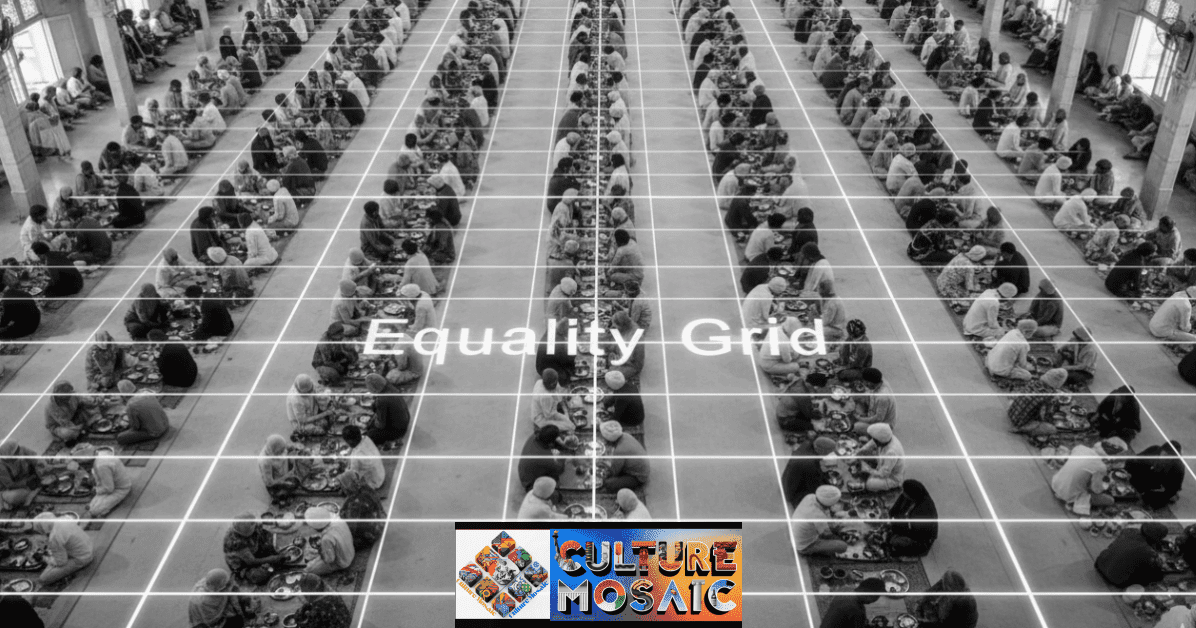
The langar system in Sikh gurdwaras is possibly the most sophisticated example of using food for social repair that I’ve encountered.
Everyone sits on the floor. No chairs, no tables, no hierarchy. Doesn’t matter if you’re a CEO or homeless—you’re on the ground with everyone else. Same food. Volunteers serve you regardless of caste, religion, wealth.
I watched a Sikh friend explain this to his eight-year-old daughter: “See that man in the expensive suit? See that woman who sleeps outside? Here, they’re the same. That’s the point.”
The langar intentionally disrupts social hierarchy. It forces your nervous system to register equality before your cognitive biases can interfere. By the time you’re halfway through your meal, you’ve shared space and food with people you’d normally avoid or ignore. The history of the communal meal includes these deliberate attempts to use biology to override cultural conditioning.
Practical Repair Protocols: Rebuilding the Restorative Threshold
People ask me: can you actually bring this back? Can modern families access the history of the communal meal when everyone’s schedules are wrecked and attention spans are shot?
Yeah. But you have to treat it like the biological intervention it is, not a lifestyle trend.
Protocol One: The No-Phone Perimeter
This isn’t about etiquette. It’s about vagal tone. Your vagus nerve cannot signal social safety while you’re receiving notifications.
Get a physical container—basket, drawer, box. Before meals, everyone’s phone goes there. No exceptions. Parents especially.
First week sucks. Withdrawal symptoms. Phantom vibrations. Compulsive reaching. Week two, slightly better. Week four, you notice conversations happening that never happened before.
My colleague Sarah implemented this with her fifteen-year-old. First three dinners were silent warfare. Daughter actually counted minutes until she could retrieve her phone. Week four, daughter mentioned something about a teacher without being prompted. Week eight, daughter asked if they could keep doing it even though the ‘experiment’ was over.
The history of the communal meal doesn’t require elaborate interventions. It requires removing the thing actively preventing your nervous system from accessing the Restorative Threshold.
Protocol Two: Family-Style Serving as Bio-Synchrony Tool
Ditch individual plating. Put food in serving dishes, bring them to the table, let people pass them around.
Why this matters biologically: passing food requires coordination. You make eye contact. You gauge portions. You notice preferences. These micro-interactions activate your social engagement system.
Plus, family-style serving is inherently slow. The potatoes take time to circulate. People serve themselves multiple times. The meal extends naturally, giving everyone’s nervous system time to downshift into parasympathetic mode.
One family I worked with started this and noticed something unexpected: their eight-year-old started asking for seconds of vegetables. Not because the vegetables changed. Because passing the bowl gave him control and agency, which reduced the power struggle around eating. The history of the communal meal includes this wisdom: autonomy within structure creates safety.
Protocol Three: Repair-Oriented Questions
“How was your day?” is a script, not a question. People respond with scripts. Fine. Good. Okay.
Try questions that require actual cognitive processing:
What’s something that frustrated you today?
What made you actually laugh—not just smile, but laugh?
If you could redo one conversation from today, what would you change?
These questions bypass autopilot and activate the prefrontal cortex. People have to think. Repair occurs when one considers while eating in a secure setting.
My family does what we call peaks and pits. Your day’s best and worst moments. Stupidly simple. But it consistently generates real information. My twelve-year-old son, who normally communicates in grunts, will launch into ten-minute explanations of middle school social dynamics.
The history of the communal meal shows us: the table used to be where you had conversations too slow for work, too personal for texting, too complex for casual hallway exchanges. We’re just trying to reclaim that function.
The Loneliness Epidemic: Why Social Repair Matters
Abandoning the history of the communal meal isn’t a cultural preference. It’s a public health disaster we’re barely acknowledging.
Mental Health Data: The Repair Deficit
Frontiers in Public Health published research linking communal eating frequency with reduced depression, anxiety, and loneliness—particularly in older adults. The 2025 World Happiness Report found that meal-sharing frequency predicts life satisfaction as strongly as employment status.
This tracks with evolutionary biology. We’re social primates. Isolation activates ancient threat detection systems. Eating alone trips the same neural circuits as being excluded from the tribe—which historically meant death.
The history of the communal meal is embedded in our nervous systems. Regular shared meals signal safety, belonging, tribal acceptance. The absence of those meals signals danger. Your body responds accordingly with stress hormones, inflammation, compromised immune function.
Environmental Repair: The Slow Food Substrate
Here’s something I’ve noticed tracking Slow Food communities: when people slow down and eat together regularly, their food purchasing patterns shift.
More farmers’ market shopping. More seasonal eating. More home cooking. These aren’t moral choices—they’re natural outcomes of accessing the Restorative Threshold. When you’re present while eating, you start caring about flavor. When you care about flavor, you seek out better ingredients. When you seek better ingredients, you end up supporting local producers.
The numbers back this up. Local food systems cut transportation emissions by roughly 7 percent. Organic farming—which most Slow Food producers practice—uses 45 percent less energy than industrial methods. The history of the communal meal connects to land repair. Healthy social bonds require healthy ecosystems.
Reclaiming the Restorative Threshold: An Ancient Technology for Modern Repair
Twenty years ago, I started researching the history of the communal meal because I was watching something important collapse and couldn’t quite name what it was.
Now I can name it: we’re losing our primary technology for social repair.
From those first shared fires 790,000 years ago to Petrini’s pasta protest in Rome, eating together has never been just about food. It’s the mechanism we use to create trust, erase hierarchy, transmit culture, and repair the bonds that isolation and speed constantly fray.
We’ve been treating the communal meal as optional. Nice when you have time. But biology and history tell a different story. We can’t afford to keep eating alone, distracted, standing up, in our cars, at our desks. Our nervous systems aren’t designed for it. Our societies can’t sustain it.
Good news: repair doesn’t require perfection. Get a basket for the phones. Put the food on platters. Ask one real question. Small interventions that reconnect you to 790,000 years of evolved biology and to the fundamental human need for belonging.
The dinner table remains the most sophisticated Socially Restorative Architecture humanity ever developed. We just need to remember it’s not decoration. It’s infrastructure.

Dr. Jon Keune, PhD
Expert in Communal Eating & Social Equality
Dr. Jon Keune is the author of Shared Devotion, Shared Food. His research explores the History of the Communal Meal as a sophisticated tool for social repair and egalitarian bonding across centuries.
FAQs About the History of Communal Meals
How did the communal meal come to be?
Goes back about 790,000 years to fire sites like Gesher Benot Ya’aqov in Israel. These weren’t just places to cook meat. They were the original spaces that forced our ancestors into what I call the Restorative Threshold—basically, sitting still long enough that your nervous system shifts out of threat mode into rest-and-digest mode.
Here’s what’s wild: the archaeological record shows food sharing happened before organized hunting. Early hominins were sharing roots and tubers—stuff that took serious work to dig up and process. Why share? Because feeding someone today meant they might save your life next month. Trust got built meal by meal.
This pattern keeps showing up everywhere. Roman conviviums where political deals got made. Greek symposia where philosophers argued over wine. Medieval feasts that cemented alliances. Flash forward to now—Mediterranean families eating for four hours straight, Ethiopian gursha where people hand-feed each other, Sikh langars where billionaires sit on the floor next to homeless people eating the same dal. The through-line across the history of the communal meal? It’s always been our main tool for social repair.
What is the Slow Food movement and how did it start?
Started in 1986 when McDonald’s wanted to plant a restaurant near the Spanish Steps in Rome. Carlo Petrini decided regular protest signs were boring. He showed up with bowls of fresh penne pasta and started distributing them to people walking by. His point wasn’t ‘America bad’—it was ‘speed kills the thing your body needs to actually digest food and connect with people.’
That pasta stunt worked. By 1989, Petrini had formalized the whole thing into the International Slow Food Movement. Got representatives from 15 countries to sign a manifesto in Paris. Their framework breaks down to three principles: good (actually tastes like something), clean (doesn’t destroy the environment), fair (farmers don’t starve). Basically a forensic audit of what industrial food systems wreck.
Now there are 100,000+ members in 160 countries trying to preserve traditional food cultures and push back against this idea that faster always equals better. The history of the communal meal includes this chunk where people organized resistance to time compression itself.
Why is eating together important for health?
Your vagus nerve—this massive cranial nerve running from your brainstem to your gut—basically acts like a social safety detector. When it registers that you’re eating with people who aren’t threatening you, it shuts down your sympathetic nervous system (fight-or-flight) and fires up your parasympathetic system (rest-and-digest).
This isn’t touchy-feely stuff. Research shows people’s heart rates actually synchronize when they share meals. Measurable cardiac coherence. Your brain also dumps oxytocin and endorphins—same chemicals that bond parents to babies.
Studies in Frontiers in Public Health connect regular family meals with lower rates of depression, anxiety, loneliness. The 2025 World Happiness Report found that how often you eat with others predicts life satisfaction about as well as whether you have a job. The history of the communal meal makes this make sense—we evolved as social eaters. Eating alone trips the same neural alarms as getting kicked out of your tribe, which historically meant you died.
How do different cultures practice communal eating?
Different cultures weaponize the history of the communal meal in specific ways, but they’re all using it for social repair.
Ethiopian gursha: you hand-feed someone else, literally placing food in their mouth. Creates this radical trust through total vulnerability. Mediterranean cultures stretch meals to four, five, six hours—not because they’re indulgent but because that’s how long it takes for real social maintenance. Sikh langars force equality by putting everyone on the floor regardless of wealth or caste—same food, same servers, same rules.
Jewish Shabbat dinners anchor the week with Friday night rituals. Korean meals feature banchan—shared side dishes everyone picks from, forcing collective decisions. Indigenous potlatches combine massive feasts with gift redistribution and status negotiation. Indian bhakti saints like Kabir used communal meals to explicitly break caste rules—everyone eating from the same pot regardless of whether they were Brahmin or Dalit.
Surface details vary wildly. Underlying mechanism stays constant: access the Restorative Threshold, repair social bonds.
How can I bring back the custom of sharing meals with others in the modern world?
Think of this as biological intervention, not lifestyle Pinterest board.
First protocol: no-phone perimeter. Get a container—box, basket, drawer, whatever. Before you eat, everyone’s phone goes there. This isn’t about politeness. Your vagus nerve can’t signal safety while you’re getting notifications. Remove the interference.
Second protocol: family-style serving. Stop plating food in the kitchen. Put it in serving dishes, bring them to the table, pass them around. This requires coordination, eye contact, noticing what people want. Activates your social engagement system.
Third protocol: repair-oriented questions. Ditch ‘How was your day?’—that’s a script, produces scripted answers. Try ‘What frustrated you today?’ or ‘What made you actually laugh?’ Questions that need real thinking.
Pick one meal weekly. Regularity matters more than frequency. Focus on hitting the Restorative Threshold, not performing some nostalgic tradition. The history of the communal meal works because the biology’s sound. You’re not inventing anything—you’re removing the obstacles (phones, rushing, distraction) that prevent your nervous system from doing what it evolved to do.
 Marcus J. Holloway