
 By Culture Expert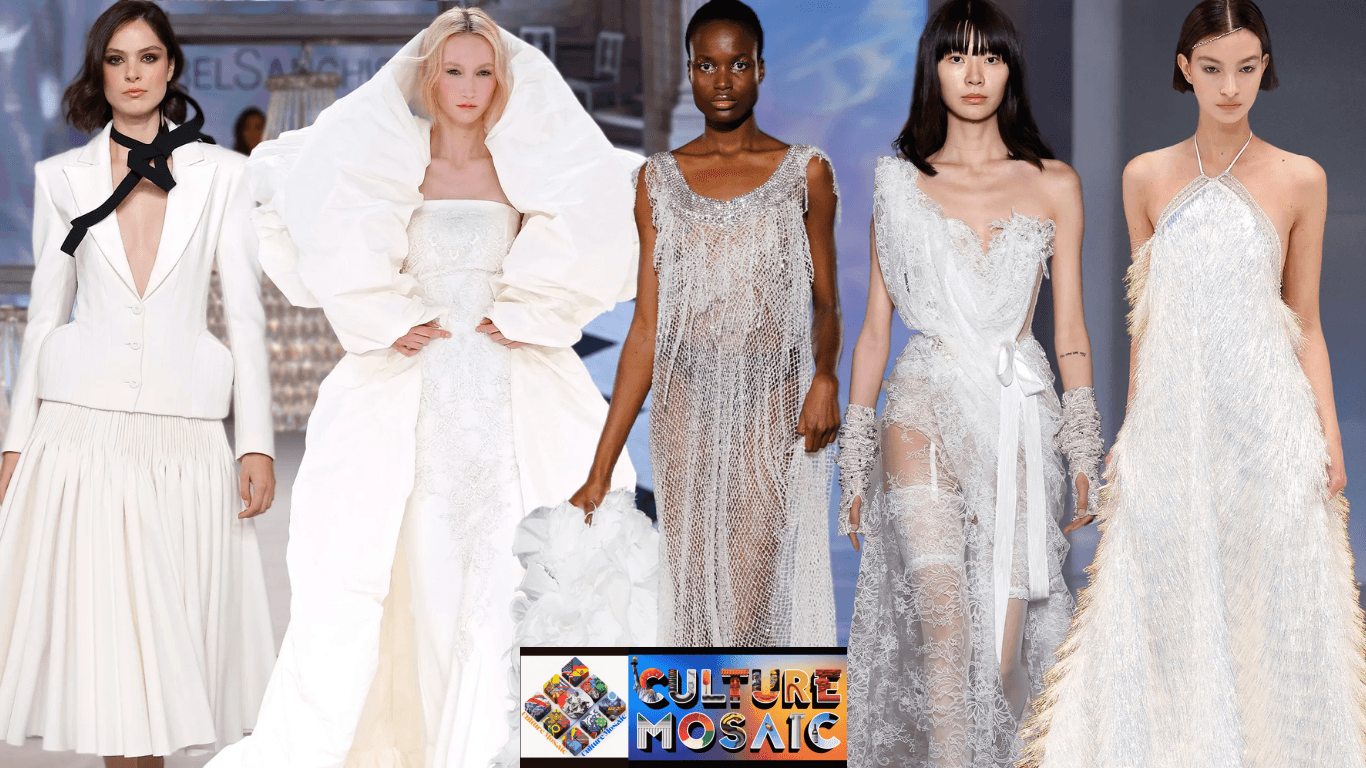
| About the Author — Isla Merritt Isla Merritt is Culture Mosaic’s Senior Bridal Style Editor, covering bridal fashion week circuits, atelier fittings, and real-wedding style across Europe for over a decade. Her reporting focuses on separating genuine runway movement from short-lived marketing trends. Full profile: culturemosaic.co.uk/contact-us |
Latest Trends in Bridal Wear: Explore the Most Unforgettable Gowns of 2026
Latest Trends in Bridal Wear: I have spent eleven years sitting in fitting rooms with brides, watching their faces change the second the right dress hits their shoulders. That moment never gets old. What does change, every single season, is what “right” actually looks like.
Here is the problem I hear on repeat. A bride books her appointment, opens twelve tabs of wedding inspiration, and within an hour she is more confused than when she started. Every gown looks “on trend.” Every stylist swears their pick is “the one everyone is asking for.” She cannot tell what is genuinely current and what is last decade’s leftover stock dressed up with a new hashtag.
I get why this stings. You are not just buying fabric and thread. You are choosing the outfit you will wear in photographs your grandchildren will one day flip through. Pick something dated, and you will feel it every time you look at those pictures. Pick something that was never really trending at all, just aggressively marketed, and you have burned a chunk of your budget on a costume rather than a gown. I have watched brides cry in fitting rooms over exactly this — and not the happy kind of tears.
So let’s fix that. I am going to walk you through the latest trends in bridal wear the way I would walk a friend through it over coffee. No fluff, no filler — just what is actually happening on runways and in real fittings right now.
Fabrics Doing the Heavy Lifting
Lace never really left, but it has changed its personality. Chantilly and matte lace are the quiet stars of this season, chosen because they photograph beautifully without the shine that can wash out under flash. I have also watched Italian Mikado creep into more collections than I expected. It holds structure the way silk faille used to, but it drapes with a softness that older, stiffer fabrics never managed. Jacquard and floral brocade are the picks for brides who want texture you can feel with your fingertips before you even see it.
If you want my honest opinion, matte lace is winning this year. It reads as expensive without shouting about it, and it works whether your venue is a barn or a ballroom.
I would also flag layered tulle as an underrated pick — my wildcard for this section. It sounds like a throwback to prom, and maybe it was once, but the way designers are cutting it now, in thin, uneven layers rather than one stiff cloud, gives it real movement on the dance floor instead of just bulk.
Silhouettes Worth Knowing
The basque waist is everywhere, and for good reason. It elongates the torso and flatters nearly every body shape, which is probably why it keeps appearing in collection after collection. Drop waists are back too, though designers have given them modern structure so they no longer feel like a costume party throwback.
Corset bodices remain a mainstay, but they are being built into gowns rather than bolted on as an obvious add-on. And bubble hems, a shape I honestly did not expect to love, are showing up on brides who want a second-look moment without a full outfit change.
Minimalist slip dresses are still holding their ground for brides who want the Carolyn Bessette-Kennedy look. Clean, cut close, no embellishment competing for attention.
Short second-look dresses deserve a mention here too. More brides are changing partway through the reception, swapping a full ball gown for something knee-length and easy to dance in. It is a practical shift as much as a stylish one, born out of brides who simply got tired of bustling a nine-foot train at 11pm.
Embellishments and the Details That Make People Stop and Stare
Oversized bows. Three-dimensional florals sewn by hand, one petal at a time. Feathers along a hemline or cuff. These are not quiet details — they are meant to be noticed, and that is exactly the point this season. Detachable sleeves and capes are also having a real moment, letting a bride wear a modest, covered look for the ceremony and something lighter for dancing later that night.
Here is my wildcard pick, and I mean this sincerely: a fringe-lined shawl. It sounds strange on paper. On a bride walking down an aisle in golden hour light, it moves in a way that beading never could.
Colour Palettes Beyond Traditional White
White is not the only answer anymore, and I say that as someone who used to be a purist about it. Blush, powder pink, and soft baby blue are appearing in real collections, not just editorial spreads nobody actually wears. I have also seen crimson floral appliqué on white gowns — a combination that reads as bold rather than clashing. If you want white but want it to feel warmer in photographs, ask for ivory with a champagne undertone rather than stark bridal white. It is a small swap that changes everything under warm lighting.
Accessories That Are Doing More Work Than Ever
Statement necklines mean accessories had to step up. Chokers, both structural and delicate, are appearing on gowns that once would have gone bare at the neck. Mantilla veils, that circular Spanish lace style, are back with real force, and I think it is because brides are craving something with history rather than something invented for a single season. Neck scarves, fingerless gloves, and capelets round out the look for brides who want layers they can add or remove as the day shifts from ceremony to reception to last dance.
Regional Variations and Where These Looks Travel
Bridal fashion does not move the same way everywhere. What reads as daring in one country is standard practice in another. A mantilla veil is a given at a Spanish ceremony and a striking novelty at a British one. A colour that reads as celebratory red in an Indian wedding shows up as an accent trim on a European gown a season later, borrowed rather than adopted wholesale. Cultural festivals in the UK and beyond keep reminding me how much regional identity still shapes what a bride chooses to wear, even inside a global trend cycle that increasingly borrows from everywhere at once.
You can trace some of these cross-border influences in our piece on Digital Fashion and Global Threads, which looks at how design ideas now travel between continents in weeks rather than years, and how quickly a regional detail becomes a global one once a single influential wedding puts it on camera.
I think this is the real story behind the latest trends in bridal wear this year. It is less about a handful of designers dictating taste from a runway, and more about ideas moving sideways between cultures, then getting reinterpreted by a bride in a completely different country who saw a photo she loved.
If you want to see these trends in person rather than through a screen, the London Bridal Expo brings dozens of designers and stylists into one room, which is honestly the fastest way to figure out what actually suits you rather than what merely photographs well online.
Emerging Designers Worth Watching
Alongside the established houses, a newer wave of independent bridal designers is pushing these ideas further and faster than the big names can. Smaller ateliers are experimenting with detachable elements more aggressively, since they do not have decades of house signature to protect and can simply chase what brides are actually asking for. I have noticed several of these smaller labels leaning hard into sustainable and deadstock fabrics too, repurposing leftover couture textiles from other fashion houses into one-of-a-kind gowns. It is a quieter trend than a colour palette or a silhouette, but it may end up being the more lasting one.
Getting the Look Without the Runway Price Tag
Not everyone has a couture budget, and that is fine. I have written before about Affordable Wedding Dresses Europe, and the short version is this: sample sales, made-to-order ateliers outside the major fashion capitals, and even well-cut ready-to-wear can capture ninety percent of a runway look for a fraction of its price. Focus your spending on fit and fabric quality first. Trend details like a detachable cape or a fringe shawl can often be added separately, which stretches a modest budget much further than people expect.
And if you are attending a wedding rather than starring in one, our Wedding Guest Dresses Fall Velvet guide is worth a look too, since guest style has quietly started following the same seasonal shifts as bridal fashion itself.
What Is Actually Fading Out
Every trend piece should tell you what to skip, not just what to chase. Heavily boned, rigid ball gowns with zero give are losing ground to structures that still hold shape but move with a body rather than against it. Matching veil sets — meaning a veil bought purely because it came bundled with the dress — are also fading, replaced by brides mixing a mantilla or a cathedral-length veil from an entirely different designer than their gown.
Overly matched bridal party looks are softening too. Uniform bridesmaid dresses in one identical cut are giving way to a shared colour palette worn across different silhouettes, so every attendant actually looks good rather than merely coordinated.
Frequently Asked Questions About Latest Trends in Bridal Wear
Your wedding day arrives once. The dress you choose will sit in every photograph taken that day, in the background of every toast, in the one memory everyone circles back to years later. Knowing the latest trends in bridal wear is not about chasing a hashtag. It is about walking into that room, in that dress, feeling like the most exact version of yourself anyone has ever seen.