
 By Culture Expert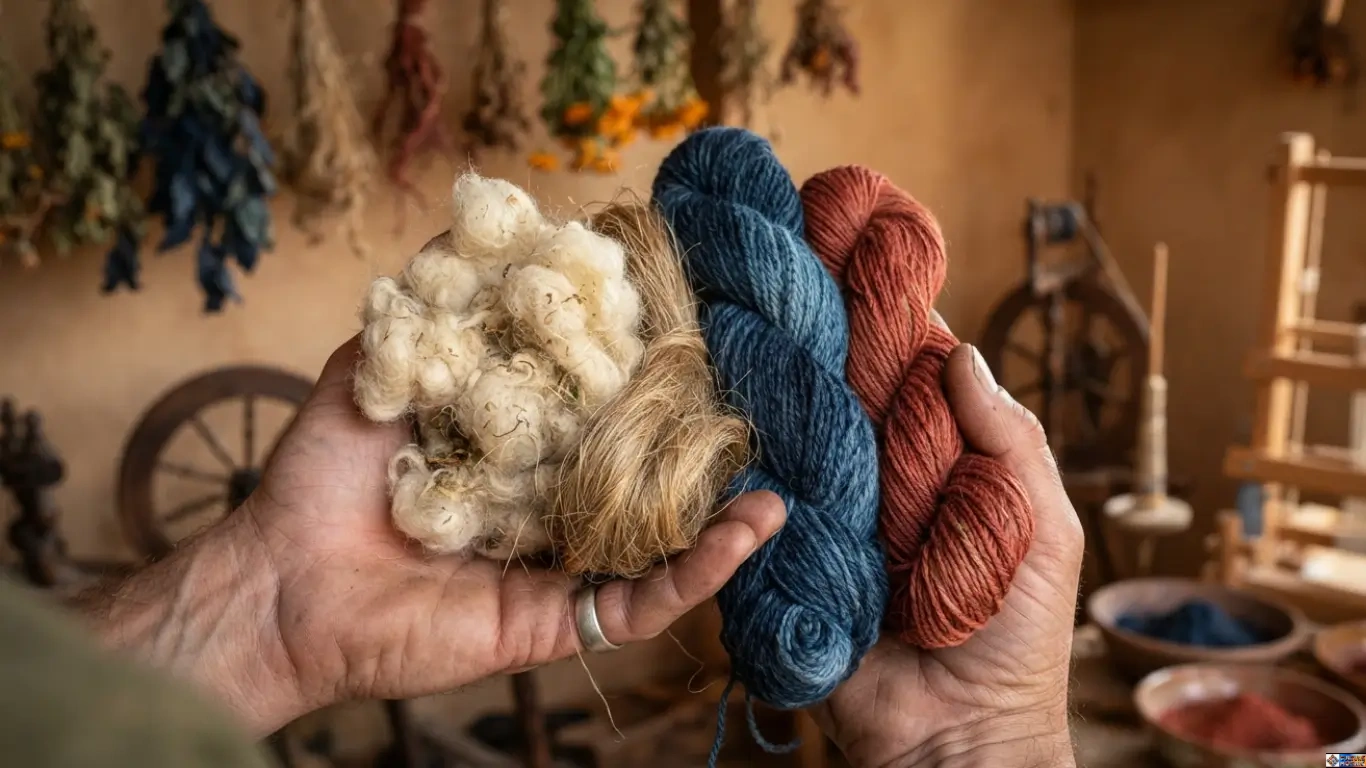
Beyond sustainability: How ancient indigenous wisdom and modern soil science are weaving a new, restorative global wardrobe.
Quick Summary
- The Problem: Industrial fast fashion relies on extractive monocultures and petroleum synthetics that deplete topsoil, pollute global waterways, and erase indigenous craftsmanship.
- The Root Cause: Linear supply chains prioritize volume over ecological health, severing the connection between raw materials and native landscapes.
- The Solution: Regenerative Textile Traditions integrate ancestral farming practices (such as rotational grazing and botanical dyeing) with modern soil science to build garments that sequester carbon, restore biodiversity, and fund artisan communities.
- Key Takeaway: Soil-to-skin garments are living investments. Choosing regenerative natural fibers over synthetic or industrial alternatives turns everyday wardrobes into active tools for ecological restoration.
Rule 1: Audit Soil-to-Skin Provenance Before Product
High in the Himalayan foothills of Nepal, a wild plant once clothed entire mountain communities. Allo, the Himalayan nettle (Girardinia diversifolia), grew untamed across steep ravines. Its long, durable bast fibers were hand-spun into weather-resistant garments, ropes, and carrying sacks.
When cheap industrial cotton and petroleum-derived polyester flooded rural markets during the late 20th century, harvesting traditions waned. Knowledgeable local weavers became grandmothers with idle hands, while younger generations migrated toward urban garment factories.
Today, an international revival is pulling these heritage practices back from near-extinction. This shift is not a sentimental homage to the past—it is a practical, direct response to a global environmental crisis.
Across the Andes, indigenous Quechua communities are reviving rotational alpaca grazing on high-altitude grasslands (puna). In Oaxaca, Mexico, natural-dye artisans are re-establishing pollinator corridors by cultivating native indigo and cochineal. Connecting a specific landscape to a finished cloth ensures that every garment actively restores the ecosystem from which it grew. Understanding the Ethical Textile Provenance of these materials is the first step toward building a truly restorative wardrobe.
Rule 2: Respect Ancestral & Geographic Roots
Regenerative practices vary across different biomes, each offering unique solutions to regional soil degradation and community empowerment:
| Region / Biome | Primary Material | Ecological Action | Community Impact |
| Himalayan Foothills (Nepal & India) | Wild Allo Nettle (Girardinia) | Deep root structures stabilize hillside topsoil; requires zero synthetic inputs | Provides seasonal income for rural women’s harvesting cooperatives |
| Andean Puna Grasslands (Peru & Bolivia) | Pastoral Alpaca Fleece | Rotational grazing allows native bunchgrasses to regenerate, storing soil carbon | Sustains pastoralist herds and preserves traditional spinning traditions |
| Oaxaca Valley (Mexico) | Botanical Indigo & Cochineal | Eliminates chemical runoff; crop diversity creates habitat for native pollinators | Restores historic dye-master livelihoods and keeps ancestral knowledge active |
| Northern France & Belgium | Bast Flax / Linen | Short-rotation cover cropping builds mycorrhizal fungi with zero artificial irrigation | Maintains heritage retting fields and regional European weaving mills |
For deeper insight into how raw material textures reflect regional history and cultural memory, The Tactile Lexicon of Woven Identity explores the physical properties of cloth as a primary record of land stewardship.
Rule 3: Prioritize Soil Microbiology Over Yield
Industrial agriculture relies on heavy tillage and chemical inputs, stripping topsoil of its natural biological activity. Deep-rooted bast fibers like hemp and wild nettle build extensive mycorrhizal fungal networks, increasing microbial biodiversity in topsoil by up to 60%. These deeper roots retain groundwater, reducing irrigation requirements by up to 30% compared to conventional monoculture cotton.
Fiber Comparison Matrix
| Attribute | Conventional Cotton | Organic Cotton | Regenerative Bio-Fibers |
| Synthetic Inputs | High (Pesticides/Fertilizers) | Zero | Zero |
| Soil Impact | Topsoil Depletion | Neutral / Stable | Active Restorative Building |
| Water Reliance | Heavy Irrigation | Rain-fed / Variable | Minimal / Rain-fed |
| Biodegradability | Partial (Chemical Dyes) | High | 100% Home Compostable |
The logic of regenerative fiber production is straightforward: the carbon locked into the soil during cultivation must exceed the carbon emitted during processing and transport. Well-managed pastures for alpaca and sheep can store up to 1.4 tonnes of carbon dioxide per hectare each year:
$$\text{Net Carbon Impact} = \text{Soil Carbon Sequestered} – \left( \text{Harvesting Emissions} + \text{Processing} + \text{Transport} \right)$$
When this equation yields a positive result, your clothing becomes an active part of the natural carbon cycle rather than a contributor to atmospheric emissions.
Rule 4: Demand Forensic Verification of Fibers
Verifying ecological claims requires objective testing rather than relying on unverified corporate marketing. Breakthroughs in the Geographic Fingerprinting of Heritage Fibers utilize stable isotope analysis ($\delta^{13}\text{C}$, $\delta^{15}\text{N}$) and trace mineral profiling to pinpoint the exact soil origin of a textile.
Analyzing these isotopic markers makes it possible to distinguish authentic pasture-raised wool or wild nettle from industrial substitutes with forensic precision.
[ Fiber Sample ] ──► [ Isotope Mass Spectrometry ] ──► [ Geolocation Profile ]
                                                               │
[ Authentic Farm Origin ] ◄────────────────────────────────────┘
To learn more about verifying heritage textiles and physical artifacts, examine ongoing research into Traceable Ancestral Textile Remnants for methods used to authenticate historical supply chains.
Rule 5: Choose 100% Compostable Bio-Fibers
Next-generation natural fibers offer functional alternatives to petroleum synthetics without sacrificing durability or performance:
- Wild Nettle & Bast Hemp: Requires zero pesticides or artificial irrigation. Deep taproots break up compacted subsoils and restore nutrient flows for rotational crops.
- Pastoral Alpaca & Climate-Beneficial Wool: Grazing animals with soft padded feet move across high pastures, treading seeds into the earth without destroying delicate topsoil crusts.
- Forest-Harvested Ahimsa Silk: Collected from wild cocoons after the moth leaves naturally. Preserves native canopy trees without toxic mulberry pesticides.
- Botanical Dyes (Indigo, Madder, Oak Gall): Plant-based dyes contain zero heavy metals or synthetic fixatives. Wastewater from dye vats can safely irrigate agricultural fields.
Synthetic vs. Regenerative Fibers
| Property | Recycled Polyester | Regenerative Bio-Fibers |
| Primary Origin | PET Water Bottles / Plastics | Soil Crops / Livestock Pastures |
| Microplastic Shedding | High (Every Washing Cycle) | Zero |
| End-of-Life State | Landfill / Incineration | Complete Organic Compost |
| Ecosystem Value | Waste Diversion | Soil & Biodiversity Building |
Rule 6: Support Decentralized Artisan Infrastructure
Industrial supply chains rely on single-crop monocultures. Disruptions from droughts, floods, or soil depletion present systemic financial risks to fashion brands.
[ Traditional Model ]   Monoculture ──► Industrial Processing ──► Waste/Landfill
[ Regenerative Model ]  Poly-crop   ──► Local Artisan Craft   ──► Soil Compost
By shifting sourcing models to decentralized, community-managed cooperatives, forward-thinking fashion houses build resilient supply chains. Brands anchoring their lines in Regenerative Textile Traditions offer clear supply chain traceability and reduced lifecycle impacts.
This material evolution aligns with the concept of Somatic Textiles, which explores how non-synthetic, naturally dyed fibers feel against human skin compared to petroleum-derived synthetic garments.
Rule 7: Shift From Seasonal Trends to 30-Year Garments
Evaluating how your clothing choices align with circular systems takes just a few questions before making a purchase:
                      [ Evaluate a Garment ]
                                │
                 Is it 100% natural, unblended fiber?
                                │
                 ┌──────────────┴──────────────┐
                YES                           NO
                 │                             │
    Is the farm origin traceable?       [ Avoid / Synthetic ]
                 │
          ┌──────┴──────┐
         YES            NO
          │             │
  Botanical dye used?  [ Unsustainable Dye ]
          │
   [ Soil-Safe Garment ]
- Fiber Composition: Is the garment made from 100% natural fibers (unmixed with polyester or elastane) that can return safely to the soil?
- Provenance Traceability: Can the brand identify the specific agricultural cooperative, pastoral community, or farm network where the raw fiber was harvested?
- Dye Processing: Were the yarns colored using botanical or mineral pigments rather than synthetic azo dyes?
- Design for Longevity: Is the garment constructed with reinforced seams and hem allowances that support repair, alteration, and multi-decade use?
Choosing long-lasting, hand-crafted textiles changes our relationship with clothing. A hemp tunic grown in cover-cropped soil, colored with native plants, and assembled by skilled artisans is designed for years of repair and wear. At the end of its useful life, it breaks down into organic matter that nourishes the earth. Supporting these living systems helps sustain both ecological health and human heritage. Explore detailed updates on traditional craftsmanship at Culture mosaic.
Frequently Asked Questions
What is the difference between organic and regenerative textiles?
Organic textiles focus on input reduction—avoiding synthetic pesticides, herbicides, and GMO seeds. Regenerative textiles go further by actively restoring the surrounding ecosystem. Regenerative farming practices, such as cover-cropping, zero-till cultivation, and rotational grazing, rebuild topsoil depth, increase local biodiversity, and draw down atmospheric carbon.
Is recycled polyester considered a regenerative material?
No. While recycled polyester diverts plastic bottles from landfills, it remains a petroleum-based plastic. It sheds synthetic microplastics during washing, cannot biodegrade in organic soil, and requires intensive energy to re-process. Regenerative textiles come from living, compostable systems that enrich topsoil.
How do regenerative textiles help combat climate change?
Regenerative cultivation avoids heavy tillage, protecting soil fungi and root networks. These roots convert atmospheric carbon dioxide into carbon-rich exudates that stay locked beneath the surface. Combined with natural processing methods, the total carbon sequestered during crop growth exceeds the carbon emitted throughout processing and transport.
Why are regenerative garments more expensive than standard options?
Regenerative textiles cost more initially because their prices reflect fair artisan wages, small-scale harvesting, natural dye preparation, and careful land management. However, their high durability lowers their long-term cost per wear, as a well-made natural fiber garment outlasts multiple synthetic alternatives.
How can I verify if a brand’s regenerative claims are legitimate?
Look for verified farm-level traceability, third-party soil certifications (such as Regenerative Organic Certified or Savory Institute Land to Market), and clear disclosures regarding artisan compensation. Brands with transparent supply chains provide explicit details about the regions, farms, and processing methods used to create their garments.
Verifiable References & Sources
- Bhadury, P. (2021). Impact of regenerative agriculture on soil fungal communities and soil organic matter dynamics. Journal of Applied Soil Ecology, 168, 104130.
- Food and Agriculture Organization (FAO). (2023). Natural Fibres and Climate Change: Carbon Sequestration Potential in Agroforestry and Pastoral Systems. Rome: United Nations.
- Nichols, R., & Grazing Land Conservation Initiative. (2022). Soil Carbon Dynamics Under Managed Intensive Rotational Grazing in Andean High-Altitude Grasslands. Rangeland Ecology & Management, 79, 45-58.
- The Victoria and Albert Museum (V&A). Historical Textiles and Botanical Dyeing Traditions of Oaxaca and South Asia. V&A Collection Archives, Textiles & Fashion Section.
- USDA Natural Resources Conservation Service. Soil Health Principles and Carbon Capture Dynamics in Fiber-Crop Systems. Agricultural Information Bulletin No. 312.