
 By Culture Expert
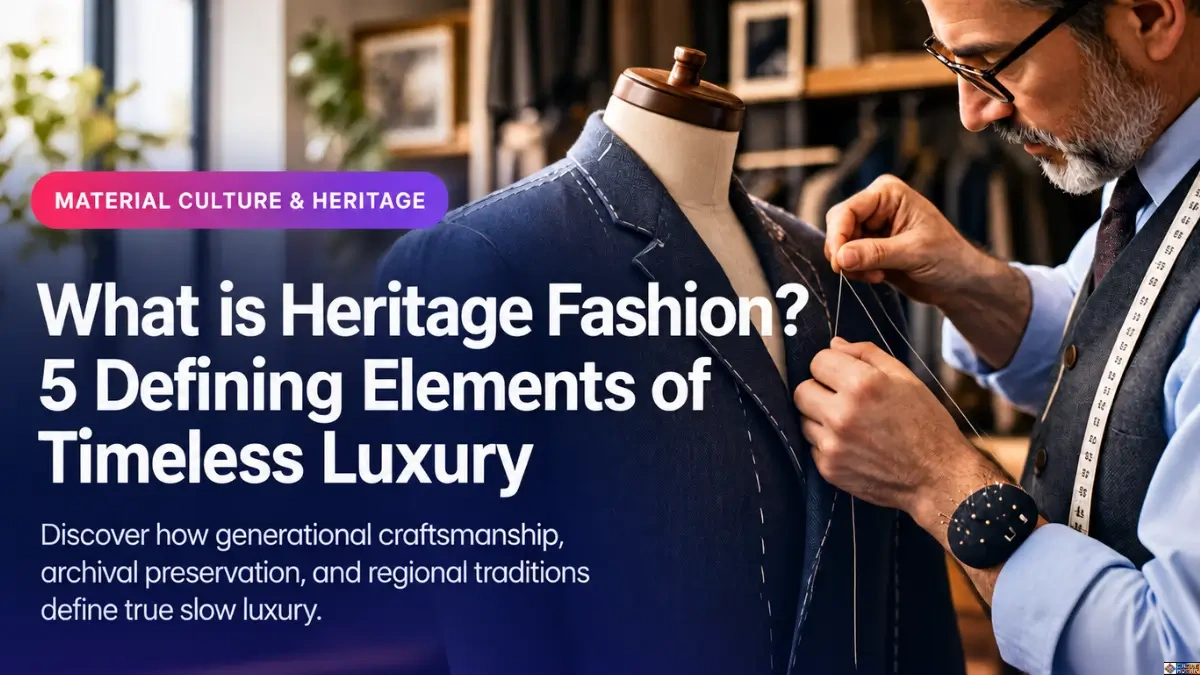
What is Heritage Fashion? It is the deliberate intersection of documented historical continuity, authenticated regional craftsmanship, and generational storytelling. Rather than chasing fleeting trends, heritage fashion houses preserve living archives and specialized techniques, producing garments designed to age gracefully, undergo repair, and outlast seasonal consumption cycles.
Introduction: The Modern Crisis of Disposable Style
We live in a moment of unprecedented sartorial saturation. Every week, micro-trends flicker across screens, urging us to consume cheap, synthetic garments that disintegrate after a handful of washes. This hyper-accelerated cycle leaves us feeling disconnected—wearing clothes that possess no soul, no story, and no physical permanence.
The pain is palpable: closets overflowing with disposable polyester, a fading sense of personal identity, and the heavy environmental toll of fast fashion.
The antidote to this disposability lies in Culture mosaic‘s core exploration: Heritage Fashion. It is not merely old clothing or marketing nostalgia; it is a living, breathing movement that honors generational craft, archival integrity, and material storytelling.
Roots & Meaning: What Is the Heritage Style?
To understand what is heritage fashion and decipher heritage style meaning, we must look beyond boardroom branding. What is a heritage brand meaning at its core? It is an institution built on an unbroken chain of human transmission, preserving artisanal techniques across centuries.
During the 18th and 19th centuries, European and regional artisan guilds thrived through hyper-local specialization:
- Cordwainers in Northampton stitched Goodyear-welted boots.
- Island weavers in the Outer Hebrides produced hand-woven Harris Tweed.
- Saddlers in Florence perfected full-grain leatherworking.
When industrial mass production emerged, these master ateliers faced a choice: commodify or cultivate. Those that chose to cultivate their founding trade became the benchmark for authentic luxury.
The Five Core Characteristics of Heritage Fashion
Not every long-established brand qualifies as authentic heritage. The designation requires meeting five distinct criteria:
1. Documented Founding Narrative and Historical Continuity
A genuine heritage house maintains a verifiable, uninterrupted line from its inception to today. It relies on living ancestral expertise rather than defunct trademarks purchased at auction.
2. Authenticated Regional Craftsmanship & Regenerative Textile Traditions
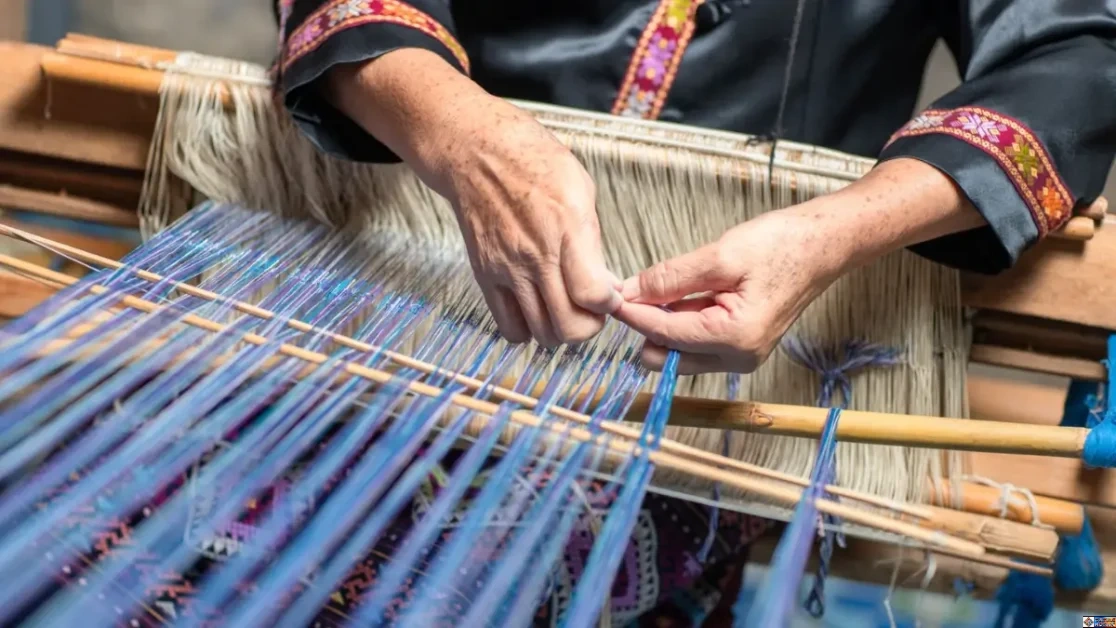
Heritage textiles cannot be separated from their geographic origins. From Scots wool to local linen, Regenerative Textile Traditions leverage centuries of environmental knowledge and sustainable land stewardship.
3. A Living Archive & Ancient Ethnic Heritage Symbols
Houses retain physical vaults of original patterns, swatch books, and ledgers. Creative leaders re-contextualize this historical inventory rather than wiping the slate clean. These archives preserve Ancient Ethnic Heritage Symbols, translating historic motifs into contemporary wear.
4. Functional Durability & Somatic Textiles
Built for demanding use—whether mariners braving North Sea gales or miners in heavy denim—these garments prioritize structural honesty. Modern developments in Somatic Textiles further reflect how sensory, body-attuned materials enhance functional wearability.
5. Repairability, Bio-Fabrics & Slow Luxury
Designed to be restored rather than discarded, heritage garments utilize high-grade natural fibers. The integration of Bio-Fabrics & Slow Luxury creates a natural, circular model of garment care and longevity.
Cultural Significance: What Is an Example of Cultural Heritage?
When exploring what is an example of cultural heritage in dress, ceremonial attire provides the clearest window. Wearing cultural garments is an act of identity preservation and community expression.
Bridal wear exemplifies this deep historical connection. What does it mean to wear a heritage dress? It means stepping into a lineage of non-verbal history, where every weave and embroidery stitch carries symbolic weight.
- Traditional Wedding Dress Cultural Meaning
- Cultural wedding dress motifs
- Why Wedding Dresses Are White
- How Much Are Wedding Dresses UK?
- Affordable Wedding Dresses Europe
- Modern Cultural Wedding Dresses
- Latest Trends in Bridal Wear
- What Wedding Dresses Are in Style
- Plus Size Wedding Dresses
- Best Sexy Wedding Dresses
- Where Can I Rent Wedding Dresses
- Discover how traditional rituals inform Modern Cultural Wedding Dresses and influence broader Fashion 2026 movements.
- Uncover the rich history behind Traditional Wedding Dress Cultural Meaning and specific cultural wedding dress motifs.
- Track how bridal aesthetics shift from Why Wedding Dresses Are White to current choices like What Wedding Dresses Are in Style and the Latest Trends in Bridal Wear.
- Explore accessible avenues including Where Can I Rent Wedding Dresses, Affordable Wedding Dresses Europe, How Much Are Wedding Dresses UK?, Plus Size Wedding Dresses, and Best Sexy Wedding Dresses.
Modern Manifestations: Men’s, Women’s, and Modern Heritage Style
What does heritage clothing style women look like alongside what is heritage fashion men? How does What is modern heritage style? adapt these codes for contemporary life?
- What is heritage fashion men: Focuses on classic tailoring, rugged waxed outerwear, selvedge denim, and Goodyear-welted boots engineered for functional durability.
- Heritage clothing style women: Blends structured riding jackets, heavy knitwear, pleated skirts, and timeless heirloom accessories.
- What is modern heritage style: Integrates archival silhouettes with relaxed, contemporary fits, allowing heritage pieces to sit comfortably alongside modern wardrobe staples.
Beyond apparel, these design codes influence cross-category aesthetics, including heritage style jewelry and heritage style interior design, where natural materials and historical patinas take center stage.
Comparison Framework: Heritage vs. Fast Fashion vs. Vintage
| Feature / Dimension | Heritage Fashion | Fast Fashion | Vintage / Retro |
|---|---|---|---|
| Origin & Lineage | Documented historical continuity & unbroken craft | Mass-produced based on viral trend cycles | Defined solely by garment age (20–100 years old) |
| Material Quality | High-grade natural fibers, full-grain leather, organic wool | Synthetic blends (polyester, acrylic, nylon) | Varies widely based on original production era |
| Manufacturing | Authenticated regional ateliers & artisan guilds | Centralized, high-speed offshore facilities | Historical factory or artisanal production |
| Longevity & Repair | Designed for multi-decade wear & active repair | Single-season disposal; non-repairable construction | Dependent on preservation and current condition |
| Cultural Value | Living material culture and ancestral storytelling | Ephemeral trends; low sentimental value | Nostalgic reflection of past subcultures |
Youth Culture & Mainstream Reach
Heritage sensibilities have extended far beyond traditional luxury corridors. Through subcultural adoption, functional workwear brands have found vibrant second lives in street culture. To see how historical codes filtered into accessible youth dressing, explore how 2016 Fashion Trends High School captured a pivotal snapshot of heritage-adjacent streetwear. Today, discovering heritage clothing online allows new generations to access authenticated archival garments worldwide.
What exactly is heritage fashion and how is it formally defined?
Heritage fashion refers to clothing brands and manufacturing traditions that possess an unbroken historical lineage, a commitment to regional craftsmanship, and a design philosophy centered on functional durability. A brand qualifies when it demonstrates continuous production using founding techniques, maintains physical archives, and traces its core design language to a practical functional origin rather than a temporary trend.
How is heritage fashion different from luxury fashion?
While both emphasize quality, luxury fashion often relies on seasonal novelty, celebrity endorsements, or artificial scarcity. Heritage fashion derives its value specifically from time, regional continuity, and accumulated expertise. A modern luxury brand can launch overnight, but heritage status must be earned across generations.
What is the relationship between heritage fashion and sustainable consumption?
Heritage fashion serves as the original slow fashion model. By prioritizing high-grade natural materials, robust construction, and lifetime repair services, heritage garments replace dozens of fast-fashion purchases over their lifespan.
Can streetwear brands develop genuine heritage status over time?
Yes, provided they transition from trend dependency to craft continuity. Workwear labels adopted by street culture demonstrate that functional durability and archival depth can earn genuine heritage status across decades.
How should I care for and maintain heritage fashion pieces?
Follow material-specific protocols rather than generic laundry routines:
Academic & Historical References
- The Victoria and Albert Museum (V&A): Textile and Dress Collection Archives, London.
- Harris Tweed Authority: The Harris Tweed Act of 1993, HMSO Legislative Archives.
- Bourdieu, Pierre: Distinction: A Social Critique of the Judgement of Taste, Harvard University Press.
- The Costume Institute at The Metropolitan Museum of Art: Historical Garment Construction and Material Culture Analysis, New York.