
 By Culture Expert
Poetcore Heritage Fashion: How to Dress Like a Poem Without Looking Like a Costume
Quick Summary: Poetcore Heritage Fashion
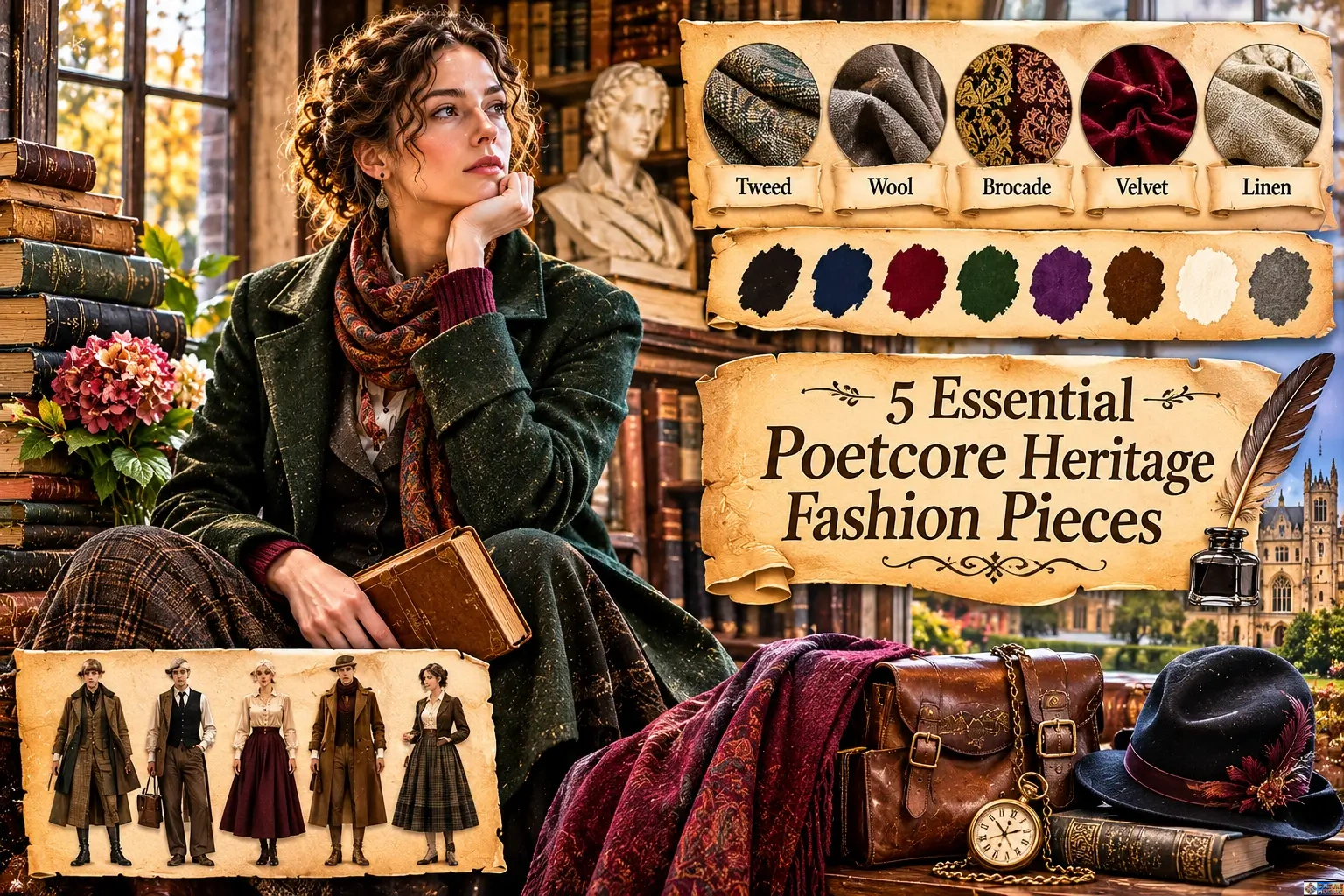
Poetcore Heritage Fashion blends the romantic, literary mood of the poet’s wardrobe (ink-dark colours, soft collars, worn leather, paper-toned neutrals) with real heritage tailoring such as tweed, wool, brocade, waistcoats and structured coats.
The 70/30 Rule:
Build 70% of the outfit from quiet, well-made heritage basics and let 30% carry the poetic detail (a scarf, a brooch, a pocket watch, a battered notebook).
Below you’ll find the history, the palette and fabrics, five capsule outfits, easy formulas, an accessory guide, a comparison with neighbouring aesthetics, and five FAQs.
The Problem: You Love the Mood, but the Mirror Says “Fancy Dress”
You’ve saved the pictures: a long wool coat on a misty moor, a velvet-collared jacket in a library, ink-smudged cuffs, a pocket watch on a chain. Then you try it in real life and something goes wrong. The cape is too theatrical for the bus. The cravat feels like a Halloween prop. You look less like a poet and more like someone auditioning for one.
That frustration is real, and it’s the most common stumbling block with literary aesthetics. The good news is that the fix is not “dress more plainly.” It’s to anchor the look in genuine heritage clothing, garments with a working history, and let the romance live in the details. That is what Poetcore Heritage Fashion does.
What Is Poetcore Heritage Fashion?
Poetcore is an internet-born aesthetic built around the image of the writer: soft, moody, introspective, a little undone. Heritage fashion is clothing rooted in traditional making: regional cloths, durable tailoring, techniques passed down through generations (see our primer, What is Heritage Fashion).
Put together, poetcore heritage fashion means dressing in the textures of the past with the sensibility of someone who reads, writes and notices things. It sits naturally alongside the wider conversation about culture and fashion and the way traditional clothing styles keep re-entering modern wardrobes.
It’s also not new. People have been dressing “like poets” for two centuries:
- The Romantics. Lord Byron’s 1813 portrait by Thomas Phillips, in Albanian dress, helped make the poet an image as well as a voice. The open collar and loosened neckwear became shorthand for the Romantic temperament.
- The Aesthetic movement. In the 1870s and 80s, Aesthetic dress, with soft fabrics, artistic colours and Liberty & Co. textiles, rejected rigid fashion. Oscar Wilde toured North America in 1882 as a living advertisement for the style.
- The campus and countryside tradition. Tweed jackets with elbow patches, knitwear and wool coats grew out of practical British country and academic dress, and later became the visual vocabulary of the scholar.
Today’s poetcore trend is the latest chapter, popularised online alongside “dark academia,” a label that took off around 2020 and drew heavily on novels such as Donna Tartt’s The Secret History.
The Core Aesthetic: Silhouettes, Fabrics, Colours, Textures
Silhouettes
- Long and lean outerwear: structured coats that fall mid-calf, belted or single-breasted.
- Soft, full sleeves against fitted waistcoats or vests for contrast.
- High-waisted, straight or slightly wide trousers and midi skirts with movement.
- Open or draped necklines: a loose collar, a tied scarf, an ascot rather than a rigid tie.
Fabrics
| Fabric | Why it works | Poetic effect |
|---|---|---|
| Tweed (e.g. Harris Tweed) | Hard-wearing, textured, flecked colour | The manor and moorland |
| Wool and wool flannel | Weight and drape | The scholar’s study |
| Brocade and jacquard | Woven pattern, a little opulence | The candle-lit salon |
| Velvet and corduroy | Soft pile that catches light | Late-night writing |
| Linen and washed cotton | Gentle creasing | A rumpled, lived-in shirt |
| Silk or fine cotton | Scarves and blouses | A whisper of romance |
On tweed specifically: authentic Harris Tweed is handwoven by islanders in their own homes in the Outer Hebrides from Scottish wool, and the name is legally protected under the Harris Tweed Act 1993. If provenance is what draws you to heritage clothing, the Orb mark is the thing to look for. For the wider idea of where fibres come from and how they can be traced, see Geographic Fingerprinting of Heritage Fibers and Regenerative Textile Traditions.
Colours
Think of a page of handwritten verse: ink black, midnight navy, oxblood, forest green, aubergine, moss, tobacco brown, parchment cream, dusty grey. A single rust or burgundy accent goes a long way. If you want to see how this palette sits against what’s current, check our Colour of the Season 2026 and Fashion 2026 guides. Deep reds also have a long textile story of their own; see The Cultural Significance of Red Velvet Fabric.
Textures and “literary” details
Ink-stain-toned dyes, tea-dyed linen, subtle marbling, worn paper shades, quill-like embroidery or feather motifs, small text-print linings, and worn leather (a satchel, a journal cover, boots with a broken-in toe). Keep these as accents. Printed poems across a whole shirt tip into costume quickly.
Layering
The signature move is tonal layering: shirt, waistcoat, jacket and coat in neighbouring shades, with one textured piece (a knit or tweed) breaking up the flatness. Add a scarf at the neck and you have the look.
The Mood: Where This Style Lives in the Imagination
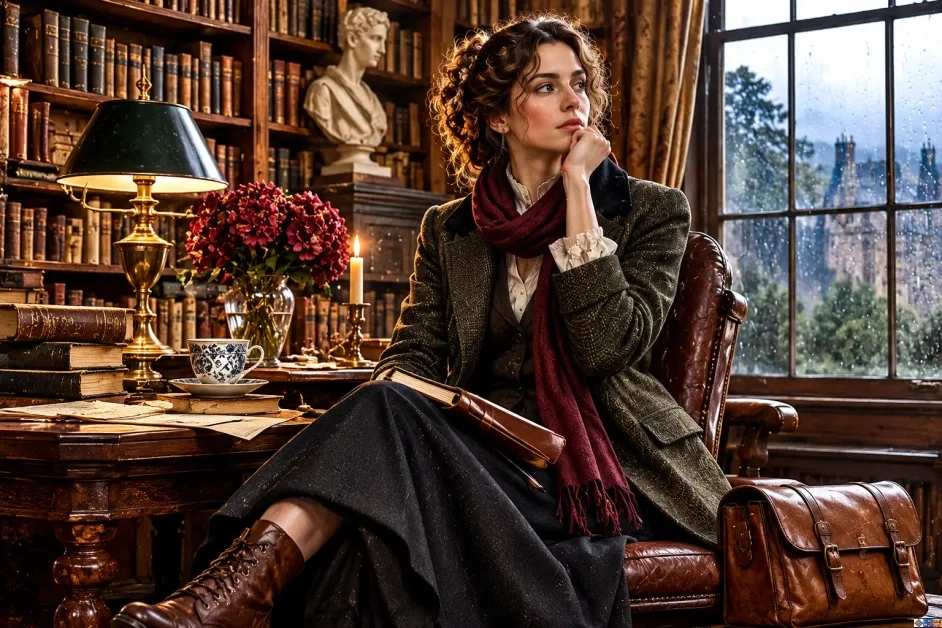
- The moody countryside manor: wet wool, boots by the door, a fire, fog on the window.
- The scholar’s study: books stacked on the floor, a desk lamp, a cardigan with a darned elbow.
- The melancholic poet’s wardrobe: the loosened collar, the coat worn a little too long, the notebook that goes everywhere.
The emotional centre is tenderness toward the past and attention to the present. That’s why it resonates in a world of disposable clothing: it asks you to slow down, mend things and keep them.
Poetcore vs. Neighbouring Aesthetics
| Poetcore Heritage | Dark Academia | Cottagecore | |
|---|---|---|---|
| Mood | Introspective, romantic | Intellectual, moody | Pastoral, gentle |
| Palette | Ink, oxblood, parchment | Brown, black, forest green | Cream, pastel, floral |
| Signature pieces | Soft collars, waistcoats, scarves | Blazers, pleated skirts, sweater vests | Prairie dresses, aprons |
| Heritage emphasis | High: regional cloth and tailoring | Medium | Medium |
| Costume risk | Moderate (cravats, capes) | Moderate | Low to moderate |
Five Essential Pieces and Outfit Combinations (Your Capsule Wardrobe)
1. The Tweed Jacket A single-breasted herringbone or Harris Tweed jacket in moss, heather or charcoal. Wear it with a white or cream shirt and dark jeans for daytime, or over a knit with corduroy trousers. Balance: the heritage fabric does the heavy lifting, so keep everything else simple.
2. The Waistcoat (Vest) in Wool or Brocade A wool waistcoat in oxblood or navy; brocade if you want an evening version. Pair with a loose linen shirt, sleeves slightly rolled. Accessory: a pocket watch on a short chain tucked into a pocket, not draped across the chest.
3. The Long Structured Wool Coat Mid-calf, dark, with a clean shoulder. It makes anything beneath it look intentional. Accessory: a wool scarf in a muted tartan or a tonal paisley.
4. The Poet Shirt (or Blouse) Cotton, linen or silk with softly full sleeves and a relaxed collar. A tied neck scarf or ascot can replace a necktie. Balance: if the sleeves are dramatic, keep the trousers or skirt plain.
5. The Worn-Leather Set Broken-in boots, a satchel, and a leather-bound journal that you actually use. These are the “literary” element in tangible form, and they cost no costume points because they’re functional.
How to Wear It Without Looking Like You’re in a Costume
- Follow the 70/30 rule. 70% modern, well-fitted basics; 30% period detail.
- One statement per outfit. A cravat or a cape or a brocade vest, never all three.
- Choose fabric over props. A good tweed reads as style; a prop reads as theatre.
- Fit modernly. Heritage cloth with a contemporary cut keeps you in the present day.
- Let it age. Wear things in. Slightly worn is the whole point.
- Match the occasion. A scarf and waistcoat at a café is poetic; a full Victorian ensemble at the supermarket is a performance.
Easy Everyday Poetcore Outfit Formulas
| Occasion | Formula |
|---|---|
| Work / office | Wool trousers + poet shirt + tweed jacket + leather satchel |
| Weekend | Knit + corduroy trousers + long coat + boots |
| Evening | Brocade waistcoat + dark shirt + slim trousers + brooch |
| Rainy day | Long wool coat + scarf + midi skirt + leather boots |
| Casual / student | Oversized cardigan + white tee + straight jeans + tote with a paperback |
Jewellery and Accessories That Define the Look
- Brooches on a lapel or scarf (cameo, botanical, or a simple bar).
- Pocket watches or a plain wristwatch with a leather strap.
- Signet or stone rings, a thin chain with a locket, small hoop or pearl studs.
- Scarves and ascots in wool, silk or paisley.
- Leather journals, fountain pens, satchels.
- Hats: a flat cap or a soft felt hat, worn lightly.
Poetcore Heritage Fashion Trends to Watch
- Slow fashion and repair. Mending, darning and buying secondhand sit at the heart of the look.
- Regional cloth as a story. Buyers increasingly ask where cloth is woven and by whom.
- Textiles beyond the garment. Fabric as décor, such as wall hanging fabric, brings the same mood into the home, and somatic textiles explore how cloth is felt on the body.
- Fabric history in focus. Crisp taffeta and rich velvets show how a single cloth can read as romantic or ceremonial depending on the cut.
- Nostalgia cycles. Compare how earlier waves return, from Y2K fashion to 2016 high-school trends.
Heritage Beyond the Study: Ceremony and Symbolism
Heritage dressing isn’t only British tweed. Many of the world’s oldest clothing traditions live in ceremonial dress, and wedding attire is where they’re most visible. If the poetic, symbolic side of the look interests you, these pieces from Culture Mosaic go deeper:
- Meaning and symbols: traditional wedding dress symbolism, Traditional Wedding Dress Cultural Meaning, cultural wedding dress motifs and Ancient Ethnic Heritage Symbols.
- Colour and convention: Why Wedding Dresses Are White, traditional red wedding dress and traditional non white wedding dresses.
- Across borders: Global bridal wear traditions, multicultural wedding attire and modern greek style wedding dress.
- Modern choices: Modern Cultural Wedding Dresses, What Wedding Dresses Are in Style, Latest Trends in Bridal Wear, What is a mermaid wedding dress? and Best Sexy Wedding Dresses.
- Practical and budget: How Much Are Wedding Dresses UK?, Affordable Wedding Dresses Europe, Where Can I Rent Wedding Dresses and Plus Size Wedding Dresses.
A poetcore twist on any of these is simple: a tonal brocade, a velvet trim, a scarf, a single brooch.
Try It: A Seven-Day Starter Test
You don’t need to buy anything. Over a week, wear one poetic detail with clothes you already own: a scarf on Monday, a waistcoat or vest on Wednesday, a leather notebook on Friday. Notice what feels like you and what feels like a role. Keep what feels natural, and put the rest back. If you try it and share your results, the community will learn more from your real experience than from any list.
📚 Frequently Asked Questions
1. What is Poetcore Heritage Fashion?
It’s an aesthetic that combines the romantic, literary mood of “poetcore” with traditional, well-made heritage clothing such as tweed, wool, brocade and structured coats. The heritage pieces give it substance; the poetic accents (scarves, brooches, worn leather, parchment tones) give it feeling.
2. How do I wear poetcore without looking like I’m in a costume?
Use the 70/30 rule: mostly modern, well-fitted basics and a small amount of period detail. Limit yourself to one statement piece, choose real heritage fabrics over props, and pick items you’ll genuinely use, like a good coat or a leather satchel.
3. What are the easiest everyday poetcore outfit formulas?
A tweed jacket over a plain shirt with dark jeans; a long wool coat, knit and corduroy trousers; or a waistcoat over a loose shirt with straight trousers. Add a scarf and boots and you’re done.
4. What jewellery and accessories define the look?
Brooches, pocket watches or leather-strap watches, signet rings, lockets, wool or silk scarves and ascots, leather journals, fountain pens and satchels. Choose one or two per outfit.
5. Is poetcore heritage fashion sustainable and affordable?
It can be. The look rewards durable fabrics, secondhand shopping, repair and fewer, better pieces. Vintage tweed jackets and wool coats are often available secondhand at reasonable prices. Genuine regional cloths like Harris Tweed cost more new but last for decades.
Sources and Further Reading
These were compiled from established references; please confirm each link and date before publishing.
- Harris Tweed Authority, “The Harris Tweed Act 1993” and Orb Mark information: https://www.harristweed.org
- UK Government legislation, Harris Tweed Act 1993: https://www.legislation.gov.uk (search “Harris Tweed Act 1993”)
- Government Art Collection / British Embassy Athens, Thomas Phillips, Lord Byron in Albanian Dress (1813): https://www.gac.culture.gov.uk
- National Portrait Gallery, London, portraits of Lord Byron, John Keats and Percy Bysshe Shelley: https://www.npg.org.uk
- Victoria and Albert Museum, “The Aesthetic Movement” and Liberty & Co. collections: https://www.vam.ac.uk
- Victoria and Albert Museum, collections on Rational and Aesthetic dress: https://www.vam.ac.uk
- Ellmann, Richard. Oscar Wilde. Hamish Hamilton, 1987 (on Wilde’s 1882 American lecture tour).
- Tartt, Donna. The Secret History. Alfred A. Knopf, 1992 (the novel central to dark academia).
- Breward, Christopher. The Culture of Fashion. Manchester University Press, 1995.
- Culture Mosaic, internal resources: https://culturemosaic.co.uk/