
 By Culture Expert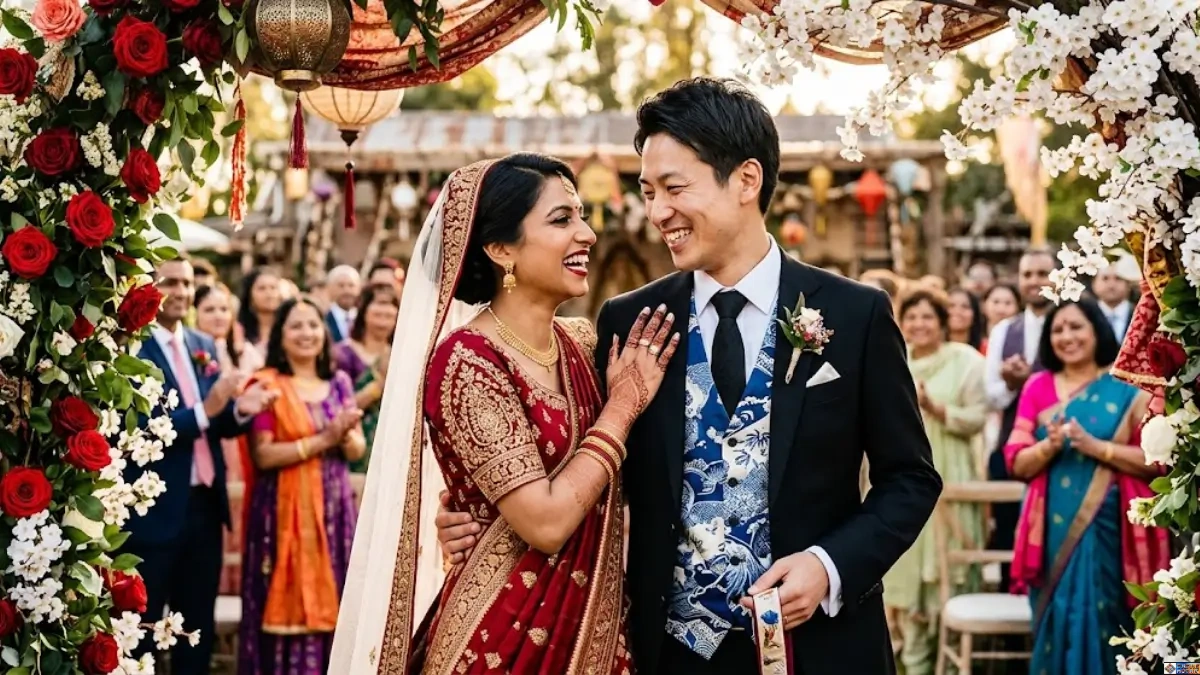
Multicultural wedding attire is any bridal or groom’s outfit that draws on more than one heritage — through fabric, colour, silhouette, or ritual garments — to reflect a couple’s combined background.
4 Ways Couples Blend Traditions:
There’s no single “correct” formula.
The goal is respect, not perfection — and a good tailor, dressmaker, or family elder who actually knows the tradition matters more than any Pinterest board.
I’ve spent years writing about bridal fashion, and the questions I get asked most about multicultural wedding attire aren’t about trends. They’re about permission. Can I wear my grandmother’s sari if my fiancé is Irish? Will his family think I’m mocking their kilt if I get the tartan wrong? Is it disrespectful to have a qipao made in a colour that isn’t red? These aren’t small worries. They sit right at the intersection of love and identity, and getting them wrong in public, on the one day everyone is watching, feels enormous.
So let’s slow down and go through it properly — fabric by fabric, culture by culture, and family by family.
The Problem With “Just Pick One”
Here’s the thing nobody says out loud: most wedding advice still assumes one culture, one dress code, one set of rules. Bridal magazines show a single silhouette. Registry office paperwork asks for one surname. Even seating charts assume two families who already share a native language and a religious building. Multicultural couples are working without a script, and the wedding industry has been slow to catch up.
I understand the frustration. You want the day to represent both of you, not one of you with a nod to the other. And you’re doing this while managing two sets of family expectations, possibly two languages, and often two very different ideas about what “formal” even means. A South Asian mother-in-law’s idea of an appropriately modest neckline and a Scandinavian mother’s idea of the same thing can be genuinely different conversations.
The solution isn’t a single “hack.” It’s understanding what each garment actually means before you touch it — and then making deliberate, informed choices instead of decorative ones.
What Multicultural Wedding Attire Actually Means Now
Multicultural wedding attire covers any outfit — bridal, groom’s, or bridal party — that combines elements from two or more cultural or religious backgrounds. Sometimes that’s obvious: a bride in a bright red qipao for tea ceremony photos, then a white Western gown for the evening reception. Sometimes it’s quieter: a groom in a navy suit with a hand-embroidered stole from his mother’s village, or a bride carrying her late grandmother’s rosary wrapped around a bouquet of local wildflowers instead of imported roses.
I wrote at length about how this plays out in practice in Modern Cultural Wedding Dresses, and the honest answer is that the “rules” are looser than they used to be, but the meanings underneath them haven’t changed. A colour still means something. A cut still means something. Ignoring that isn’t fusion — it’s just costume.
1. Every Traditional Textile Carries a Family’s Fingerprint
Before you combine two traditions, it helps to know what each one is actually saying. Textile choice in bridal wear was never really about aesthetics first — colour, weave, and motif have historically carried the weight of blessing, status, and protection.
Red shows up again and again across Asia and parts of Africa, and for good reason. In Chinese weddings, the qipao’s crimson is tied to luck and the warding-off of misfortune, not romance in the Western sense. In many South Asian communities, that same red on a bride’s lehenga or sari signals fertility and prosperity rather than purity. White, by contrast, was historically the colour of mourning in several of these same cultures — which is exactly why a bride marrying into one of these families might get a strong reaction to an all-white gown at the ceremony itself, whatever it means where she grew up.
Motif matters just as much as colour. I’ve laid out the full breakdown of specific symbols in Cultural Wedding Dress Motifs, but the short version: a phoenix or dragon on Chinese bridal silk represents the union of the feminine and masculine, not decoration for its own sake. If you want to understand where these symbols originated, Ancient Ethnic Heritage Symbols traces several of them back further than most modern bridal blogs bother to go — and increasingly, textile scientists can even trace the literal fibres in heirloom garments back to a region using isotope analysis, a method covered in Geographic Fingerprinting of Heritage Fibers. Your dress isn’t just symbolic. In some cases, it’s practically traceable to a specific hillside.
None of this means you can’t blend. It means blend on purpose. I’d rather see a couple keep one heavily symbolic piece intact — a veil, a sash, a specific embroidery pattern — than water down two traditions into something that honours neither. This, more than any single garment, is what separates thoughtful multicultural wedding attire from a costume rack.
2. South Asian Bridal Wear Sets the Boldest Colour Rules
If you’re marrying into a South Asian family, colour is the first thing to understand, because the etiquette here is stricter than almost anywhere else in bridal fashion. Hindu brides traditionally favour red, maroon, or magenta lehengas and saris, heavy with gold thread work — zari and zardozi — that itself carries status and craftsmanship value passed down through generations. The Tamil koorai silk sari is a good example: green threads through the weave for fertility, yellow for prosperity, and certain wide-bordered versions are considered so sacred they’re offered to temples rather than kept for personal wear.
Punjabi Sikh brides often wear a chura, a set of red-and-white bangles gifted by a maternal uncle, alongside their bridal lehenga — a piece of jewellery, not fabric, but every bit as symbolically loaded. And the sari or lehenga is rarely a single-piece purchase. It’s a whole ecosystem of dupatta, blouse, and jewellery, which is exactly why platforms like Aza Fashions have built entire businesses around outfitting one bride for five separate events — mehendi, haldi, sangeet, ceremony, and reception — rather than one dress for one day.
If you’re a non-South Asian partner wearing a sari or lehenga for your own wedding, the etiquette that matters most is fit and modesty for the religious portion of the ceremony, and avoiding an all-white outfit for the main event. Beyond that, most families I’ve spoken to are genuinely moved when a partner makes the effort, imperfections and all — and that effort is really the whole point of multicultural wedding attire in the first place.
3. East Asian Silhouettes Balance Structure and Symbolism
East Asian bridal wear is where I most often see multicultural wedding attire done well, mostly because the tradition of changing outfits mid-celebration is already baked in.
Chinese, Korean, and Japanese bridal traditions share a preference for precise, structured silhouettes over the flowing drape you see in South Asian or African bridal wear, but the symbolism inside that structure runs just as deep.
The qipao (also called a cheongsam) is fitted, high-necked, and traditionally red silk with gold dragon-and-phoenix embroidery — a design that specifically represents balanced femininity and masculinity coming together, which is a lovely thing to point out to a partner who thinks the motif is “just decorative.” Korean hanboks lean toward pink or purple for the ceremony, with a voluminous skirt and short jacket that photograph beautifully against almost any Western wedding party’s colour scheme.
Japanese shiromuku — the pure white kimono worn for the Shinto ceremony — carries a very different meaning from a Western white dress: it’s traditionally read as the bride’s readiness to be “dyed” in the colours of her new family, a symbol of integration rather than of purity for its own sake.
What I like about East Asian bridal traditions for fusion weddings specifically is how well the multiple-outfit-change custom already fits a two-culture wedding. Many Chinese brides already plan to wear a red qipao for tea ceremony and family photos, then a white gown for the Western-style reception. If your partner comes from a different heritage entirely, that second outfit change is the easiest place to fold theirs in — a family tartan sash, a lace mantilla, a specific embroidery style — without touching the ceremony that matters most to the other side of the family.
4. West African Cloth Turns the Whole Family Into the Design
Nigerian weddings, in particular, treat attire as a collective statement rather than an individual one, and this is probably the biggest adjustment for a partner coming from a culture where the bride’s dress is meant to be singular and unmatched by anyone else in the room.
Yoruba brides traditionally wear aso-oke, a hand-woven cloth considered the most prestigious fabric in Nigeria, typically styled as a five-piece set: blouse, wrapper, shawl, headscarf (gele), and veil. Igbo brides often wear isiagu cloth with coral bead crowns; Hausa brides favour richly embroidered shadda gowns with elaborate headpieces. And then there’s aso-ebi — the custom of the whole bridal party and often the guests wearing coordinated fabric, chosen and distributed by the families themselves, which functions as a visible, wearable statement of collective blessing on the marriage.
If you’re planning a fusion wedding with West African heritage on one side, aso-ebi is actually a gift for a multicultural couple, not an obstacle. It gives you a built-in, family-approved way to visually unify a bridal party that might otherwise be wearing three unrelated colour schemes. Kente cloth from Ghana works similarly — handwoven, brightly patterned, and historically reserved for royalty and blessing, which is exactly the kind of textile that photographs as intentional rather than costume-y when it’s paired with a Western-cut suit or dress.
5. Latin American and Celtic Heritage Show Up in the Details
Not every heritage tradition needs a full outfit change to register — some of the most moving multicultural weddings I’ve come across lean on a single, specific object rather than an entirely different garment.
Mexican and broader Latin American Catholic weddings often centre on the mantilla ceremony: a long lace veil draped over the bride’s head and the groom’s shoulders by both mothers, symbolising the couple’s union under one covering. Huipils — handwoven, brightly embroidered cotton tunics worn by Indigenous and mestiza brides across Mexico and Guatemala — carry embroidery patterns that are specific enough to identify a weaver’s home village, and are increasingly worn as the main bridal garment rather than a folkloric add-on. On the groom’s side, the guayabera — a linen shirt with vertical embroidered panels, worn untucked and without a jacket — remains the standard formal choice across much of Central America and the Caribbean, heat notwithstanding.
Celtic heritage tends to show up in accessories more than full silhouettes: a groom’s kilt in his family or clan tartan, a handfasting cord binding the couple’s wrists during the vows, or a Claddagh ring exchanged as a symbol of love, loyalty, and friendship. None of these require abandoning a partner’s own tradition. A bride in a huipil standing beside a groom in his father’s tartan kilt is, honestly, one of the more striking pairings I’ve seen described to me — two entirely different textile histories, both fully intact, standing next to each other rather than blended into a compromise.
6. Menswear Is Finally Catching Up
For years, multicultural wedding coverage focused almost entirely on the bride, and menswear got a suit and not much else. That’s changing, and it’s overdue.
Grooms now have genuinely equivalent options across cultures. The sherwani — a long, structured coat worn over a kurta and churidar, often in silk or brocade with zardozi embroidery — is the South Asian answer to Western formalwear, styled with a safa (turban) and mojari shoes. A Scottish groom’s formal kilt, worn with the correct clan tartan and full Highland dress, carries the same weight a bride’s gown does.
The barong tagalog, a sheer, embroidered shirt traditionally woven from piña or jusi fibre and worn untucked without a jacket, is the Philippines’ formal standard, chosen specifically because it’s suited to heat that a Western three-piece suit isn’t. West African grooms might wear an agbada or dashiki in a print that coordinates with the bride’s aso-ebi, and Central American and Caribbean grooms often choose the guayabera described above.
Multicultural wedding attire for men is really the same idea as for the bride: a groom doesn’t have to choose one tradition over the other any more than she does. I’ve seen grooms wear a sherwani for the ceremony and swap into a Western suit for the reception, mirroring exactly the outfit-change logic that’s long been normal for brides. It’s a small shift, but it matters — the men’s side of a multicultural wedding shouldn’t be an afterthought dressed in rented black tie while the bride does all the cultural heavy lifting.
7. Guests, Bridal Parties, and Non-Binary Couples Have Their Own Rules
If you’re a guest at a multicultural wedding, the safest approach is to ask, not assume — but a few patterns hold fairly consistently.
At a South Asian wedding, skip white, black, and heavy red; you’re avoiding mourning colours and the bride’s own colour in one move. Jewel tones — emerald, sapphire, magenta, ruby — and metallics are always welcome, and wearing Indian-inspired attire like a salwar kameez as a non-Indian guest is generally read as a genuine compliment rather than appropriation, provided it’s respectful and appropriately formal. Chinese weddings carry a lighter version of the same rule: avoid all-white, and skip solid black if you can, though it’s loosening at modern urban celebrations. At most West African weddings, if you’re invited into the aso-ebi, wearing the assigned fabric is a sign you’re honoured to be included, not an imposition.
Gender-inclusive weddings add another layer worth getting right. If you’re unsure what to call a bride who doesn’t identify with that word, “nearlywed” and “marrier” are the two terms gaining the most traction as gender-neutral alternatives, alongside the honorific “Mx” for anyone who doesn’t use Mr, Mrs, or Ms. Wedding parties are following suit: “honour attendants” or simply “the wedding party” now regularly replace strictly gendered “bridesmaids” and “groomsmen,” and tailored suiting has become a genuinely popular non-binary attire choice specifically because it carries so little gendered history compared with a traditional gown.
It’s also worth saying plainly: not every “who walks whom down the aisle” question is really about attire, but it’s tangled up with the same instinct — respecting each family’s version of tradition. In many Western Christian ceremonies, the bride’s mother is traditionally escorted to her seat by a groomsman just before the processional begins, though a growing number of families now ask a sibling, a close friend, or even the groom himself to do it instead. Sikh, Jewish, and several other ceremonies handle this differently again, with both parents sometimes walking the bride or groom together. There’s no universal rule here beyond communicating early with both families about what each tradition expects.
How Cultures Encode Meaning Into Bridal Fabric
Four Ways Real Couples Are Actually Blending Two Wardrobes
There isn’t one template for multicultural wedding attire, but almost every couple I’ve come across lands on one of these four approaches, sometimes combining more than one.
For more on how couples are approaching this in practice, this piece from Springfield Country Club rounds up several real fusion looks worth seeing.
The Slow-Fashion Case for Heirloom Textiles
Here’s something that doesn’t get said enough in bridal coverage: a lot of the fabric traditions in this piece are disappearing, not thriving. UNESCO has listed several heritage weaving techniques — including Al Sadu weaving in the Gulf and traditional Li textile techniques in China — as intangible cultural heritage specifically because the number of artisans who know how to make them is shrinking fast, often down to a handful of older weavers in a single region.
That’s a genuine argument for choosing heirloom or artisan-made textiles over a mass-produced “ethnic print” gown, and it lines up neatly with the slow-fashion movement more broadly. I’ve written before about what this actually means in practice in What Is Heritage Fashion and Regenerative Textile Traditions — both worth reading if you’re considering commissioning a custom multicultural outfit rather than buying off the rack.
There’s also a growing aesthetic conversation around this, sometimes labelled Poetcore Heritage Fashion, that treats an heirloom textile less like a costume and more like a piece of wearable family history — which, frankly, is closer to how these fabrics were always meant to be understood. There’s even a more clinical, technical side to this preservation effort worth knowing about, sometimes discussed under the banner of Somatic Textiles, which looks at how handmade fabric physically holds the imprint of the maker.
A dress made from a family member’s old sari, repurposed into a modern silhouette, or a suit lined with fabric from a grandfather’s own wedding, will always carry more weight than anything bought new specifically to “look cultural.” If your family has old textiles sitting in a trunk somewhere, that’s genuinely the first place to look before you shop — heirloom-first is quietly becoming the most sustainable version of multicultural wedding attire around.
What This Actually Costs, and Where to Start Looking
Budget is the part nobody wants to talk about, but multicultural wedding attire is very often two full outfits, not one, so it’s worth planning for early.
In the UK, formal bridal wear spans an enormous range, and it’s genuinely worth reading How Much Are Wedding Dresses UK? before you commit to a custom order on top of a second traditional outfit. If budget is tight, Affordable Wedding Dresses Europe is a sensible place to start for the Western half of a two-outfit wedding, and Where Can I Rent Wedding Dresses is worth genuine consideration for a traditional outfit you’ll likely only wear once — heavily embroidered lehengas and sherwanis in particular rent well, since the cost of new can run into the thousands.
On sizing and inclusivity: most of the heritage silhouettes in this piece — wrap saris, draped huipils, kaftans, aso-oke sets — were traditionally cut with far more forgiving construction than a fitted Western gown, which is worth knowing if you’ve struggled to find Plus Size Wedding Dresses that don’t compromise on formality. If you’re leaning Western for one half of your wardrobe, it’s worth checking What Wedding Dresses Are in Style and Latest Trends in Bridal Wear — 2026 in particular has swung back toward soft, draped column silhouettes rather than the structured, corseted shapes that dominated a few years ago, a shift covered in more detail in Fashion 2026 and Colour of the Season 2026.
If your reception look leans more fitted and glamorous than your ceremony outfit, Best Sexy Wedding Dresses is worth a browse for that second-look moment — a genuine departure from the Y2K-influenced silhouettes that briefly resurfaced in bridal fashion a couple of seasons back, discussed in Y2K Fashion, which mostly hasn’t stuck around for formal bridal wear.
And on the “why white at all” question that comes up constantly in mixed-heritage planning conversations: it’s worth reading Why Wedding Dresses Are White if only so you can explain, with real history behind you, why one side of the family might be attached to a colour the other side associates with funerals. The short version — it traces back to Queen Victoria’s 1840 wedding, not to any older universal tradition — genuinely helps de-escalate more than one cross-cultural planning disagreement.
If you want the broader picture of how heritage and personal style intersect beyond weddings specifically, Culture and Fashion and Traditional Clothing Styles are good starting points, and Traditional Wedding Dress Cultural Meaning goes deeper into the specific meanings only briefly touched here.
Frequently Asked Questions
What is a multicultural wedding?
A multicultural wedding is a ceremony and celebration that combines traditions, rituals, languages, or attire from two or more distinct cultural, ethnic, or religious backgrounds — usually because the couple, or their families, come from different heritages. It’s not one culture hosting the other as a guest; done well, both traditions carry equal weight in the ceremony, the food, and the multicultural wedding attire everyone shows up in.
What is traditional attire for a wedding?
It depends entirely on which tradition you mean. Traditional wedding attire spans everything from a red-and-gold sari or lehenga in South Asian weddings, to a qipao in Chinese ceremonies, a shiromuku kimono in Japan, aso-oke in Yoruba weddings, a huipil in Mexico and Guatemala, and a kilt with clan tartan in Scotland. Each carries specific colour and fabric meanings rooted in that culture’s history, so “traditional” always needs a culture attached to it to actually mean anything.
Who walks mom down the aisle?
In many Western Christian wedding processionals, the bride’s mother is traditionally escorted to her seat by a groomsman, just before the wedding party itself processes in. It’s increasingly common for a sibling, a close family friend, or the groom himself to take on this role instead, and several cultural and religious traditions handle it entirely differently — worth confirming with both families early, especially at a multicultural wedding where two different processional customs might be in play.
What is a non-binary bride called?
There isn’t one single agreed term, but “nearlywed” and “marrier” are the two gender-neutral alternatives gaining the most traction as replacements for “bride” or “groom,” alongside the gender-neutral honorific “Mx.” Many non-binary individuals simply prefer their own name paired with “partner,” or ask their wedding party to use “honour attendant” instead of bridesmaid or groomsman.
How do you blend two cultures in wedding attire without offending either family?
Talk to both families early, and specifically ask an elder from each side what matters most to get right — colour, modesty, or a specific ritual garment. Then pick one of four common approaches: sequential outfit changes, a single fusion garment, a shared colour palette, or symbolic accessories layered onto one dominant look. The safest rule of thumb for genuinely respectful multicultural wedding attire is to keep at least one symbolic element from each culture fully intact, rather than diluting both into something more generically “ethnic.”
Sources
UNESCO Intangible Cultural Heritage, Traditional Li Textile Techniques: Spinning, Dyeing, Weaving and Embroidering
UNESCO Intangible Cultural Heritage, Al Sadu, Traditional Weaving Skills in the United Arab Emirates
Wikipedia, Koorai Silk Sari
Wikipedia, Yoruba Clothing
Wikipedia, Bride
CNN Style, Planning My Multicultural Wedding Was Already Difficult. Finding a Dress Was Even Harder (2025)
Fibre2Fashion, Fusion Couture: How Cross-Cultural Weddings Are Transforming Bridal and Groom Fashion (2025)