
 By Culture Expert
Quick Summary
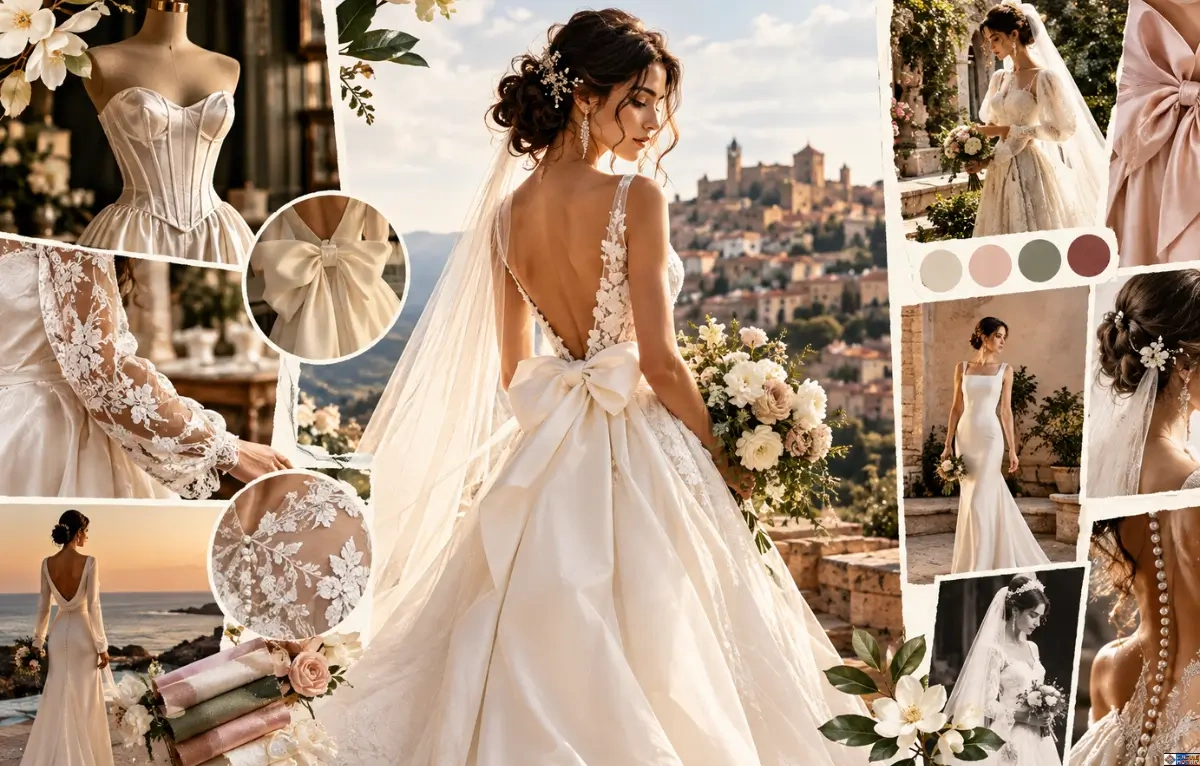
- The big picture: The latest trends in bridal wear lean toward personal, story-led dresses rather than one single look.
- Silhouettes: Sculpted corsetry, sleeves (long, sheer or detachable), minimalist satin and vintage-inspired shapes are all in play.
- Details: Bows, buttons, illusion lace, embroidery and statement backs are popular finishing touches.
- Colour: Ivory and soft neutrals still lead, with champagne, blush and richer shades appearing more often. Pantone named Cloud Dancer, a soft white, its 2026 Colour of the Year.
- Values: Re-wearing, renting, altering and restyling are becoming normal choices, not compromises.
- What this article is: A heritage-minded guide. It explains what is trending and why these ideas feel familiar, because many of them echo traditions from around the world. It is not a shopping catalogue.
Why Choosing a Wedding Dress Feels So Hard
You open a search page and type “wedding dress trends 2026.” Within seconds you are looking at hundreds of gowns, each claiming to be the look of the moment. Boutique appointments, online lists, social feeds: they all pull in different directions.
If that feels overwhelming, it is a very common reaction. A wedding dress is one of the few garments people expect to be beautiful, meaningful, comfortable and photogenic all at once, often with a budget attached. It is easy to worry about choosing something that looks dated in a few years, or that does not feel like you.
Here is the calmer way to look at it. Trends are rarely brand new. Most are old ideas, such as the sleeve, the veil, the embroidered motif or the colour, returning in a fresh form. Once you know where an idea comes from, you can decide whether it belongs in your story. That is the approach we take on this site, where we explore culture and fashion together.
What Are the Current Bridal Trends?
Below are the directions that are widely visible in bridal fashion right now. Trends vary by designer, retailer and region, so treat this as a guide to themes rather than a definitive ranking.
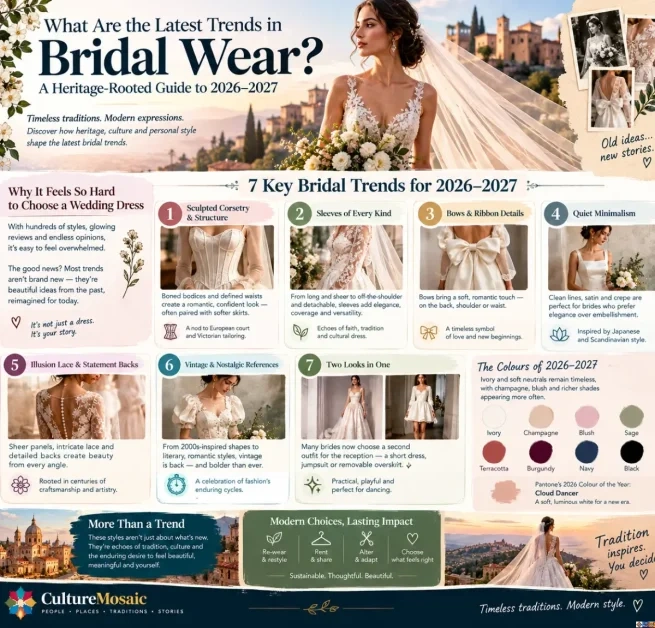
1. Sculpted corsetry and structure
Boned bodices and defined waists continue to feature, often paired with soft skirts so the dress feels dramatic without being heavy. Corsetry has a long history in European dress, but it now often appears with modern stretch panels and lacing that adjusts the fit.
2. Sleeves of every kind
Long sleeves, sheer sleeves, off-the-shoulder drapes and detachable sleeves give brides more ways to change the look between ceremony and party. Covered shoulders and arms also have deep roots in many faith and cultural traditions.
3. Bows and ribbon details
Bows at the back, shoulder or waist add a playful, romantic note. They sit comfortably alongside minimalist gowns and vintage-inspired designs.
4. Quiet minimalism
Clean satin, crepe and fluid silk shapes remain popular for brides who prefer elegance over embellishment. If you like how a plain dress lets the fabric speak, our guide to taffeta fabric shows how texture alone can carry a look.
5. Illusion lace, sheer panels and statement backs
Transparent layers and low or detailed backs give a dress interest from every angle, particularly in photographs and during processions.
6. Vintage and nostalgic references
Fashion keeps looping back on itself. You can see it in the resurgence of early-2000s shapes (read more on Y2K fashion), and in broader fashion 2026 conversations about romantic, literary styling, a mood we explore in Poetcore heritage fashion.
7. Two looks in one
Many brides now choose a second outfit for the reception: a short dress, a jumpsuit, a removable overskirt. It is practical for dancing and gives you a second set of photographs.
Which Dress Is Trending Now for a Wedding?
If you want a quick comparison, this table summarises the styles most often discussed.
What Are the Bridal Look Trends for 2026 and 2027?
For the coming seasons, the direction is less about one silhouette and more about personalisation. Expect to see:
- Customisation: Alterations, added sleeves, changed necklines and bespoke detailing.
- Texture: Pleating, draping, tulle layers and tactile fabrics that photograph well.
- Heirloom thinking: Reworking a family dress or incorporating a relative’s lace, brooch or fabric.
- Softer colour: Beyond white, warm neutrals and gentle tones. Our piece on the colour of the season 2026 explains how colour moods develop.
Trend forecasts are predictions, not guarantees. Designers present collections months before dresses reach shops, and what you see on a runway can look quite different in a boutique.
The Heritage Behind the Trends
This is where bridal fashion becomes a story.
Why are wedding dresses white?
In much of the English-speaking world, the white wedding dress is strongly associated with Queen Victoria, who wore a white gown for her wedding to Prince Albert in February 1840. Her choice was widely reported and copied, though white and light colours had been worn by brides before then, and white was not universal even afterwards. We trace that history in why wedding dresses are white.
White is not the only bridal colour
In many parts of the world, brides traditionally wear red, gold or other rich colours associated with luck, prosperity and celebration. This is well documented in Chinese, Indian and other South Asian wedding dress traditions. Japan’s shiromuku, a white kimono, carries its own symbolism of purity and new beginnings. Read more in our guides to traditional wedding dress symbolism and traditional wedding dress cultural meaning.
If you are drawn to colour, it is not a rebellion. It is, in many cultures, the original rule. A good place to start is the symbolism of red velvet fabric.
Embroidery, motifs and ancestral craft
Hand embroidery, woven patterns and symbolic motifs have been part of wedding clothing for centuries, often passed from mother to daughter or made by whole communities. Today, brides are bringing these elements into modern gowns through embroidered panels, sashes, veils and borders. Explore cultural wedding dress motifs, ancient ethnic heritage symbols and traditional clothing styles.
For those curious about the deeper craft side, see what is heritage fashion, regenerative textile traditions, somatic textiles and the geographic fingerprinting of heritage fibers.
Blending cultures in one wedding
Many couples now combine traditions, perhaps a white gown for the ceremony and a red or gold outfit for another celebration. That is a trend with centuries of precedent. See our guides to multicultural wedding attire, global bridal wear traditions and modern cultural wedding dresses.
A respectful note
When borrowing a motif or garment from a culture that is not your own, take a moment to learn what it means, who makes it and when it is worn. Buying from artisans or community-led makers, and asking questions, goes a long way.
Fabrics, Colours and Accessories to Watch
Fabrics: Satin, crepe, silk, organza, tulle, lace and textured tulle remain the core. Lightweight fabrics are popular for destination and summer weddings, while heavier satins and velvets suit colder months.
Colours: Ivory, soft white, champagne and blush remain the safest bets. Deeper tones and traditional reds or golds are gaining visibility, particularly where couples want to honour heritage.
Accessories:
- Statement veils (cathedral length or cropped), sometimes with embroidered edges
- Gloves and sleeves as separate pieces
- Bows, hair ribbons and pearl details
- Heirloom jewellery
- Comfortable second shoes for dancing
Wedding Dress Shopping in the UK: Practical Questions
Searches such as “wedding dresses,” “Selfridges wedding dresses” and “John Lewis bridal appointment” suggest that many UK brides want to try on dresses in person before committing. Policies, brands and appointment availability change, so check each retailer’s website directly before you plan your visit rather than relying on a general article. We do not endorse any particular retailer.
Helpful reads while you plan:
- What wedding dresses are in style
- How much are wedding dresses UK?
- Affordable wedding dresses Europe
- Where can I rent wedding dresses
- Plus size wedding dresses
- Best sexy wedding dresses
How to Choose a Trend Without Losing Yourself
- Start with your story. Which traditions, places or people matter to you?
- Pick one or two trends, not six. A bow plus a sleeve is a look. Seven trends together is a costume.
- Think about the photographs in ten years. Classic lines with one modern detail age well.
- Plan for comfort. You will sit, hug, dance and eat in it.
- Consider the afterlife of the dress. Can it be altered, rented, resold or reworn?
The weddings people remember are rarely the ones that followed a trend perfectly. They are the ones where the dress clearly belonged to the person wearing it.
Frequently Asked Questions: The Latest Trends in Bridal Wear
1. What are the 2026 wedding dress trends?
The most commonly discussed themes include sculpted corsetry, sleeves of all kinds, bows and ribbon details, minimalist satin, illusion lace, statement backs and vintage-inspired shapes. There is also strong interest in customisation, second outfits and re-wearable or rented dresses. Because trends differ between designers and retailers, it helps to look at several sources before deciding.
2. Is white still the most popular colour for a wedding dress?
Yes, white, ivory and soft neutrals remain the most common choices in the UK and much of the West. However, many brides choose champagne, blush or richer colours, and in many cultures red, gold and other bright colours are traditional. Both choices have long histories.
3. Can I wear a traditional or cultural outfit as a modern bride?
Absolutely, and many people do, either as their main outfit or as a second look. Some choose a modern gown with traditional embroidery, jewellery or accessories. If the tradition is not your own, learn about its meaning first and work with makers from that culture where possible.
4. How far ahead should I look for a wedding dress?
Many bridal retailers recommend allowing several months for ordering, delivery and alterations, but timelines vary by designer and shop. Check with your chosen boutique directly. Off-the-peg, rental and pre-loved options can usually be arranged faster.
5. Are sustainable or rented wedding dresses a real trend?
Yes. Renting, buying pre-loved, altering a family dress and re-wearing a gown after the wedding are all increasingly visible choices, driven by cost and environmental concerns. See our guide to where can I rent wedding dresses for ideas.
Your Next Step
Bridal trends change every season, but the traditions behind them have lasted for centuries. Before you book that appointment or save another inspiration photo, spend a little time with the stories behind the styles. Start with traditional wedding dress symbolism, then explore global bridal wear traditions. The dress you choose will carry more meaning when you know what it is carrying.
Sources and Further Reading
Please verify each link and publication detail before publishing, as pages can move or change.
- Royal Collection Trust, collection records on Queen Victoria’s wedding dress and veil (1840): https://www.rct.uk
- Victoria and Albert Museum, wedding dress and bridal fashion collections and research: https://www.vam.ac.uk
- Pantone, Colour of the Year 2026 (Cloud Dancer, PANTONE 11-4201): https://www.pantone.com/color-of-the-year
- Metropolitan Museum of Art, Costume Institute and Asian Art collections on wedding and ceremonial dress: https://www.metmuseum.org
- Victoria and Albert Museum, textiles and fashion research on South Asian, East Asian and Middle Eastern bridal dress: https://www.vam.ac.uk
- Costume Society (UK) resources on dress history: https://costumesociety.org.uk
- Primary reference: contemporary press coverage of Queen Victoria’s wedding of 10 February 1840, held in national and British Library newspaper archives: https://www.bl.uk
- Current retailer policies and appointment details: check each retailer’s official website directly.