
 By Culture Expert
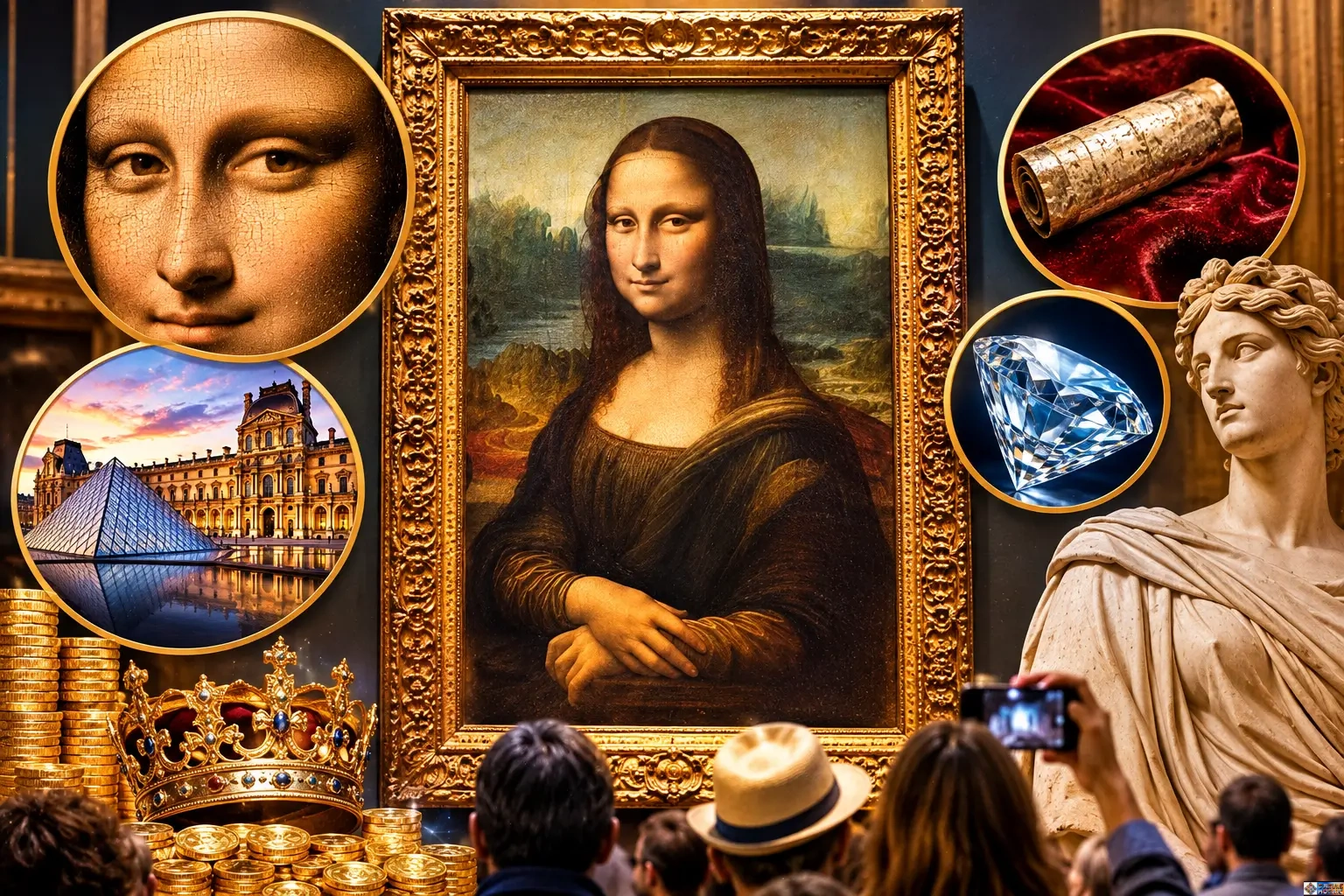
How Much Is the Mona Lisa Worth? The Mona Lisa was valued at $100 million in 1962, the highest insurance valuation ever recorded for a painting at the time. Adjusted for inflation, that is over $1 billion today. Legally, though, it is priceless: French heritage law forbids the Louvre from selling it.
Quick Summary
The Problem With a Simple Answer
You came for a number, and the honest answer is “it depends what you mean by worth.” That can feel like a letdown. It is also the most interesting part, because the painting is valued in four different ways, and each one tells a different story.
1. The Insured Value: $100 Million in 1962
When the painting crossed the Atlantic for its 1963 showings at the National Gallery of Art in Washington and the Metropolitan Museum in New York, it carried a $100 million valuation. Guinness World Records recognises it as the highest insurance valuation ever given to a painting.
One nuance an art economist would flag: the figure worked more as an official statement of importance than as a policy anyone expected to pay out. Accounts of the trip say the premium would have been prohibitive, so the valuation guided security arrangements rather than a conventional insurance purchase.
What it means now. Prices in the United States have risen roughly tenfold since 1962, which puts $100 million at about $1.0 to $1.1 billion. That answers “how much is the Mona Lisa worth today” and “how much would the Mona Lisa be worth now.” For “how much is the Mona Lisa worth in pounds,” divide by the current exchange rate; at recent rates it is about £750–800 million. The same logic covers anyone searching for its value in 2022 or any year since: no new appraisal has been published, so only inflation moves the number.
2. The Market Value: A Price That Can Never Be Tested
Who owns the Mona Lisa? The French state. Under the French Heritage Code, collections of public museums cannot be sold or lost through prescription (Code du patrimoine, art. L451-5). The painting entered the royal collection in the sixteenth century, and the Republic inherited it. No director, minister or president could legally sell it.
Because a sale is impossible, any market value is an exercise in comparison, not a measurement. Here are the benchmarks:
| Work | Price | What it tells us |
|---|---|---|
| Mona Lisa (1962 valuation) | $100 million (over $1 billion today) | Official transit valuation |
| Leonardo, Salvator Mundi (2017) | $450.3 million including fees | Highest confirmed auction price for any painting (Christie’s) |
| Warhol, Shot Sage Blue Marilyn (2022) | About $195 million | Record for a 20th-century work at auction |
Salvator Mundi answers “What is the #1 most expensive painting in the world?” at auction. Some private sales have reportedly gone higher, but they are less well documented.
Looking closer at the comparison: Salvator Mundi is a heavily restored work with a disputed attribution history, while the Mona Lisa is a fully documented, universally recognised Leonardo. Most specialists would expect it to far exceed any price ever paid. But no honest methodology produces a single figure, because there is no comparable sale. Treat any precise “market value” you see online as marketing.
3. The Cultural Value: Why Is the Mona Lisa So Valuable?
Who painted the Mona Lisa?
Leonardo da Vinci’s portrait was begun around 1503 in Florence. The sitter is traditionally identified as Lisa Gherardini, wife of the cloth merchant Francesco del Giocondo, which is why Italians call it La Gioconda. Leonardo kept it for years and took it to France, where he died in 1519.
Did the Mona Lisa die?
People occasionally search for “how the Mona Lisa died,” confusing the painting with its creator or its subject. The painting is very much alive. Leonardo died on 2 May 1519 at Amboise, and Lisa Gherardini is generally believed to have died in Florence around 1542, though the details are less certain.
Why is the Mona Lisa so famous, and so expensive?
Three forces stack on top of each other:
- Technique. Leonardo’s sfumato uses thin, soft glazes that melt the edges between face and shadow, which is why the smile seems to shift as you look.
- Drama. On 21 August 1911, Vincenzo Peruggia, a former Louvre worker, walked out with the painting. Newspapers worldwide covered the empty wall. It was recovered in Florence in 1913, and the theft is widely credited with turning a respected masterpiece into a global celebrity.
- Repetition. Parodies, protests and endless selfies feed its fame. It was targeted in a 2022 cake attack and a 2024 soup incident, and its protective glass held both times.
For more on how fame is built, see Who Is the Most Famous Artist? on Culture Mosaic.
4. The Economic Impact on the Louvre and French Tourism
The Louvre welcomed about 8.7 million visitors in 2024, and by most accounts the Mona Lisa is the main reason many of them come. No credible public figure isolates the revenue the painting generates on its own, so any such number is an estimate. What is documented is how France is reorganising the museum around it.
In January 2025, President Macron announced the “Louvre New Renaissance” project, which includes a new entrance and a new home for the painting. NPR reported that the Mona Lisa will move to its own independently accessible, separately ticketed space. Time Out reports the room is planned for 2031 under the Cour Carrée. Cost estimates vary with scope: Time Out cites about £675 million overall, while the Smithsonian says the overhaul may reach $1 billion.
Part of the funding comes from higher admission prices for visitors from outside the European Economic Area: since 14 January 2026, an individual adult ticket costs €32, up from €22. In plain terms, the painting is being treated as an asset that needs its own infrastructure.
Why “Priceless” Is a Real Economic Category
Economists use the term existence value: people value a thing’s survival even if they never see it. Insurance and auction methods measure what a buyer would pay. They cannot capture what a nation, a city and millions of strangers would lose. That is why priceless is a technical description here, not a poetic one.
If this made you curious about how we respond to art, explore Neuro-Aesthetic Wall Art, The Psychology of Color in Design and Art Therapy Power of Artistic Expressions on Culture Mosaic.
If You Want to See It
The current gallery is crowded, and the move to a separate ticketed room is planned for around 2031. If seeing it in person matters to you, plan an early visit and check the Louvre’s official site for current rules and prices before you book.
Frequently Asked Questions
1. How much is the Mona Lisa worth today?
There is no official current price. The best-sourced anchor is the 1962 valuation of $100 million, which equals roughly $1 billion or more in today’s money. Any higher figure is informed speculation, because the painting cannot legally be sold.
2. Who currently owns the Mona Lisa?
The French state. The Louvre displays and protects it, but French heritage law bars public museums from selling their collections.
3. Why is the Mona Lisa so famous?
Leonardo’s sfumato technique, the mystery around the sitter, centuries in French royal and national collections, and above all the 1911 theft, which put it on front pages around the world.
4. Is the Mona Lisa the most expensive painting in the world?
Not by sale price. Salvator Mundi holds the confirmed auction record at $450.3 million. The Mona Lisa has never been offered for sale, so its theoretical value is unmeasured, though most experts assume it would exceed that figure.
5. Will the Mona Lisa ever be sold or leave France?
A sale is legally off the table. It has travelled abroad only rarely, in the 1960s and 1970s, and the Louvre has said it is too fragile for further journeys. The only move currently planned is within the Louvre itself.
Sources
- Louvre Museum, collection and visitor information: louvre.fr
- Légifrance, Code du patrimoine, art. L451-5: legifrance.gouv.fr
- Guinness World Records, highest insurance valuation for a painting: guinnessworldrecords.com
- Christie’s, Salvator Mundi sale, November 2017: christies.com
- NPR, “The Louvre will be renovated and the ‘Mona Lisa’ will have her own room,” January 2025: npr.org
- Time Out, “The world’s most-visited museum is getting a major overhaul,” February 2025: timeout.com
- Smithsonian Magazine, on the architects chosen for the Louvre overhaul: smithsonianmag.com
- Artforum, “Mona Lisa to get her own room”: artforum.com
- Euronews, “Louvre to hike ticket prices for non-EU visitors by 45% next year,” November 2025: euronews.com