
 By Culture Expert
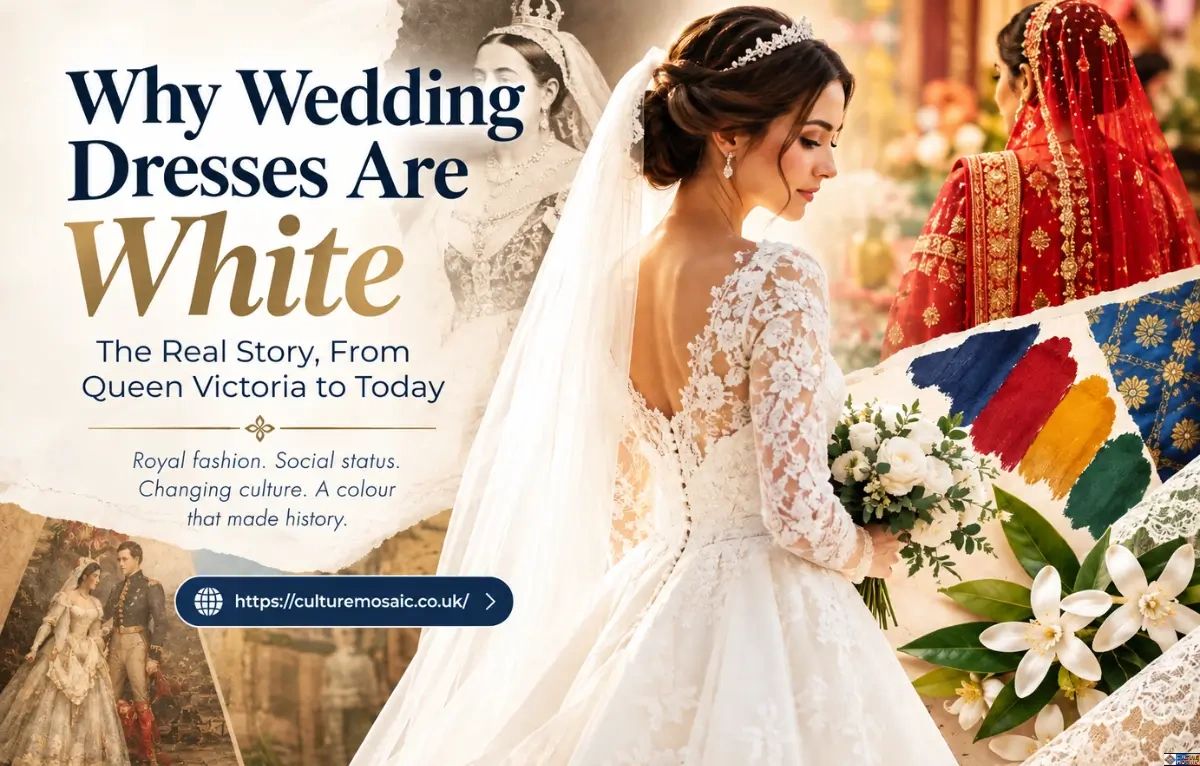
Why Wedding Dresses Are White: Uncovering the Real History Behind the Tradition
Quick Summary
- Short answer: Most Western brides wear white because of a mix of royal fashion, wealth and later moral symbolism. It is not an ancient rule.
- Who made it famous: Queen Victoria, who wore white satin and Honiton lace when she married Prince Albert on 10 February 1840. She was not the first bride in white, but she made it aspirational.
- What came before: Brides wore their best dress in almost any colour, and blue was linked to purity long before white was.
- Does white mean virginity? That meaning became attached in the 19th century. It was not the original reason, and no rule says only virgins may wear white.
- Is it universal? No. Red is traditional across much of China and India, and many other cultures use gold, indigo, green or vivid pattern.
The problem: a tradition everyone follows and few can explain
Ask a room of people why brides wear white and you will hear confident answers: “purity,” “virginity,” “it’s in the Bible.” Then comes the awkward follow-up: Do I have to wear it? Can I if I’m not a virgin? Why does everyone say guests shouldn’t?
If you have ever felt uneasy about those questions while dress shopping, you are in good company. A garment meant to feel joyful can arrive loaded with rules nobody can source. The history is more interesting than the myth, and much kinder to brides.
What colour were wedding dresses before white?
For most of European history, a bride simply wore her best outfit. Practical reasons governed the choice:
- Most people owned very few good garments, so the wedding dress was worn again afterwards.
- Dyes were expensive, so rich colour showed status.
- Fabric mattered more than colour: velvet, silk and embroidery signalled wealth.
Blue had a religious association. It was linked to the Virgin Mary and to fidelity, which is the likely origin of “something blue.” Red, green, yellow and black were all worn. Brides in many places wore a good dark dress to the ceremony and kept wearing it for years.
Before Victoria: the white brides history remembers
White did appear earlier, mostly among royalty:
So if you are wondering who was the first bride to wear white, the honest answer is that nobody can name one person. White was a rare royal choice for centuries. Victoria’s wedding turned it into a model.
The 1840 wedding that changed everything
The detail that matters most is that Victoria’s dress was a statement about wealth and national pride, not about purity.
She wore white satin made from silk woven in Spitalfields, London, along with a deep flounce of Honiton lace made by lacemakers in Devon. At the time the English lace industry was struggling against cheaper machine-made imports. Victoria’s choice was a public endorsement of British craft. The lace design was reportedly destroyed afterwards so it could not be copied, which tells you how exclusive it was meant to feel.
She also wore orange blossoms, a flower long associated with fertility and good fortune. Printed images of the wedding circulated widely, and the ensemble became the template.
Why did it spread? White is expensive to keep white. Before modern laundry, a pale gown worn once was a quiet boast that you could afford not to reuse it. Victoria made that boast fashionable.
How “white” picked up its purity meaning
The idea that white stands for purity grew through the Victorian era, helped by:
- Magazines and etiquette writers. American editor Sarah Josepha Hale of Godey’s Lady’s Book promoted white as the proper bridal colour in the mid-1800s.
- Christian imagery. White has long stood for baptism and spiritual cleanliness. Revelation 19:7–8 describes the bride of the Lamb in bright, clean linen. This is a symbol and not a wedding-dress rule for ordinary brides.
- Class aspiration. As the middle classes grew, copying royal custom signalled respectability.
Historians still debate how much purity drove the trend versus following it. The most defensible reading is that white began as luxury and was later moralised.
What does a white dress symbolise today?
Meanings now vary by couple and culture:
- New beginnings, the idea of a clean slate
- Celebration and formality, the “big day” look
- Heritage and family continuity, especially with passed-down gowns
- Personal style, in ivory, champagne, blush or tailored white
Our guide to traditional wedding dress symbolism goes deeper on motifs such as veils, flowers and fabrics, and our piece on traditional wedding dress cultural meaning covers regional variations.
Does a bride have to be a virgin to wear white?
No. There is no religious law, legal rule or universal etiquette requiring it. The purity link is a 19th-century cultural layer, and many brides, including second-time brides and brides who have children, wear white.
If you feel pressure, it helps to know the original statement was about status, not sexual history. Wear what makes you feel like yourself.
Why is it “disrespectful” to wear white to a wedding?
This is etiquette rather than law. The convention exists so that the bride stands out in photographs and on the day. A few practical notes:
- Guests are generally asked to avoid white, ivory and cream, and increasingly to avoid anything that could read as bridal.
- Brides can waive it. Some couples explicitly invite guests to wear any colour, or ask everyone to wear white.
- “Only the bride is allowed to wear white” is a social norm that varies. Flower girls, brides’ mothers and wedding parties sometimes wear white by choice.
If in doubt, check the invitation or ask the couple.
Global colours: white is not universal
White is a Western pattern that spread through colonial influence, media and trade. Many traditions use different colours.
Explore more on global bridal wear traditions, multicultural wedding attire and cultural wedding dress motifs. If you are considering a blend of traditions, see Modern Cultural Wedding Dresses.
Non-white wedding dresses today
Colour is back in fashion. Common choices include blush, sage, deep red, black, gold-threaded fabrics and printed gowns. Many brides choose colour to honour family heritage, while others do it for the photographs. For current directions, read What Wedding Dresses Are in Style and Latest Trends in Bridal Wear, or see the broader mood in Fashion 2026 and Colour of the Season 2026.
Why are wedding dresses so expensive?
The price comes from a mix of factors:
- Fabric and finishing, such as silk, lace, beadwork and layered tulle
- Labour, since many gowns involve handwork and multiple fittings
- Tailoring and alterations, which are often extra
- Marketing and the “wedding premium”, because items labelled “bridal” tend to cost more than similar eveningwear
- Low volume, as most dresses are worn once
Budget routes exist. See How Much Are Wedding Dresses UK?, Affordable Wedding Dresses Europe and Where Can I Rent Wedding Dresses. For fit-focused options, try Plus Size Wedding Dresses and Best Sexy Wedding Dresses.
How the white dress went mass-market
Through the late 19th and 20th centuries, ready-made clothing, department stores, magazines and, later, Hollywood and wedding photography made the white gown the default for ordinary brides. Historians of the wedding industry also point to rising post-war prosperity and to marketing that framed the white wedding as an expected milestone. The result is that a royal fashion became a mass tradition within about a century.
It also helps to see this inside the bigger picture of culture and fashion, where clothing reflects economics as much as belief. If heritage dressing fascinates you, read What is Heritage Fashion, Traditional Clothing Styles and Ancient Ethnic Heritage Symbols. On the craft side, see Regenerative Textile Traditions, Somatic Textiles and Geographic Fingerprinting of Heritage Fibers. You can find more on Culture mosaic.
Myth vs fact
The solution: choose with confidence
You now have what you need to decide for yourself:
- If you love white, wear it without guilt. It has a rich, if surprising, history.
- If you prefer colour, you are following the older and more global tradition.
- If you are honouring a culture, choose fabrics and motifs that carry your family’s story.
FAQs About Why Are Wedding Dresses White?
1. Why do brides wear white?
Mainly because of fashion and status in the 19th century, popularised by Queen Victoria in 1840. White satin and lace signalled wealth, and over time Christian imagery and Victorian ideas of virtue added symbolic meaning.
2. Is a wedding dress supposed to be white?
Not necessarily. In Western tradition white is customary, but there is no rule. Many cultures prefer red, gold or other colours, and modern brides choose ivory, blush, black or colourful gowns freely.
3. What does a white dress symbolise in Christianity?
White commonly stands for purity, baptism and spiritual renewal, and Revelation 19:7–8 uses bright, clean linen as a picture of the church as a bride. Scripture does not command ordinary brides to wear white.
4. Can a non-virgin wear a white wedding dress?
Yes. White is a colour tradition, not a statement about anyone’s sexual history. Second-time brides, brides with children and brides of every background wear white.
5. Why is only the bride allowed to wear white?
It is a modern etiquette custom meant to keep the bride visually distinct at her own wedding. It is not a law, and some couples relax it or ask everyone to wear white.
Sources and further reading
- Royal Collection Trust (rct.uk), collection records and essays on Queen Victoria’s 1840 wedding dress and lace
- Victoria & Albert Museum (vam.ac.uk), collections and research on wedding dress history
- Ehrman, Edwina. The Wedding Dress: 300 Years of Bridal Fashions. V&A Publishing, 2011
- Wallace, Carol McD. All Dressed in White: The Irresistible Rise of the American Wedding. Penguin, 2004
- Howard, Vicki. Brides, Inc.: American Weddings and the Business of Tradition. University of Pennsylvania Press, 2006
- Otnes, Cele C. and Pleck, Elizabeth H. Cinderella Dreams: The Allure of the Lavish Wedding. University of California Press, 2003
- Cunnington, C. Willett. English Women’s Clothing in the Nineteenth Century. Faber, 1937
- Godey’s Lady’s Book (1849 and following), mid-19th-century guidance on bridal dress, available through digitised archives
- The Bible, Revelation 19:7–8
- Historic Royal Palaces (hrp.org.uk), background on royal dress and ceremony