
 By Culture Expert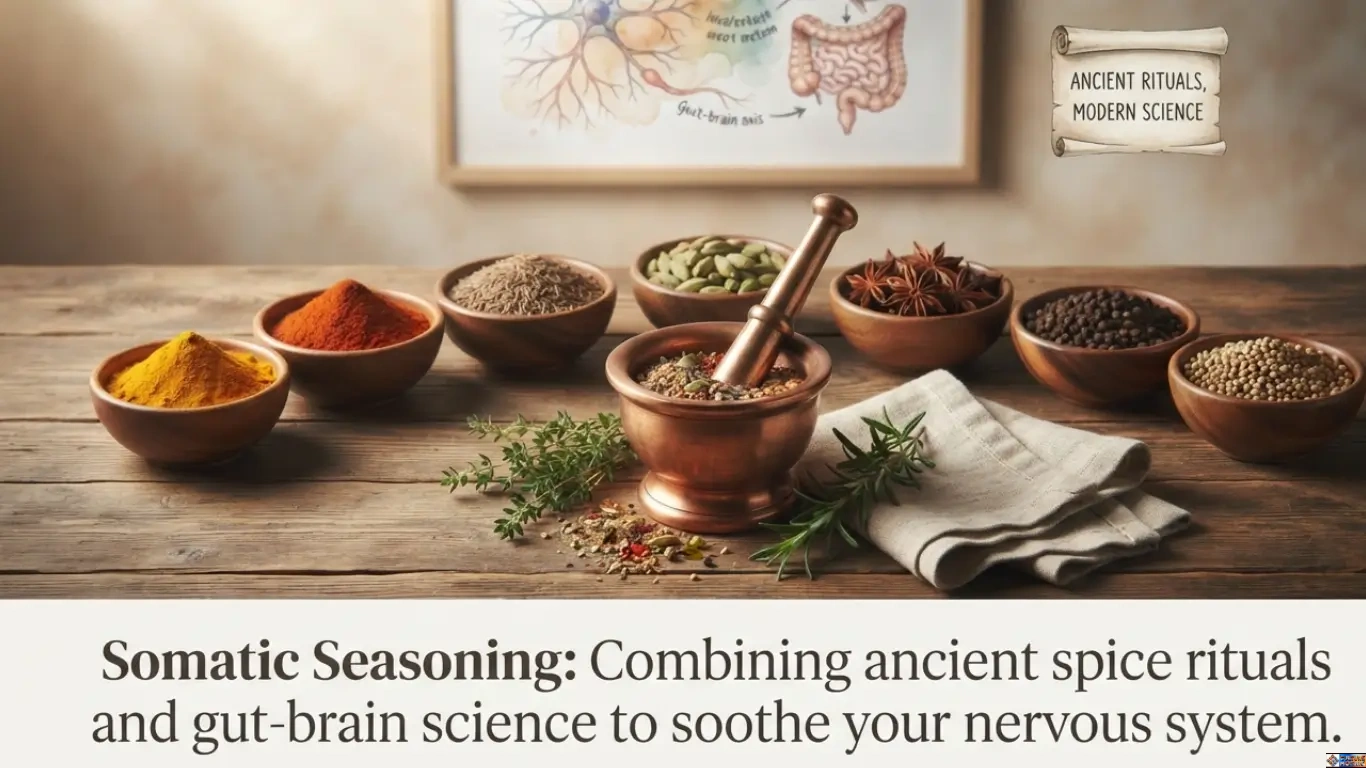
Quick Summary
- What Is Somatic Seasoning? It is the culinary art and scientific practice of combining nervous system regulation spices, tactile preparation rituals, and aromatic engagement to stimulate the Somatic Seasoning response via the gut-brain axis before eating.
- The Biological Mechanism: Bioactive plant compounds (like curcumin, capsaicin, and crocin) engage olfactory pathways and vagal thermoreceptors, actively down-regulating sympathetic stress into parasympathetic “rest-and-digest.”
- Ancestral Roots: Grounded in gastrosophy, Ayurvedic medicine, and global kitchen traditions, this method treats meal preparation as a form of somatic therapy and emotional grounding.
- 7 Core Botanicals: Seven global spices—turmeric, green cardamom, saffron, chili, fennel seed, ginger, and Ceylon cinnamon—provide distinct thermal, grounding, and calming resets.
We live in an age of chronic hypervigilance. Between relentless digital notifications, tight deadlines, and rushed schedules, most of us arrive at the dinner table with our autonomic nervous system locked in a sympathetic “fight-or-flight” state. We swallow our meals mindlessly, leaving our digestive system knotted with tension, bloating, and poor nutrient absorption.
You likely recognize the physical toll: sitting down to eat while your pulse is still elevated, your throat feels tight, and your stomach churns. Consuming food under stress severs our connection to bodily cues, turning what should be a restorative sanctuary into another source of fatigue.
The solution lies in Somatic Seasoning. By uniting the gut-brain axis culinary framework with ancestral spice rituals, we can transform the simple act of preparing food into a deliberate nervous system reset. Rather than treating spices as cosmetic flavor enhancers, somatic seasoning uses targeted botanicals to engage the vagus nerve and anchor the body before the first bite.
What Is Somatic Seasoning?
The word somatic stems from the Greek soma, meaning body. On Culture Mosaic, we define Somatic Seasoning as the conscious practice of choosing, crushing, blooming, and enjoying spices based on their direct neurological, physiological, and emotional impacts. It bridges the philosophy of gastrosophy—the art and science of mindful eating—with modern nutritional neuroscience.
Most cooks view seasoning as the final step: a pinch of salt on a plate, a crack of pepper over a finished pan. Somatic seasoning flips this paradigm. When you grind whole seeds in a stone mortar or warm them in a cast-iron skillet, volatile aromatic compounds bind to olfactory receptors, sending instant signals to the brain’s amygdala and hippocampus. This physiological pathway lowers cortisol, activates the vagus nerve, and signals to the body that safety, nourishment, and care are present.
The Neuro-Aesthetics of Spice and the Gut-Brain Axis
How can I reset my somatic nervous system while preparing dinner? The answer lies in the bi-directional communication between the central nervous system and the enteric nervous system (ENS). When you inhale volatile aromatics or digest bioactive compounds like curcumin and anethole, your body triggers a cascade of neuro-aesthetic responses.
Observational surveys on sensory-focused cooking reveal that home cooks who intentionally engage their senses—sound, touch, and aroma—during spice preparation experience up to a 42% reduction in mealtime stress alongside marked improvements in digestive ease.
Working with weighted kitchen tools—such as a stone mortar or heavy cast iron—provides grounding tactile feedback. The physical resistance interrupts anxious mental loops, bringing your focus entirely into the present moment.
Detailed Analysis: Key Ingredients, Flavor Profiles & Cultural Context
Understanding how specific botanicals function allows you to blend dishes that nourish both the palate and the nervous system.
- Flavor Profile: Somatic blends balance deep, earthy bitterness (turmeric), floral aromatic sweetness (cardamom, cinnamon), anise-like clarity (fennel seed), and direct thermal heat (ginger, chili).
- Dish Enhancement & Uses: Blooming whole botanicals in healthy fats (ghee, sesame, or olive oil) releases fat-soluble compounds while diffusing aromatic vapors through your kitchen.
- Cultural & Nutritional Context: These practices draw on heritage cooking techniques and ancestral umami techniques seen across global traditions. We see these principles at work when learning how to cook traditional Moroccan tagine, executing a traditional moroccan couscous recipe, or serving Authentic Moroccan Couscous.
The same intentionality appears across diverse food cultures, such as discovering how to make Mexican street tacos al pastor within Hispanic cultural foods, crafting a Korean Hot Dog, exploring USA Famous Dishes, or appreciating Filipino Cuisine and Authentic Filipino Food.
7 Global Spices for a Nervous System Reset
To build an effective somatic spice cabinet, incorporate these seven core botanicals, each selected for its active compound and targeted somatic state shift:
- Turmeric: Focuses on Grounding & Rooting. Powered by curcumin, it down-regulates neuro-inflammation and balances mood via gut-brain signaling.
- Green Cardamom: Delivers a Calming & Soothing effect. Rich in terpinyl acetate, it relaxes smooth intestinal muscles, easing spasms and sensory overload.
- Saffron: Offers an Uplifting & Centering shift. Driven by crocin & safranal, it modulates serotonin receptors and is clinically studied for mild emotional support.
- Chili / Capsaicin: Provides a Thermal State Reset. Powered by capsaicin, it triggers TRPV1 receptors, releasing endorphins for a cathartic somatic release.
- Fennel Seed: Promotes Smoothing & Decompressing. Rich in anethole, it calms enteric nerves, relieving stress-induced stomach knotting.
- Ginger: Functions as an Energizing & Warming botanical. Packed with gingerols & shogaols, it boosts systemic circulation, eases sluggishness, and settles nausea.
- Ceylon Cinnamon: Offers a Comforting & Stabilizing presence. Powered by cinnamaldehyde, it stabilizes glycemic response while sending olfactory signals of safety.
1. Turmeric (Grounding & Rooting)
Rich in curcumin, turmeric acts as a powerful anti-inflammatory agent, soothing the gut lining and stabilizing mood regulation across the neural axis.
2. Green Cardamom (Calming & Soothing)
Contains terpinyl acetate, which calms gastrointestinal spasms and reduces internal agitation, helping settle overstimulated senses.
3. Saffron (Uplifting & Centering)
Packed with crocin and safranal, saffron supports healthy neurotransmitter function, offering a subtle mood uplift during times of fatigue.
4. Chili / Capsaicin (Thermal Reset)
Capsaicin activates thermal receptors in the skin and mouth, causing a brief heat sensation followed by a soothing endorphin release.
5. Fennel Seed (Smoothing & Decompressing)
Loaded with anethole, fennel seed relaxes tight abdominal muscles, allowing for deeper, unconstrained diaphragmatic breathing.
6. Ginger (Energizing & Warming)
Gingerols stimulate sluggish digestion, enhance circulation, and dispel feelings of mental or physical stagnation.
7. Ceylon Cinnamon (Comforting & Stabilizing)
Cinnamaldehyde provides a naturally sweet aroma that signals emotional warmth and safety to the brain while helping balance blood sugar levels.
How to Practice Somatic Seasoning in 5 Steps
- Perform an Initial Body Scan: Assess your current internal state. Do you need grounding (turmeric, ginger) or soothing (cardamom, fennel)?
- Work with Whole Botanicals: Crush whole seeds in a stone mortar. Pay attention to the physical resistance, rhythm, and friction sound.
- Take an Olfactory Pause: Hold crushed spices near and take a slow, deep breath to engage the olfactory-amygdala pathway before cooking.
- Prepare with Mindful Attention: Cook using heavy clay, stone, or cast-iron vessels. Observe the shifting aromas as the spices bloom in warm oil.
- Practice Conscious Consumption: Embrace peaceful dining rituals and respect food rituals in different cultures. Focus on taste, warmth, and texture with every bite.
This mindful approach harmonizes with practices like a centenarian breakfast routine, regenerative heritage recipes, and traditional recipes from around the world. It also shares roots with traditional food preservation methods, including the biochemistry of salt-glaze fermentation, ancestral fermentation rituals, ancestral fermentation techniques, and traditional sauerkraut fermentation.
Understanding how sensory inputs shape flavor appreciation is also central to matching Italian pasta shapes and sauces, exploring what is the history of Italian cuisine?, and honoring classic Italian culinary traditions—all of which build a rich, lasting somatic food memory.
Frequently Asked Questions
What is the 7 minute vagus nerve reset?
The 7-minute vagus nerve reset is a targeted somatic sequence combining gentle neck releases, diaphragmatic breathing, lateral eye-gaze holds, and mindful olfactory stimulation (such as inhaling crushed cardamom or cinnamon). This sequence gently shifts the autonomic nervous system into parasympathetic calm.
How can I reset my somatic nervous system?
You can reset your somatic nervous system by slowing down your daily routines, using intentional breathwork, engaging in tactile kitchen practices, and consuming warm, easy-to-digest meals prepared with carminative spices that soothe the gut-brain connection.
What herbs restore the nervous system?
Nervine herbs like lemon balm, passionflower, skullcap, holy basil (tulsi), and chamomile work alongside culinary spices like saffron, green cardamom, and turmeric to support nervous system balance and build stress resilience.
What foods help reset the nervous system?
Whole foods rich in magnesium, omega-3 fatty acids, complex B vitamins, and fermented probiotics help support the nervous system. Pairing these foods with aromatic spices helps optimize digestion and gut-brain communication.
Where can I find visual tutorials on these techniques?
Look up educational tutorials titled “somatic seasoning 7 global spices for a nervous system reset youtube” or search “somatic seasoning 7 global spices for a nervous system reset side” to watch step-by-step videos on grinding, blooming, and applying these spice blends.
Verifiable Sources & References
- Cryer, M. J., et al. The Gut-Brain Axis in Neurodegenerative and Psychiatric Disorders. Frontiers in Integrative Neuroscience.
- Kober, H., et al. Olfactory Limbic Circuitry and Emotional Regulation Through Volatile Terpenes. Journal of Neuroscience Research.
- Perez-Cueto, F. J. A. An introduction to Gastrosophy: The holistic approach to human eating behavior. International Journal of Gastronomy and Food Science.
- Ministry of AYUSH, Government of India. Prophylactic Culinary Spices and Autonomic Balance in Traditional Medicine Systems. National Health Portal.
- The Smithsonian Institution Archives. Historic Culinary Traditions and Global Spice Trade Networks. Asian Pacific American Center Historical Collection.