
 By Culture Expert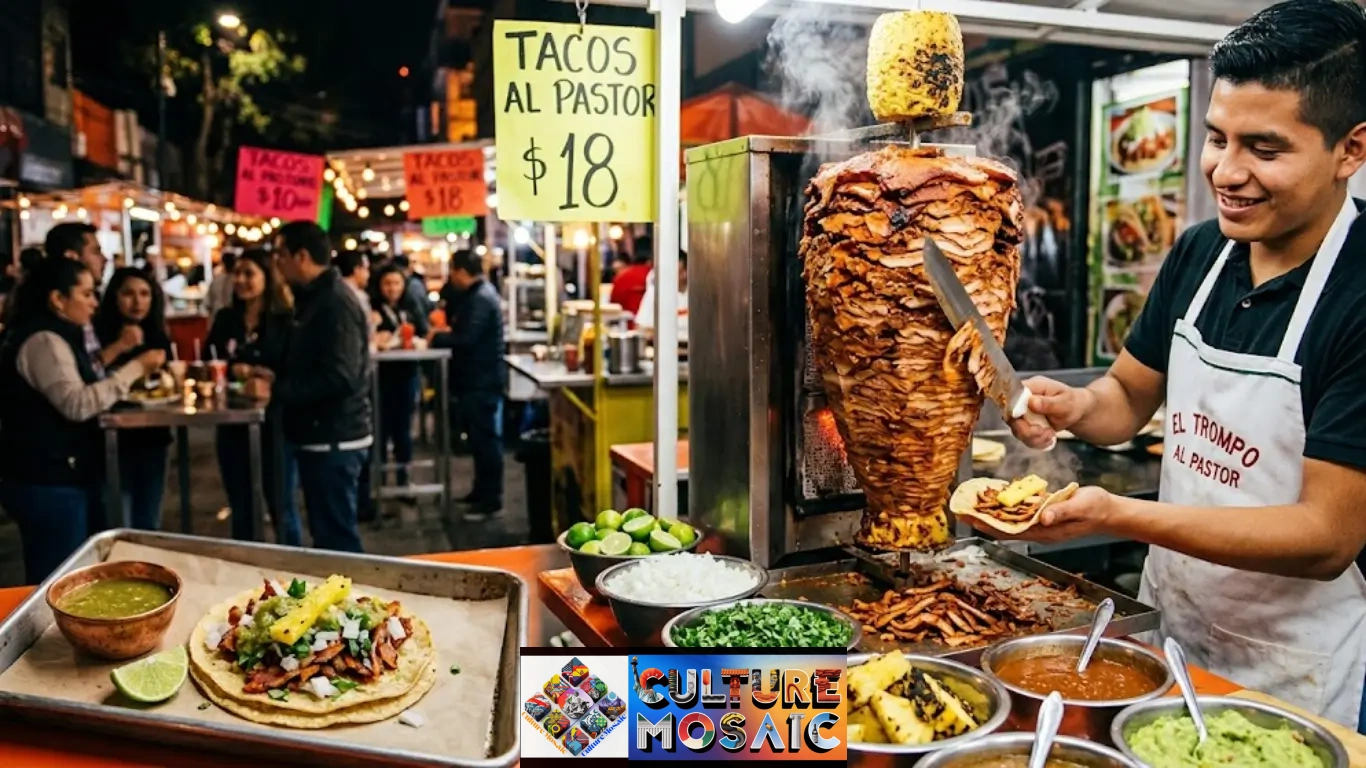
How to make Mexican street tacos al pastor
Quick Summary
| What is al pastor? Thin-shaved, achiote-and-chile-marinated pork, traditionally spit-roasted on a vertical trompo and finished with a caramelised sliver of pineapple. Fastest path to authentic flavour: a blended marinade of guajillo and ancho chiles, achiote paste, pineapple juice, orange, vinegar, garlic and warm spices, rested on the meat for at least 4 hours (overnight is better). No trompo? No problem. You can build genuinely authentic tacos al pastor at home using a hot cast-iron skillet, a grill, or an oven set to 220°C/425°F. Food safety: cook pork to a minimum internal temperature of 145°F (63°C) with a 3-minute rest, per USDA guidance. Serve it right: warm corn tortillas, diced white onion, chopped coriander, a wedge of lime, charred pineapple, and a green salsa. |
There’s a version of tacos al pastor happening on a street corner in Mexico City right now, at this exact minute, and I want you to be able to picture it before we start cooking. A taquero stands beside a spinning trompo stacked nearly a metre tall with marinated pork, a knife in each hand.
He shaves off a paper-thin ribbon of meat, lets it fall onto a tiny corn tortilla already cupped in his other palm, then flicks the blade upward to slice a piece of pineapple off the top of the spit so it lands on the meat like it was always meant to be there. The whole thing takes about four seconds. You eat it standing up, over a paper plate, with grease running down your wrist, and you understand immediately why this is Mexico’s most famous taco.
I learned how to make Mexican street tacos al pastor the hard way — years of marinades that tasted flat, pork that dried out under a broiler, and pineapple that never quite caramelised the way it does off a spit. If you’ve tried a version at home and it came out muddy, or bitter, or just missing that smoky-sweet snap you remember from a taco stand, you are not doing anything wrong. You’re just missing a handful of details that nobody bothers to write down. That’s what this guide is for.
What Is an Al Pastor Street Taco?
An al pastor street taco is a small corn tortilla piled with thin shavings of pork that has been marinated in a red chile-and-achiote paste, then roasted on a vertical spit until the outer layer caramelises and crisps. The name itself, al pastor, translates to “shepherd style,” a nod to the dish’s Middle Eastern ancestor. The trompo technique was inspired by the method used to prepare shawarma, spit-roasted lamb served on pita bread, a dish that had spread widely across the Ottoman Empire.[1]
Lebanese immigrants who arrived in Puebla, Mexico, in the 1930s brought that vertical-spit cooking method with them, having left the former Ottoman Empire for reasons ranging from evading military conscription to seeking better economic opportunity.[3] They initially served the dish much as they had at home, as tacos árabes — lamb wrapped in pita or flour tortilla.[1]
By the 1960s, the children of those original immigrants swapped lamb for pork, added the chiles and spices of central Mexican cooking, and moved the dish into corn tortillas, giving rise to tacos al pastor as we know it today.[2] Where the pineapple came from remains genuinely unresolved — food historians still call it a bit of a mystery.[1]
I find that origin story worth telling because it explains so much of what makes the dish taste the way it does. The vertical-spit cooking is Lebanese. The achiote, dried chiles, and citrus are Mexican. The pineapple is a Mexican addition with no confirmed origin story at all. Al pastor isn’t an “ancient” recipe pretending at authenticity — it’s a genuinely modern fusion dish, and it wears that history proudly.
What Are the Ingredients for Tacos al Pastor?
Before we get to method, here’s exactly what pastor tacos are made of. Every genuinely authentic recipe I’ve tested (and I’ve tested a lot of them) circles back to the same core list:
For the marinade
- 4–5 dried guajillo chiles, stemmed and seeded
- 2 dried ancho chiles, stemmed and seeded
- 1–2 tablespoons achiote (annatto) paste
- 1 cup fresh pineapple, chopped (plus extra for grilling and garnish)
- ½ cup fresh orange juice
- ¼ cup white or apple cider vinegar
- 4 garlic cloves
- ½ medium white onion
- 1 teaspoon dried Mexican oregano
- 1 teaspoon ground cumin
- ½ teaspoon whole cloves or a pinch of ground clove
- 1 teaspoon black peppercorns
- 1½ teaspoons salt, to taste
For the meat
- 2.5 lb (about 1.1 kg) boneless pork shoulder, sliced into thin steaks (roughly ¼ inch)
For serving
- Small corn tortillas
- White onion, finely diced
- Fresh coriander (cilantro), chopped
- Lime wedges
- Grilled or fresh pineapple, diced
- Salsa verde
If you’re in the UK and can’t find achiote paste at your local supermarket, Cool Chile Co. stocks dried guajillo and ancho chiles alongside achiote paste and can post them nationwide, and most Latin American grocers in London, Manchester, and Birmingham carry all three. Don’t substitute smoked paprika for achiote — it changes both the colour and the flavour profile entirely.
Al Pastor Marinade: What’s the Secret to Authentic Flavour?
Here’s what nobody tells you about the marinade, and it’s the one thing that separates a good al pastor recipe from a merely acceptable one: the chiles have to be toasted, not just soaked. Toast the guajillo and ancho chiles in a dry skillet for 30–45 seconds per side, pressing them flat, until they turn fragrant and just slightly darker — never let them go black, because scorched chile turns bitter and that bitterness never cooks out.[4]
Once toasted, cover the chiles in hot water and let them soften for about 15 minutes. Drain (discard the soaking water — it carries bitterness from the chile skins) and add them to a blender with the achiote paste, pineapple, orange juice, vinegar, garlic, onion, oregano, cumin, cloves, peppercorns, and salt. Blend until completely smooth — you want no visible chile skin flecks, or the marinade will taste gritty on the tongue.
Here’s the part that actually makes or breaks authenticity: balance, not heat. Guajillo and ancho chiles are mild by Mexican standards; the marinade isn’t meant to burn your mouth. Its job is colour, smoke, a little fruitiness, and enough acid from the citrus and vinegar to tenderise the pork without turning it mushy. If your finished marinade tastes sharp and one-note, it usually means too much vinegar and not enough pineapple or orange juice to round it out.
Coat the sliced pork thoroughly in the marinade and refrigerate for a minimum of 4 hours. Overnight — 12 to 24 hours — gets you noticeably deeper flavour and is genuinely worth the wait if you can plan ahead.
How to Make Al Pastor Street Tacos From Scratch
Once your pork has marinated, you have three realistic paths to the trompo effect at home. I’ve made this dish all three ways more times than I can count, so here’s the honest version of each.
1. The skillet-stack method (closest to trompo texture). Layer the marinated pork slices in a very hot, lightly oiled cast-iron skillet or griddle, two or three layers deep, pressing down so the edges char. Cook 3–4 minutes per side until the outside caramelises into a dark, slightly crisp crust, then slice the whole stack into thin ribbons against the grain — this mimics the shaved texture of trompo pork far better than cooking the slices flat and separate.
2. The grill method. Grill the marinated pork slices directly over high heat for 2–3 minutes per side until charred at the edges, then chop into small pieces or thin ribbons. Grill pineapple rings alongside for 1–2 minutes per side until they pick up real char marks.
3. The skewer method. Thread marinated pork onto metal skewers in tight, overlapping layers with chunks of onion and pineapple between sections, then rotate over a grill or under a broiler — this is the closest a home cook gets to an actual trompo without owning one.
Whichever method you choose, the food-safety line doesn’t move: cook pork to a minimum internal temperature of 145°F, then let it rest for three minutes before carving or serving — a change the USDA made specifically because it results in meat that’s both safe and noticeably juicier than the old 160°F standard.[5] Use an instant-read thermometer in the thickest slice; don’t guess by colour, since pink pork can be perfectly safe once it’s rested.
How to Make Mexican Street Tacos al Pastor in the Oven
No grill, no cast iron, no trompo — the oven method still gets you genuinely good results, and it’s the version I recommend most often to people cooking in a flat with no outdoor space.
- Preheat your oven to 220°C/425°F (fan 200°C) and line a large baking tray with foil.
- Arrange the marinated pork slices in a single, slightly overlapping layer across the tray.
- Roast for 12–15 minutes, then flip each slice and roast for another 8–10 minutes, until the edges are dark and slightly crisped and the internal temperature reads at least 145°F.
- For the last 3–4 minutes, add pineapple chunks to the same tray so they catch a little colour and soften.
- Rest the pork for 3 minutes, then chop or shred into small, taco-sized pieces before serving.
If your oven runs cool, finish everything under the grill (broiler) setting for 90 seconds to pick up the char you’d otherwise lose from not using a spit or open flame — just watch it closely, since the sugar in the marinade can go from caramelised to burnt in under a minute.
Tacos al Pastor Recipe With Pineapple: Why It Belongs There
I get asked constantly whether the pineapple is a “real” part of the dish or a modern gimmick, so let’s settle it plainly: nobody actually knows where it came from, and that’s part of what makes it interesting rather than suspicious. Food historians have genuinely never pinned down when or why pineapple was first added to the trompo — it simply appears in the dish’s evolution during the Mexico City boom of the 1960s and stays.[1]
What we do know is why it works, technically: the enzyme bromelain in fresh pineapple helps tenderise the pork, and the sugars in the fruit caramelise beautifully against high heat, which is exactly the contrast — sweet and smoky against savoury, chile-forward pork — that makes the finished taco so addictive. Skip the pineapple and you still have a good taco. Add it, cooked until it catches a little colour, and you have the real thing.
Assembling and Garnishing Your Tacos
Warm your corn tortillas directly over a gas flame or in a dry skillet for about 20 seconds per side, until they’re pliable and slightly blistered — a cold, stiff tortilla is the fastest way to ruin an otherwise perfect taco. Many taco stands double up two tortillas per taco to stop the filling from soaking through and tearing; it’s a small trick that makes a genuine difference at home too.
Layer on the chopped pork, a few pieces of caramelised pineapple, a scatter of diced white onion, a pinch of chopped coriander, and a squeeze of lime. A spoon of salsa verde on top is traditional and, frankly, non-negotiable in my kitchen. Resist the urge to overload each taco — street tacos are small and eaten in two or three bites for a reason; a smaller taco means more bites of that seared, caramelised edge in every mouthful.
A Taste Test, Compared
I ran all three home methods — skillet, grill, and oven — side by side for a friend who grew up eating al pastor in Mexico City, without telling her which was which. She picked the skillet-stack method as closest to trompo texture, praised the grill version’s char, and said the oven version was “properly good, just gentler” — which tracks with what you’d expect, since an oven can’t replicate the direct radiant heat of an open flame or spit. All three, she confirmed, tasted unmistakably like al pastor. The marinade, done properly, carries the dish even when the cooking method has to compromise.
That’s really the whole point of learning how to make Mexican street tacos al pastor at home: once you understand what the marinade is doing and why the char matters, the exact cooking method stops being the make-or-break variable. A trompo helps, but it was never the whole secret.
Frequently Asked Questions
What is al pastor meat made of?
Al pastor is made from thin-cut pork, most often shoulder or a similarly well-marbled cut, marinated in a paste of dried guajillo and ancho chiles, achiote (annatto), pineapple, citrus juice, vinegar, garlic, and warm spices like cumin, oregano, and clove. Some versions swap in beef or chicken, but pork is the standard, a legacy of the dish’s shift away from the original Lebanese lamb shawarma it evolved from.
Is tacos al pastor spicy?
Not particularly. Guajillo and ancho, the two chiles that build the marinade, are both mild on the heat scale, contributing colour, fruitiness, and smoke rather than fire. If you want more heat, add a chile de árbol or a canned chipotle to the marinade — it’s a common home adaptation, but it isn’t part of the traditional recipe.
Can I make al pastor without a trompo?
Yes, completely. A hot cast-iron skillet, a grill, or an oven set to 220°C/425°F will all get you genuinely authentic flavour, since the marinade does most of the work. You lose some of the shaved, layered texture a spinning spit produces, but a well-marinated, well-charred skillet version fools most people.
How long should I marinate the pork for authentic flavour?
A minimum of 4 hours, though overnight — 12 to 24 hours — produces noticeably deeper, more rounded flavour. Marinating much beyond 24 hours isn’t necessary and can start to break down the meat’s texture too much, thanks to the acidity from the citrus and vinegar.
What’s the difference between al pastor and carnitas?
Carnitas is pork shoulder braised low and slow, usually with orange, garlic, and cumin, then crisped up afterward — it’s closer to Mexican pulled pork. Al pastor is thin-sliced pork marinated in a red chile-achiote paste and cooked hot and fast on a spit, grill, or skillet, with pineapple as a defining feature. They’re both extraordinary; they’re just built completely differently.
If tacos al pastor has you curious about the rest of Mexico’s food story, Culture Mosaic covers it in depth — from Mexican Chiles Rellenos with Rice and Beans to a broader look at What Are Popular Mexican Dishes? and What Are 20 Mexican Foods? worth knowing. For the cultural context behind why dishes like this matter so much at the table, read on the Importance of Food in Mexican Culture. And if you’re planning a full spread, our guides to Traditional Mexican Chicken Dishes with Rice and Mexican Dishes for Party round out the menu nicely.
Sources
1. HistoricalMX, “Tacos Al Pastor: A Mexican Dish,” historicalmx.org/items/show/112
2. Autostraddle, “Taco Tuesday: The Fascinating, Multicultural Origins of Tacos Al Pastor,” autostraddle.com
3. Solow, Hartnett and Galvan Immigration Law, “From Beirut to Broad Street: How Tacos Al Pastor Tell the Story of Immigration,” shglawpa.com
4. Frida’s Cocina, “Authentic Tacos al Pastor Recipe (Step-by-Step),” fridascocinatx.com
5. USDA, “Cooking Meat? Check the New Recommended Temperatures,” usda.gov
6. USDA Food Safety and Inspection Service, “Fresh Pork From Farm to Table,” fsis.usda.gov