
 By Culture Expert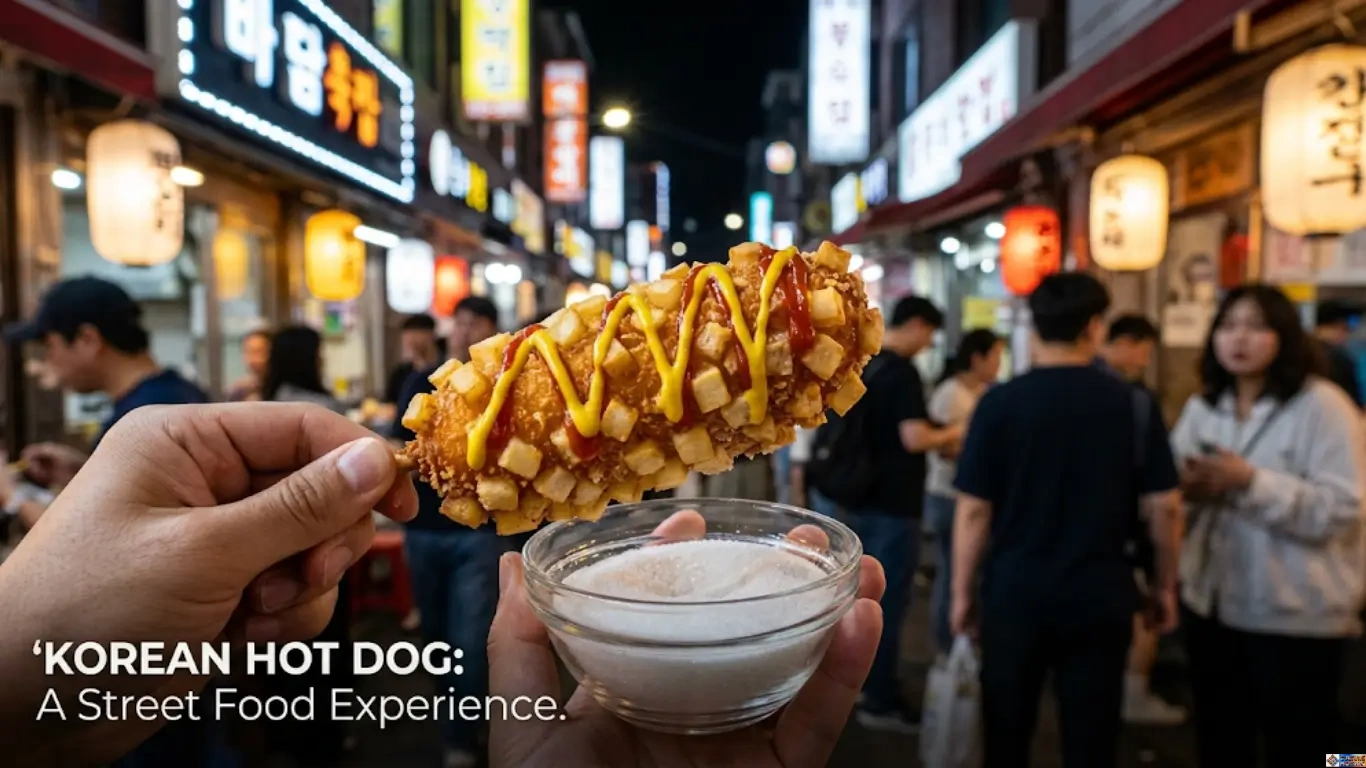
Quick Summary
What is a Korean Hot Dog (gamja-hotdog or K-corn dog)? It is a quintessential Korean night market street food made from skewered sausages, low-moisture mozzarella, or rice cakes dipped in a yeasted, chewy dough, encrusted with toppings like cubed potatoes or panko, deep-fried to golden perfection, and finished with a dusting of granulated sugar and signature sauces. Moving far beyond the standard American corn dog, it represents post-war culinary adaptability transformed into a global food phenomenon.
Beyond the Standard Fast-Food Snack
Finding street food that delivers a genuine sensory thrill can feel surprisingly difficult in a landscape dominated by mass-produced fast food. Standard fried snacks often end up soggy, heavy, or predictable, leaving food enthusiasts craving a dynamic interplay of textures and bold flavor contrasts.
This is where the Korean Hot Dog steps in to redefine fried street snacks. By pairing a yeasted, rice-flour batter with savory fillings, crunchy exterior coats, and a contrasting dusting of sugar, this Korean night market icon delivers an extraordinary bite every single time. Whether you are seeking a korean hot dog near me, hunting down spots for a korean hot dog london or a korean hot dog near manchester, buying a convenience-ready korean hot dog frozen, or mastering a home recipe, this dish represents street food culture at its absolute finest.
Korean Corn Dog Origin and Gamja-Hotdog History
To understand why Korean hot dogs are so good, one must look at South Korea’s post-war history. Following the Korean War, American military presence introduced processed ingredients—most notably processed sausages and canned meats—into the local food supply.
By the 1970s and 1980s, street vendors across Seoul transformed these ingredients into affordable snacks for students and working-class commuters. Instead of utilizing basic cornmeal batter (the staple of Western corn dogs), vendors drew upon Heritage Cooking Techniques to craft a stretchy, bread-like coating using wheat flour and glutinous sticky rice flour (chapssal).
By the 1990s, vendors at vibrant night markets like Myeongdong introduced cubed potatoes directly to the exterior batter, creating the legendary gamja-hotdog (potato hot dog). This innovation anchored the dish directly into Korean night market food culture, turning simple street stalls into hubs of modern culinary creativity.
The Sensory Architecture: American Corn Dog vs. Korean Hot Dog
The distinction between a traditional Western corn dog and a Korean street hot dog lies in the structural composition, batter biochemistry, and flavor profiling.
| Characteristic | Traditional American Corn Dog | Authentic Korean Hot Dog (Gamja-Hotdog) |
|---|---|---|
| Batter Base | Yellow cornmeal and baking powder (cake-like, dense) | Yeasted wheat dough + glutinous rice flour (chapssal) for a chewy center |
| Filling Options | Standard hot dog sausage | All-beef sausage, low-moisture mozzarella, fish cake, or rice cake halves |
| Exterior Coatings | Smooth fried cornmeal shell | Coarse panko, cubed potatoes (gamja), crushed instant ramen, or cornflakes |
| Finishing Touches | Yellow mustard and tomato ketchup | White granulated sugar roll, followed by spicy mayo, honey mustard, or sriracha |
| Flavor Profile | Purely savory, corn-heavy | Complex sweet-and-savory (단짠 / danjjan) harmony |
Culinary Science: Batter Physics and Somatic Seasoning
What makes Korean hot dogs hit every visual and sensory note? It comes down to structural batter engineering:
- The Yeasted Rise: Unlike baking-powder batters, traditional street vendors rely on Ancestral Fermentation Techniques and slow dough development. The yeast creates tiny air pockets, ensuring the dough expands evenly while creating a barrier that stops oil absorption during deep frying.
- The Umami-Sugar Dynamic: Sweeping hot dogs through granulated sugar immediately after pulling them from the oil creates an essential sweet base. Applying savory condiments over top produces a classic danjjan (sweet-savory) profile, engaging the palate through principles explored in Somatic Seasoning and Ancestral Umami Techniques.
- The Cheese Pull Physics: High-moisture cheeses break down and leak into frying oil, ruining the crust. Authentic vendors use low-moisture, block mozzarella cut into thick batons, ensuring a stretch that holds structural integrity long after cooking.
Step-by-Step Home Recipe: Mastering the Ultimate Korean Hot Dog
Recreating this iconic dish at home requires precision with dough consistency and frying temperature.
Essential Ingredients
- Dough Batter: 1 ¼ cups (160g) all-purpose flour, ½ cup (60g) glutinous rice flour (chapssal flour), 2 tbsp sugar, 1 tsp instant yeast, ½ tsp fine salt, ¾ cup warm water.
- Fillings: 4 high-quality hot dog sausages (or certified korean hot dog halal beef franks), 1 block low-moisture mozzarella cheese cut into matching sticks.
- Coatings: 2 cups panko breadcrumbs, 1 large potato (peeled, finely diced into small cubes, and blotted dry), ½ cup white granulated sugar.
- Frying Oil: 1–2 liters neutral oil with a high smoke point (canola, sunflower, or peanut oil).
Step-by-Step Preparation
- Prepare the Yeasted Dough: In a bowl, whisk together all-purpose flour, glutinous rice flour, sugar, salt, and instant yeast. Add warm water and stir until a smooth, thick, elastic dough forms. Cover and allow it to proof in a warm place for 45–60 minutes until doubled in volume.
- Assemble the Skewers: Thread your hot dog halves and mozzarella cheese batons onto sturdy wooden skewers, placing the sausage at the bottom and cheese at the top. Thoroughly dry the assembled skewers with paper towels and dust them lightly with cornstarch (this prevents the batter from slipping during dipping).
- Batter & Coat: Pour the risen dough into a tall jar or glass. Insert a skewer straight down and rotate to wrap the thick dough securely around the filling.
- Classic Style: Roll immediately into panko breadcrumbs.
- Gamja Style: Press the diced potato cubes onto the wet dough first, then roll lightly in panko to fill any gaps.
- Fry to Golden Perfection: Heat neutral oil in a deep pot to 175°C (350°F). Lower two skewers into the hot oil carefully. Fry for 3–5 minutes, turning occasionally with tongs, until uniform and deep golden brown.
- Sugar Roll & Sauce Drizzle: Remove the hot dogs and place them on paper towels to drain excess oil for 30 seconds. While hot, roll generously in granulated sugar. Finish with zigzag drizzles of ketchup, honey mustard, or sriracha mayo.
For complementary street food deep dives, explore our guides on How to Make Mexican Street Tacos al Pastor or learn about traditional slow-cooked methods in How to Cook Traditional Moroccan Tagine.
Global Adaptation: Halal, Frozen, and Urban Hotspots
As Korean food culture has expanded worldwide, the street food scene has evolved to serve diverse global communities:
- Certified Halal Options: Popular chains in global urban centers now utilize certified beef franks, chicken sausages, or 100% mozzarella sticks, making korean hot dog halal variations widely available across international markets.
- Urban Hubs: Cities across North America and Europe feature dedicated Korean street food stalls. In the UK, food lovers regularly seek out spots in culinary hubs like korean hot dog london (Chinatown, Soho) and korean hot dog near manchester (Chinatown, city center markets).
- Frozen Market Convenience: High-end Asian supermarkets now stock ready-to-heat korean hot dog frozen packs. Air-frying frozen hot dogs at 180°C (350°F) for 10–12 minutes yields an exceptional, crisp crust right at home.
Discover more global recipes and heritage dishes within our collection of Regenerative Heritage Recipes and explore traditional preservation methods in our feature on Traditional Sauerkraut Fermentation.
Frequently Asked Questions
What is a Korean hot dog?
A Korean hot dog is a popular Korean street food made of skewered sausages, mozzarella cheese, or rice cakes coated in a yeasted wheat and rice flour batter, covered in coatings like panko or cubed potatoes, deep-fried, and finished with granulated sugar and condiments.
Why are Korean hot dogs so good?
They offer a dynamic contrast of textures and flavors. The combination of a crispy exterior, chewy interior dough, melted cheese pull, and the balance of sweet sugar with savory toppings creates an additive sensory profile.
What do Korean hot dogs taste like?
They taste sweet, savory, cheesy, and rich all at once. The first taste is crisp and sweet from the sugar coating, followed immediately by the savory crunch of panko or potatoes, the chew of yeast-risen dough, and a warm, salty bite of sausage or melted cheese.
What are some popular toppings for Korean hot dogs?
Popular exterior coatings include cubed potatoes (gamja), crushed instant ramen noodles, cornflakes, and panko breadcrumbs. Common sauce toppings include tomato ketchup, honey mustard, sriracha mayo, garlic sauce, and sweet chili sauce.
How do you store and reheat leftover Korean hot dogs?
Store leftovers in an airtight container in the refrigerator for up to 3 days. Reheat them in an air fryer at 175°C (350°F) for 5–7 minutes or in a preheated oven to fully restore their signature crunch without making them greasy.
References and Credible Sources
- National Institute of Agricultural Sciences (South Korea): Korean Traditional Food Data & Street Food Preservation Studies.
- Korean Culture and Information Service (KOCIS): The Global Evolution of K-Food and Street Food Culture.
- Journal of Ethnic Foods: Historical Transitions of Korean Post-War Culinary Adaptations and Modern Fast Food Culture.
- Culture Mosaic Digital Archives: Explore broader articles on social eating customs in Dining Rituals, sensory connections in Somatic Food Memory, and ancient culinary methods in Ancestral Fermentation Rituals.