
 By Culture Expert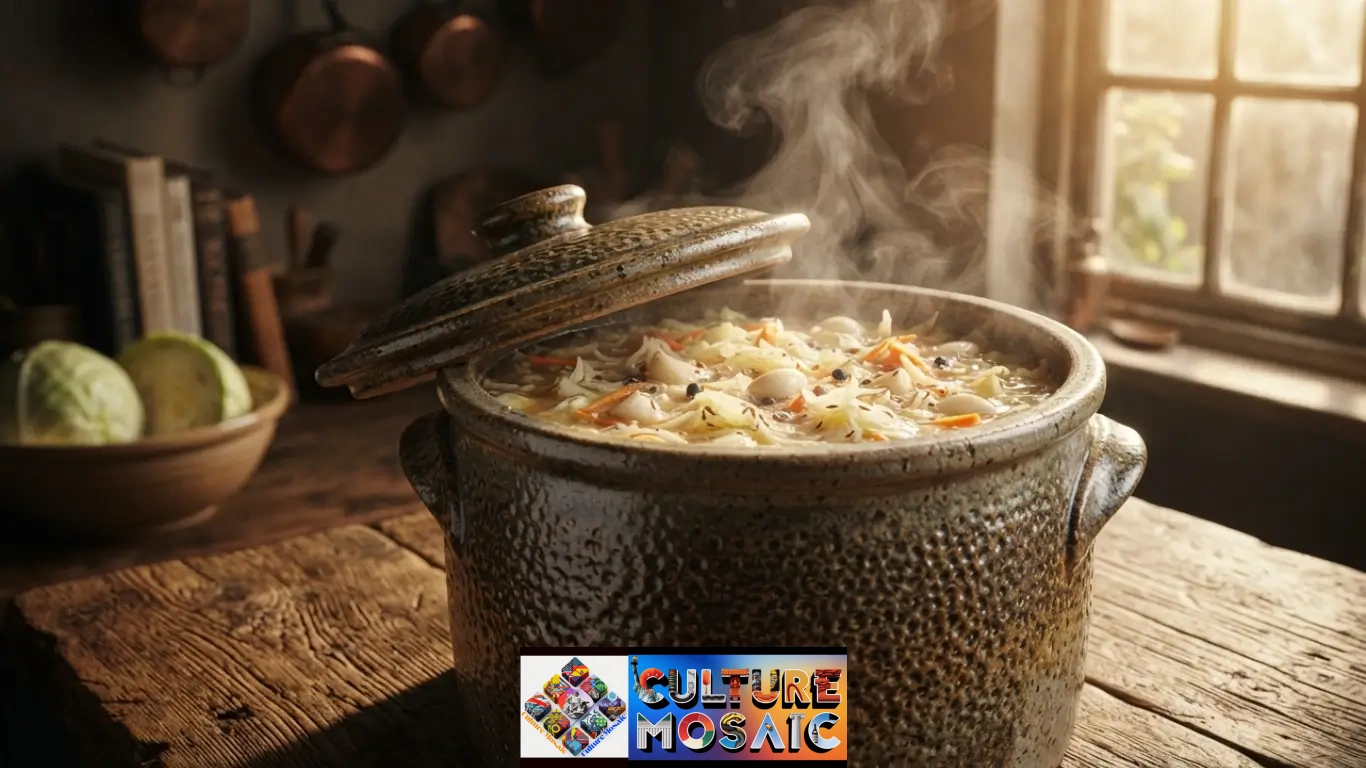
Quick Summary: The Science of Salt and Time
- The Core Mechanism: The Biochemistry of Salt-Glaze Fermentation relies on a fused sodium-silicate matrix that creates a non-porous, chemically inert barrier for optimal microbial control.
- Vessel Intelligence: Traditional salt-glazed crocks maintain anaerobic environments through water-seal moats that vent carbon dioxide while blocking oxygen and mold spores.
- Microbial Scaffolding: The iconic “orange peel” surface texture provides microscopic anchor points where beneficial Lactobacillus colonies establish stable biofilms.
- The Salt Ratio Rule: Ideal fermentation requires a 2% to 3.5% total salt concentration; too little invites spoilage bacteria, while too much inhibits necessary enzymatic pathways.
- Salt Dynamics in Batter: In dishes like idli, pure salt acts as an osmotic agent and enzyme regulator, suppressing wild yeast overgrowth while stabilizing Leuconostoc mesenteroides.
The Science of Salt and Time: The Biochemistry of Salt-Glaze Fermentation Explained
By Dr. Elena Caruso | Published on Culture mosaic
Few things are as frustrating to a culinary enthusiast as lifting the lid of a fermentation vessel after three weeks of patient waiting, only to find a fuzzy blanket of Kahm yeast, a soft, mushy texture, or off-putting industrial odors. You followed the recipe precisely, weighed your vegetables, and added the recommended brine. So where did the process go wrong?
The issue often lies not in your ingredients, but in your vessel. Modern glass jars allow light penetration that degrades light-sensitive nutrients, while lightweight plastics off-gas subtle organic compounds and lack thermal inertia. More critically, modern smooth surfaces fail to provide the structural scaffolding that lactic acid bacteria need to thrive.
The solution is an ancient technological marvel: salt-glazed stoneware crocks. By bridging high-temperature material science with microbiological ecology, these specialized vessels transform home preservation from an unpredictable risk into a masterclass in biological precision. Through Heritage Cooking Techniques, our ancestors engineered an environment that optimizes bacterial succession, regulates osmotic pressure, and delivers unmatched depth of flavor.
Pillar I: The Molecular Shield & Firing Chemistry
The story of The Biochemistry of Salt-Glaze Fermentation begins long before fresh produce meets brine—it starts inside the potter’s kiln at temperatures exceeding 1200°C (2192°F). When coarse rock salt (sodium chloride) is introduced into the kiln chamber at peak heat, the salt vaporizes instantly, splitting into sodium ions and chlorine gas. The gaseous sodium reacts with the silica and alumina inherent in the local clay body:
2NaCl + SiO₂ + H₂O → Na₂SiO₃ + 2HCl
This reaction forms a permanent layer of sodium silicate glaze (Na₂SiO₃) integrated directly into the clay matrix. Unlike applied lead or cadmium glazes that sit on top of ceramics and risk leaching over time, salt-glazing creates a non-porous, chemically inert barrier.
What is a salt-glazed fermentation crock, and why is it used?
A salt-glazed fermentation crock is a heavy stoneware container featuring a vitrified, non-porous interior and an exterior characterized by a subtle, orange peel-like dimpled texture. It is used in traditional food preparation because it provides three distinct biochemical advantages over modern containers:
- Thermal Mass Inertia: Heavy stoneware absorbs and releases ambient heat slowly, shielding sensitive microbial communities from ambient kitchen temperature swings.
- Total Light Protection: Opaque clay walls prevent ultraviolet light from degrading light-sensitive vitamins and photolytic enzymes in the ferment.
- Chemical Neutrality: Highly acidic brines (pH 3.2 to 4.5) cannot react with or leach compounds from the vitrified sodium silicate wall.
Pillar II: Microscopic Scaffolding & Biofilm Kinetics
Microorganisms do not naturally prefer floating freely in liquid; they thrive when anchored to surfaces. This is where Ancestral Fermentation Techniques and Ancestral Fermentation Rituals intersect with surface topography. The famous “orange peel” texture of a salt-glazed crock is not merely decorative—it serves as functional microscopic architecture.
During firing, microscopic sodium silicate deposits form micro-craters across the vessel surface. These micro-craters act as anchor sites where species like Lactobacillus plantarum and Leuconostoc mesenteroides adhere and form structured, protective biofilms. Within these biofilms, bacteria secrete extracellular polymeric substances (EPS) that protect the colony from early osmotic shock and stabilize Ancestral Umami Techniques, unlocking complex, savory amino acid chains like glutamate.
Vessel Comparison Matrix
- Salt-Glaze Stoneware: Optimal Biofilm Scaffolding (Micro-craters) | High Thermal Inertia (Stable) | Maximum Chemical Inertness (Vitrified) | High Anaerobic Reliability (Water-seal channel)
- Canning Glass Jars: Low Biofilm Scaffolding (Slippery/Smooth) | Low Thermal Inertia (Fluctuates) | High Chemical Inertness (Inert) | Variable Anaerobic Reliability (Manual burping)
- Food-Grade Plastic: Poor Biofilm Scaffolding (Smooth) | Very Low Thermal Inertia | Moderate Chemical Inertness (Micro-scratching) | Moderate Anaerobic Reliability (Gasket breakdown)
Pillar III: Vessel Mechanics & The Anaerobic Environment
How does the crock maintain an anaerobic environment?
Lactic acid fermentation is strictly anaerobic; the presence of oxygen encourages spoilage organisms like mold (Aspergillus) and film yeasts. Traditional salt-glazed crocks achieve an oxygen-free zone through an integrated water-seal moat channel built into the rim.
When the heavy clay lid rests inside the water-filled gutter, it creates a one-way valve system. As Lactobacillus bacteria consume simple sugars (glucose and fructose), they release carbon dioxide gas (CO₂). The expanding CO₂ builds pressure inside the crock, bubbling outward through the water moat. However, outside air containing oxygen and airborne mold spores cannot pass backward through the water barrier. Over time, the internal atmosphere becomes entirely saturated with CO₂, halting aerobic decay completely.
This self-regulating mechanism is essential when crafting long-term ferments like Traditional Sauerkraut Fermentation or preparing base components for Regenerative Heritage Recipes.
Pillar IV: Salt Biochemistry & Brine Dynamics
The choice and concentration of salt dictate the biological succession inside your vessel. Whether you are using pure mineral salt or a coarse Somatic Seasoning salt like kosher salt (which lacks anti-caking additives that cloud brine), salt alters the osmotic pressure of the plant cells, drawing out moisture containing fermentable sugars while selectively inhibiting pathogenic strains like Clostridium botulinum.
What happens if you use too much or too little salt?
Calculating salt ratios by weight (typically measured as a percentage of total vegetable plus water weight) is vital to success:
- Too Little Salt (<1.5% w/w): The osmotic pressure is insufficient to draw out cellular juices quickly. Pectin-degrading enzymes naturally present in plant tissues remain active, resulting in soft, mushy vegetables. Pathogenic bacteria and wild yeasts outcompete beneficial strains, leading to spoilage.
- Too Much Salt (>4.0% w/w): High salinity creates extreme osmotic stress that dehydrates even halotolerant Lactobacillus cells. Fermentation stalls or slows dramatically, leaving vegetables harsh, overly salty, and unfermented.
- The Ideal Range (2.0% – 3.5% w/w): This salinity sweet spot suppresses spoilage microbes while enabling a healthy succession of lactic acid bacteria, maintaining crisp vegetable texture by preserving plant pectins.
Cultural Applications: From European Crocks to Asian Batters
The underlying principles of salinity and surface physics apply across global culinary history. Consider how salt controls microbial kinetics in various traditional preparations:
- Does salt help in fermentation of idli batter? Yes. In South Asian cuisine, adding salt directly influences batter rise. While wild yeasts and Leuconostoc mesenteroides drive the fermentation of rice and urad dal, salt added before fermentation regulates the speed of gas production, strengthens gluten-like protein networks, and prevents the batter from souring prematurely in warm climates.
- Dough & Bread Fermentation: Just as salt controls batter kinetics, precise salinity and vessel choice govern dough behavior across various breadmaking cultures, similar to the traditional dough preparations found in Georgian Khachapuri Regional Varieties.
- Global Pickling & Curing Traditions: From the long-term vegetable curing found in Hispanic Cultural Foods and USA Famous Dishes to the complex side dishes of Asian cuisine like Korean Hot Dog condiments, salt chemistry serves as a universal preservation tool.
Whether exploring Italian Culinary Traditions, studying What Is the History of Italian Cuisine?, or investigating classic pairing choices like Italian Pasta Shapes and Sauces, controlled salt dynamics remain central to authentic flavor creation.
These principles extend to slow-cooked cultural staples worldwide. Vessel construction and heat retention play crucial roles in dishes like How to Cook Traditional Moroccan Tagine, traditional moroccan couscous recipe, and Authentic Moroccan Couscous. Similarly, acid and mineral balance shape Latin American classics like How to Make Mexican Street Tacos al Pastor and Southeast Asian staples found in Filipino Cuisine and Authentic Filipino Food.
Somatic Flavor & The Social Fabric of Shared Ferments
Fermentation is more than a chemical conversion—it is a sensory engagement that taps into Somatic Seasoning and Somatic Food Memory. The deep, complex tang produced by a salt-glazed crock cannot be replicated by adding industrial white vinegar to raw vegetables. It requires the slow accumulation of organic acids, esters, and aromatic compounds that interact with our olfactory and tactile senses.
Throughout history, tending to large fermentation crocks was a community effort—a fundamental part of Food Rituals in Different Cultures and daily Dining Rituals. These shared preservation efforts built The Commensal Architecture of Shared Vessels, bringing families together around seasonal harvests. These fermented foods remain core components of health-focused routines around the globe, including the nutrient-dense Centenarian Breakfast Routine observed in long-lived populations, offering a rich repository of Traditional Recipes from Around the World.
Frequently Asked Questions
1. What is a salt-glazed fermentation crock, and why is it used? A salt-glazed fermentation crock is a heavy stoneware vessel glazed with sodium chloride during high-temperature firing. It is used because its vitrified surface is non-porous, chemically non-reactive to high acidity, and opaque, providing an ideal, thermally stable environment for anaerobic fermentation.
2. How does the crock maintain an anaerobic environment? Most modern salt-glazed crocks feature a water-seal moat around the rim. When the lid is placed into the water-filled trough, it allows CO₂ gas produced by fermentation to bubble out while preventing ambient oxygen, mold spores, and wild yeasts from entering the vessel.
3. What happens if you use too much or too little salt? Using too little salt (<1.5%) leads to soft, mushy ferments and increases the risk of pathogenic bacteria or mold growth. Using too much salt (>4%) inhibits beneficial Lactobacillus strains, stalling fermentation and leaving the food excessively salty.
4. Does salt help in fermentation of idli batter? Yes. In idli batter, salt regulates microbial growth, strengthens the batter structure to trap CO₂ bubbles, prevents wild yeasts from over-fermenting the mix into excessive sourness, and enhances overall flavor development.
5. Why is pure mineral or kosher salt preferred over table salt for fermentation? Kosher salt and pure mineral salts lack iodine and anti-caking additives (such as sodium aluminosilicate). Iodine possesses anti-bacterial properties that can inhibit Lactobacillus, while anti-caking agents can cause brine to become cloudy and leave bitter off-flavors.
References & Verifiable Citations
- Steinkraus, K. H. (2018). Handbook of Indigenous Fermented Foods. CRC Press. (Focusing on microbial ecology and osmotic salinity dynamics).
- USDA National Institute of Food and Agriculture: Complete Guide to Home Canning and Fermentation Mechanics. Agriculture Information Bulletin No. 539.
- Hildyard, R. (1999). European Ceramics: Salt-Glazed Stoneware History and Chemistry. V&A Museum Publications.
- Journal of Applied Microbiology: Biofilm Formation Dynamics of Lactobacillus plantarum on Textured Ceramic Substrates (Vol. 114, Issue 4, pp. 1022–1031).