
 By Culture Expert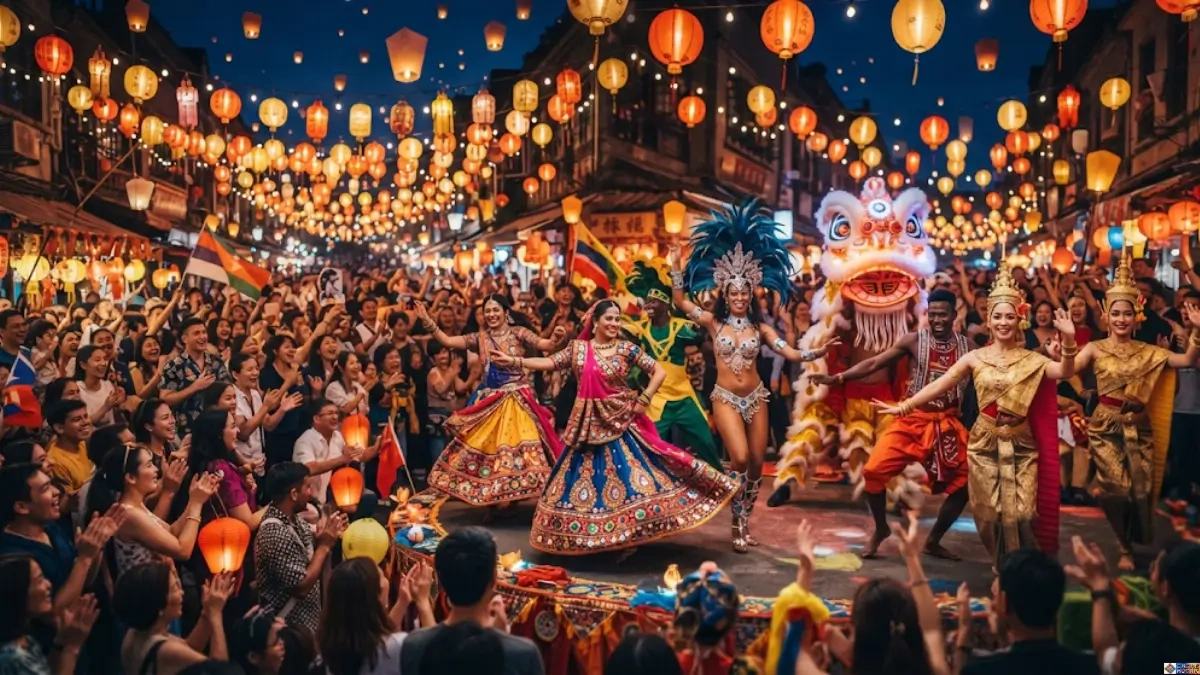
Quick Summary
- Unique cultural festivals: Living traditions still run by the communities who invented them — not repackaged tourism-board spectacles.
- Global span: Covers nine celebrations, from Shetland’s fire festival to Bolivia’s dancing devils, complete with real history, daily rituals, and etiquette.
- Local UK spotlight: Explores Britain’s own quirky traditions located just a short trip from London and Manchester.
- Interactive tools: Includes a comparison table separating “unique” from “biggest,” plus five direct FAQ answers readers search for.
I’ve spent the better part of two decades chasing festivals most guidebooks skip. Not because the famous ones aren’t worth seeing — Rio’s Carnival is spectacular, no argument there — but because the smaller, stranger, more specific ones tell you something the big shows can’t. They tell you what a place actually believes.
Why “Unique” Isn’t the Same as “Famous”
Here’s the problem with most festival lists: they’re really just tourism-board rankings dressed up as culture writing. Oktoberfest, Rio Carnival, Songkran — genuinely wonderful, genuinely worth the trip, and also genuinely commercial operations with sponsorship decks and ticket tiers. Nothing wrong with that. But if you’re after unique cultural festivals in the truer sense — the ones still shaped by the people who hold them, not by a marketing calendar — you need to look somewhere else.
That’s the gap this piece tries to close, and it’s the whole reason we went looking for unique cultural festivals rather than another ranked list of the usual suspects. We’ve gone deep into the ancient roots of modern festivals before at Culture Mosaic, and the throughline is always the same: the strangest festivals are usually the oldest ones, worn smooth by repetition until the original reason half-disappears and only the ritual remains.
A fire festival that started as protection against plague. A dance that began as a way to avoid angering a mountain. That’s the texture we’re after here — not spectacle for its own sake, but ethno-cultural festivals heritage that’s survived because a community decided it mattered enough to keep doing.
What Makes a Festival Culturally Significant?
A festival earns the word “significant” when it does three things: it marks something the community actually believes matters (a harvest, a saint, a solstice, a victory), it’s performed by locals rather than for an audience, and it’s survived long enough to have picked up layers — Christian over pagan, colonial over indigenous, modern over ancient. We’ve mapped this pattern across traditional world festivals cultural heritage before, and it holds up again and again in the nine unique cultural festivals below.
9 Unique Cultural Festivals Around the World
1. Up Helly Aa — Lerwick, Shetland, Scotland
Every last Tuesday in January, nearly a thousand torch-bearing “guizers” march through Lerwick’s dark streets behind a hand-built replica Viking longship, then set it on fire. It looks ancient. It isn’t, quite — the first torchlit procession only dates to 1881, and the first galley wasn’t burned until 1889, a Victorian reinvention of Shetland’s older midwinter fire customs rather than an unbroken thread back to the Norsemen themselves.
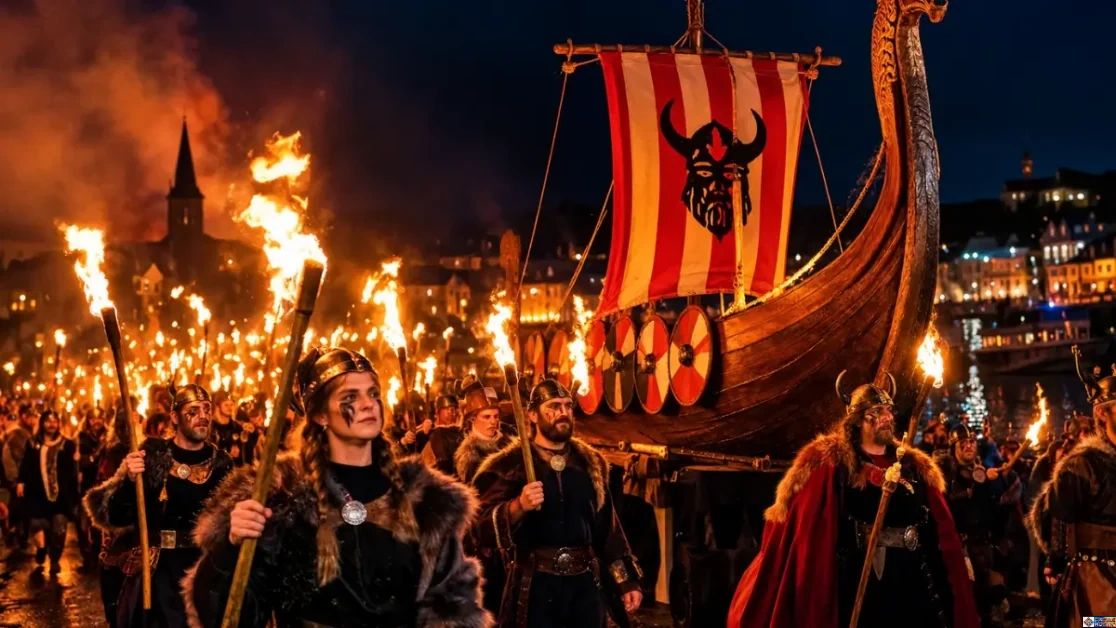
That honesty matters, and it doesn’t make the spectacle any less real: eleven separate Up Helly Aa festivals now run across Shetland between January and March, each with its own Guizer Jarl leading the squads. For the first time in 2023, women were permitted to join the main Lerwick Jarl Squad after over a century of a men-only rule — proof that even a “traditional” festival keeps renegotiating what tradition means.
2. Thaipusam — Batu Caves, Malaysia
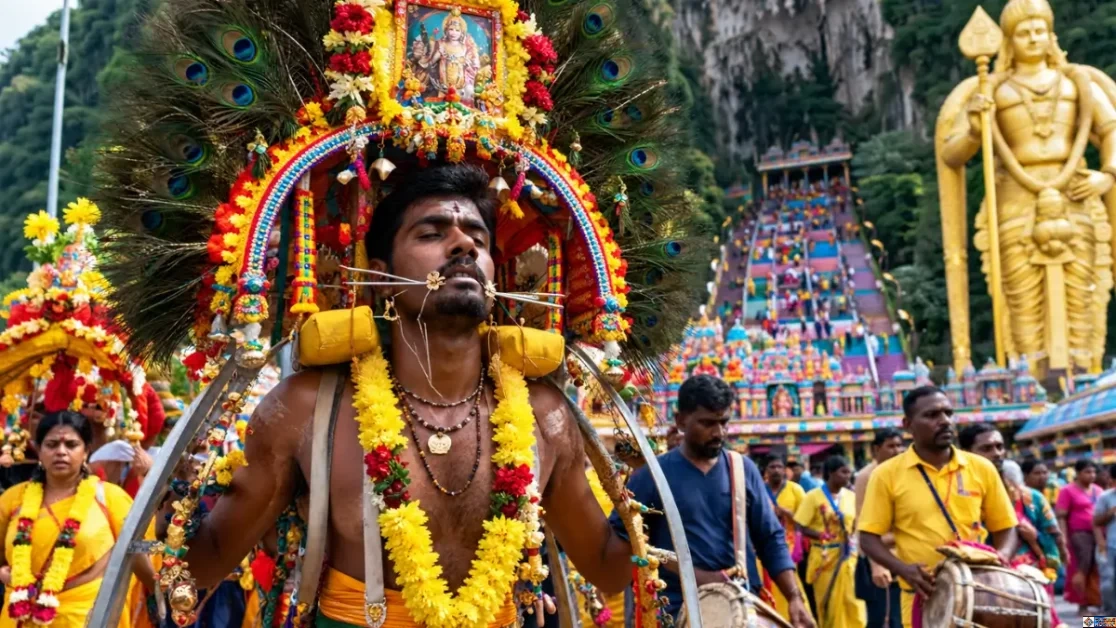
Thaipusam honours the Hindu god Lord Murugan’s victory over the demon Surapadman, and at Kuala Lumpur’s Batu Caves it draws over a million people — the largest Thaipusam gathering outside India itself. Devotees carry kavadi, elaborate framed structures (sometimes pierced through skin and cheeks) as physical burdens, then climb 272 steps to the cave temple barefoot, often in a trance state induced by drumming and chanting. It’s confronting to watch and not designed for spectacle; if you go, skip the flash photography near kavadi bearers, it can break the trance and is considered deeply disrespectful.
3. Naadam — Mongolia, nationwide
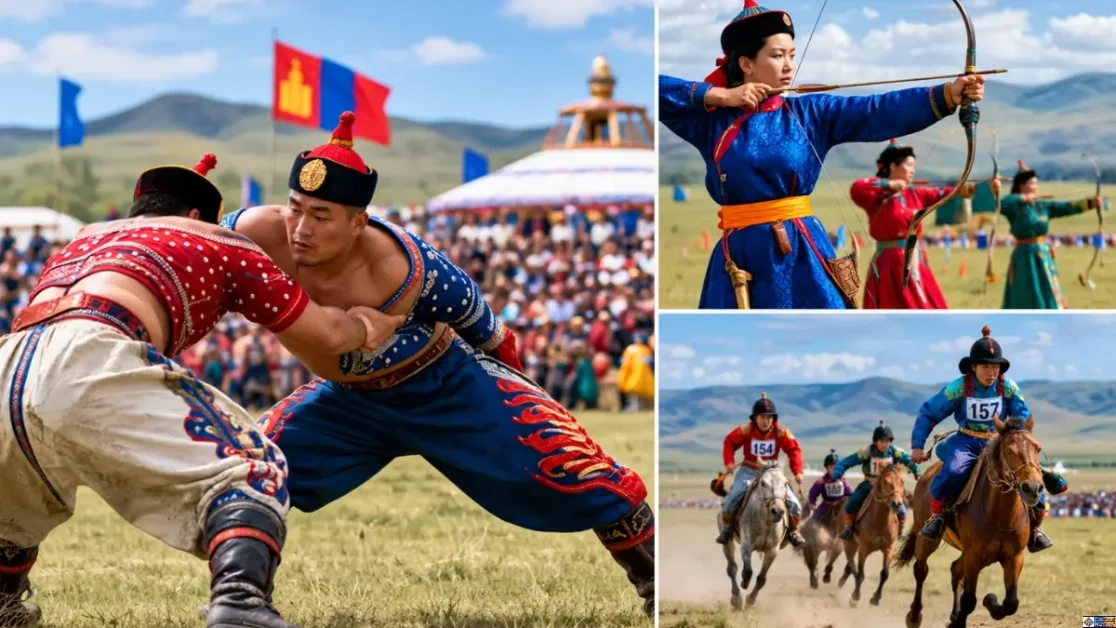
Held every July, Naadam centres on the “Eriin Gurvan Naadam” — the Three Manly Games of wrestling, archery, and horse racing — with roots UNESCO traces back over 2,000 years to a nomadic warrior culture that needed its fighters battle-ready between raids. Women compete in the archery and horse-racing events, just not the wrestling. UNESCO added Naadam to its Intangible Cultural Heritage list in 2010, and the festival still functions the way it always did: less a show than a nationwide test of who can still do the things that kept Mongolia’s steppe culture alive.
4. Timkat — Gondar and Lalibela, Ethiopia
Timkat is the Ethiopian Orthodox celebration of Epiphany, and its centrepiece is genuinely unlike anything else in world Christianity: priests carry Tabots — replicas of the Ark of the Covenant, usually hidden from the laity — down to a river or purpose-built pool in a torchlit night procession, where they’re kept under vigil until dawn. At sunrise the water is blessed and thousands wade in to renew their baptismal vows.
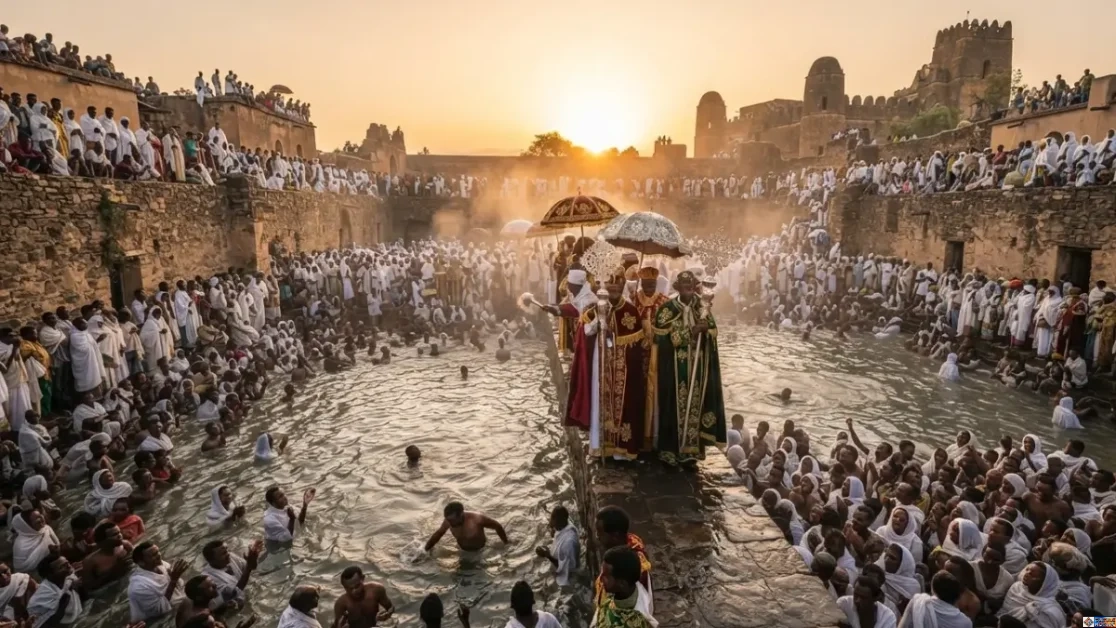
Gondar’s Fasiladas Bath, a 17th-century pool built to represent the Jordan River, is the most photographed setting, but the ritual plays out in nearly every Ethiopian town with its own Tabot. UNESCO recognises it as the “Ethiopian Epiphany” on its Intangible Cultural Heritage list — one of a handful of religious festivals in the world that still functions as a genuine mass baptism rather than a reenactment of one.
5. Gion Matsuri — Kyoto, Japan
Gion Matsuri has run every July since 869 CE, when Kyoto’s emperor ordered prayers at Yasaka Shrine to end a plague — the same impulse behind Up Helly Aa, oddly enough, on the opposite side of the planet.
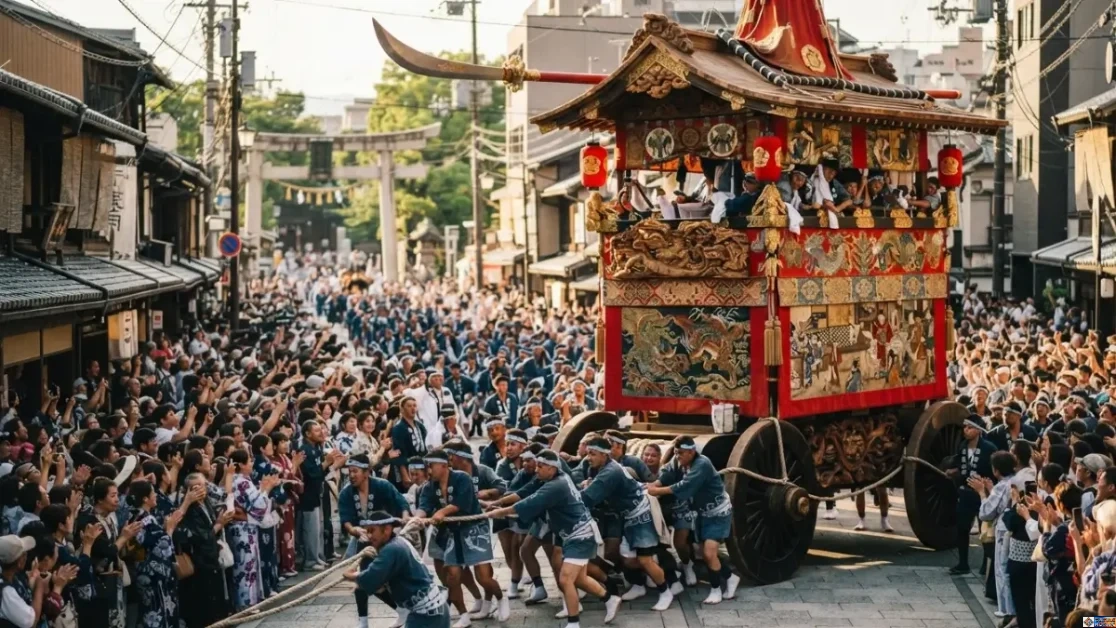
Sixty-six ceremonial pikes became, over centuries of merchant one-upmanship during the Kamakura period, the towering yamaboko floats that now parade through the city on 17 and 24 July, each one a “portable museum” hung with centuries-old tapestries donated by the neighbourhoods that maintain them. UNESCO listed the Yamaboko float procession as Intangible Cultural Heritage in 2009. It’s one of Japan’s three great festivals, and unlike a lot of “ancient” festivals, this one has genuinely never stopped — bar a 33-year gap during the Ōnin Wars.
6. Inti Raymi — Cusco, Peru
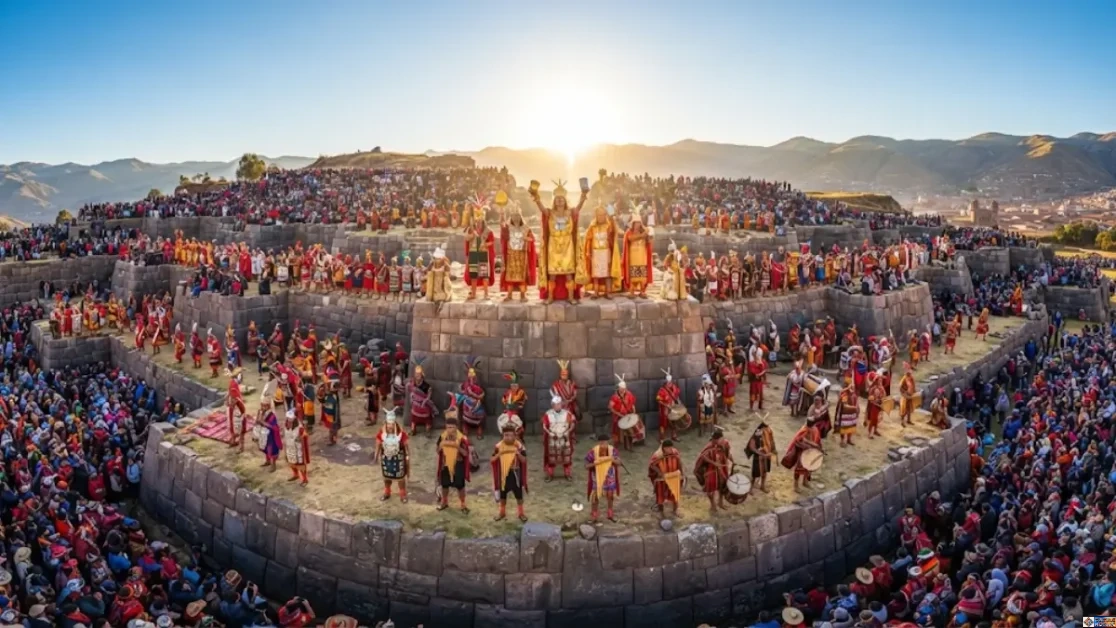
The Inca Festival of the Sun, established under Emperor Pachacutec in the 15th century to mark the June winter solstice, was banned outright by Spanish colonial authorities and stayed banned for roughly four centuries. It came back in 1944, reconstructed from the chronicles of Inca Garcilaso de la Vega, and today plays out as a three-act reenactment moving from the Qorikancha sun temple to Cusco’s main square and finally to the Sacsayhuamán fortress above the city, with over 700 performers. It’s theatre, unashamedly — but theatre built to keep a suppressed ritual legible to the people descended from those who once performed it for real.
7. La Diablada — Oruro, Bolivia
The Carnival of Oruro’s signature dance stages an actual pitched battle between angels and seven dancing devils, representing the seven deadly sins, a piece of colonial-era Catholic theatre first staged in 1818 that fused onto older Uru and Andean beliefs about Tío, the spirit believed to inhabit the region’s silver mines. Miners danced as devils to keep Tío appeased rather than angered — a piece of practical spiritual insurance for one of the most dangerous jobs in the Andes.
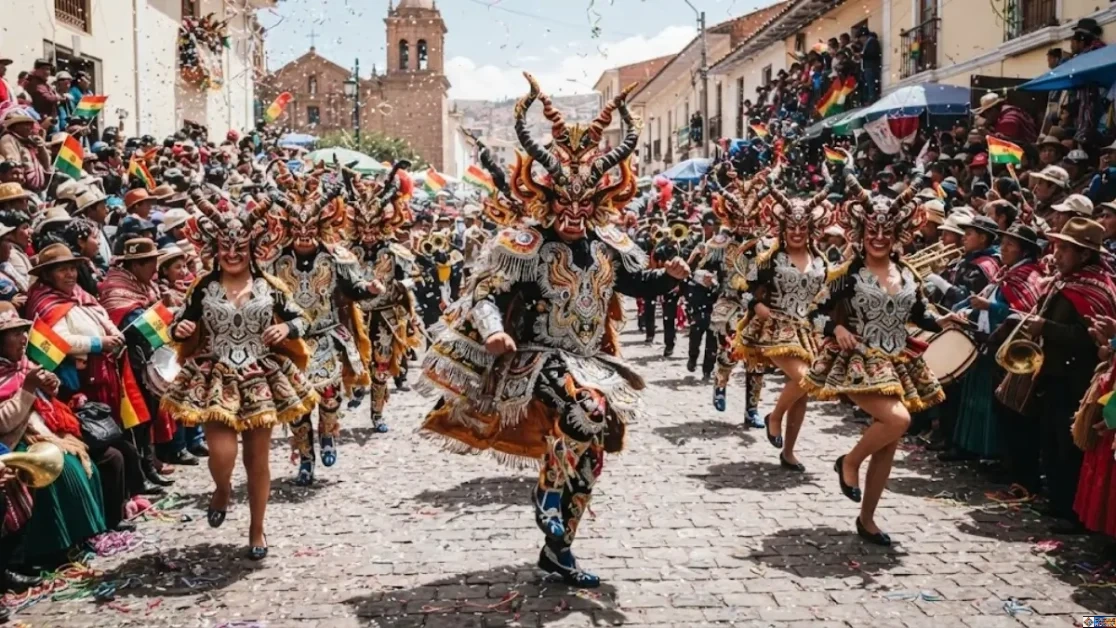
UNESCO named the wider Carnival of Oruro a Masterpiece of Oral and Intangible Heritage in 2001. If Latino cultural festival traditions are your particular interest, this is the one that rewards the deepest digging — the costumes alone can take a family a year to build.
8. Yanshui Beehive Fireworks Festival — Tainan, Taiwan
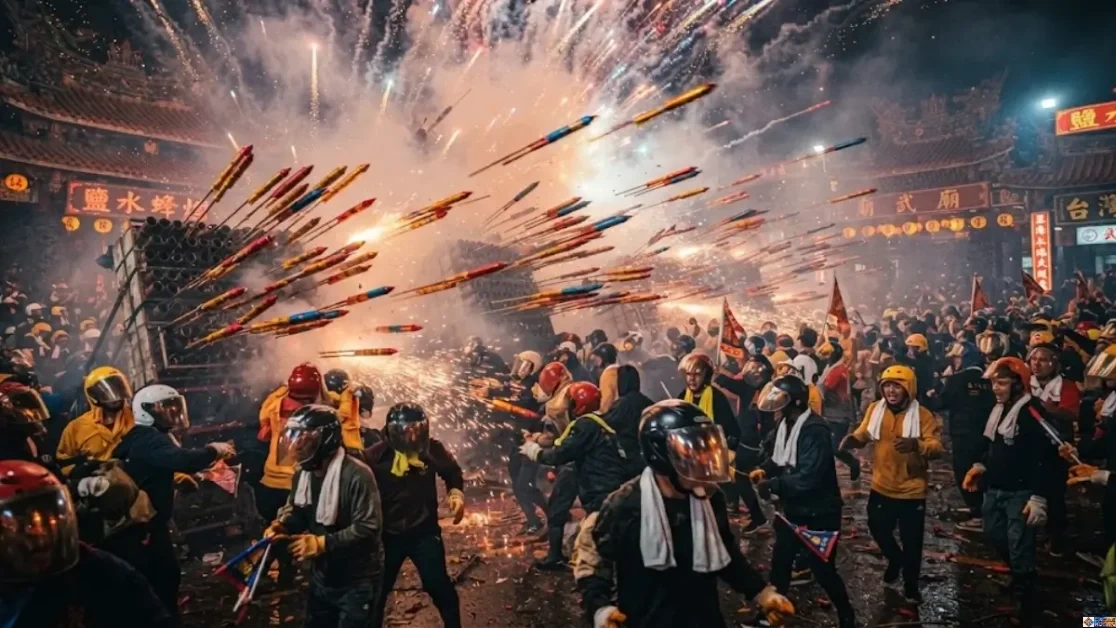
Held during the Lantern Festival period each spring, Yanshui’s centrepiece is a wall of rockets — hundreds of thousands of them, packed into “beehive” racks and fired directly into a crowd of protective-gear-clad spectators. The tradition dates to a 19th-century cholera outbreak, when locals believed setting off explosives at Guan Gong’s shrine would drive out the plague spirit. It’s chaotic, genuinely a little dangerous, and about as far from a sanitised heritage reenactment as a festival gets — which is exactly why it belongs on this list rather than a “top 10 fireworks displays” round-up.
9. Britain’s Own Quirky Traditions
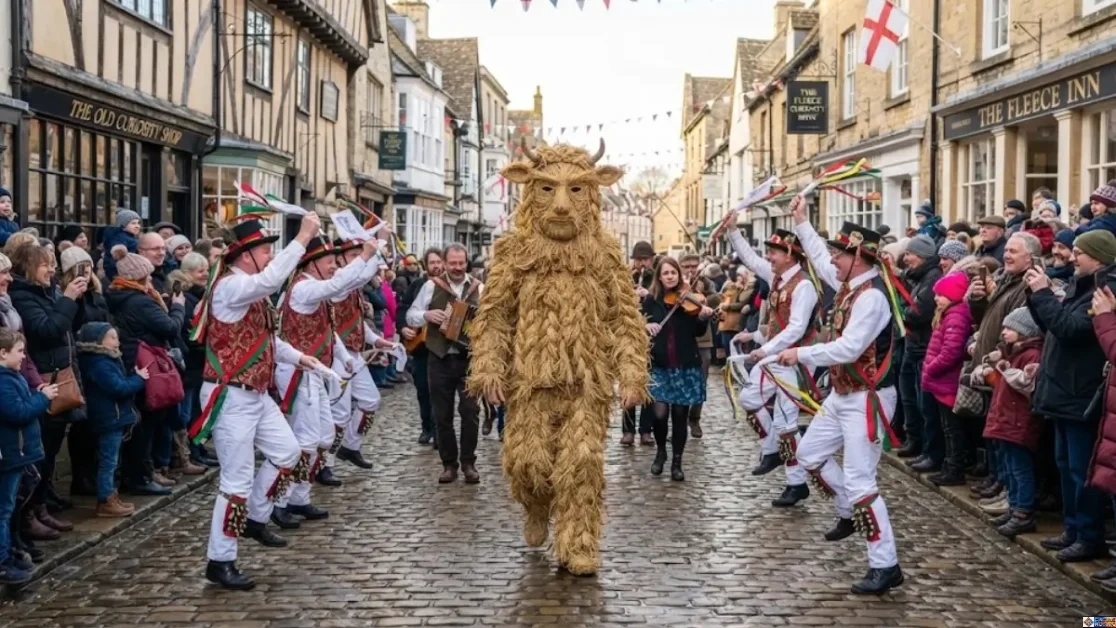
You don’t have to leave the UK to find something this odd. The Whittlesea Straw Bear Festival, held every January in the Cambridgeshire market town of Whittlesey — around 90 minutes from London by train — dresses a local resident head to foot in straw and parades him through the streets to folk music, before burning the costume at the end of the weekend. It’s rooted in the 19th-century Plough Monday custom of dressing a labourer in straw to go door-to-door “cadging” money; the tradition lapsed in 1909 after a disapproving police inspector shut it down, and was revived from scratch in 1980.
Over the Pennines, roughly half an hour from Manchester, the Saddleworth Rushcart Festival sees around a hundred Morris dancers from across the country haul a two-tonne, thirteen-foot cart of woven rushes between the valley’s villages every August, a custom that goes back to the days when churches strewed rushes over bare earthen floors, revived by the Saddleworth Morris Men in 1975.
Neither festival is trying to sell you anything. Both are proof that the strangest traditions don’t only survive in far-flung places — they’re often within reach of your own postcode. We’ve catalogued the wider circuit in our guide to Best UK Folk Festivals, and there’s a whole strand of American equivalents too, like the little-known Washington Whiskey Rebellion Festival in Pennsylvania, which turns a tax revolt into a weekend of living history.
Unique vs Biggest: How the Numbers Compare
When people search for unique cultural festivals, they’re often really asking two different questions at once — which is rarest, and which is largest — and those two answers don’t line up. “Unique” and “biggest” aren’t the same axis, and conflating them is where a lot of top 10 festivals in the world lists go wrong.
Some of the world’s largest gatherings — India’s Kumbh Mela, recognised by UNESCO as Intangible Cultural Heritage in 2017, draws tens of millions of pilgrims to a single riverbank over a matter of weeks — are also deeply, specifically local in what they mean. Scale and authenticity aren’t opposites. They just don’t map onto each other in the way a listicle title implies. If raw size is what you’re after rather than strangeness, we’ve built out the full picture in our Top 20 Biggest Festivals in the World guide.
| Festival | Country | When | Signature Tradition |
|---|---|---|---|
| Up Helly Aa | Scotland (Shetland) | Last Tuesday in January | Burning a replica Viking longship |
| Thaipusam | Malaysia | Jan/Feb (full moon) | Kavadi pilgrimage, 272 steps |
| Naadam | Mongolia | 11–13 July | Wrestling, archery, horse racing |
| Timkat | Ethiopia | 19 January | Tabot procession, water blessing |
| Gion Matsuri | Japan (Kyoto) | Throughout July | Yamaboko float procession |
| Inti Raymi | Peru (Cusco) | 24 June | Reenacted Incan sun ceremony |
| La Diablada | Bolivia (Oruro) | Carnival (Feb/March) | Angels-vs-devils dance battle |
| Yanshui Beehive Fireworks | Taiwan | Lantern Festival period | Rocket “beehives” fired into crowds |
| Whittlesea Straw Bear | England (Cambs.) | Weekend after Plough Monday | Straw costume parade and burning |
Why Festivals Like These Still Matter
There’s a reason unique cultural festivals resist being copied wholesale into a theme park somewhere. There’s a case, increasingly made in academic circles, that festivals function as a kind of temporary civic scaffolding — ephemeral social infrastructure that appears once a year, does its job of binding a community together, and then vanishes until next time. It’s a useful frame, because it explains why these traditions are so hard to fake or export wholesale: you can copy the costumes, but you can’t copy the years of shared labour — the mask-making, the float-building, the straw-plaiting — that goes into staging them.
Some researchers go further and describe the physical, embodied side of this as the somatic architecture of collective ritual: the idea that dancing in a trance, or marching barefoot up 272 steps, does something to a body and a community that a passive audience experience simply can’t replicate. It’s also worth noting the economic weight these events carry once tourism gets involved — we’ve broken down what is the economic impact of music festivals in more commercial contexts, and the same forces apply here, just with lower ticket prices and higher stakes for the towns involved.
The Sustainability Question
None of this comes free. A festival that draws a million people to a cave temple, or fires a wall of rockets into a crowd, leaves a mark — on the site, on the air, on the people cleaning up afterwards. We’ve written before about the post-concert hangover that follows the big commercial festivals, and the same maths applies here at smaller scale: singed streets in Lerwick, a haze over Tainan, plastic waste along the Batu Caves procession route.
The better-run festivals on this list have started building in a genuine answer to that, treating regenerative festival culture as part of the tradition itself rather than a bolt-on — local clean-up crews, sustainably sourced rushes and straw, chariot routes chosen to avoid protected habitat. It’s not a solved problem anywhere yet. But it’s a better question to be asking than “how do we get more visitors.”
How to Attend Respectfully
Watching unique cultural festivals up close is a privilege, not an entitlement, and it comes with a few rules of thumb I’ve picked up the hard way, mostly by getting them wrong once: dress modestly at religious festivals, particularly Timkat and Thaipusam, where bare shoulders or shorts will mark you out and can cause genuine offence.
Ask before photographing anyone in a trance state or mid-ritual — a kavadi bearer at Batu Caves is not a photo op, they’re mid-vow. Follow local guidance on where spectators can stand, especially at Yanshui, where the “safety zone” exists because people have been badly burned ignoring it. And don’t expect the festival to perform for you; you’re a guest at someone else’s tradition, not the audience it was built for.
If you’d like a broader map before you commit to a trip, we’ve pulled together a Global Cultural Festivals Guide covering dozens more, plus a running calendar in our Festivalle 2026 coverage for anyone planning a festival-led year of travel.
Frequently Asked Questions
What are 10 amazing cultural celebrations around the world?
Beyond the nine covered in detail above — Up Helly Aa, Thaipusam, Naadam, Timkat, Gion Matsuri, Inti Raymi, La Diablada, the Yanshui Beehive Fireworks Festival, and Britain’s Whittlesea Straw Bear and Saddleworth Rushcart — a tenth worth chasing is India’s Kumbh Mela, the largest religious gathering on Earth and a UNESCO-listed Intangible Cultural Heritage tradition in its own right. For a longer list ranked by scale rather than obscurity, our Top 20 Biggest Festivals in the World guide goes further.
What is the most unique festival in the world?
If forced to pick one, I’d argue for Bolivia’s La Diablada. Most festivals on this list have one clear origin story; La Diablada layers three — pre-Columbian Uru mine spirits, an 1818 Catholic morality play, and a 20th-century UNESCO-recognised carnival — into a single dance, without any one layer erasing the others. That kind of visible, unresolved history is rare, and it’s what unique cultural festivals should really mean.
What are some popular cultural festivals around the world?
Popularity and uniqueness pull in different directions, but they do overlap. Rio Carnival, Oktoberfest, Songkran, and India’s Holi are the festivals most likely to show up on a bucket list, and all four are worth experiencing — they’re simply more commercialised and internationally marketed than the nine above. If you want the popular version alongside the lesser-known one, both belong on the same travel calendar, just at different points in your trip planning.
What is the biggest cultural festival?
By attendance, India’s Kumbh Mela dwarfs everything else on Earth, drawing crowds estimated in the tens of millions over a matter of weeks. Among the festivals covered here, Thaipusam at Batu Caves is the largest single-day gathering, pulling more than a million pilgrims and visitors to one site outside Kuala Lumpur.
What are 9 amazing cultural festivals I’ve never heard of?
That’s essentially the brief of this piece: Up Helly Aa, Thaipusam, Naadam, Timkat, Gion Matsuri, Inti Raymi, La Diablada, the Yanshui Beehive Fireworks Festival, and the UK’s own Whittlesea Straw Bear and Saddleworth Rushcart. Each one is documented, dated, and still actively practised — not a revival for tourists’ benefit, but a tradition tourists happen to be allowed to watch.
Sources
- UNESCO Intangible Cultural Heritage — Naadam, Mongolian traditional festival
- UNESCO Intangible Cultural Heritage — Carnival of Oruro
- UNESCO Intangible Cultural Heritage — Ethiopian Epiphany (Timkat)
- Shetland.org — Lerwick Up Helly Aa
- Wikipedia — Up Helly Aa (procession and galley-burning history)
- Wikipedia — Inti Raymi
- The Restless Beans — How to Visit Thaipusam at the Batu Caves
- Peterborough Today — The mystery and history of the Whittlesea Straw Bear festival
- Mysterious Britain — Saddleworth Rushcart
- Discover Kyoto — Gion Matsuri
- TravelLocal — Unique Cultural Festivals Around the World
- Culture Mosaic — Religious Festivals in the World