
 By Culture Expert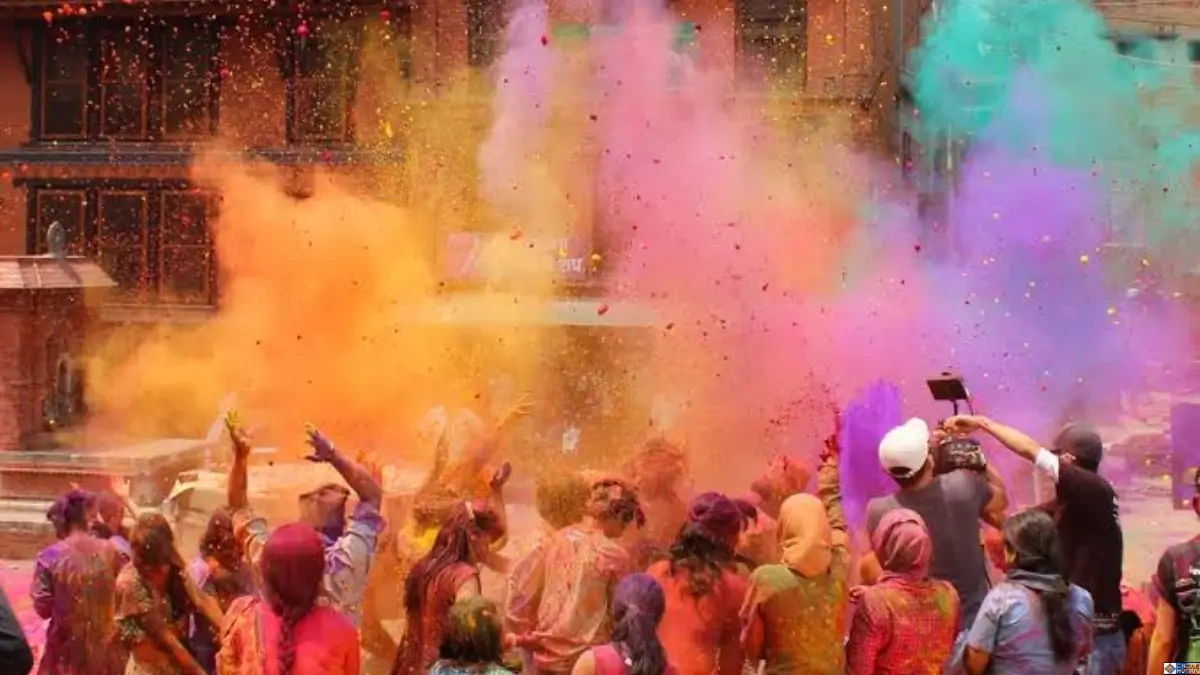
Quick Summary
Every modern festival stands on far older ground than its ticket price suggests. Holi’s vibrant colour-throwing traces back to Sanskrit texts and a 300 BC stone inscription, while Venice’s Carnival began in 1162 as a victory feast rather than a high-fashion masquerade. Similarly, Day of the Dead descends from an Aztec month dedicated to the goddess Mictecacihuatl before being folded into Catholic All Souls’ Day after 1519.
Even popular music history gets misattributed: Woodstock was not the first major modern gathering—Monterey Pop preceded it by two years, and Britain’s Three Choirs Festival has run continuously since 1719. Exploring where these iconic celebrations originate reveals why similar ritual patterns repeat across continents, offering essential context for visiting them without erasing the living heritage that made them notable.
The Problem: We Celebrate Without Knowing Why
I’ve sat through enough Holi mornings covered in gulal, enough Halloweens handing out sweets, enough New Year’s Eves counting down, to notice something odd. Most of us can name the festival. Almost none of us can say where it came from, or why the ritual takes the exact shape it does. Ask a stranger why we throw colour at Holi, why Venice hides its face behind masks, or why a music festival lasts exactly a weekend, and you’ll mostly get shrugs, or worse, a confidently wrong answer picked up from a meme.
That gap matters more than it looks. The cultural history of festivals isn’t a niche academic interest — it’s the difference between a tradition surviving intact and a tradition drifting into noise. When a tradition gets stripped of its origin story, it drifts. It gets commercialised, misattributed, or quietly erased — a sacred bonfire becomes a marketing backdrop, an ancestor-honouring ritual becomes a costume theme. Cultural anthropologists have watched this happen for a century: strip the meaning out of a rite, and you’re left with the shell of a party.
Why This Matters to You
If you’re planning travel around a festival, hosting one, or just tired of nodding along at Diwali dinners without knowing the actual story, the ancient roots of modern festivals aren’t trivia. They’re the difference between visiting Día de los Muertos as a respectful guest and turning up in face paint that means nothing to you. They’re the difference between understanding why Cambridge Folk Festival matters and assuming all festivals started with Woodstock. I’ve laid out the history below in the order it actually happened, cross-checked against museum records, primary historical texts and academic sources, not blog folklore.
1. Holi’s Ancient Roots Go Back Further Than Most People Guess
Holi is the clearest case of a “modern” festival with a documented ancient paper trail. A stone inscription dated to roughly 300 BC, found at Ramgarh in the Vindhya region, records a version of the festival by name. The Puranas — including the Bhavishya Purana and Narada Purana — describe its core legend: the demon king Hiranyakashipu, his devout son Prahlad, and the fire that consumed the evil aunt Holika instead of the boy she meant to burn. The 7th-century Sanskrit play Ratnavali, attributed to King Harsha, mentions the celebration directly, and 16th-century temple murals at Hampi depict royal couples being drenched in coloured water almost exactly as it happens today.
Why do we celebrate Holi, and what are the ancient roots of Holi and Diwali? Both festivals sit inside the same seasonal and mythological architecture. Holi marks Vasanta Ritu, the arrival of spring on the Hindu lunisolar calendar, and its bonfire ritual, Holika Dahan, is a purification rite older than the codified Puranic legend attached to it. Diwali, the Festival of Lights, draws on the Ramayana’s account of Rama’s return from exile and is tied to Lakshmi worship and the lighting of oil lamps to mark the new moon of Kartika. Neither festival was invented by any single text — the texts recorded a practice that already existed and gave it a fixed story.
2. Venice Carnival Started as a War Memorial, Not a Party
I find this one genuinely surprising every time I explain it. Venice’s Carnevale is remembered today for masks, gowns and Grand Canal balls, but its origin in 1162 was closer to a victory parade. Doge Vitale II Michiel had just defeated Ulrich II, the Patriarch of Aquileia, who had seized Venetian territory. As part of his surrender, Ulrich was forced into an annual tribute of one bull and twelve pigs, representing himself and his twelve rebel vassals. Each year, the animals were paraded into St Mark’s Square and ceremonially slaughtered on the Thursday before Lent — a day still called Giovedì Grasso, or Fat Thursday.
Masks entered the picture later, as a way to let all social classes celebrate the pre-Lenten period anonymously, and by the mid-13th century, Carnival was a fixture of Venetian civic life. It’s a pattern I’ll come back to again and again in this article: a specific, often violent or political historical event gets ritualised, softened over centuries, and eventually re-emerges as pure spectacle, with the founding grievance forgotten by everyone except historians.
3. Day of the Dead’s Aztec Origins Predate the Spanish by Centuries
What are the Day of the Dead Aztec origins? Día de los Muertos is one of the more direct lines from ancient religion to modern practice anywhere in the world. Long before 1519, when Spanish conquistadors arrived in central Mexico, the Aztec calendar set aside an entire twenty-day month — roughly corresponding to late July and early August — to honour Mictecacihuatl, the “Lady of the Dead,” and her husband Mictlantecuhtli, who ruled the underworld realm of Mictlan. According to research summarised by USC’s Dornsife scholars, the celebration likely predates the Aztec empire itself, with roots plausibly reaching back to the Toltec people of central Mexico.
Household altars, offerings of food for the deceased, and skeletal imagery were already central to Mesoamerican practice — Aztec gods were routinely depicted as skeletal figures, and the capital city of Tenochtitlan held a public rack of human skulls known as a tzompantli. When Spanish missionaries could not eradicate the ritual, it was folded into the Catholic calendar of All Saints’ Day (1 November) and All Souls’ Day (2 November), producing the hybrid celebration recognised today, complete with marigolds, sugar skulls and the ofrenda altar tradition that UNESCO recognises as intangible cultural heritage.
How do ancient festivals of the dead impact us today? This is a genuinely global pattern, not a Mexican peculiarity. Obon in Japan, rooted in Buddhist and Shinto belief that ancestral spirits return home each year, still shapes August travel patterns across the country. The Ghost Festival in Chinese folk religion, All Souls’ Day across Catholic Europe, and Pchum Ben in Cambodia all descend from the same underlying instinct: that the dead deserve an annual, scheduled acknowledgment rather than private, unstructured grief. Anthropologists generally read this as one of the oldest festival functions there is — arguably older than harvest celebration itself, since caring for the dead required no agricultural calendar at all.
4. Is Easter Based on an Ancient Pagan Ritual? The Honest Answer
I want to be careful here, because this is one of the most repeated claims about any festival and one of the least well-supported by primary sources. The theory goes that “Easter” derives from Eostre, a supposed Anglo-Saxon spring goddess, and that the holiday itself is a Christianised pagan fertility festival. The entire written record for Eostre’s existence is a single passage from the 8th-century English monk Bede, who noted in The Reckoning of Time that the Anglo-Saxon month of Eosturmonath was named for a goddess in whose honour feasts were once held. No contemporary pagan source mentions her at all — not inscriptions, not other Anglo-Saxon texts, not the Old Norse Poetic Edda, which catalogues dozens of minor deities.
Historians are split, and both camps have serious scholars in them. Archaeologist Richard Sermon’s 2024 study Easter: A Pagan Goddess, a Christian Holiday and Their Contested History argues that Easter began as a Christian feast tracking the Jewish Passover — the Gospels tie Christ’s crucifixion and resurrection directly to Passover’s timing — and that Bede’s Eostre, if she existed, was a minor, largely forgotten local figure rather than the source of the festival.
Other historians, working from Jacob Grimm’s 19th-century Deutsche Mythologie, are more willing to credit a genuine pre-Christian spring cult behind the name. What almost everyone agrees on: Easter eggs, rabbits and spring symbolism attached themselves to the holiday over centuries because they’re near-universal fertility symbols, not because a documented pagan liturgy was copy-pasted wholesale into Christian practice.
5. Which Modern Asian Festivals Have Ancient Roots?
Beyond Holi and Diwali, look at how consistently Asian festivals blend inherited layers rather than starting fresh. Obon fuses Buddhist ancestor veneration with older Shinto household customs. Balinese Nyepi, the Hindu “Day of Silence,” follows the Saka calendar inherited from Indian Hindu-Buddhist kingdoms that ruled parts of Indonesia over a thousand years ago. Vasant Panchami, celebrated forty days before Holi, has spread from Indian Saraswati worship into Nepal, Bangladesh and Indonesia’s Pawukon calendar, where universities still declare public holidays for it.
The through-line across all of these is that “ancient” doesn’t mean static — each festival absorbed new populations, new rulers and new religions without discarding its older seasonal or spiritual logic. I’ve covered how this same layering plays out globally in Traditional World Festivals Cultural Heritage and specifically across Asia, Africa and Latin America in Ethno Cultural Festivals Heritage.
6. Did Music and Beer Festivals Exist in Antiquity?
Yes — and this is where most “history of festivals” content quietly goes wrong by assuming festivals began with Woodstock. Music, wine and beer festivals are among the oldest documented human gatherings. Sumerian hymns to Ninkasi, the goddess of beer, date back more than 3,800 years and effectively function as the world’s oldest known beer recipe.
Archaeologists have found the remains of the world’s oldest known brewery at Hierakonpolis in Egypt, dating to around 3400 BC, capable of producing roughly 300 gallons a day — some of it rationed daily to the labourers who built the pyramids at Giza. Egypt’s “Festival of Drunkenness” combined ritual, mythology and state-sponsored beer distribution in a single annual event, tied to the myth of the goddess Sekhmet being pacified with blood-red beer.
The ancient Greeks went further still, building music and performance directly into religious festival life. The Dionysia, held in Athens in honour of Dionysus, combined wine, theatre and music into what many historians consider a direct ancestor of both the modern arts festival and the drama festival. Ascolia, a rural Attic harvest festival, mixed wine, competitive games and satirical poetry recitals centuries before anyone had heard of a headline slot.
7. Was Woodstock the First Music Festival? No — Here’s What Actually Came First
Was Woodstock the first music festival? No, and it isn’t especially close. Woodstock, in August 1969, is the festival most people picture when they hear the phrase, but Monterey International Pop Festival predates it by two years, running 16–18 June 1967 in California. Monterey introduced Jimi Hendrix and The Who to American audiences and gave Janis Joplin her breakout performance; historians and outlets from Billboard to Britannica describe it as the template Woodstock followed, not the other way round. Even Monterey wasn’t first in its own genre — the Fantasy Fair and Magic Mountain Music Festival in Marin County ran a week earlier, on 10–11 June 1967, with a similarly stacked lineup that history has mostly forgotten.
What was the first modern music festival? If “modern” means a large-scale outdoor popular-music gathering built around a lineup of acts rather than a single genre’s institutional showcase, Monterey Pop (1967) is the strongest claim. But if the bar is simply an organised, recurring festival built around music, the UK’s Three Choirs Festival has been running continuously since 1719, alternating between the cathedrals of Gloucester, Worcester and Hereford, making it — by most measures, including its own long-running claim — the oldest music festival still active anywhere in the world.
What was the first music festival ever? Push back far enough and the honest answer is that we can’t name a single “first,” because organised competitive and religious music festivals go back to classical antiquity: the Pythian Games at Delphi, held from around 582 BC, included musical and poetic competitions alongside athletics, predating the Olympic Games’ athletics-only format by centuries.
8. Britain’s Music Festivals Hold the Real Records
What was the first music festival in the UK? Discounting the classical-music institutions like Three Choirs (1719) and looking specifically at popular and rock music, that title — the first music festival in the UK, in the popular-music sense — goes to the National Jazz Festival, first held at the Richmond Athletic Ground in Surrey on 26–27 August 1961.
It rebranded as the National Jazz and Blues Festival, moved to a permanent home in Reading in 1971, and is recognised by Guinness World Records as the oldest annual popular-music festival still running today, under its current name: Reading Festival. It’s a fair answer whether you’re searching for “first music festival in UK” specifically or the broader rock-and-pop lineage. I’ve written a full account of how that lineage runs through today’s circuit in Best UK Folk Festivals.
What is the oldest music festival still happening? For classical and choral music, it’s the Three Choirs Festival (1719). For popular and rock music specifically, it’s Reading Festival (1961, under its earlier jazz-festival name).
What is the most popular music festival in the world? By reported attendance, Germany’s Oktoberfest dwarfs every dedicated music festival, drawing roughly 7.2 million visitors across sixteen days, though it’s a beer and folk festival with music as one strand rather than a music festival proper. Among festivals built specifically around music, Milwaukee’s Summerfest holds the Guinness World Record for the largest music festival by attendance, at around 800,000 visitors across its multi-weekend run, with Belgium’s Tomorrowland close behind at roughly 400,000 attendees drawn from more than 200 countries.
This short history of music festivals only scratches the surface, but it’s enough to retire the Woodstock myth for good.
Comparing the Contenders: Music Festival “Firsts” at a Glance
An Ancient Roots of Modern Festivals Timeline
A Respectful Festival Travel Guide
Knowing where a festival came from changes how you should behave inside it. A few rules I keep returning to, drawn from museum guidance and the way local communities themselves describe good and bad visitor behaviour:
- At Día de los Muertos, treat the ofrenda altars as active grief work, not photo backdrops. Ask before photographing families at gravesides, and skip the “sugar skull face paint as costume” approach unless you understand what La Catrina actually represents.
- At Holi, buy or make natural, plant-based colour rather than synthetic dye, which can cause real skin and eye irritation, and never throw colour at someone who visibly doesn’t want to participate.
- At Venice Carnival, remember the mask tradition exists because it once let every social class celebrate as equals — treating it purely as a costume-rental photo opportunity misses the point entirely, though it won’t stop anyone from doing it.
- At any music festival, plan your exit as carefully as your entry. I’ve written separately about the unglamorous side of festival culture in The Post Concert Hangover — the tonnes of tents and waste left behind each year — and the growing movement of organisers trying to fix it, covered in Regenerative Festival Culture.
For a broader planning reference across dozens of countries and calendars, Global Cultural Festivals Guide and Religious Festivals in the World are both worth bookmarking before you book flights.
It’s Not Just India, Mexico and Europe
The same excavation exercise works almost anywhere you look. America’s own festival calendar includes events built on real historical grievance and celebration, not just imported tradition — I’ve traced one example, tied to the 1794 uprising against a federal liquor tax, in Washington Whiskey Rebellion Festival. Latin American diaspora communities have built entirely new festival traditions on old foundations, which I cover in Latino Cultural Festival, and newer events are still being built on these same anthropological instincts, as with the 2026 lineup detailed in Festivalle 2026. The parenta.com guide to religious festivals in the world is a useful companion resource if you want a family-friendly, calendar-style overview alongside the deeper history here.
For a broader take on how far back this all goes, the team at Tonight Pass has traced the ancient roots of modern festivals from a nightlife and event-industry angle, which pairs well with the anthropological framing in this piece.
9. The Origins of Global Celebrations: The Pattern Underneath All Nine
Look back across everything above and the same three-part structure keeps showing up. First, a real event or seasonal need: a war won, a season turning, a harvest brought in, a death that needed marking. Second, a period where myth and religion attach themselves to that event, giving it fixed characters, dates and rituals — Holika and Prahlad, Mictecacihuatl and Mictlantecuhtli, a doge and a defeated patriarch.
Third, a long secular drift, where the myth fades from active belief but the ritual shape survives, gets exported, and eventually turns into something you can buy a ticket to. Music festivals compress this cycle fastest of all — from Sumerian temple ritual to Coachella in roughly four thousand years, with the actual ticketed-festival format itself only around sixty years old.
Understanding that sequence doesn’t make the modern version fake. If anything, it’s the opposite: a festival surviving three or four thousand years of migration, colonisation, religious conversion and commercialisation and still pulling a crowd is one of the more remarkable facts about how humans hold onto meaning. For more on how these traditions are being actively preserved and reinvented today, see the ongoing coverage on Culture Mosaic.
Frequently Asked Questions
- What are the ancient roots of Holi and Diwali?
Holi traces to Vasanta Ritu spring celebrations and the Holika Dahan bonfire legend, documented in a 300 BC stone inscription and later fixed in the Puranas. Diwali draws on the Ramayana’s story of Rama’s return and Lakshmi worship marking the Kartika new moon. Both predate any single written source; the texts recorded practices that already existed.
- Is Easter based on an ancient pagan ritual?
It’s genuinely contested. The only historical reference to a pagan goddess named Eostre comes from the 8th-century monk Bede, with no corroborating pagan sources. Mainstream Christian scholarship ties Easter’s origin and dating directly to the Jewish Passover, while some historians, following 19th-century folklorist Jacob Grimm, argue a real pre-Christian spring cult likely existed. Both positions have credible academic defenders.
- Was Woodstock the first music festival?
No. Monterey International Pop Festival (June 1967) preceded it by two years and is widely credited as the template Woodstock followed. Classical festivals go back much further still — Britain’s Three Choirs Festival has run since 1719.
- What are the Day of the Dead Aztec origins?
Día de los Muertos descends from an Aztec month-long observance honouring Mictecacihuatl, the Aztec goddess of death, likely inherited from earlier Toltec practice. After the Spanish conquest in 1519, missionaries merged the indigenous ritual with the Catholic All Saints’ and All Souls’ Days, producing the hybrid holiday celebrated today.
- How do ancient festivals of the dead impact us today?
They established the template that grief benefits from a shared, scheduled, communal outlet rather than private mourning alone. That template survives in Day of the Dead, Obon in Japan, All Souls’ Day across Catholic Europe, and the Ghost Festival in Chinese folk religion — all still observed by millions of people who follow largely unchanged ritual structures.
Sources
- Britannica — “Day of the Dead” (topic overview)
- USC Dornsife / The Conversation — “Day of the Dead: From Aztec goddess worship to modern Mexican celebration”
- Ancient Origins — “Day of the Dead: Aztec Goddess Worship to Mexican Celebration”
- Ancient Origins — “Happy Holi: Ancient Legends Behind India’s Colorful Celebration”
- HoliFestival.org — “History of Holi”
- News India Times — “Exploring the ancient roots of the Holi festival”
- TheCollector — “Behind the Mask! The Little-Known Origins of the Carnival of Venice”
- Images of Venice — “Origins and History of the Venice Carnival”
- EBSCO Research Starters — “Venice Carnival Starts”
- History for Atheists — “Easter, Ishtar, Eostre and Eggs” (citing Ronald Hutton, Stations of the Sun, and Richard Sermon, Easter: A Pagan Goddess, A Christian Holiday and Their Contested History, 2024)
- Academia.edu — “The Goddess Eostre: Bede’s Text and Contemporary Pagan Tradition(s)”
- Britannica — “Monterey Pop Festival”
- Billboard — “Monterey Pop Anniversary: How the Three-Day Extravaganza Set the Stage for Festivals to Come”
- Guinness World Records — “Oldest annual popular music festival (current)”
- Historic England Blog — “8 Historic Music Festivals”
- The Catholic Herald — “The world’s oldest music festival continues to fascinate” (Three Choirs Festival)
- Wikipedia — “History of alcoholic drinks” (Hierakonpolis brewery, ancient Egypt)
- Wikipedia — “Ascolia”
- Atlas Obscura — “Ancient Egyptians Celebrated the Feast of Drunkenness with Blood-Red Beer”
- Gitnux — “Festival Attendance Statistics” (Oktoberfest, Summerfest, Tomorrowland figures)
- Festivism — “World’s Biggest Music Festivals by Attendance”