8 Religious Festivals in the World: A Celebration of Faith and Tradition
I remember standing at the edge of the Puskar fair in Rajasthan at four in the morning, watching a man lower a clay lamp into the dark water of the lake. There was nothing cinematic about it. The lamp went in, flickered, and died. He did not seem disappointed.
He walked back through the crowd without looking around. I spent a long time thinking about what he had just done and why — and that moment is, in a way, the whole reason I study religious festivals in the world for a living. Not for the spectacle. For the thing underneath.
The Anatomy of Sacred Joy: Why We Gather

Beyond the Calendar: The Shared Frequency of Global Devotion
People ask me why I became a scholar of comparative religion rather than theology. My answer is always the same: I am not interested in what people believe in isolation. I am interested in what they do together. Festivals are where belief becomes public.
Where it gets loud, and physical, and messy. And if you study enough of them — from the highland harvest rites of Ethiopia to the lantern festivals of Taiwan — certain patterns start looking less like coincidence and more like something structural about how human communities work.
Three forces recur, almost without exception, across the traditions I have spent my career studying:
- The Solar and Lunar Alignment: Before there were scriptures, there were seasons. The festival calendar in most traditions is, at root, an agricultural document. The Egyptian Wepet Renpet — the Opening of the Year — was calibrated to the first rising of Sirius and the Nile’s annual inundation. The timing was not symbolic. It was practical. The sacred and the agricultural were not yet separate categories.
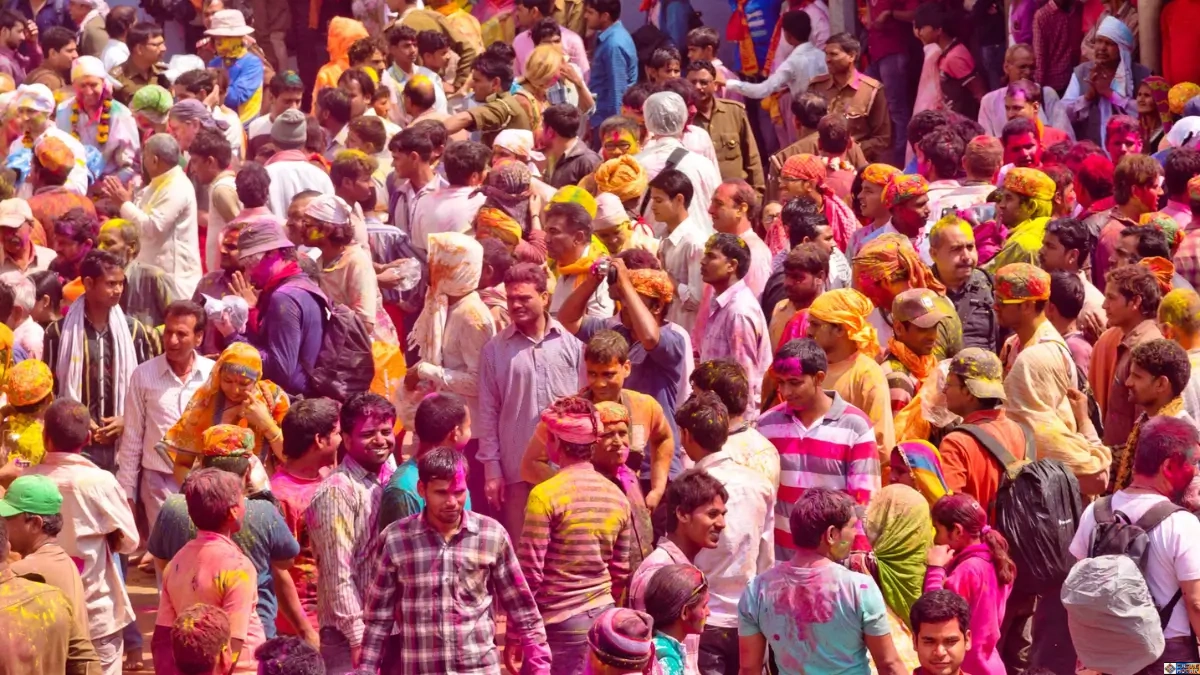
- The Collective Transgression: This one surprises people. Festivals almost universally involve a temporary suspension of normal hierarchy. During Holi, caste dissolves under thrown pigment. During the Roman Saturnalia — ancestor of much of what we now call Christmas — masters served slaves at the dinner table. This was not chaos. It was a controlled, ritually sanctioned release that actually made the everyday hierarchy easier to sustain. Anthropologists call it ‘ritualised inversion.’ I call it knowing how a pressure valve works.
- The Sensory Liturgy: Smoke, fire, percussion, the scent of specific flowers, specific foods eaten only on this day. These are not decorative. They are mnemonic technologies. They write the event into the body — into smell and muscle memory — in a way that language alone cannot. That is precisely why festivals outlast the empires that created them. The body retains memories that the mind may forget.
The Global Festival Matrix
Eight Sacred Windows: A Seasonal Reference
Here are eight of the most significant religious festivals around the world, categorized by faith tradition, primary location, and seasonal timing. This is not a ranking. It is a cross-section of the most significant religious festivals in the world — chosen for geographic spread and theological diversity rather than size or fame.
| Festival | Faith & Culture | Primary Location | Seasonal Window |
|---|---|---|---|
| Holi | Hinduism | India / Nepal / Global | Spring (Phalguna) |
| Eid al-Fitr | Islam | Global Observance | Lunar (Shawwal) |
| Diwali | Hinduism / Sikhism / Jainism | India / Global | Autumn (Kartika) |
| Inti Raymi | Inca Indigenous Tradition | Cusco, Peru | June Solstice |
| Nyepi | Balinese Hinduism | Bali, Indonesia | Spring (Saka New Year) |
| Songkran | Theravada Buddhism | Thailand / SE Asia | April (Solar New Year) |
| Semana Santa | Roman Catholicism | Spain / Latin America | Spring (Holy Week) |
| Vesak | Buddhism | Sri Lanka / Global | May Full Moon |
Case Study: The Illumination of Diwali

Five Days of Light Against an Ancient Dark
The first thing to understand about Diwali is that it is not one festival. It is five days of overlapping observances tied to different narrative threads — the return of Rama, the worship of Lakshmi, the story of Bali and Vamana, the Jain commemoration of Mahavira’s enlightenment — all converging in the lunar month of Kartika.
Western coverage flattens this into ‘the Hindu festival of lights’ and moves on. That flattening loses something essential. The Christmas festival history went through a similar process of compression over centuries, and we are still working out what was lost.
What I find most striking about Diwali, having observed it across communities in Leicester, Mumbai, and rural Tamil Nadu, is how the clay lamp — the diya — functions as both theological statement and domestic act. You are not going to be attending the ceremony.
You are making one, at your own threshold, with your own hands. The theological claim — light defeats darkness, righteousness returns — is enacted in the most intimate possible register: your own doorstep, your own windowsill. This is why it travels. The ritual infrastructure fits inside a household.
In contemporary urban settings, LED strips have largely replaced hand-poured wax in clay saucers. Some cultural scholars treat this as loss. I am less certain. The ancestral gathering traditions embedded in Diwali are more durable than their material form. The gesture is what carries meaning. The lamp is the vehicle, not the meaning itself.
Case Study: The Silent Stillness of Nyepi

The World’s Only Festival That Asks You to Disappear
Every festival I have ever studied involves the production of something — sound, colour, smoke, food, movement. Nyepi is the only one I know that is built entirely around subtraction. On Bali’s Day of Silence, the island stops. The airport closes. Traffic disappears. Lights go out.
The hotels keep their guests in. The internet is restricted. For 24 hours, an entire island collectively performs non-existence — the theological logic being that malevolent spirits arriving for the Balinese New Year will find nothing worth inhabiting and pass on.
The night before is its inverse: the ogoh-ogoh processions, enormous papier-mache demons paraded through firelit streets before being burned. The noise is extraordinary. Then the silence falls and you feel, quite viscerally, how much the noise was doing. I spent a Nyepi night in Ubud some years ago, and by mid-morning I was genuinely disoriented by the absence of ambient sound.
By late afternoon I had stopped reaching for my phone. There is something in that enforced stillness that is worth taking seriously — not as tourism, but as technology. Silence, it turns out, is something a community can choose together.
“To look at the diverse religious festivals in the world is to realise that while our dogmas may be written in quiet isolation, our spirits are fundamentally designed to sing out in a crowded, beautiful chorus.”
— Editorial Team, Culture Mosaic
Holi: When the Hierarchy Dissolves

A Festival That Has Outlasted Every Empire That Tried to Suppress It
I want to push back against the way Holi gets discussed in travel content. The throwing of coloured powder is real and it is joyful and it makes for striking photographs. It is also the youngest element of a festival that has been observed, in some form, for over two thousand years.
What is ancient is the Holika Dahan — the bonfire burned the night before. A demon named Holika, immune to fire, sat in the flames holding a child she intended to destroy. The fire took her and left the child unharmed. The colour and chaos the following morning are a celebration of that failure. Not a vague celebration of spring. A specific, named victory over a specific kind of malevolence.
The version of Holi celebrated in London parks or Brooklyn community centres is genuinely different from what happens in Mathura or Vrindavan. I do not think that difference is a problem, exactly — ritual has always migrated and adapted — but I think it is worth naming.
When you reduce a festival to its most photogenic element, you strip out the theology, and you strip out the history. The transformative micro festivals writing has looked at exactly this tension — how small-scale reimaginings of ancient gatherings can honour rather than hollow out the original.
The Islamic Calendar and Eid: Faith Mapped onto the Moon

A Celebration That Travels Through Every Season Over a Lifetime
Eid al-Fitr marks the end of Ramadan — a month of fasting, prayer, and intensified attention to charity and community — with a communal feast and the obligatory giving of Zakat al-Fitr: food or its monetary equivalent, paid before the Eid prayer so that those without resources can also celebrate. This structural requirement is not incidental. It is the theological core of the festival. The feast is designed, from its foundation, to be shared beyond the boundaries of family and wealth. That is not sentiment. That is architecture.
What I find structurally fascinating — and I say this as someone whose work involves thinking carefully about how festivals relate to time — is the way the Islamic lunar calendar refuses synchronisation with the solar year. Eid migrates. Over the course of a lifetime, a Muslim will experience Eid in every season: the short winter days of Birmingham, the hot June evenings of Karachi, the cool autumn afternoons of Jakarta. The festival is not tied to an environmental mood. Its meaning has to come from somewhere else. And it does: from the shared experience of Ramadan itself, which travels with it.
Día de los Muertos: A Festival That Refuses Grief Its Usual Territory

What Mexico Understood About Death That Most Cultures Still Struggle With
In an archive in Oaxaca, I was once shown a colonial-era document — a report from a Franciscan friar, written in the late 16th century — detailing his failed attempts to suppress what he called ‘the idolatrous practice of feeding the dead.’ What he was trying to eradicate was a practice that predated the arrival of Christianity in Mesoamerica by at least a thousand years. He did not succeed. What survived his efforts, absorbed into the Catholic calendar of All Saints and All Souls, became Día de los Muertos.
The festival is observed on November 1st and 2nd across Mexico and among Mexican communities worldwide. Families build ofrendas — altars laden with the favourite foods, photographs, and possessions of those who have died. Marigold petals are laid in paths from the doorway. Candles are lit. The theological logic is precise: the dead are hungry, they are homesick, and they need to find their way back. So you make the path easy.
Western death culture, broadly speaking, treats grief as a private wound to be managed. Día de los Muertos treats it as a social obligation to be performed — publicly, collectively, and with significant effort. The dead are not mourned. They are hosted. I have been thinking about that distinction for years and I still find it genuinely instructive.
Christmas: The World’s Most Exported Festival

How One Feast Absorbed Everything It Encountered
From a scholar’s perspective, the Christmas festival history is almost improbably interesting. The December 25th date appears nowhere in the Gospels. It was established in Rome in the 4th century, most likely to position the new feast in deliberate relation to existing midwinter observances — the Saturnalia, the birthday of the unconquered sun (Sol Invictus), possibly the Persian Mithraic celebrations. Over the following sixteen centuries, Christmas absorbed customs from every geography it moved through. The evergreen tree came from northern Europe. The crib from 13th-century Assisi, via Francis of Assisi’s nativity scenes. Gift-giving partly from the Saturnalia, partly from the St Nicholas traditions of Asia Minor.
The result is a festival with a singular theological claim at its centre — the Incarnation, God taking on human form — wrapped in a layered archaeology of borrowed customs that have, in some cases, almost nothing to do with that claim. I am not critical of this. It is how living traditions survive. They do not preserve themselves in amber. They integrate the landscape around them, and they keep moving.
Vesak: The Full Moon and the Bodhi Tree

Buddhism’s Quietest Major Festival
Vesak — also called Buddha Purnima — commemorates the birth, enlightenment, and death of Siddhartha Gautama, all understood to have occurred on the same full moon day in May. It is observed across Sri Lanka, Thailand, Myanmar, Cambodia, and by Buddhist diaspora communities globally. The Bodhi Day tradition offers a quieter companion observance for those approaching Buddhism from outside the tradition.
What I want to say about Vesak is something that rarely surfaces in surveys of religious festivals in the world: not every significant religious festivals: not every significant rite is built around communal euphoria. Vesak involves the lighting of lanterns, the release of caged birds as an act of liberation, the distribution of vegetarian food. The emphasis falls on dana — generosity — and on meditation rather than celebration. It is quieter than almost any other major festival I have studied. And it has been continuous for over two thousand years. There is a lesson in that, about what kinds of ritual actually last.
Inti Raymi: The Sun King’s Oldest Living Audience

Why an Inca Festival Survived Spanish Colonialism
The Festival of the Sun was outlawed by Spanish colonial authorities in Cusco in 1572 — not long after the conquest, once it became clear that it was functioning as a focal point for Quechua cultural identity and, presumably, as a form of political memory. It survived underground. It was formally revived in 1944 by Faustino Espinoza Navarro, reconstructed from Garcilaso de la Vega’s 17th-century accounts, and has been performed at the fortress of Sacsayhuaman each June solstice since.
The survival of Inti Raymi illustrates something I have come to think of as axiomatic about the relationship between communities and their festivals: you can ban a rite, but you cannot ban the memory of why it mattered. Prohibition does not destroy ritual. It drives it inward, where it becomes, if anything, more important — more freighted with identity and resistance. The same pattern appears in the suppression of the African religious traditions that became Candomble in Brazil, in the criminalisation of certain Native American ceremonies in the United States, and in the colonial-era manuscript I read in Oaxaca about Día de los Muertos. The prohibition is always temporary. The festival always comes back.
Minor Festivals With Major Weight
Why Scale Is Not the Measure of Significance
Coverage of religious festivals in the world tends to privilege scale. The largest gatherings, the most photographed moments. I want to make an argument for a different measure. Hanukkah is observed by a comparatively small global Jewish population over eight winter nights. Its core story — a small quantity of oil burning far longer than it physically should, the refusal of a minority tradition to be assimilated into a dominant empire — speaks to something far wider than its community of origin. I have met people with no Jewish background who find it among the most moving of all the world’s religious observances. The story is specific. The meaning is not.
The Chinese New Year festival complex — spanning the Lunar New Year across East and Southeast Asian traditions — carries a ritual grammar so old it predates most of the religious categories we now use to organise the world’s sacred calendar. At its heart is the New Year’s Eve family reunion dinner: possibly the most replicated single ritual act in human history, performed simultaneously by hundreds of millions of households across multiple countries, in a dozen languages, in every time zone. Scale matters here. But scale is not why it matters.
Ethics and Preservation: Navigating Sacred Spaces
The Tourism Dilemma: Keeping Sacred Traditions Intact
The globalisation of travel to religious festivals in the world has produced genuine ethical friction, and I want to be direct about it rather than diplomatic. Commodification is real. I have sat in the back of a jeep watching tourists photograph a funeral procession in Toraja and felt genuine discomfort — not at the tourists individually, who were curious and respectful by any reasonable measure, but at the system that positioned them there. Here is what I tell people who ask me how to attend a festival outside their own tradition:
- Understand Photography Etiquette: Some moments are not yours to take home. Solemn indigenous and monastic rituals exist for the participants, not the observer. Lowering the camera is not a loss. It is sometimes the only honest response to where you are.
- Dress for the Sanctuary, Not the Festival: Garment codes exist for reasons that predate your visit by centuries. They are not an inconvenience. Research them before you arrive, not at the entrance.
- Support Local Artisans Directly: The economic geography of festival attendance matters. Spend inside the community — at vendor stalls, at family-run accommodation, with local guides who carry genuine knowledge of the tradition, not just the schedule.
- Learn the Theological Frame: A festival is not a backdrop. Understanding what is actually being commemorated — the specific story, the specific obligation, the specific claim about the nature of reality — changes how you experience it. It also changes how you are received.
- Wildcard: Attend Without Internet Access: The most significant festivals in the world often happen in places where connectivity is limited. Do not fight that. The enforced presence is not an inconvenience. It is closer to the original point than anything you will find on a highlights reel.
For more on where these traditions intersect with contemporary culture and curation, the Culture Mosaic archive on Transformative Micro Festivals and the World’s Biggest Celebration Festivals offer useful companion reading.
Frequently Asked Questions
Q1: What are the most widely observed religious festivals in the world?
Christmas, Eid al-Fitr, Diwali, Vesak, and Passover each draw hundreds of millions of participants. They are anchor points — moments around which entire communities organise memory, identity, and obligation. The scale varies wildly. The impulse does not.
Q2: How do religious festivals shape local economies?
The economic footprint of a major festival is rarely incidental — it is centuries old. Diwali generates billions in Indian retail sales in a matter of days. The Semana Santa processions in Andalucia sustain regional hospitality economies across an entire spring season. Ritual spending is some of the most loyal spending human communities produce.
Q3: Are religious festivals accessible to non-believers?
Most welcome respectful observers, though etiquette varies dramatically. Holi street celebrations are openly participatory by design. Certain Shinto rites are performed by priests alone, with public access only to the periphery. The honest answer is: research the specific festival and the specific site before you go, not the general tradition.
Q4: How are religious festivals changing in the digital age?
Live-streamed puja, virtual Hajj preparation tools, and short-form video coverage of processions have all extended participation beyond physical borders. Some communities see this as a preservation tool for diaspora populations. Others — rightly, I think — worry that reducing a festival to its visual surface misrepresents what is actually happening. Both concerns are worth holding simultaneously.
Q5: Which religious festival is the largest human gathering on earth?
The Kumbh Mela, rotating across four sites on India’s sacred rivers — Prayagraj, Haridwar, Nashik, and Ujjain — draws over 50 million pilgrims at peak gatherings. Nothing else comes close. It is the largest peaceful human assembly ever recorded, and it has been happening, in one form or another, for over a thousand years.
Further Reading on Culture Mosaic
- Ancestral Gathering Traditions
- Transformative Micro Festivals
- Christmas Festival History
- Bodhi Day Facts for Kids
- When is Día de los Muertos
- Hanukkah
- Chinese New Year Games for Kids
- World’s Biggest Celebration Festival
- Culture Mosaic