
 By Culture Expert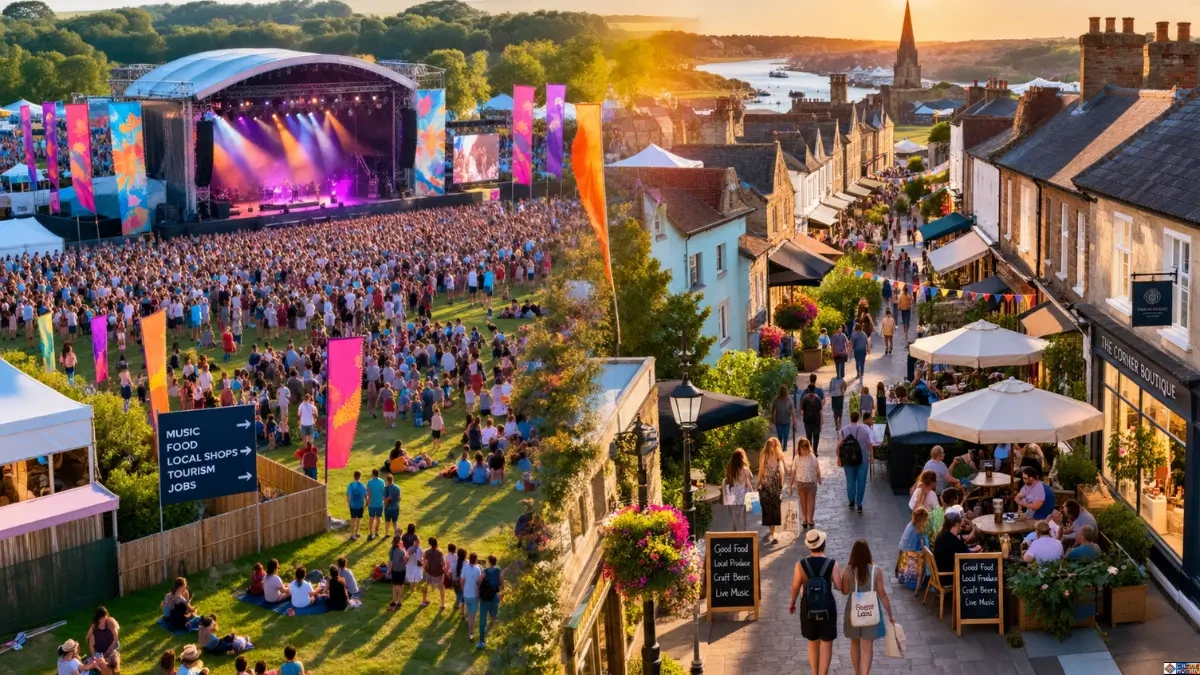
Quick Summary (Answer Block)
What is the economic impact of music festivals? Music festivals act as temporary economic engines, generating revenue through direct attendee spending on tickets, accommodation, food, and transport, while driving indirect economic growth via the regional supply chain. Across UK and European markets, outdoor events yield a local economic multiplier of 1.4× to 1.8×—meaning every £10 million in direct event revenue generates £14–18 million in total regional economic activity. Festivals create temporary jobs, boost off-site tourism, elevate host-city branding, and strengthen civic logistical infrastructure. However, rising production costs, inflation, and land-use overheads present significant financial pressures for independent event organizers.
The Invisible Economy Behind Every Soundcheck
The gates have not opened yet. Three hundred metres away, a small market town is already running out of space on its pub chalkboards. The B&Bs filled up on Thursday. The taxi firm stopped answering calls Friday morning. And somewhere in a field that smelled like mud and dry grass three weeks ago, forty-seven refrigerated lorries sit lined up in precision.
That is where the true story of festival economics begins—long before the headline act walks onstage.
When people ask what is the economic impact of music festivals, they usually focus on ticket sales and gross gate receipts. But analyzing festival impact solely through gate revenue misses the broader financial ecosystem. Festivals operate as temporary, self-contained pop-up cities. Like any urban center, they trigger cascading layers of financial activity that ripple across supply chains, transport networks, and municipal budgets.
For every pound spent through the gate, a significant multiple is recirculated throughout the host community. This regional multiplier—not gross gate turnover—defines the real financial narrative. It is a perspective Culture Mosaic has highlighted for years: in 2026, as live event models face shifting consumer habits and inflationary costs, understanding this multi-layered footprint is vital for event organizers, local councils, and cultural strategists alike.
BY THE NUMBERS: Festival Economic Impact at a Glance
Direct Impact: The Inner Circle of Revenue
Ticket Sales and International Event Tourism
The most visible stream of income comes from ticket sales. Major UK gatherings clear millions long before a warm-up act takes the stage. However, the critical economic metric is not just how much money is collected, but where the buyers originate.
International and out-of-region attendees spend significantly more per head than local day-trippers. They book multi-night accommodations, dine at local establishments, and explore surrounding attractions. This makes major cultural events—from landmark gatherings featured in the Top 20 Biggest Festivals in the World to boutique regional celebrations like Festivalle 2026—vital international tourism anchors that drive regional development.
On-Site Commerce: What Headline Figures Miss
Inside the perimeter fence operates an intensive micro-economy:
- Food vendors turning over thousands of pounds in a single afternoon.
- Merchandise booths operating with continuous queues.
- Pop-up bars, artisanal craft pitches, mobile charging kiosks, and wellness vendors.
While a portion of on-site revenue flows back to the festival producer, a substantial share goes directly to independent regional vendors and small businesses operating pop-up venues within the grounds.
The Multiplier Effect: How a Festival Pound Travels
To understand how do music festivals impact local economies, one must analyze the multiplier effect—tracking how a single pound of direct expenditure circulates through a community before exiting the regional economy.
The Local Multiplier Chain
Across UK and European outdoor event markets, the local economic multiplier consistently ranges between 1.4 and 1.8. A festival generating £10 million in direct on-site revenue yields between £14 million and £18 million in total regional economic output.
Direct vs. Indirect Spending
Direct Spending
- Event Tickets & Passes
- On-site Food & Beverages
- Official Merchandise
- Vendor Stall Rentals
- On-site Parking & Upgrades
Indirect & Induced Spending
- Off-site Hotel & B&B Stays
- Local Taxi & Shuttle Fares
- Main Street Dining & Retail
- Regional Agricultural Procurement
- Re-spent Staff Wages in Community
The difference between raw direct spend and total financial output is determined by economic leakage. When organizers source food, stage equipment, and staffing from local businesses, more money recirculates regionally. Conversely, relying exclusively on national corporate contractors causes financial value to leak out of the local economy.
How Festivals Feed Local Businesses Beyond the Gates
The Hospitality Peak and Local Commerce
Ask any B&B owner, hotelier, or pub manager within twenty miles of a festival site which weekend shapes their annual balance sheet, and you will get a unanimous answer. Festival attendance creates an intense surge in hospitality demand:
- Accommodation: Hotels, short-term lets, and campsites fill months in advance.
- Food & Retail: Supermarkets, bakeries, cafes, and late-night takeaways see record footfall.
- Service Providers: Local transport, equipment hirers, and security firms experience major seasonal spikes.
For rural communities where shoulder-season tourist trade is thin, a single festival weekend can deliver 15% to 20% of a business’s annual net turnover.
Transport Infrastructure and Seasonal Pressure
The influx of thousands of attendees places temporary demands on local transit infrastructure. Train stations, private charter buses, taxi fleets, and ride-shares log peak operating numbers. While some revenue flows to national transport operators, regional shuttle operators, local parking providers, and private hire drivers benefit directly.
In many instances, the infrastructure upgrades required to host large crowds—such as reinforced access roads, expanded electrical hookups, and upgraded broadband coverage—provide long-term utility to host towns well after the festival stage is dismantled.
The Return Visitor “Halo Effect”
The long-term economic value of a festival extends beyond the weekend itself. Visitors who discover a destination through a festival frequently return as year-round tourists to explore local heritage, stay at rural guesthouses, and dine at regional restaurants.
This long-tail leisure trade is documented throughout the Global Cultural Festivals Guide. Whether traveling for a Latino Cultural Festival, exploring traditions at a Washington Whiskey Rebellion Festival, or visiting regional cultural light festivals, first-time event attendees often become repeat visitors.
Urban vs. Rural: How Scale and Geography Change the Story
The economic profile of an event shifts based on its venue and geography. Urban park events and rural field festivals circulate funds through distinct channels:
While urban festivals leverage established transit networks and high bed capacity, rural boutique events—such as those highlighted in guides to the Best UK Folk Festivals—often retain a higher percentage of local spend per head because regional vendors handle production, catering, and staging.
Why Are Music Festivals Struggling? The Modern Economic Paradox
Despite record consumer demand for live music, independent festival organizers face severe financial challenges. Understanding why are music festivals struggling requires examining the cost pressures impacting event production:
- Production Cost Inflation: Over the past three years, site setup costs—including diesel generators, temporary fencing, staging, and security—have increased by 30% to 45%.
- Supply Chain Bottlenecks: Post-pandemic consolidation among equipment suppliers has driven up hire rates for sound systems, lighting rigs, and portable sanitation.
- Changing Consumer Habits: Ticket buyers are purchasing passes much closer to the event date, creating cash-flow pressure for independent organizers who must pay upfront deposits for artist fees and municipal permits.
- Environmental and Waste Overhead: Managing event footprints, compliance, and cleanups adds significant operational expense. Issues surrounding site remediation are explored further in The post concert hangover.
To navigate these economic headwinds, forward-thinking producers are adopting sustainable procurement strategies outlined in frameworks for Regenerative Festival Culture. By partnering with local farming cooperatives, utilizing renewable site energy, and establishing multi-year municipal support agreements, festivals can reduce waste while keeping production capital within the local community.
Cultural Capital: The Non-GDP Investment
Cultural Capital Impact
Destination Map
Establishes regional cultural identity and drives ongoing tourism demand.
Workforce Pipeline
Trains event crew, sound engineers, production managers, and safety directors.
Heritage & Cohesion
Preserves ancestral and community traditions across generations.
Beyond immediate tax receipts and hotel bookings, music festivals build enduring social and cultural capital:
- Municipal Branding: Hosting an acclaimed annual event enhances a town’s cultural profile, attracting creative professionals, remote workers, and broader business investment.
- Workforce Pipeline: Festivals serve as practical training grounds for young professionals in audio engineering, crowd management, logistics, and hospitality.
- Heritage Preservation: Gatherings celebrating Ethno Cultural Festivals Heritage, Traditional World Festivals Cultural Heritage, or historical roots like the Ancient roots of modern festivals preserve regional arts while providing economic grounding for local performers.
These historical roots connect directly to global celebrations of community identity, including major Religious Festivals in the World (as well as holiday guides on Religious Festivals in the World) and body-based community traditions like Ancestral Somatic Rituals 2026.
FAQ: What Is the Economic Impact of Music Festivals?
1. What is the economic impact of music festivals on local businesses?
2. How does the multiplier effect work for music festivals?
3. What is the difference between direct and indirect spending at a music festival?
4. Do music festivals create long-term economic benefits for a region?
5. How can local authorities maximize the economic impact of music festivals?
References & Credible Sources
- UK Music: LIVE Supply Chain & Economic Impact Reports
- Oxford Economics: The Global Economic Impact of Live Event Tourism
- BIFFA & Vision 2025: Environmental and Economic Accounting in Outdoor Events
- Illustrate Magazine: Analysis on What Is the Economic Impact of Music Festivals and local community engagement.