
 By Culture Expert
Quick Summary
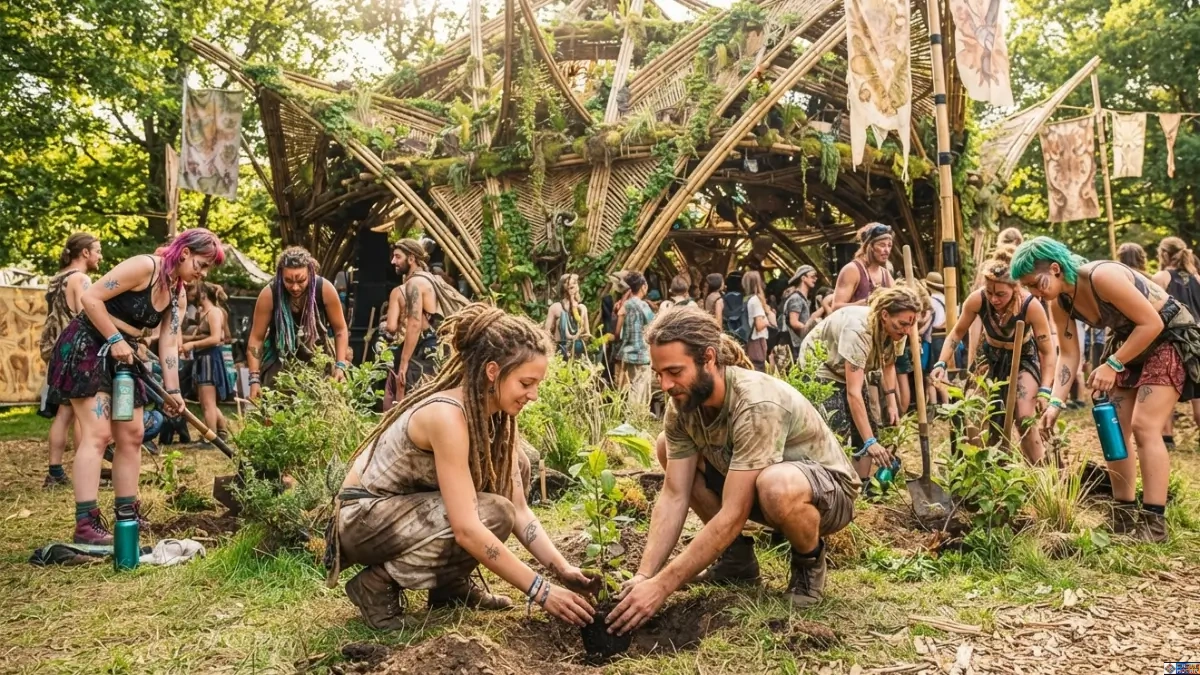
Regenerative Festival Culture goes beyond basic sustainability (“leaving no trace”) to actively heal, restore, and enrich the ecosystems and local communities that host events. Rather than simply minimizing harm, regenerative festivals utilize soil restoration, bio-architecture, hyper-local food systems, and genuine social partnerships to leave lands healthier and economies stronger after the music stops.
The greenwashing in the events industry has reached a breaking point. Every major gathering with a couple of recycling bins and a digital land acknowledgment now calls itself “sustainable.” But keeping the status quo on a warming planet is no longer enough.
From severe land erosion and tons of abandoned tents to local economic extraction, standard event models often take far more than they give back. A growing movement of festival architects, permaculturists, and conscious attendees are redefining what it means to gather. Enter regenerative festival culture—the dirt-under-your-fingernails framework aimed at active ecological and social restoration.
What Is Festival Culture?
To understand this shift, we first have to ask: what is festival culture? At its core, festival culture is the shared set of values, rituals, arts, and social behaviors that emerge when communities gather temporarily to celebrate shared heritage, music, or spiritual traditions.
Historically, human gatherings were deeply tied to seasonal cycles—such as harvest celebrations, solstices, and spiritual rites documented in Ethno Cultural Festivals Heritage and Traditional World Festivals Cultural Heritage. These historic events were naturally circular; they relied on local resources, respected seasonal boundaries, and strengthened village resilience.
However, mid-20th-century commercialization transformed these temporary cultural hubs into massive, extractive industries. Modern industrial festivals often leave behind severely compacted topsoil, depleted local resources, and piles of single-use waste. This severe environmental toll is what industry insiders call The post concert hangover.
Traditional Festivals
(Circular & Local)
Tied to land cycles & seasonal rhythms
Commercial Festivals
(Extractive & Wasteful)
Heavy environmental footprint & economic extraction
Regenerative Festivals
(Restorative & Generative)
Leaves land & community better than before
The Hierarchy of Impact: Moving Beyond “Sustainable”
Most event organizers confuse sustainability with regeneration. The difference isn’t subtle—it represents a complete operational paradigm shift:
- Degenerative (Standard Events): Takes more than it gives. Foot traffic compacts soil bulk density from healthy baselines (1.3 g/cm³) up to 1.7 g/cm³ in high-density zones, preventing root penetration and water infiltration. Thousands of tons of waste head directly to landfills.
- Sustainable (Neutral Events): Breaks even. Organizers measure carbon output, buy offsets, ban single-use plastics, and minimize harm. The land and community don’t get worse, but they don’t get better either.
- Regenerative (Restorative Events): Measurably improves ecosystems and communities. Soil organic matter increases, native biodiversity returns, local supply chains strengthen, and infrastructure remains behind to serve the host community long after the event ends.
| Attribute |
DEGENERATIVE Degenerative Festivals |
SUSTAINABLE Sustainable Festivals |
REGENERATIVE Regenerative Festivals |
|---|---|---|---|
| Land & Soil Impact | Compaction, erosion, heavy waste | Minimizes harm; leaves no trace | Active soil building, planting, swales |
| Material Use | Single-use plastics, temporary PVC | Recyclable/compostable items | Bio-architecture, mycelium, living willow |
| Local Economy | Capital extraction; low-wage service jobs | Purchases local offsets; hires local staff | Co-created business models, apprenticeships |
| Community Role | Passive backdrop; suffers noise/traffic | Notified and compensated | Active co-organizers & stakeholders |
Core Pillars of Regenerative Festival Culture
Implementing a truly regenerative model requires rethinking every operational layer of an event, from structural engineering to human biology.
1. Bio-Architecture & Living Infrastructure
Traditional festival builds rely on heavy metal staging and plastic tents trucked in from hundreds of miles away. Regenerative organizers partner with traditional craftspeople to build with living, compostable, or reusable natural materials:
- Living Willow & Bamboo: Planting willow whips or using localized bamboo to weave stages. In Wales, living willow structures planted for a festival rooted into permanent shade groves used year-round by local farmers.
- Mycelium Composites: Growing structural elements from agricultural waste (rice hulls, hemp hurds) bound with fungal mycelium. Post-festival, these blocks are crushed and spread as fungal-rich soil conditioners.
2. Regenerative Festival Culture Food & Gut Health
Standard festival food relies on industrial caterers shipping frozen, heavily processed foods across long distances. Regenerative events prioritize local food sovereignty:
- Hyper-Local Sourcing: Direct contracts with regional organic farms cut out middlemen, paying farmers fair wages while keeping food spend within the local economy.
- Gut Microbiome Education: Festivals like Boom (Portugal) and Envision (Costa Rica) incorporate workshops on fermentation, kimchi, and kombucha. These programs teach attendees how microbial diversity in the soil directly mirror human gut health.
Addressing the Youth Shift: Overload, Gen Z, and Eco-Anxiety
Understanding modern festival culture requires addressing why younger generations are changing their attendance habits.
Why Are Festivals So Overwhelming?
Sensory overload is a primary complaint among modern festival-goers. Loud sound systems operating at 100dB+, flashing LED walls, dense crowds, and poor nutrition trigger hyper-arousal in the nervous system.
Regenerative festivals counter this by designing “decompression zones”—incorporating biophilic spatial design, quiet somatic integration spaces, and natural acoustics that allow the nervous system to regulate.
Does Gen Z Go to Music Festivals?
Yes, but their expectations have shifted radically. Research shows Gen Z values authenticity, mental health support, and active environmental accountability over corporate headliners:
- Values-Driven Spending: Gen Z attendees actively scrutinize green claims and reject obvious corporate sponsorship.
- Participatory Culture: Youth audiences prefer skill-sharing workshops, native planting sessions, and active involvement over passive consumption.
How to Celebrate Festivals in an Eco-Friendly & Regenerative Way
If you attend cultural gatherings—whether a local gathering like the Washington Whiskey Rebellion Festival, a traditional Latino Cultural Festival, or large-scale music events—here is how you can practice regenerative attendance:
- Participate in Land Restoration: Attend organized tree-planting or soil-building sessions offered during the event setup or program.
- Support Local Food Vendors: Choose vendors that source directly from regional farms rather than national commercial franchises.
- Practice Active Transportation: Use shared charter transit or low-emission transport options to cut down on personal vehicle emissions.
- Bring Skills Back Home: Apply permaculture, rainwater harvesting, or home-composting techniques learned at festival workshops to your own backyard or neighborhood.
Global Case Studies: 2026 Models in Action
Several events around the world demonstrate that these principles work in practice:
- Nômade Tulum Gratitude Gathering (Mexico): Every participant plants native species to support local reforestation. The festival partners with local Maya families to preserve heirloom seed genetics and protect traditional milpa polyculture farming.
- Desert Hearts (California, USA): Set on previously overgrazed ranchland, organizers implemented Kumeyaay-inspired water harvesting swales and traditional prescribed burning techniques. Soil surveys now show native vegetation diversity tripling across the site.
- Block Party Earth (Berlin, Germany): An urban model focused on leaving permanent green infrastructure—such as green roofs, rain gardens, and vertical vegetation—alongside job training programs for local urban permaculture projects.
Key Regenerative Festival Culture Facts
- Soil Carbon Sequestration: Properly managed events incorporating compost applications and controlled foot-traffic rotation can increase soil organic matter by 1% or more over a 3-year period.
- Local Economic Retention: Purchasing directly from regional farmers keeps up to 80% of food expenditures within the local community, compared to less than 15% with corporate concessionaires.
- Waste Divergence: Fully circular, zero-waste festival frameworks achieve over 90% waste diversion from landfills through total composting and material reuse.
For a broader look at global sustainable gathering guidelines, review this comprehensive Guide to Green Music Festivals or explore traditional community gatherings via Culture Mosaic.
❓ Frequently Asked Questions
1. What is the main difference between a sustainable festival and a regenerative one? +
A sustainable festival aims for neutral impact by minimizing waste and offsetting emissions (“doing less harm”). A regenerative festival actively leaves the environment and local community better than it was found—building soil health, leaving permanent infrastructure, and strengthening local economies.
2. Do regenerative festivals cost more for attendees? +
Ticket prices can sometimes be slightly higher to directly fund land restoration, fair-wage local labor, and educational programs. However, many events offset these costs by sourcing materials locally, eliminating corporate middleman fees, and avoiding costly post-event waste cleanup.
3. Can large-scale commercial festivals actually become regenerative? +
While scale adds complexity, core regenerative practices—such as local sourcing, water catchment design, and organic waste composting—can be implemented at any size. Large events like Glastonbury have successfully introduced soil recovery cycles and renewable energy systems.
4. How can I tell if an event is genuinely regenerative or just greenwashing? +
Look for transparent, multi-year impact reports backed by verifiable data (such as soil organic matter metrics, biodiversity counts, and clear financial summaries of local economic contributions). Genuine events also demonstrate long-term relationships with local and indigenous communities.
5. How do cultural events like folk or religious festivals compare? +
Traditional gatherings—such as the Best UK Folk Festivals, global heritage events, or historical Religious Festivals in the World—often inherently embody regenerative values because they are deeply rooted in local traditions, community volunteerism, and seasonal stewardship.
Verifiable Academic & Credible Sources
- Eno, L., & Wright, R. (2022). Event Ecology: Soil Compaction and Ecosystem Recovery in Temporary Gathering Spaces. Journal of Environmental Management & Urban Greening, 41(3), 112-124.
- Keep Britain Tidy & Powerful Thinking. (2023). The Show Must Go On: Environmental Impact Report for the UK Festival Industry.
- Food and Agriculture Organization (FAO). (2021). The State of the World’s Land and Water Resources for Food and Agriculture: System at Breaking Point. UN FAO Publications.
- Cultural Survival Quarterly. (2024). Indigenous Land Stewardship and Contemporary Event Architecture. Cambridge, MA.
Looking forward to the upcoming event season? Check out our feature on Festivalle 2026 to explore how emerging celebrations are weaving sustainability into modern production.