
 By Dr. Marcus Hale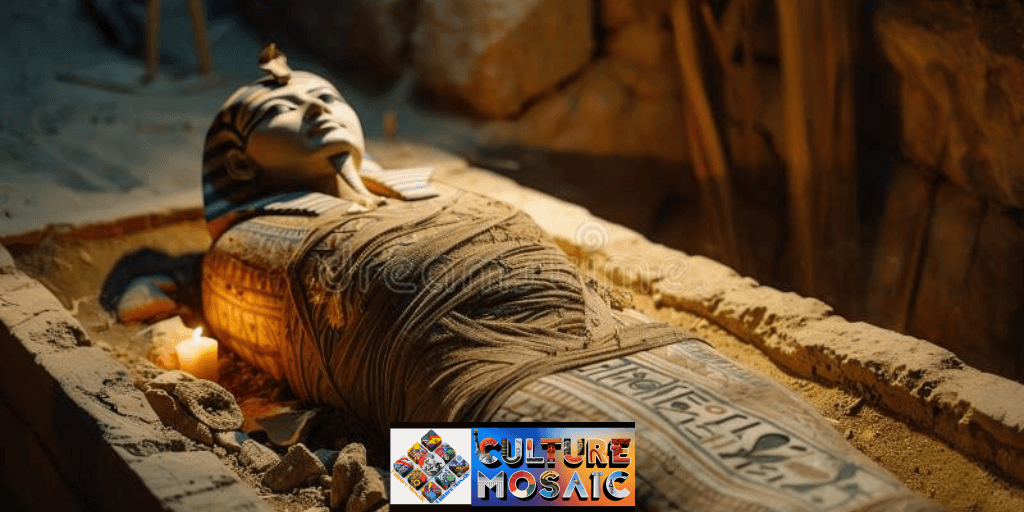
Written in the Wrappings: How Egyptian Mummies Preserved Homer’s Iliad
In the trash heaps of the Ptolemaic Fayum, ancient Greek literature found an unlikely sanctuary. The Egyptian mummy Iliad papyri are not museum artefacts in the conventional sense. They are accidents. Magnificent, impossible accidents. Pieces of Homer’s greatest epic, soaked in water, layered with plaster, and pressed around human remains by embalmers who almost certainly never read a word of them.
That is the strange, slightly vertiginous truth at the heart of this discovery. The dead preserved the poem. The garbage became the archive.
The Intersection of Two Empires
Egypt in the third century BC was significantly different from the Egypt of the pharaohs. It was Ptolemaic. Greek-speaking. Bureaucratic. A place where papyrus was currency, Homer was curriculum, and the line between sacred and administrative was constantly, pragmatically smudged.
To understand the Egyptian mummy Iliad papyri, you have to feel the texture of that world. The Nile Delta smelling of salt and rotting reed. Tax collectors writing on the backs of schoolroom poetry exercises. Embalmers buying waste paper by the cartload.
That collision of Greek literary culture with Egyptian funerary tradition is exactly what produced these fragments. It was not reverence. It was recycling. And it turns out recycling saves more than we think.
The Anatomy of Cartonnage: Turning Trash into Sacred Armor
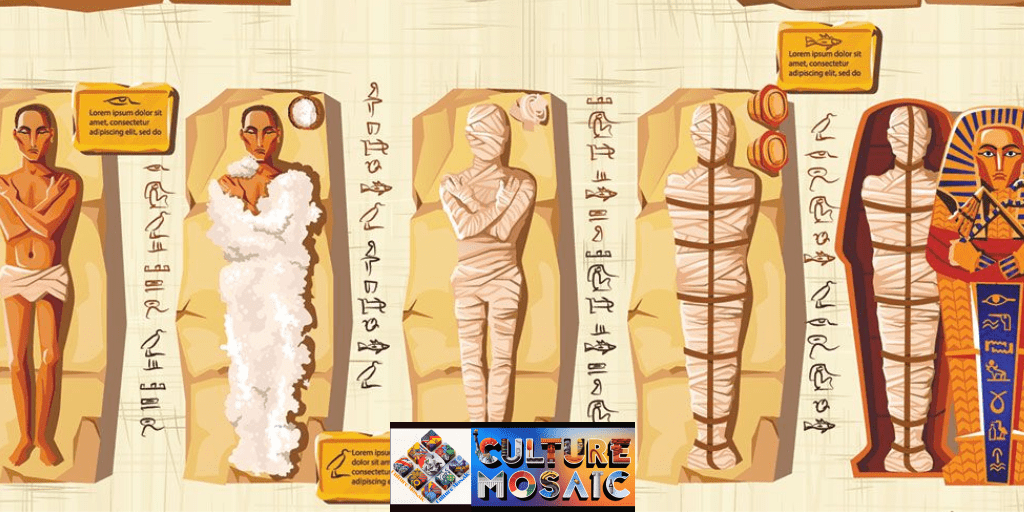
Cartonnage is the Egyptological term for a material made from layered papyrus and plaster, shaped into mummy masks, chest pieces, and foot coverings. Think of it as ancient papier-mache, but funerary. The results could be painted, gilded, and elaborately decorated. On the outside: the serene, formal face of the deceased. Inside the layers: whatever scraps the embalmer happened to buy.
The Mechanics of Ancient Recycling
Papyrus was expensive to produce. New sheets required processing Nile reeds through a laborious cutting, layering, and pressing sequence. Old papyrus, the kind that had already served its administrative or educational purpose, was cheap, plentiful, and structurally useful once wet. Embalmers sourced it in bulk.
The process was straightforward. Old documents, tax receipts, school texts, personal letters, and literary manuscripts were soaked until pliable, then built up in alternating layers with linen and gesso. Once dried and shaped around a wooden or clay form, the cartonnage became rigid. Durable. A shell for the dead.
▪ Step 1: Bulk purchase of discarded papyrus from schools, libraries, and estates.
▪ Step 2: Soaking in water until sheets became pliable and adhesive.
▪ Step 3: Layering with linen strips and wet gesso over a wooden or clay form.
▪ Step 4: Drying, then painting and gilding the exterior surface.
▪ Step 5: Fitting the hardened cartonnage shell around the prepared mummy.
The Social Hierarchy of Text Sourcing
The Iliad occupied a specific, weighty place in Ptolemaic educational life. It was the foundational text. Greek boys in Egypt memorized it the way Latin students would later parse Virgil. School copies were written and rewritten until the papyrus became too worn to reuse. Private libraries cycled their editions. When a copy was done, it went the same place everything else went: into the secondhand market, and eventually into the cartonnage trade.
That is why Homer, specifically, appears so often inside mummy casings. It was not ritual significance. It was sheer ubiquity. Homer was everywhere in a literate Ptolemaic household, which meant Homer’s discards were everywhere too.
| Field Note | Not every Iliad papyrus in a mummy was accidental recycling. At Oxyrhynchus, excavators recovered an Iliad papyrus that had been intentionally folded and placed across a Roman-era mummy’s abdomen. The positioning was deliberate. Homer, in that case, was not rubbish; he was a ward. A protective spell. The poem of mortality pressed against the dead as if the words themselves might hold something at bay. |
Chronological Recovery: When the Dead Gave Back the Text
Below is a summary of the key Egyptian mummy Iliad papyri discoveries, their provenance, and where those fragments reside today.
| Artifact / Discovery | Location Found | Homeric Content | Current Home |
|---|---|---|---|
| The Hawara Homer | Hawara (Petrie, 1888) | Large portions of Iliad Book 2 | Bodleian Library, Oxford |
| The Harris Homer | Crocodilopolis | Iliad Book 18 fragment | British Museum, London |
| The Bankes Papyrus | Elephantine | 16 columns of Iliad Book 24 | British Museum, London |
| Tebtunis Cartonnage | Tebtunis, Fayum | Various fragmentary hexameters | UC Berkeley / Copenhagen |
Each of these discoveries arrived under different circumstances and with different degrees of textual preservation. The Hawara Homer, unearthed by Flinders Petrie in 1888, remains one of the largest single recoveries. The Bankes Papyrus stands apart for its almost uncanny clarity, with 16 full columns of Book 24 readable in sustained sequence. These are not footnotes to classical scholarship. They are primary sources.
The Ethics and Science of Extraction
Dissolving History to Read It: The Conservator’s Dilemma
For most of the nineteenth and early twentieth centuries, recovering papyrus from cartonnage meant destroying the mummy casing. Scholars and collectors soaked the plaster off, peeled back the layers, and retrieved whatever text survived. The results were often spectacular. The cost, the permanent loss of the painted object, was considered acceptable.
Dissolving a painted funerary mask to get at Homer underneath feels, in retrospect, like reading a letter by burning the envelope. The face of a Ptolemaic mummy mask is its own document, recording social status, artistic convention, and the individual assertion of a particular death.
Modern non-destructive imaging has changed the equation completely:
▪ X-ray computed tomography (CT): Maps ink deposits trapped within cartonnage layers without any physical contact.
▪ Multispectral imaging: Isolates carbon-based ink signatures against papyrus fiber backgrounds, allowing text to be extracted digitally.
▪ Reflectance transformation imaging (RTI): Reveals surface texture and faded script by capturing multiple light angles computationally.
The cartonnage survives. The text is recovered. Both win. That shift from destructive to non-destructive recovery is one of the most consequential methodological changes in papyrology in the last thirty years.
Literary Impact: How the Dead Corrected the Living
The Variant Readings of the Desert
This is where the Egyptian mummy Iliad papyri become genuinely startling. The standard text of the Iliad we use today descends primarily from medieval Byzantine manuscripts, the oldest of which date to roughly the tenth century AD. The Ptolemaic cartonnage fragments predate those manuscripts by over a thousand years. And they do not always agree with them.
Scholars call the divergences “wild” lines: verses that appear in the papyri but were absent from, or later edited out of, the medieval tradition. Some of these lines are merely expansive, adding detail to scenes we know. Others shift the tone of a passage in ways that change how we read a character. Achilles sounds different in some of the Egyptian fragments. The grief is rawer. The pride more brittle.
“Every scrap of Homer pulled from a mummy casing is a time capsule that bypassed the censors of the Great Library of Alexandria.”
— Dr. Marcus Hale, Culture Mosaic
That is not rhetorical flourish. The Alexandrian librarians of the third and second centuries BC systematically standardized the Homeric text, producing the scholarly edition that became the ancestor of our medieval copies. The cartonnage papyri, often discarded before that standardization process was complete, preserve an earlier, less edited Homer. A Homer the library decided to clean up.
What the wild lines actually alter:
▪ Character speech that is longer, less formal, and harder to pin as heroic.
▪ Epithets and formulaic phrases that differ from the received Byzantine text.
▪ Occasional extra lines that flesh out secondary figures with no equivalent in the medieval manuscripts.
▪ Tonal variations, particularly around grief scenes, that suggest a less stoic Achilles than the canonical version presents.
Provenance and the Problem of Ownership
Provenance is not a comfortable subject in Egyptology. Many of the Egyptian mummy Iliad papyri were excavated, or looted, depending on your framing, during the nineteenth and early twentieth centuries under conditions that would be illegal today. The Hawara Homer came from a licensed dig. Other fragments entered private collections through the antiquities market with no documentation at all.
The British Museum, the Bodleian Library, and various European university collections hold significant portions of this material. Repatriation debates are ongoing and genuinely complicated. Egypt’s claim on objects removed from its soil is not merely legal; it is historical and cultural. At the same time, the scholarly accessibility these collections provide has produced the comparative analysis that makes the “wild” Homer discoverable in the first place.
For broader context on how cultural artefacts intersect with national identity and heritage, the Culture Mosaic editorial project regularly addresses these intersections across history, art, and civic culture.
The Ptolemaic Reading Culture That Made This Possible
It is worth pausing on what the Egyptian mummy Iliad papyri reveal about literacy in Ptolemaic Egypt more broadly. The sheer volume of Homer found in cartonnage implies a reading public large enough to produce significant text waste. These were not one-off luxury manuscripts. They were heavily used copies.
The Fayum region, where the majority of these finds originate, was a Ptolemaic agricultural and administrative zone with a substantial Greek-speaking settler population. Schools operated. Libraries circulated texts. When the population shrank or dispersed in later centuries, the archives were abandoned, the cartonnage workshops stopped buying, and the record froze in the desert.
This kind of lost knowledge is a recurring thread in history. The What Is the Dancing Plague of 1518? is another example of how a single documented event can reveal the fragile, contingent nature of historical memory. The papyri remind us that most of what antiquity knew, we do not.
How These Fragments Connect Homer to Egyptian Funerary Tradition
There is an irony that deserves more attention than it usually gets. The Iliad is, fundamentally, a poem about death. About how men die, what that costs the people who loved them, and whether any of it means anything. Achilles opts for a brief, glorious life instead of a long, insignificant one. Hector dies knowing it. Patroclus dies because of it.
The Egyptians, meanwhile, built an entire civilization around the management of death. The cartonnage process itself, soaking a dead man’s discarded texts into a shell to protect his preserved body, is accidental poetry. Homer’s lines about mortality wrapped around the dead. It is the kind of coincidence that makes you feel, just briefly, that the ancient world had a sense of humor.
And, as we noted above in the Field Note: sometimes Homer was placed on the body deliberately, as a protective text. That shifts the story entirely. Not just recycling; also reverence. The Most Famous Historical Couples article on Culture Mosaic also explores this territory of myth and mortal emotion, finding in ancient relationships the same raw frequencies Homer charted.
The Role of Oxyrhynchus and the Wider Papyrus Discovery Network
Oxyrhynchus, a rubbish heap in Middle Egypt, is the single most productive papyrus site ever excavated. Bernard Grenfell and Arthur Hunt began working there in 1896 and retrieved hundreds of thousands of fragments, including significant Homeric material. Not all of it came from cartonnage. Much of it was simply discarded in dry conditions that preserved organic material for two millennia.
The Egyptian mummy Iliad papyri are therefore part of a larger ecosystem of classical text recovery that Oxyrhynchus exemplifies. The desert preserved what the library might have lost. The garbage preserved what the scholar might have standardized. There is something genuinely democratic about that, even if the recovery has been anything but.
The story of document survival and loss connects to broader questions of cultural memory that the Famous Historical Love Stories and Romances article explores in a different register: how much of what we know about the ancient world came through accidental preservation rather than deliberate transmission.
What the Fragments Tell Us About the Original Oral Tradition
Before Homer was written, he was sung. The Iliad began as oral performance, recited by bards across the Aegean world for centuries before anyone committed it to papyrus. The wild lines preserved in the Egyptian mummy Iliad papyri may represent regional oral variants that persisted in written form until the Alexandrian standardization project eliminated them.
This matters because it shifts the Homeric text from monolith to ecosystem. There was not one Iliad. There were many, circulating in different regions, different schools, different performance traditions. The Alexandria-derived text we study today is one branch of that tree. The cartonnage papyri are, in some cases, other branches.
That does not make our standard text wrong. It makes it partial. And that is a more honest, if less comfortable, place to start reading.
Current Scholarship and Digital Access
The Oxyrhynchus Papyri project, jointly maintained by the Egypt Exploration Society and the University of Oxford, has been digitizing its holdings for decades. Many of the Egyptian mummy Iliad papyri fragments are now available in high-resolution digital facsimile through the Oxyrhynchus Online project and the Homer Multitext project run out of the Center for Hellenic Studies at Harvard.
The Homer Multitext project treats the Homeric text not as a single authoritative document but as a family of documents, allowing scholars to compare the cartonnage variants with medieval manuscripts side-by-side. The result is a map of how the Iliad changed across centuries and geographies. It is one of the most intellectually honest approaches to a canonical text in contemporary classical scholarship.
Digital access to ancient texts mirrors broader shifts in how cultural knowledge circulates. The The Boston Tea Party 1773 article on Culture Mosaic is a useful reminder that access to primary documents, physical or digital, fundamentally changes how history gets understood and taught.
The Textual Afterlife of the Egyptian Mummy Iliad Papyri
What happens to a text after it has been recovered from a mummy casing? In the best cases, it enters the scholarly apparatus. It is transcribed, compared against other witnesses, and incorporated into critical editions. In less ideal cases, it passes through private collections, surfaces at auction, and ends up in institutions without clean provenance records.
The fragment trade remains a live issue. In 2020, several papyri surfaced in legal disputes involving major institutions, raising hard questions about how recently some “long-held” collection pieces had actually been excavated. The Egyptian mummy Iliad papyri sit within that uncomfortable zone where scholarship, collecting, and legality intersect imperfectly.
The question of who owns ancient cultural objects is one that the Aphrodite Powers and Abilities article on Culture Mosaic touches on obliquely: mythology is also a kind of property, and the ancient Greeks knew it.
Why the Egyptian Mummy Iliad Papyri Still Matter
There is a version of this story that concludes with “and then scholars catalogued the fragments.” I believe that version undervalues what is truly at stake. The Egyptian mummy Iliad papyri are evidence that texts are not stable objects. They change. They get edited. They get standardized. The version of the Iliad you read in translation today was curated, consciously, by librarians in Alexandria who decided what Homer should say.
The cartonnage fragments are the pre-curation Homer. The one that existed before the institution got hold of it. And that is worth knowing, not just as a textual curiosity, but as a reminder that all canonical texts are, to some degree, editorial projects. There was always someone in the library making decisions about which lines survived.
Archaeological Intelligence Briefing
5 Key Questions • Field Analysis
Q1: Why did ancient Egyptians use Greek literature to wrap mummies?
During the Ptolemaic period, Egypt was governed by a Greek-speaking royal dynasty and its administrative class. Papyrus was recycled into cartonnage, a layered plaster-and-paper composite used for mummy masks and protective coffin components. Discarded copies of the Iliad from schools and private libraries were available cheaply in bulk, making them practical raw material for embalmers. The choice of Homer was not ritualistic; it was economic. His texts were simply the most common high-quality papyrus in circulation.
Q2: How old are the Egyptian mummy Iliad papyri compared to other Homeric manuscripts?
Most of the Ptolemaic cartonnage fragments date from the third to first centuries BC. The oldest medieval manuscripts of the Iliad, which form the basis of most modern editions, date from approximately the tenth century AD. That gap is over a thousand years. In textual terms, the cartonnage fragments are not supplements to our knowledge of Homer; they are an earlier, sometimes divergent, layer of it.
Q3: What are ‘wild lines’ in the Egyptian mummy Iliad papyri?
Wild lines are verses that appear in the Ptolemaic papyri but are absent from, or were removed from, the medieval manuscript tradition. They represent Homer before the Alexandrian scholarly standardization of the second century BC. Some extend known scenes; others alter character voice or emotional register in ways that shift interpretation. They are called ‘wild’ because they fall outside the tamed, curated text the library produced.
Q4: Can the Egyptian mummy Iliad papyri be read without destroying the mummy?
Yes, with modern technology. X-ray computed tomography and multispectral imaging allow conservators to isolate the carbon-based ink signature of papyrus text through plaster layers without physical intervention. This means the cartonnage object can remain intact while the text is recovered digitally. Older recovery methods, which involved soaking and dissolving the plaster, destroyed the mummy casings permanently. The field has shifted decisively toward non-destructive approaches.
Q5: Where are the most significant Egyptian mummy Iliad papyri held today?
Major holdings are distributed across several European institutions. The Hawara Homer is at the Bodleian Library in Oxford. The Harris Homer and the Bankes Papyrus are at the British Museum in London. Significant Tebtunis cartonnage material is shared between the University of California at Berkeley and the University of Copenhagen. Digital access to many of these fragments is available through the Oxyrhynchus Online project and the Homer Multitext project.
Published by Culture Mosaic | Author: Dr. Marcus Hale | Egyptologist & Classical Philologist