
 By Culture Expert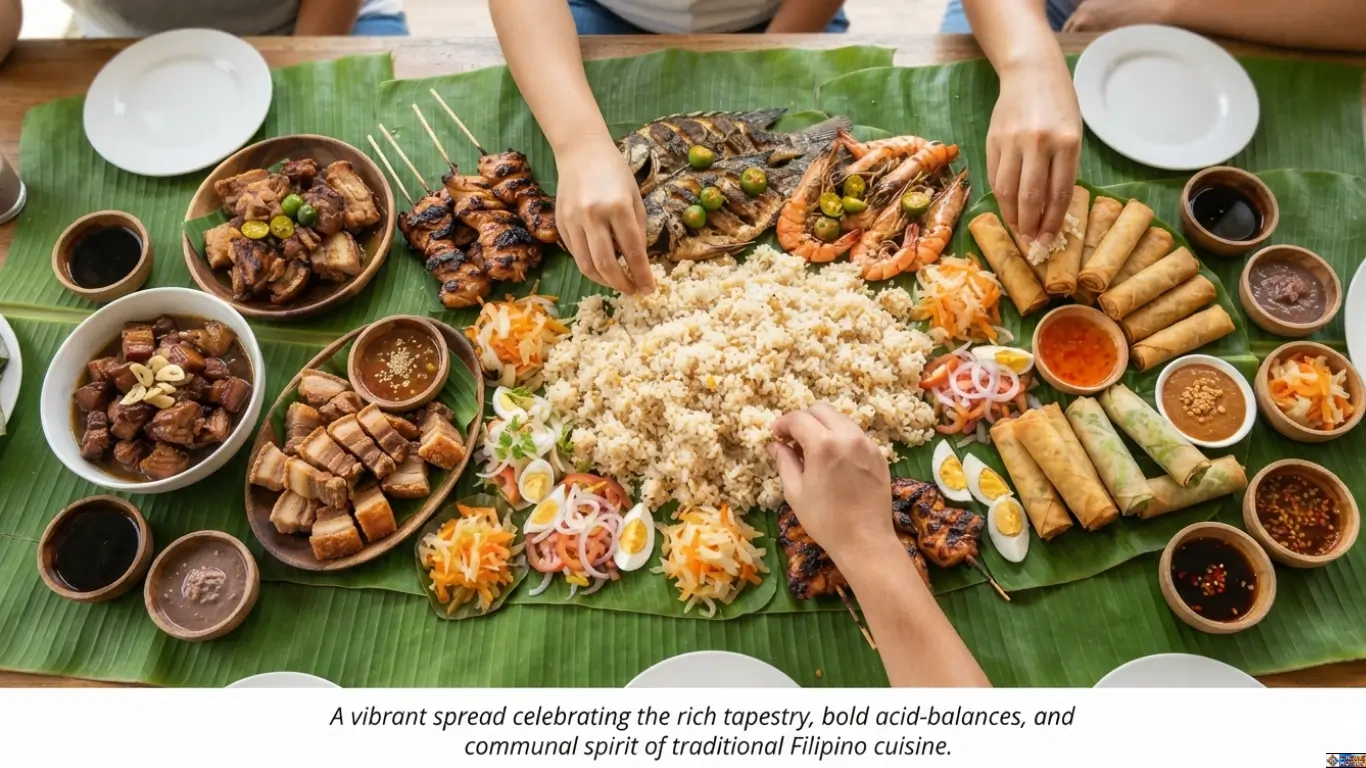
Filipino Cuisine is an intricate Southeast Asian flavor system defined by its bold, counter-balanced taste architecture—specifically the tension between sourness (asim), saltiness (alat), and sweetness (tamis). Built upon an ancient Austronesian foundation of acid-curing and palm vinegar fermentation, it seamlessly integrates centuries of Chinese maritime trade, Spanish colonial braising, and American foodway influences across more than 7,000 islands. Far more than mere sustenance, it is a deeply communal food tradition centered around shared rice, personalized dipping sauces (sawsawan), and hands-on feasts (kamayan).
For decades, global food media treated Southeast Asian gastronomy through a narrow lens—celebrating the fiery chili pastes of Thailand or the complex herb broths of Vietnam while quietly overlooking the Philippines. Many travelers arriving in Manila or searching for culinary clarity feel perplexed by dishes that don’t fit standard Western categories. Is it Spanish? Is it Asian? Why is the broth so tangy?
This misunderstanding creates a real loss for adventurous eaters. By skipping over the Philippines, food lovers miss out on one of the planet’s most brilliant, historic flavor systems. To truly understand Filipino Cuisine, one must abandon the Western notion of a fixed recipe and embrace a living, relational style of cooking where flavor is dynamically constructed at the table.
Welcome to a deep anthropological journey through the island archipelagos, where ancient preservation rituals meet centuries of trade, resulting in a dining experience that honors both land and lineage.
The Historical Layers of Filipino Cuisine
The story of the Philippine palate is built on centuries of cultural layering. Long before foreign ships anchored in island harbors, the archipelago’s original Austronesian inhabitants established culinary principles directly tied to their tropical environment.
Emphasis on hyper-local seafood, boiling, open-fire grilling, and acid preservation via palm vinegars and citrus (kinilaw).
Introduction of noodles (pancit), soy sauce, bean curd, spring rolls (lumpia), and wok stir-frying.
Sautéing in garlic and onions (gisa), rich stews (mechado, caldereta), tomato bases, and festive roasts.
Canned goods, evaporated milk, fast-food fried chicken, and sweet-style spaghetti sauces.
Indigenous Foundations
Before foreign contact, tropical humidity dictated survival. Without refrigeration, early islanders mastered vinegar preservation, salt-curing, and fermenting. They relied on local palm vinegars (sukang paombong, sukang tuba), native citrus like calamansi, and fermented seafood pastes (bagoong).
Raw fish was cured in citrus juices to create kinilaw—an indigenous dish that predates South American ceviche by centuries. The core culinary logic was clear: harness natural acidity to preserve freshness while cooling the body in intense heat. Exploring these traditional methods reveals how Heritage Cooking Techniques allowed ancient communities to thrive alongside their coastal landscapes.
Chinese Trade & Integration
Starting in the Song Dynasty, Fujianese merchants brought noodles (pian-i-sit, which became pancit), tofu, soybean pastes, and wok stir-frying. Rather than copying these dishes outright, indigenous cooks adapted them. Chinese spring rolls became lumpia, and noodle soups were infused with native garlic, calamansi, and fish sauce.
Spanish Colonial Encounters
When Spain arrived in 1521, they brought Mediterranean cooking styles: sautéing in olive oil, garlic, and onions (sofrito), along with New World crops via the Manila-Acapulco Galleon trade—tomatoes, potatoes, chili peppers, and corn.
Unlike in the Americas, Spanish settlers in the Philippines adapted to local ingredients rather than replacing them. They integrated slow-braised stews like caldereta and pochero into island kitchens. In these cross-cultural culinary exchanges, we see clear parallels with Hispanic Cultural Foods and techniques found in How to Make Mexican Street Tacos al Pastor.
The American Era
In the 20th century, American rule introduced convenience foods: canned meats, processed cheeses, and condensed milk. These modern ingredients gave rise to local adaptations like banana ketchup, canned meat breakfasts with garlic rice (silog), and sweet Filipino spaghetti.
What Makes Filipino Food Unique? Flavor Architecture & Sawsawan
To understand traditional Filipino food, you must look past individual ingredients and examine how flavor profiles interact on the palate.
                  ┌─────────────────────────────────────────┐
                  │          FILIPINO FLAVOR MATRIX         │
                  └────────────────────┬────────────────────┘
                                       │
         ┌───────────────────┬─────────┴─────────┬───────────────────┐
         │                   │                   │                   │
┌────────┴────────┐ ┌────────┴────────┐ ┌────────┴────────┐ ┌────────┴────────┐
│   ASIM (Sour)   │ │   ALAT (Salty)  │ │  TAMIS (Sweet)  │ │ ANGHANG (Spicy) │
│ Vinegar, Citrus,│ │ Bagoong, Patis, │ │ Brown Sugar,    │ │ Native Chilis,  │
│ Sour Fruits     │ │ Sea Salt        │ │ Coconut Milk    │ │ Ginger          │
└─────────────────┘ └─────────────────┘ └─────────────────┘ └─────────────────┘
The Power of Sour (Asim)
While Western cuisines often treat acidity as a finishing accent, Filipino cooks use sourness as a core structure. Sourness cleanses the palate, preserves ingredients, and balances heavy animal fats. This acid base is created using diverse natural souring agents:
- Palm & Fruit Vinegars: Sukang Iloco (cane), Sukang Tuba (coconut sap), and Paombong (nipa palm).
- Indigenous Fruits: Tamarind (sampalok), green mango, sour plum (batuan), calamansi, and kamias.
The Interactive Table: Sawsawan
In many global dining cultures, altering a chef’s dish with extra salt or sauce is considered impolite. In Filipino food culture, the cook creates a balanced base dish, while the diner adjusts the final flavor using a condiment tray called the sawsawan.
Common Sawsawan Combinations
- Toyomansi: Soy sauce + crushed calamansi + native bird’s eye chili (essential for grilled meats).
- Suka’t Bawang: Cane vinegar + crushed garlic + black peppercorns + chili (the classic pairing for crispy pork).
- Patis at Calamansi: Fermented amber fish sauce + calamansi juice (perfect for lifting rich soups).
- Bagoong Alamang: Sautéed fermented shrimp paste + green mango (a contrast of savory umami and sharp sourness).
This interactive dining dynamic offers a real-world demonstration of Somatic Seasoning and Somatic Food Memory, where diners actively adjust flavors to match their physical cravings and regional preferences.
Regional Diversity Across the Archipelago
Because the Philippines spans more than 7,000 islands divided by seas and mountain ranges, its food traditions vary greatly by region.
| Region | Key Dish | Dominant Flavor Profile | Ancestral Culinary Technique |
|---|---|---|---|
| Ilocos (Northern Luzon) | Pinakbet & Dinakdakan | Bitter, Salty, Earthy | Vegetable stewing with un-strained bagoong monamon |
| Pampanga (Central Luzon) | Sisig & Bringhe | Savory, Tangy, Rich | Boiling, charcoal grilling, and sizzling pan-crisping |
| Bicol Peninsula | Bicol Express & Laing | Creamy, Spicy, Umami | Slow reduction of coconut cream (gata) with labuyo chilis |
| Visayas Islands | Cebu Lechon & Kinilaw | Aromatic, Fresh, Sour | Whole-pig spit roasting stuffed with lemongrass & acid curing |
| Mindanao (Muslim South) | Pyanggang Chicken & Rendang | Smoky, Earthy, Complex | Use of palapa (burnt coconut meat paste with native ginger) |
Luzon: Earthy Stews & Culinary Craft
Northern Luzon’s Ilocos region relies on rugged land produce—bitter melons, eggplants, and okra stewed in fermented fish sauce (Pinakbet). Further south, Pampanga holds the title of the nation’s “Culinary Capital,” famous for refined stews and Sisig—a dish created by boiling, grilling, and frying diced pork cheek and liver, finished with calamansi and chili peppers.
The Visayas: Roast Meats & Seafood Curing
In the central islands, coastal resources take center stage. Visayan cooks are famous for Kinilaw, using fresh raw fish cured in local palm vinegar, tabon-tabon fruit, ginger, and coconut milk. Cebu is world-renowned for its Lechon—whole pigs stuffed with lemongrass, garlic, sea salt, and scallions, then slowly roasted over hardwood coals until the skin turns golden and brittle.
Mindanao: Spiced Coconut Paste & Indigenous Traditions
In southern Mindanao, where Muslim kingdoms preserved their independence for centuries, the food profile shifts toward neighboring Maritime Southeast Asia. Here, cooks rarely use pork, choosing instead beef, chicken, or seafood braised in rich coconut milk and palapa—a fragrant spice paste made from toasted coconut, native scallions (sakurab), ginger, and turmeric. This yields dishes like Pyanggang Chicken, recognizable by its dark, smoky sauce.
What are the Top 10 Popular Filipino Dishes?
When exploring a filipino cuisine list, these core dishes showcase the depth of island cooking:
Chicken or pork simmered slowly in palm vinegar, soy sauce, garlic, bay leaves, and cracked black peppercorns. A masterclass in savory acid preservation.
A tangy broth made sour with tamarind, green mangoes, or calamansi, packed with pork or seafood, water spinach, radish, and long green chilis.
Whole pig slowly charcoal-roasted until crisp. Served with a savory liver sauce or spiced vinegar dip.
A rich oxtail, tripe, and vegetable stew thickened with roasted peanut sauce and annatto, paired with savory bagoong alamang.
Finely chopped crispy pork cheeks and liver, seasoned with calamansi, onions, and bird’s eye chilis, served on a hot cast-iron plate.
Rice noodles smothered in a rich savory garlic-shrimp sauce, topped with crushed pork cracklings, boiled eggs, scallions, and poached shrimp.
Crispy, golden spring rolls packed with seasoned ground pork, carrots, and onions, served alongside sweet chili dipping sauce.
A rich beef shank and bone marrow broth simmered for hours with corn on the cob, bok choy, and peppercorns.
Fresh raw Spanish mackerel cured in coconut vinegar, calamansi, ginger, red onions, and bird’s eye chilis.
A festive shaved-ice dessert layered with sweet beans, palm fruit, coconut gel, purple yam (ube), flan, and evaporated milk.
Much like USA Famous Dishes or street food favorites like the Korean Hot Dog, these iconic offerings reflect how global food choices adapt over time to fit local tastes.
Fermentation: The Invisible Flavor Engine
Beyond vinegar and fresh citrus, the hidden foundation of Filipino cuisine lies in its rich tradition of ocean-based fermentation.
In coastal fishing towns, small shrimp (alamang) or tiny anchovies (monamon) are layered with unrefined sea salt inside ceramic jars. Over months of tropical heat, natural enzymes break down the fish proteins. The amber liquid drained from the top becomes patis (fish sauce), while the remaining savory paste becomes bagoong.
This ancient preservation tradition mirrors the biological principles explored in Ancestral Umami Techniques, Ancestral Fermentation Rituals, Ancestral Fermentation Techniques, and The Biochemistry of Salt-Glaze Fermentation. Much like European vegetable crock aging seen in Traditional Sauerkraut Fermentation, tropical salt preservation turned seasonal harvests into stable, umami-rich staples.
Dining Rituals: Kamayan & Communal Connection
In the Philippines, how you eat is just as important as what you eat.
                    ┌───────────────────────────────────────┐
                    │      COMMUNAL KAMAYAN FEAST LAYOUT    │
                    └───────────────────┬───────────────────┘
                                        │
             ┌──────────────────────────┴──────────────────────────┐
             ▼                                                     ▼
┌─────────────────────────┐                               ┌─────────────────────────┐
│     BANANA LEAF BASE    │                               │     CENTER BED OF RICE  │
│ Freshly wilted over     │                               │ Steamed jasmine or      │
│ open flame for aroma    │                               │ garlic rice core        │
└────────────┬────────────┘                               └────────────┬────────────┘
             │                                                         │
             └──────────────────────────┬──────────────────────────────┘
                                        │
                                        ▼
                   ┌─────────────────────────────────────────┐
                   │         ARRANGED PROTEINS & SIDES       │
                   │ Grilled pompano, lechon kawali, lumpia, │
                   │ salted eggs, mangoes, and sawsawan      │
                   └─────────────────────────────────────────┘
The Art of Hand-Eating (Kamayan)
Before forks and spoons arrived, islanders ate with their hands—a practice known as Kamayan (or Salo-Salo). Eating with your hands is far from messy; it is a refined skill that engages all the senses:
- The Cup: Use the fingertips of your right hand (never the palm) to gently gather a small portion of rice.
- The Compress: Press the rice against a piece of meat or fish on the banana leaf to create a cohesive bite.
- The Push: Bring the food to your lips and use your thumb to push the bite cleanly into your mouth.
Kamayan feasts bring people together around long tables lined with wilted banana leaves, covering them with garlic rice, crisp roasts, fresh seafood, and tropical fruits. By removing artificial utensils, guests connect directly with the warmth, texture, and aroma of the food.
This shared approach to dining reflects the broader cultural values described in Dining Rituals and Food Rituals in Different Cultures. Whether sitting down for a family meal or enjoying a slow-cooked feast like a traditional moroccan couscous recipe, How to Cook Traditional Moroccan Tagine, or Authentic Moroccan Couscous, communal dining remains one of humanity’s most powerful ways to build connection.
How to Experience Authentic Filipino Food Near You
Interested in trying authentic Filipino dishes at a local restaurant or cooking them at home? Here is a practical roadmap:
- Find an Authentic Local Spot: Search online for a filipino cuisine restaurant or explore a nearby filipino cuisine menu. Look for family-run eateries (carinderias) or places offering weekend Kamayan feasts.
- Order with Flavor Balance in Mind: Build a meal that contrasts rich, savory, and sour dishes:
- Order a sour broth (Sinigang).
- Pair it with a rich braised protein (Adobo or Kare-Kare).
- Add a crunchy fried element (Lumpiang Shanghai or Lechon Kawali).
- Make sure every guest gets plenty of steamed white rice.
- Cook Heritage Dishes at Home: Look up tested filipino cuisine recipes to learn the basics of vinegar braising and acid marinades. Exploring sustainable, ancestral recipes—much like those found in Regenerative Heritage Recipes—connects your kitchen directly to time-honored food traditions.
- Discover Global Food Narratives: For broader cultural stories, regional food guides, and heritage recipes, explore the archives at Culture mosaic.
Frequently Asked Questions
Is Filipino food considered a distinct cuisine?
Yes. While influenced by centuries of trade with China, Spain, and the Americas, Filipino cuisine remains a distinct culinary tradition. Its unique identity comes from indigenous Austronesian techniques—such as palm vinegar preservation, citrus curing (kinilaw), and fermented seafood pastes—combined with a flavor matrix built around sourness (asim) and interactive table dipping sauces (sawsawan).
What is typical Filipino cuisine?
Typical Filipino meals center on steamed white rice paired with savory, vinegary, or sour main dishes (ulam). Popular everyday classics include Adobo (vinegar and soy sauce stewed meat), Sinigang (tamarind sour soup), and fried fish paired with fresh tomatoes and fermented shrimp paste.
How is Filipino food traditionally eaten?
Filipino food is traditionally eaten using your hands in a practice known as Kamayan, particularly during communal gatherings where meals are served over banana leaves. In modern homes, it is eaten using a spoon in the right hand (to push rice and hold broth) and a fork in the left hand (to guide food onto the spoon).
What food do Filipinos eat the most?
Rice (Kanin) is the undisputed staple of the Philippine diet, eaten at breakfast, lunch, and dinner. It is accompanied by seafood (tilapia, milkfish/bangus), pork, chicken, and local vegetable stews seasoned with garlic, onions, and indigenous vinegars.
Are there vegetarian options in traditional Filipino food?
Yes. Traditional vegetable dishes like Pinakbet (pumpkin, eggplant, okra, and long beans), Laing (taro leaves cooked in coconut cream), and Ginataang Sitaw at Kalabasa (squash and yard-long beans in coconut milk) are widely popular. Diners can request versions made without meat or shrimp paste.
Academic References & Sources
- Fernandez, Doreen G. (1994). Tikim: Essays on Philippine Food and Culture. Anvil Publishing. (Primary reference for indigenous culinary taxonomy, kinilaw, and the philosophy of sawsawan).
- National Commission for Culture and the Arts (NCCA). Traditional Foodways and Intangible Cultural Heritage of the Philippine Archipelago. Philippine Government Publications.
- Sta. Maria, Felice Prudente. (2006). The Governor-General’s Kitchen: Philippine Culinary Vignettes 1521–1946. Anvil Publishing. (Historical detail on Spanish and American colonial trade routes).
- Fenix, Micky. (2014). Country Cooking: Philippine Regional Cuisines. Anvil Publishing. (Regional breakdown of Ilocano, Visayan, and Mindanao food systems).