
 By Dr. Marcus Hale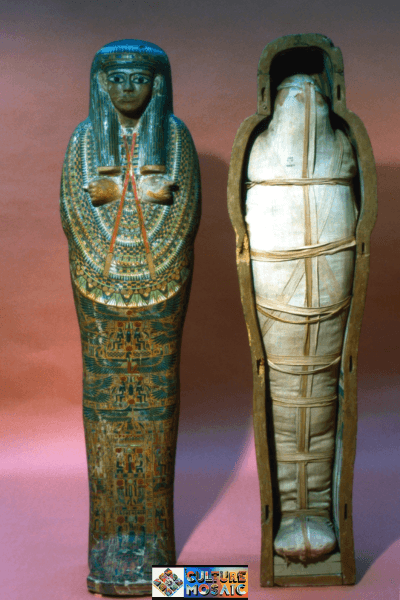
Ancient Egyptian Mummies Preservation Techniques
QUICK SUMMARY
- Mummification in ancient Egypt took roughly 70 days, and most of that time was spent drying the body, not wrapping it.
- The real preservation tool wasn’t magic; it was natron, a natural salt mined from the Wadi Natrun that pulled every trace of moisture out of the tissue.
- Priests removed the lungs, liver, stomach, and intestines and stored them in canopic jars, but they left the heart inside the body on purpose.
- Not everyone got the full treatment. Mummification was a luxury service, and the cheapest version barely qualified as embalming at all.
- Egyptians mummified animals too, by the millions. Saqqara alone has yielded more than half a million ibis mummies.
- A 2023 chemical study of an embalming workshop at Saqqara finally identified the real ingredients behind terms scholars had only guessed at for a century.
I once stood over a body that was older than the Parthenon and watched a conservator point out that the skin still had pores in it. Pores. On something that predates the alphabet most of us learned to write. That moment is the reason I keep coming back to this subject as part of my conservation work for Culture mosaic. It isn’t the gold or the curses that get me. It’s the sheer stubbornness of the craft.
Here’s the problem most people run into when they search for ancient Egyptian mummies preservation techniques: they land on a page that either reads like a dusty textbook or leans so hard into horror-movie theatrics that the actual science gets lost. I get why that’s frustrating. You want to understand how a 3,000-year-old body can still have fingerprints, and you want it explained by someone who isn’t padding the page with filler to hit a word count.
So that’s what I’m doing here — the real steps, the real chemistry, and the real beliefs that made this whole practice make sense to the people doing it. If you’re brand new to the topic, my piece on What Is Mummy in History? is a good place to start with the basics before diving into the technical side here.
What Is the Mummification Process in Ancient Egypt, Really?
Most of what we know about the mummification process in ancient Egypt comes from a Greek tourist. Herodotus visited Egypt in the fifth century BC and wrote down what embalmers told him in Book II of his Histories. He described three tiers of service, and I find that detail more revealing than almost anything else about the practice. This wasn’t a uniform ritual performed the same way for everyone. It was a trade, with a price list.
The most expensive option involved full organ removal and months of careful drying. The cheapest option was closer to a chemical shortcut: cedar oil injected into the body cavity to dissolve the insides, followed by a rough natron treatment. Wealth didn’t just buy a nicer coffin. It bought a better shot at surviving the millennia.
The 7 Steps of Mummification
By the New Kingdom, roughly 1550 to 1069 BC, embalmers had refined the process into something close to an assembly line. Here’s how it actually worked, step by step:
- Purification: The body was washed with water from the Nile and palm wine, which has mild antiseptic properties. This wasn’t just hygiene. Water from the Nile carried religious weight, tying the cleansing to the life-giving river itself.
- Removing the brain: Embalmers considered the brain unimportant, so they broke through the ethmoid bone with a hooked instrument inserted through the nostril and pulled the tissue out in pieces, sometimes whisking the rest into liquid to drain. It was then discarded.
- Removing the internal organs: A small incision, usually about ten centimetres, was cut into the left side of the abdomen. The liver, lungs, stomach, and intestines came out through this opening and were preserved separately. The heart stayed exactly where it was.
- Desiccation with natron: The body, now hollowed out, was packed inside and out with natron and left to dry for around forty days. This is the step that actually does the preserving. Everything else is presentation.
- Cleansing and anointing: Once fully dried, the body was washed again and treated with oils and resins—frankincense, myrrh, cedar, and, according to a landmark 2023 chemical analysis of an embalming workshop at Saqqara, imported ingredients like juniper oil, elemi resin from Southeast Asia, and Dead Sea bitumen.
- Stuffing and reshaping: Linen, sawdust, and resin-soaked padding restored the body’s lifelike shape after the drying process left it sunken. Protective amulets, including the wedjat eye and a heart scarab, were tucked into the wrappings at specific points.
- Wrapping in linen: Fingers and toes were wrapped individually before the limbs and torso were bound in layer after layer of resin-treated linen strips. A finished mummy, fully wrapped, weighed around 70 pounds. The whole process spanned about 70 days before burial.
What Exactly Is Natron, and Why Did It Matter So Much?
This is the section most people are really searching for when studying ancient Egyptian mummies preservation techniques. Everything else—the wrapping, the amulets, the ritual—is presentation. Natron is the chemistry.
Natron is a naturally occurring salt made mostly of sodium carbonate decahydrate and sodium bicarbonate, with small amounts of sodium chloride and sodium sulfate mixed in. It formed in dried lake beds at the Wadi Natrun, a valley northwest of Cairo that the Egyptians considered sacred. What makes it so effective is that it’s aggressively hygroscopic: it pulls water out of anything it touches. Bacteria need moisture to break down tissue, so removing moisture fast enough halts decay entirely.
Researchers studying the Saqqara embalming workshop confirmed that if embalmers pulled a body out of natron too early, microbes colonized it almost immediately. Forty days was the non-negotiable chemical threshold.
Why Did the Ancient Egyptians Make Mummies?
This is really a question about theology, not embalming chemistry. The Egyptians believed a person was made up of several parts, including the ka (life force) and the ba (personality or soul). After death, these elements needed a recognizable physical body to return to. If the body decayed past recognition, the ka and ba would have nowhere to anchor themselves, shutting the deceased out of the Field of Reeds.
Preservation wasn’t vanity; it was infrastructure for eternity. I go into this belief system in more depth in Egyptian Concept of Life After Death, if you want the fuller picture of what happened after the wrapping was finished.
Why Did They Leave the Heart Inside the Body?
Because the heart, not the brain, was considered the seat of intelligence, memory, and character. Egyptians believed that after death, a person’s heart was weighed against the feather of Ma’at (truth and balance) in the Hall of Judgment. A heart burdened by wrongdoing would tip the scale, causing the deceased to be devoured by Ammit and lose any chance at eternal life.
Removing the heart would have made that judgment impossible. Embalmers left it in place, often placing a heart scarab amulet over it inscribed with a spell asking the heart not to testify against its owner.
What Were Canopic Jars Used For?
Canopic jars held the four organs that were removed and preserved separately: the liver, lungs, stomach, and intestines. Each jar was placed under the protection of one of the Four Sons of Horus:
- Imsety (human-headed) protected the liver.
- Hapy (baboon-headed) guarded the lungs.
- Duamutef (jackal-headed) looked after the stomach.
- Qebehsenuef (falcon-headed) preserved the intestines.
Was Everyone Mummified in Ancient Egypt?
No, and this is a common misconception. Full mummification was expensive, labor-intensive, and reserved primarily for royalty, nobility, and wealthy elite.
Poorer Egyptians were often buried directly in hot, desert sand. Ironically, the desert’s natural heat and dryness desiccated bodies just as effectively as natron, leaving some poor burials remarkably well preserved compared to elite tombs exposed to ambient moisture.
Did They Mummify Animals, Too?
Constantly, and on an industrial scale. Cats, ibises, crocodiles, falcons, baboons, and beetles were mummified as votive offerings to gods. Excavations at Saqqara alone have yielded more than half a million ibis mummies offered to Thoth.
Interestingly, X-ray and CT scans reveal that a portion of these animal mummies contain only partial remains—or just linen packed to resemble an animal shape. Demand was so high that suppliers occasionally cut corners!
Famous Mummies from Ancient Egypt You Should Know
These preservation techniques were applied to real figures whose remains survive today. King Tutankhamun is the most famous example; see How Did King Tut Die and Why? and Where Is King Tut’s Mummy? for the full story on his life, death, and modern resting place.
Other notable royal identifications include Who Was Hatshepsut in Ancient Egypt?, covering a female pharaoh whose mummy was verified via modern CT scanning. Royal wives carry rich histories as well—see Seti I Wife for a compelling deep dive.
To explore how embalming aesthetics evolved under Greco-Roman influence, check out The Golden Mummies of Egypt. For broader overviews, read through Most Famous Egyptian Mummies, and to understand how these preservation dates align across dynasties, see How Old Are Most Egyptian Mummies?.
Is There Such a Thing as a “Real Mummy Alive”?
No. Ancient Egyptian mummification was strictly performed on the deceased. The misconception often arises from pop culture or confusion with a much later, unrelated practice: Japanese Buddhist monks (sokushinbutsu) who engaged in self-mummification through extreme asceticism before death. In the Egyptian tradition, however, embalming was purely post-mortem.
Mummification Facts That Still Surprise Me
- A fully wrapped mummy weighed roughly 70 pounds, a fraction of a living adult’s weight, due to total desiccation.
- Mummy wrappings sometimes reused papyrus scraps, including rare literary texts. In my article on Egyptian Mummy Iliad Papyri, I discuss how lines from Homer were recovered from inside cartonnage casings.
- Some royal mummies, including Thutmose I and Amenhotep I, were found with brain tissue intact, proving embalmers occasionally skipped or adapted steps.
- Global trade routes supplied embalmers. Resins found in the Saqqara workshop originated in Southeast Asian rainforests, proving ancient trade networks catered directly to Egyptian embalming demand.
FAQs About Ancient Egyptian Mummies Preservation Techniques
How long did the mummification process take?
About 70 days from start to finish. Roughly 40 days were spent drying the body in natron, with the remaining time split between organ removal, anointing, and wrapping.
What is natron, and where did the Egyptians get it?
Natron is a naturally occurring mineral salt composed of sodium carbonate decahydrate and sodium bicarbonate. The Egyptians mined it from dried lake beds in the Wadi Natrun.
Why didn’t embalmers remove the heart along with the other organs?
Because the Egyptians believed the heart held a person’s intelligence, memory, and moral character. It was left in the body so it could be weighed against the feather of Ma’at during the final judgment in the afterlife.
Were only pharaohs mummified in ancient Egypt?
No, but artificial mummification was a paid luxury service. Poorer citizens were usually buried in desert sand, which often preserved tissue naturally through dry heat.
Are ancient Egyptian mummification techniques still being studied today?
Yes. Breakthroughs like the 2023 Nature study analyzing chemical residues from Saqqara pots continue to redefine our understanding of ancient organic chemistry and long-distance trade.
Sources & Further Reading
- Herodotus, Histories, Book II — early eyewitness account of Egyptian embalming practices.
- Mummification — Birmingham Egyptology, University of Birmingham.
- Canopic Jar Collection — The Metropolitan Museum of Art.
- Rageot, M. et al., “Biomolecular analyses enable new insights into ancient Egyptian embalming,” Nature, vol. 614 (2023).
- Discovery of embalming workshop reveals how ancient Egyptians mummified the dead — CNN.