
 By Culture Expert
Exploring the Most Famous Egyptian Mummies and Their Enduring Legacies
I have spent a long time thinking about ancient Egypt, and I still find mummies unsettling in the best possible way. Not because of horror films. Not because of curses. Because you are looking at a real person who stood in actual sunlight, ate bread, gave orders, and feared death just as much as we do. The most famous Egyptian mummies are not props. They are primary sources with skin on.
Egypt’s mummification tradition spanned roughly three thousand years. Not every ruler survives with equal clarity. Many royal bodies were looted, reburied, burnt, or simply lost. The handful that came down to us intact represent a staggering accident of geography, religion, and sheer good fortune. What the ancient embalmers were after was not novelty. They were solving an eternal problem. The Egyptian concept of life after death required the physical body to remain recognisable, so the Ka could find its way home.
What follows is not a catalogue. It is five portraits of the most important mummies the Nile ever produced, drawn from decades of research, field work, and long conversations in poorly lit museum corridors.
Beyond the Linen: The Material Culture of Immortality
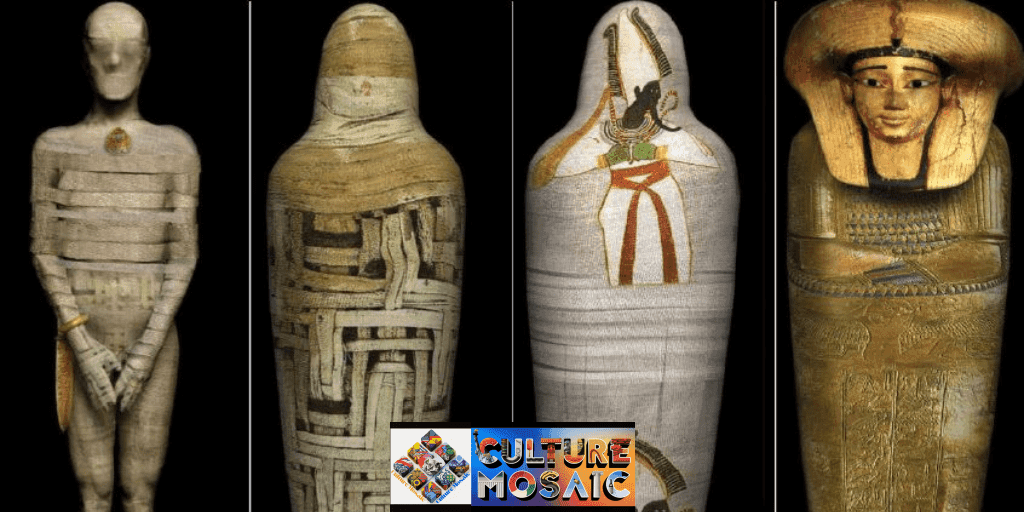
Before we meet the mummies themselves, it is worth understanding why these particular bodies survived when so many others did not. The short answer is chemistry. The longer answer is obsessive cultural commitment to a process that the Egyptians spent three millennia perfecting.
Natron salt was the foundation. A naturally occurring compound of sodium carbonate and bicarbonate, it was packed around and inside the body to draw out moisture. Without water, bacteria cannot do their work. Without bacteria, decay stalls. The ancient embalmers understood this intuitively, even without a microscope.
What they added on top of that scientific base was extraordinary. Imported cedar resin from Lebanon. Juniper berries. Beeswax. Bitumen from the Dead Sea in later periods. Each substance had antiseptic or preservative properties, and most were expensive. The great royal mummies were not cheap to produce. They were the result of vast state resources being pointed at a single objective: keep this body intact forever.
The wrapping itself followed what researchers have described as a sacred geometry. Specific bandages were associated with specific gods. The positioning of the arms and hands shifted between dynasties. Every detail was codified in funerary texts, and the priests who performed these rituals trained for years. That training shows. The best-preserved royal mummies feel almost architectural in their precision. Even the fragments of Iliad papyri found within wrappings speak to the layered, literate culture that surrounded these burial rites.
The Sovereigns: Profiles of Egypt’s Most Renowned Mummies
These five rulers represent the clearest window we have into ancient Egypt’s royal world. Each was powerful in life. Each became, in death, something even more lasting.
1. Tutankhamun: The Intact Legacy
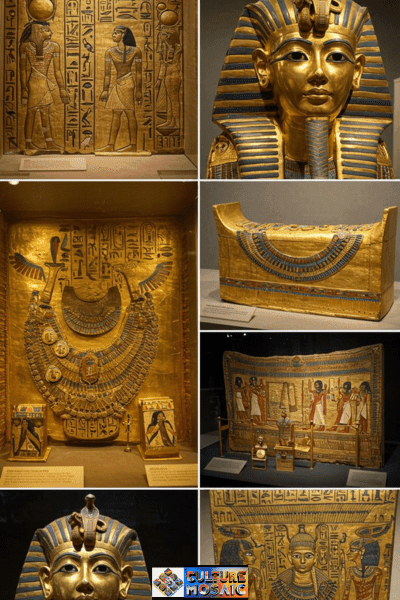
Tutankhamun is the gravitational centre of any conversation about the most famous Egyptian mummies. He was not, in his time, considered a major pharaoh. He ruled for roughly nine years, died young, and was subsequently erased from official records by those who came after him. History had almost finished with him. Then, on 4 November 1922, Howard Carter’s team broke through a sealed doorway in the Valley of the Kings and found a tomb that had been sitting, untouched, for over three thousand years.
The contents were staggering. More than five thousand objects. The gilded throne. The canopic shrine. The three nested coffins, the innermost made of 110 kilograms of solid gold. And inside all of that, the mummy of a teenage king who had been dead since approximately 1323 BCE.
What the mummy itself has told us is, if anything, more interesting than the treasure. CT scanning in 2005 produced over 1,700 digital cross-sections of Tutankhamun’s body. The results were quietly shocking. He had a badly fractured leg sustained shortly before death, a partially cleft palate, and significant bone disease likely caused by repeated inbreeding within the royal line. The long-held theory that he was murdered, popular partly because of a supposed blow to the skull, collapsed under the scan data. The skull fracture appears to have occurred after death, during the mummification process or early excavation.
He was not a warrior king. He was a fragile young man born into one of history’s most isolated bloodlines, doing his best to hold a kingdom together while his body let him down. The mummy is still in his original tomb in KV62, lying in the outermost of his coffins, which is itself enclosed in a quartzite sarcophagus. It is genuinely affecting to stand in that small, warm room and understand what you are looking at.
2. Ramesses II: The Great Ancestor
Ramesses II ruled Egypt for sixty-six years. He fought the Hittites to a standstill at the Battle of Kadesh, signed what is considered the world’s first formal peace treaty, fathered somewhere between eighty and one hundred children, and built more monuments than any other pharaoh in history. He was ninety or perhaps older when he died. He had survived most of the ancient world.
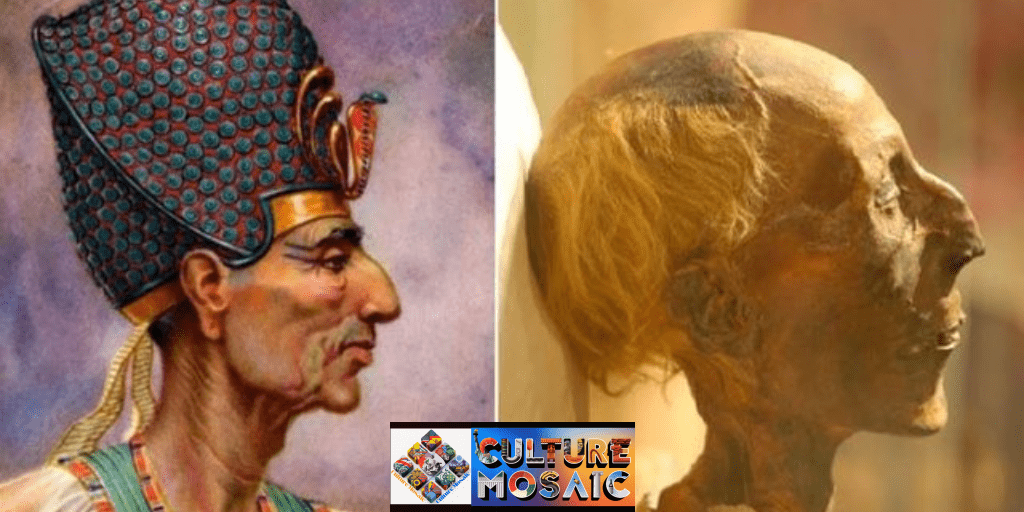
His mummy is remarkable for several reasons. The physical detail is extraordinary. His aquiline nose, a feature prominent in statuary, is clearly visible. His hair, once thick and dark, survives as fine reddish-white strands, the colour partly the result of henna applied by ancient embalmers, and partly natural pigmentation that returned as the hair dried. He was tall by ancient Egyptian standards, well over six feet. You can see a slight forward curvature in the spine, a consequence of decades of arthritis that afflicted him in old age. He was still formidable, even dead.
The story that most people find hard to forget involves the late 1970s. Ramesses’ mummy, housed at the Egyptian Museum in Cairo, had developed a fungal infection that was spreading through the linen wrappings. To treat it, the mummy needed to travel to France, to specialists in Paris. To enter France, it needed a travel document. Egypt issued one. The passport listed the occupation as “King (deceased).”
He was met at Paris-Le Bourget airport with full military honours, as befitted a head of state. I find that genuinely moving. Three thousand years after his death, the world still felt the need to show him respect.
3. Hatshepsut: The King Who Was a Woman
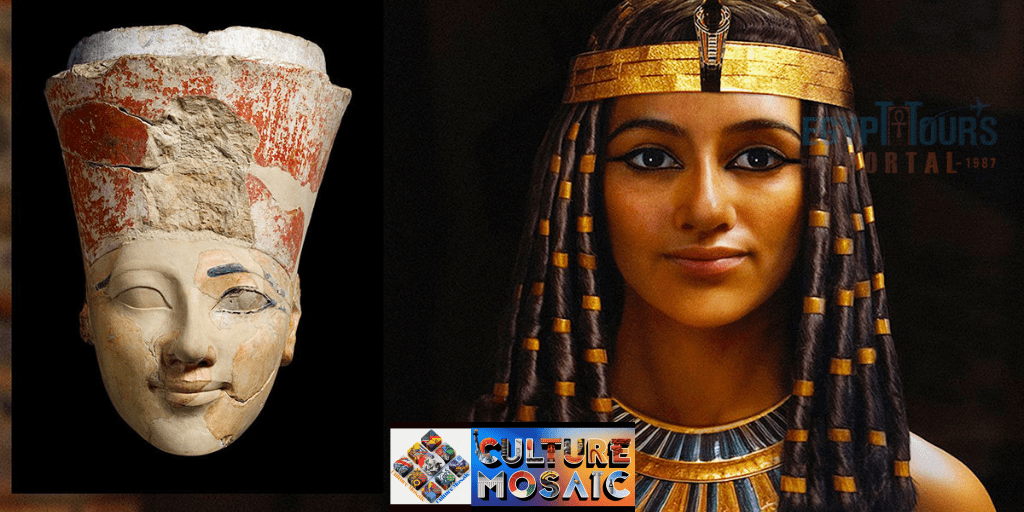
Hatshepsut is one of the most fascinating figures in Egyptian history, and one of the most frustrating. She ruled Egypt as pharaoh for roughly twenty years during the 18th Dynasty, a period of extraordinary prosperity and architectural ambition. Her mortuary temple at Deir el-Bahari is one of the most striking buildings the ancient world produced. And then, within decades of her death, her successor and nephew Thutmose III had her image systematically hacked from temple walls, her cartouches chiselled out, her statues smashed and buried. The erasure was thorough. It worked for three thousand years.
Identifying her mummy was therefore a puzzle of almost absurd complexity. The tomb built for her (KV20) was eventually discovered, but the sarcophagus it contained had been altered and appeared to hold a different royal woman. A second, badly disturbed mummy was found in a nearby cache (KV60), alongside a wet nurse known as Sitre-In. For decades, neither was confidently identified as Hatshepsut.
The breakthrough came in 2007, and it was small enough to fit in a box. A wooden canopic box bearing Hatshepsut’s name was found to contain a molar. When CT scanning was applied to the two candidate mummies, one of them had a missing upper molar. The socket matched the tooth perfectly. The mummy in KV60 was Hatshepsut. The identification was confirmed via DNA comparisons with her grandmother Ahmose Nefertari and further refined by subsequent studies.
It is, I think, the most elegant piece of historical detective work in modern Egyptology. A queen who was deliberately unmade by history was reassembled from a single tooth.
4. Seti I: The Most Beautifully Preserved Face
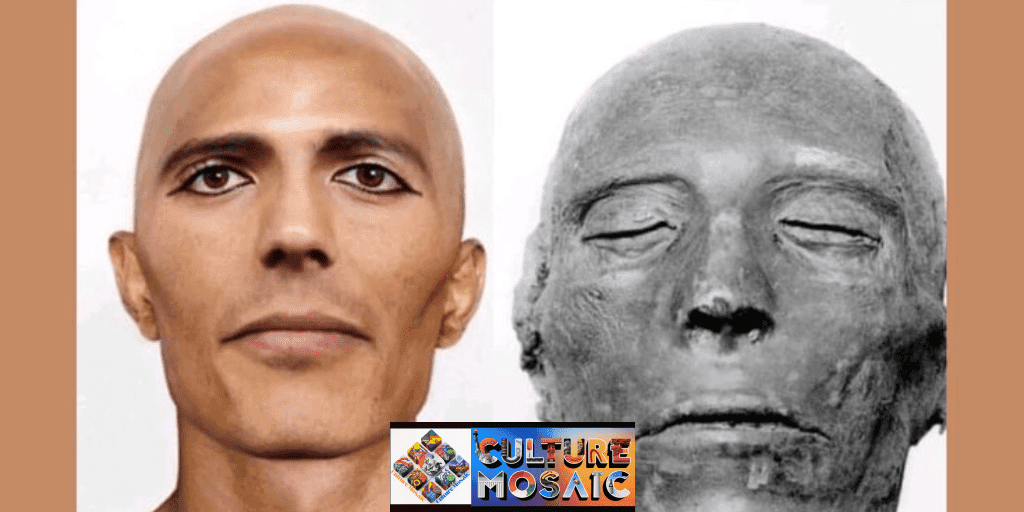
Father of Ramesses II. Father of the most prolific self-promoter in ancient history. Seti I had the unenviable task of being the parent of a legend, and he handled it by being exceptional in his own right. He resumed Egypt’s military campaigns in Canaan and Syria after a period of stagnation, secured the trade routes, and commissioned some of the finest art the 19th Dynasty ever produced.
His tomb, KV17 in the Valley of the Kings, is the longest and deepest ever cut into the limestone of that hillside. Its painted reliefs are breathtaking: sharp, detailed, vivid even now. The French explorer Giovanni Battista Belzoni found it in 1817 and described weeping when he first saw the decorated corridors by torchlight. I believe him.
But it is the mummy itself that stops people cold. Museum curators who have worked with the royal collection consistently describe Seti I’s face as the finest example of preservation in the entire corpus. The skin is pale gold and translucent. The features are refined, almost aristocratic. The eyes are partially open. He looks, every account agrees, not dead but simply asleep. Deeply, profoundly asleep, with no intention of waking.
He is currently held at the Egyptian Museum in Cairo. I have seen him twice. Both times, I found it very difficult to walk away quickly.
5. Ahmose-Nefertari: The Deified Queen
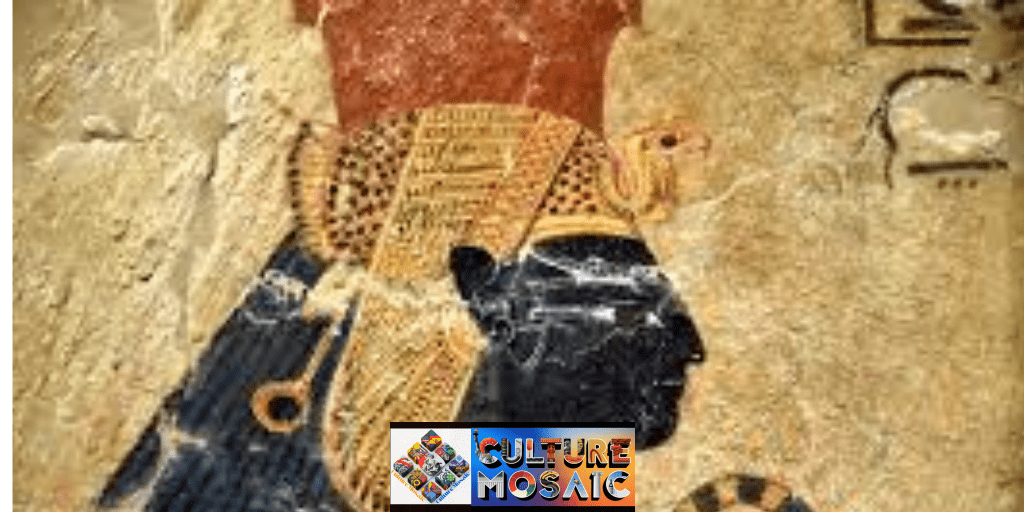
Ahmose-Nefertari occupies a unique position among the most famous Egyptian mummies because she is the only one in this group who was formally worshipped as a goddess during the New Kingdom, both while she was alive and for centuries after her death. She was the wife of Ahmose I, the pharaoh who expelled the Hyksos and reunified Egypt, and her political and religious authority appears to have been genuinely extraordinary.
She held the title of Second Prophet of Amun, the first woman known to hold that rank. She negotiated directly with the priesthood at Karnak. She established funerary guilds and endowment funds. She was, by any institutional measure, a co-ruler rather than merely a consort. After her death, she and her son Amenhotep I became the patron deities of Deir el-Medina, the village of craftsmen who built the royal tombs. They were worshipped there for four hundred years.
Her mummy was discovered in the Deir el-Bahari royal cache in 1881, unwrapped, badly damaged by ancient tomb robbers who had stripped the linen of any amulets or jewels it contained. What survived is significant enough. Her wooden sarcophagus, over ten feet long and blackened with resin, is one of the most imposing objects ever found in an Egyptian tomb. The scale of it conveys something no inscription fully captures: this was a woman the ancient world regarded as genuinely divine.
At-a-Glance: Comparing the Royal Legacies
The five most famous Egyptian mummies span over five hundred years of pharaonic history. Each left a different kind of mark on both ancient Egypt and modern archaeology.
| Pharaoh / Queen | Dynasty | Discovery Year | Primary Modern Insight |
| Tutankhamun | 18th | 1922 | CT scans (2005) disproved murder theory; revealed severe bone disease from inbreeding |
| Ramesses II | 19th | 1881 | Fungal treatment required travel to Paris (1976); issued passport listing ‘King (deceased)’ |
| Hatshepsut | 18th | Mummy: 1903; ID: 2007 | Identified via a single displaced molar matched to a royal canopic box — DNA confirmed |
| Seti I | 19th | 1881 | Considered the finest example of facial preservation among all royal mummies |
| Ahmose-Nefertari | 18th | 1881 | Only royal mummy of a ruler formally deified and worshipped for four centuries after death |
From Tombs to Tech: How Science Animates the Past
The great shift in Egyptology over the last thirty years is the move away from invasive study. For most of the twentieth century, understanding a mummy meant unwrapping it, cutting it, and hoping the information gained justified the irreversible damage. That approach is now essentially finished, replaced by technologies that let researchers read a three-thousand-year-old body like an open book without touching the cover.
CT scanning is the most transformative of these tools. The ability to generate hundreds or thousands of cross-sectional images of a mummy, then digitally reconstruct its skeleton, organs, and soft tissue, has overturned assumptions held for generations. The Tutankhamun skull fracture story is one example. Another is the discovery that Ramesses II suffered from severe atherosclerosis, hardening of the arteries, a condition previously assumed to be a disease of modern diet and lifestyle. Several royal mummies show it. Ancient Egyptians ate well, by any standard, but elite diets heavy in meat and rendered fats took the same long-term toll they do today.
Ancient DNA work is younger but equally radical. The ability to extract genomic material from three-thousand-year-old tissue and compare it across royal family lines has confirmed long-suspected relationships, proposed new ones, and in Hatshepsut’s case, provided one strand of a multi-part identification. Researchers at the Max Planck Institute for Evolutionary Anthropology have been particularly active in this field, working with the Egyptian authorities to build a more complete genetic map of the New Kingdom royal family.
3D facial reconstruction deserves a mention too. Several of the most famous Egyptian mummies now exist as digital facial models, built from CT data and refined by forensic artists. Seeing what Ramesses II or Tutankhamun may actually have looked like, not as art but as reconstructed biology, is quietly extraordinary. The faces are human in a way that painted reliefs, however beautiful, are not.
Then there is the Pharaohs’ Golden Parade. In April 2021, Egypt moved twenty-two royal mummies from the Egyptian Museum in Cairo to the new National Museum of Egyptian Civilization (NMEC) at Fustat. Each mummy travelled in a specially designed vehicle, accompanied by a motorcade and a ceremonial escort, through streets lined with people. It was part state occasion, part act of cultural reclamation. Egypt was insisting, publicly and with some ceremony, that these were not curiosities. They were ancestors.
Where to Find the Most Famous Egyptian Mummies Today
If you want to see these mummies in person, and I think everyone should at least once, the main destination is Cairo. The National Museum of Egyptian Civilization at Fustat now houses the royal mummy collection in a dedicated gallery called the Hall of Royal Mummies, a climate-controlled space purpose-built to provide both conservation and respectful display. It is one of the finest museum experiences I have had anywhere.
Tutankhamun remains in his original tomb, KV62, in the Valley of the Kings near Luxor. The mummy is inside the outermost coffin within the quartzite sarcophagus. The gold death mask and the bulk of the burial goods are in the Grand Egyptian Museum at Giza, which opened to the public in 2023 and represents the most significant archaeological museum project of the century so far. Seti I’s mummy is in Cairo. Ahmose-Nefertari’s mummy is also in Cairo. Hatshepsut, once identified, was rehoused in the Royal Mummy Room as well.
For those studying the most famous Egyptian mummies from outside Egypt, significant collections of related artefacts are held at the British Museum in London, the Metropolitan Museum of Art in New York, the Louvre in Paris, and the Ägyptisches Museum in Berlin. None of these institutions hold the royal mummies themselves, but all contain objects from the same world, the same hands, the same civilisation.
The 70-Day Ritual: Understanding the Mummification Timeline
The traditional mummification process took seventy days, a number that was not arbitrary. It corresponds to the period during which the star Sirius was invisible from Egypt, below the horizon, before its annual heliacal rising, which the Egyptians associated with the flooding of the Nile and the beginning of the new agricultural year. The seventy days of mummification mirrored the star’s seventy-day absence: a period of transformation, of the soul in transition, before resurrection.
The first ten days involved washing and purification. The next forty involved desiccation with natron. The final twenty were devoted to wrapping, anointing, and the application of resins and amulets. Each stage was accompanied by specific recitations from funerary texts, specific ritual gestures, specific materials associated with specific deities. The process was inseparable from religious practice.
For the most famous Egyptian mummies, the most expensive materials and the most skilled practitioners would have been deployed. The embalmers who worked on royal bodies were a specialised caste, their knowledge closely guarded, their social status reflecting the importance of their work. The Greek historian Herodotus, writing in the fifth century BCE, described three grades of mummification at different price points, a detail that gives you a clear sense of how fully commercialised the industry had become by the Late Period.
Why Ancient Egyptians Mummified Their Dead: The Theology of the Body
Modern people sometimes assume mummification was about preserving the body for its own sake, as a kind of proto-scientific impulse. It was not. The preservation was entirely in service of a theological requirement. The ancient Egyptian concept of the person was radically different from Western notions of a unified self.
The Ka was a vital essence, a double of the person created at birth alongside the physical body. At death, the Ka needed somewhere to live. It needed to be fed, through offerings left in the tomb. And crucially, it needed to be able to recognise its host. If the body decayed beyond recognition, the Ka was homeless. Mummification was therefore less about preservation than about maintenance of identity across death.
The Ba was something closer to what we would call personality or soul: it could leave the tomb, fly about, visit the world of the living. But it too needed to return to the body at night. The two concepts together, Ka and Ba, required a physical anchor that could survive indefinitely. That anchor was the mummified body. The most famous Egyptian mummies are not just historical objects. They are the physical components of a cosmic survival plan that their creators believed, with total sincerity, would work forever.
The Royal Cache: How the Mummies Almost Disappeared
It is worth pausing to appreciate how close we came to not having any of this. The Valley of the Kings was not a secure storage facility. It was looted, repeatedly, beginning almost immediately after the first tombs were completed. By the end of the New Kingdom, the problem had become acute enough that the priests of Amun undertook a massive, organised re-burial programme.
Between approximately 1054 and 1045 BCE, royal mummies were systematically unwrapped, inspected, re-wrapped, relabelled, and consolidated into a small number of hidden caches. The largest of these, at Deir el-Bahari (DB320), was not discovered until 1881. When Egyptologist Émile Brugsch descended into it, he found over fifty royal mummies stacked in a corridor and two chambers, including Ramesses II, Seti I, Ahmose-Nefertari, and many others. He had a week to clear the site, working in temperatures that would have been extreme even in good health, before word got out.
The story of how the cache was actually found is worth knowing. A local family from the village of Qurna had stumbled upon it some years earlier and had been quietly selling objects from it to antiquities dealers in Luxor. When the provenance of unusual artefacts pointed investigators toward the Abd el-Rassul family, one of the brothers eventually confessed. Without that confession, the most famous Egyptian mummies might have disappeared piece by piece into private collections over the following decades. A genuine near-miss.
The Living Archive: Ongoing Research Into Royal Mummies
The study of the most famous Egyptian mummies is not a closed chapter. New research is published every year, and some of it is genuinely startling. A 2021 study used whole-genome sequencing to examine ancient DNA from mummies at Abusir el-Meleq in Middle Egypt, finding strong genetic affinities with ancient populations from the Levant and Anatolia. This has reopened longstanding debates about the ethnic composition of ancient Egyptian populations at different periods of their history.
Radiology continues to produce results. A 2020 study of heart tissue from twenty-one ancient Egyptian mummies found calcified material consistent with atherosclerotic plaque in several cases. The diet-disease link was clearly present three thousand years ago. Another study, examining Ramesses III’s mummy and an unnamed male mummy buried with him, used genetic fingerprinting to confirm that the unnamed male was likely Ramesses III’s son and probable assassin, Prince Pentawer, identified from the Turin Judicial Papyrus which records the Harem Conspiracy against Ramesses III.
The DNA confirmation of a three-thousand-year-old murder and succession crisis, from physical remains, is the kind of development that makes Egyptology genuinely exciting right now. The mummies are not done talking.
Frequently Asked Questions About the Most Famous Egyptian Mummies
Where can you see the most famous Egyptian mummies today?
The primary destination is the National Museum of Egyptian Civilization (NMEC) in Cairo, which houses the Royal Mummy Hall containing the great pharaonic collection, including Ramesses II, Seti I, Hatshepsut, and Ahmose-Nefertari. Tutankhamun’s mummy remains in his original tomb, KV62, in the Valley of the Kings near Luxor, while his treasures are at the Grand Egyptian Museum at Giza.
5 Best Practices for Visiting
- •Book tickets for the Royal Mummy Hall in advance, as access numbers are limited to protect the preservation environment.
- •Visit early in the morning when the museum is cooler and less crowded; the hall requires a separate entry ticket.
- •Allow a full day at the NMEC; the Royal Mummy Hall is one section of a very large collection.
- •Combine a Cairo visit with a trip to Luxor to see Tutankhamun in his actual tomb; the contrast is striking.
- •Read a basic account of each ruler before you go; knowing Hatshepsut’s story before you stand in front of her changes the experience entirely.
Why did the ancient Egyptians mummify their dead?
Mummification was a theological requirement, not merely a preservative impulse. The ancient Egyptian concept of personhood included the Ka (vital essence) and the Ba (personality or soul), both of which required the physical body to remain recognisable after death as a home base. Without a preserved body, the Ka was, in Egyptian theology, effectively homeless. Mummification was the engineering solution to a religious problem.
5 Best Practices for Understanding This Concept
- •Read the Egyptian Book of the Dead in a modern translation; it makes the theological logic explicit and is accessible to non-specialists.
- •Study the concept of the Ka and Ba as distinct entities before trying to understand mummification as a practice.
- •Visit the funerary artefact galleries at the British Museum or Metropolitan Museum, where shabti figures and canopic jars illustrate the practical infrastructure of the afterlife.
- •Consider how different the Egyptian view is from Greek or Roman concepts of the soul; the contrast sharpens both.
- •Look at tomb paintings, particularly those showing the Opening of the Mouth ceremony, which reactivated the mummy’s sensory and spiritual faculties.
How long did the mummification process take?
The full royal mummification process took seventy days, a period deliberately aligned with the seventy-day absence of the star Sirius from the Egyptian night sky. The process was divided into distinct phases: initial purification, organ removal and preservation, desiccation with natron salt, and finally wrapping and anointing. Each phase was accompanied by specific religious rituals. Shorter, less elaborate versions were available at lower cost for non-royal individuals.
5 Best Practices for Grasping the Process
- •Understand the role of natron before everything else; the chemistry of preservation is the foundation on which the ritual sits.
- •Read Herodotus’ account of mummification in Book II of his Histories; it is a Greek outsider’s description but gives a good sense of the commercial structure.
- •Look at CT scan reports from the royal mummies, many of which are published in open-access journals; they make the physical results of the process concrete.
- •Compare Egyptian mummification with other ancient preservation traditions (Chinchorro mummies in South America, Inca ice mummies) to understand what is universal and what is specific to Egypt.
- •Visit a physical recreation of the mummification process if your museum has one; several major institutions have created interactive reconstructions.
How was Hatshepsut’s mummy finally identified after so many years?
The identification came down to a single tooth. A wooden canopic box bearing Hatshepsut’s name had been found to contain a molar. When CT scanning was applied in 2007 to two candidate mummies, one of them, the female mummy from tomb KV60, was found to have a missing upper molar, and the empty socket matched the canopic tooth precisely. This dental match was the primary identification mechanism, subsequently supported by DNA comparison with confirmed royal relatives.
5 Best Practices for Following Royal Identification Research
- •Follow the publications of the Egyptian Mummy Project and the Cairo Faculty of Medicine, which produced much of the identification work.
- •Read Zahi Hawass and Sahar Saleem’s book Scanning the Pharaohs for an accessible overview of the CT scanning programme across multiple royal mummies.
- •Understand the limitations of ancient DNA extraction; contamination is a persistent problem, and findings are frequently provisional.
- •Follow the Journal of Egyptian Archaeology and the Journal of Archaeological Science for primary research.
- •Treat popular press coverage of royal mummy identification with scepticism; headline claims often outrun the actual evidence reported in peer-reviewed papers.
Is the Mummy’s Curse real?
No. The ‘Mummy’s Curse’ is a media construction born in 1923, when journalists who had been excluded from exclusive access to the Tutankhamun excavation needed a story. Lord Carnarvon’s death from septicaemia five months after the tomb opening provided the hook. Statistical analysis of the survival rates of people present at the opening shows no significant difference from expected mortality rates for their age groups and time period. Howard Carter, the excavation’s principal archaeologist, lived for seventeen years after opening the tomb.
5 Best Practices for Thinking Critically About Archaeological Mythology
- •Read the original 1923 newspaper coverage alongside the actual mortality records; the gap between the two is instructive.
- •Apply basic statistical thinking: of twenty-six people present at the burial chamber opening, how many died within ten years, and how does that compare to expected
The Permanence of Identity
The ancient Egyptians were right about one thing, even if not in the way they intended. The most famous Egyptian mummies have achieved a form of immortality. Not through the Ka finding its way home in the dark. Not through the Ba circling back to its body at night. But through an unbroken chain of human attention: priest to tomb robber to collector to archaeologist to CT scanner to museum visitor.
Every time someone stands in front of Seti I’s face and finds they cannot look away, every time a student reads about the tooth that named Hatshepsut, every time a child in a school group stares up at the sheer scale of Ahmose-Nefertari’s sarcophagus, something the ancient Egyptians would have recognised as sacred is happening. A name is being spoken. A face is being seen. The dead are, in the most practical possible sense, being made to live again.
That, I think, is the right way to think about these bodies. Not as artefacts. Not as curiosities. As the most extraordinary long-term archive the ancient world ever produced, still yielding information, still provoking awe, still insisting on their own reality three thousand years after the last embalmer laid down his tools.