
 By Dr. Marcus Hale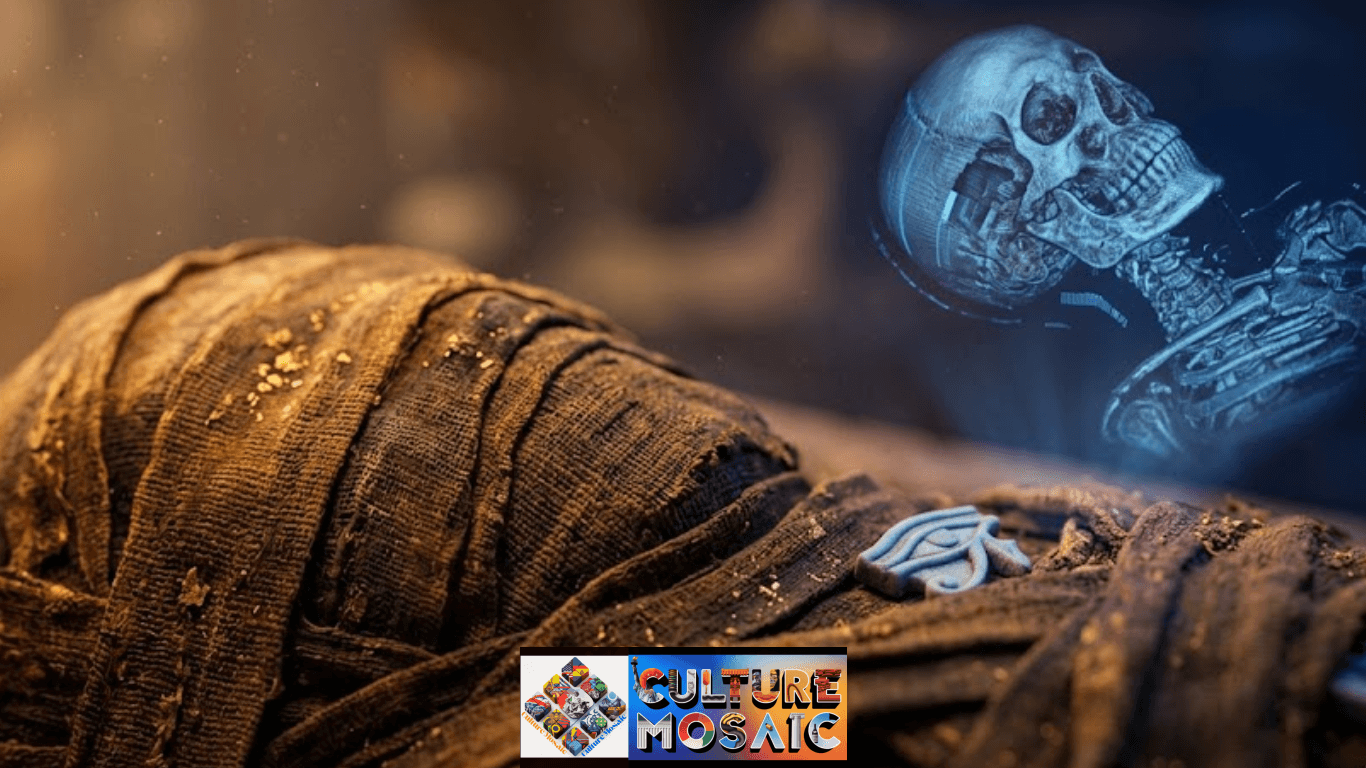
What Is a Mummy in History? Unlocking the 4,000-Year-Old Science of Immortality
I still remember the first time I stood over an uncovered coffin in a storage room at Saqqara, close enough to see the linen wrapping catch the light. It wasn’t dramatic. No dust cloud, no curse, no theme music. Just a quiet, dry smell, like old paper left in an attic for a century—and a body that had been waiting almost four thousand years for someone to look at it again.
That’s the moment I actually understood what mummies really meant in history. Not a monster. Not a Halloween costume. A promise, wrapped in linen, that a person would not simply vanish.
Here’s the problem I see constantly: people search for facts about mummies and get served either horror movie nonsense or a textbook paragraph so dry it could desiccate a body on its own. Neither one answers the actual question. Neither one explains why an entire civilization spent seventy days, staggering wealth, and their most skilled priests on the dead. That gap between curiosity and a real answer is exactly what I want to close here.
I’ve spent years reading tomb inscriptions, examining CT scans of royal remains, and walking through the galleries where these people are still, in a very real sense, present. Let’s answer the question properly: why did mummification matter so much, and why does it still pull millions of visitors into museum halls every single year?
What Is Mummy in History, Really?
A mummy, at its simplest, is a body preserved well enough that skin, hair, and sometimes organs survive long after death. That preservation can happen by accident (through cold, dryness, or lack of oxygen) or on purpose (through deliberate embalming).
Egypt is the civilization everyone thinks of first, and for good reason. The Egyptians turned mummification into an art form, a religious obligation, and eventually an industry. If you want to explore the fundamental definition of What is mummy in history, the story of Egyptian mummification really begins with a simple, almost desperate belief: the soul could not survive without its original body to return to.
“This wasn’t vanity. It wasn’t about looking good for eternity. It was survival math, as the Egyptians understood it. Lose the body, lose the person, forever.”
Why Ancient Egypt Took This So Seriously
Egyptian religion held that a person was made of several vital spiritual parts, not just flesh:
- The Ka: A person’s vital life force.
- The Ba: The aspect closest to personality or soul.
Both the Ka and Ba needed a recognizable body to come home to after death. If that body rotted beyond recognition, the person was, in the truest sense, lost. No afterlife, no Field of Reeds, no reunion with family who died before them.
That belief explains a lot of what looks strange to modern eyes. It explains the money spent, the priesthood involved, and the sheer stubbornness of the ritual across more than four thousand years, from roughly 2600 BCE through the Roman period. It also explains why the wealthy got elaborate treatments and the poor got a simpler version buried in hot desert sand, drying naturally without much help at all. Status didn’t disappear at death. If anything, it got more visible.
How Mummification Actually Worked (Warning: It’s Not Pretty)
The process was detailed, grueling, and took roughly 70 days from start to finish:
- Organ Removal: Priests, acting in the role of Anubis, removed the brain first using a hooked instrument inserted through the nose. They discarded it because they didn’t consider it important. The heart remained inside the body, believed to hold memory, judgment, and identity.
- Canopic Preservation: Abdominal organs—liver, lungs, stomach, and intestines—were removed and preserved separately in four canopic jars, each guarded symbolically by one of the Four Sons of Horus.
- Dehydration (40 Days): The body was packed inside and out with natron, a naturally occurring salt that pulls moisture out of tissue with brutal efficiency.
- Washing & Wrapping: The dried body was washed, anointed with protective oils and resins, and wrapped in layer after layer of linen—sometimes over a hundred yards—with protective amulets tucked between the folds.
Cost determined quality. While wealthy families afforded full treatments, poorer ones used shortcut methods. Sacred animals—cats, ibises, crocodiles—were also mummified by the millions as religious offerings, creating a massive industry in votive gifts.
What Is Mummy in History for Kids?
If a curious ten-year-old asked me to explain this simply, I’d say it this way:
Ancient Egyptians believed people needed their bodies in the next life, so they figured out how to stop bodies from rotting. They removed the parts that decay fastest, dried the rest out with a special natural salt, and wrapped it up carefully like an ancient bandage job. They did this for pharaohs, everyday people, and even pet cats. It’s one of the most impressive science projects of the ancient world—four thousand years before refrigeration existed!
Mummies Beyond Egypt: A Global Story
Egypt didn’t invent mummification. In fact, humans on nearly every continent have independently sought ways to preserve the dead:
- The Chinchorro People (Chile & Peru): Mummified their dead as early as 5000 BCE—roughly two thousand years before Egypt started. They preserved ordinary fishing families using reeds, ash, clay, and face masks.
- Natural Freezing: Glacial conditions in the Andes and Siberian permafrost preserved bodies so well that modern researchers can still analyze their last meals.
- European Bog Bodies: Acidic, oxygen-starved peat bogs across Northern Europe naturally created leathery preserved remains, keeping skin and facial stubble intact while dissolving bones.
- Sokushinbutsu (Self-Mummification): Buddhist monks in Japan and China practiced a grueling process of extreme diet and meditation to preserve their remains, which are still venerated in temples today.
Famous Mummies From Ancient Egypt
Some names carry weight even outside Egyptology circles:
- Tutankhamun: The obvious one, largely because his tomb was found nearly intact in 1922, gold mask and all. I’ve written before about How Did King Tut Die and Why, and about Where Is King Tut Mummy housed today, if you want the fuller story.
- Hatshepsut: One of the rare women to rule as pharaoh in her own right rather than as a regent. I dug into Who Was Hatshepsut in Ancient Egypt in a separate piece, because her story deserves more than a footnote.
- Seti I: Father of Ramesses the Great, who left behind one of the best-preserved royal mummies ever recovered. I’ve covered his family in detail, including Seti I Wife, in another article.
- Greco-Roman Golden Mummies: If gold-adorned burials from the Greco-Roman period interest you more than the classic pharaonic era, The Golden Mummies of Egypt are worth your time.
For a broader roundup, I put together a full list of the Most Famous Egyptian Mummies worth knowing.
Deconstructing Myths: Is There a “Real Mummy Alive”?
No. There is no real mummy alive. Mummification, whether Egyptian, Chinchorro, or accidental, is a preservation process for the dead. It does not reanimate anyone. What draws people in is awe: the realization that a face from four thousand years ago can still be recognizable, that a heartbeat once existed inside that chest cavity.
The “Curse of the Pharaohs” Explained
The “curse of the pharaohs” legend, the one that supposedly killed off members of Howard Carter’s excavation team after they opened Tutankhamun’s tomb, has a much less supernatural explanation. Several researchers have pointed to mold spores and bacteria that can build up in sealed tombs over millennia, capable of causing respiratory illness in anyone who breathes in that stale air. Grim, sure. Cursed, no.
Why This Still Matters to Archaeology Today
I’ll admit a bias here: I think mummies are the single richest source of ancient human data we have, more revealing than almost anything else archaeology recovers. A statue tells you what a culture wanted to project. A mummy tells you what actually happened to a real person—diet, disease, injury, and belief, preserved in tissue rather than stone.
Scholars studying the Egyptian Concept of Life After Death lean heavily on burial evidence like this, and even fragile written material found alongside mummies, like the Egyptian Mummy Iliad Papyri, has reshaped what we know about literacy and cultural exchange in the ancient Mediterranean world.
Modern non-invasive imaging has changed the entire ethics of this field. Fifty years ago, studying a mummy often meant unwrapping it, which destroyed centuries of careful preservation just to satisfy curiosity. Now a CT scanner can build a three-dimensional model layer by layer without disturbing a single strand of linen. We get more information today, with far less damage, than archaeologists a century ago could have imagined possible.
Frequently Asked Questions
What is mummy in history in simple terms?
A mummy is a dead body that has been preserved, either deliberately through embalming or naturally through environmental conditions like extreme cold, dryness, or lack of oxygen, so that skin, hair, and sometimes internal organs survive for centuries or millennia rather than decomposing normally.
What mummy facts do most people get wrong?
The biggest one is assuming Egypt invented mummification. It didn’t. The Chinchorro people of South America were mummifying their dead roughly two thousand years earlier. Another common mistake is assuming only pharaohs were mummified; wealthy commoners, and even sacred animals, went through the same process on a smaller budget.
How long did Egyptian mummification take, and why so long?
Roughly seventy days, split into a forty-day natron drying period and a final stretch of wrapping, anointing, and ritual. The timeline wasn’t arbitrary. Egyptians believed rushing the process risked an incomplete preservation, which they saw as a genuine threat to the person’s survival in the afterlife.
Is there a real mummy alive anywhere in the world?
No. Despite what the search term implies, mummification preserves the dead; it has never revived anyone. The fascination usually comes from how lifelike a well-preserved face can still look after thousands of years, not from any actual reanimation.
Why are famous mummies from ancient Egypt still studied today?
Because a mummy body holds evidence a textbook never could: real diets, real diseases, real injuries, and real family lineages traced through DNA. Each mummy is effectively a preserved medical and historical record, which is why museums and universities continue to scan and study them rather than treat them as static relics.
Sources & Further Reading
- Smithsonian Institution — “Mummies”, Ancient Egypt Spotlight
- University of Sydney — Egyptian Mummification (Nicholson Collection education resource)
- University of Copenhagen / ScienceDaily — “Ancient Egyptian manual reveals new details about mummification”
- World History Commons — Chinchorro Mummies
- Discover Magazine — “The Mummification Process: How Ancient Egyptians Preserved Bodies for the Afterlife”