
 By Dr. Marcus Hale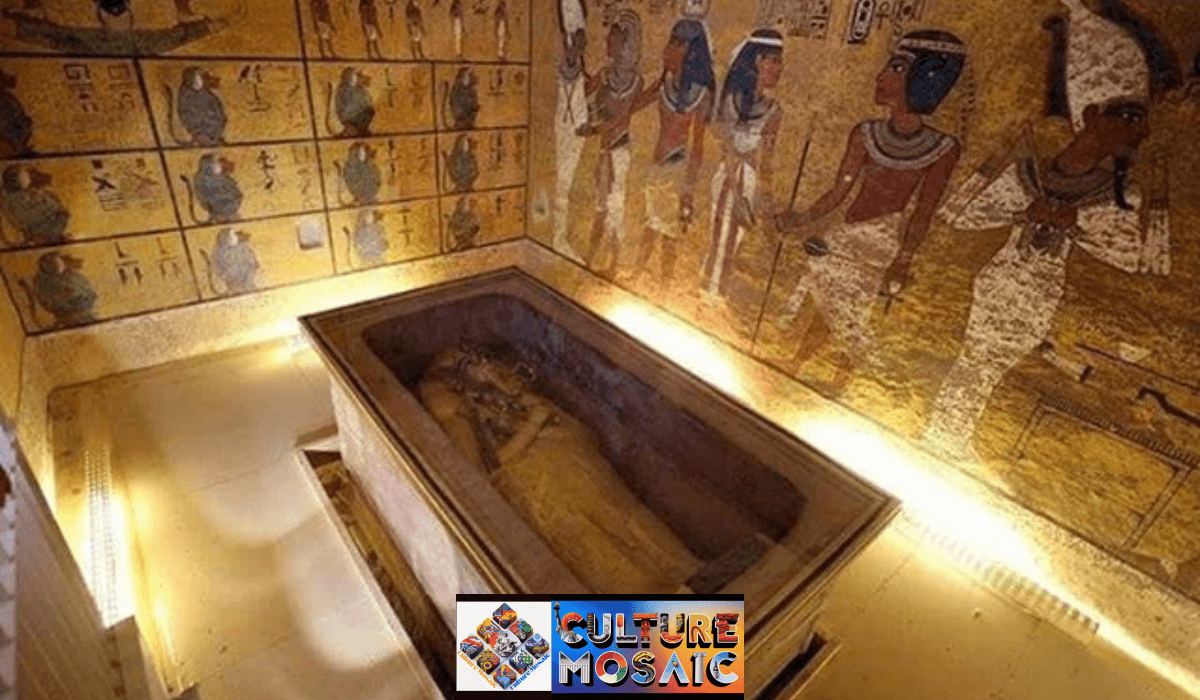
I have stood inside KV62 more times than I can count, and the question I get asked most, by far, is some version of where is king tut mummy right now. People assume he is behind glass in Cairo somewhere, sitting next to his gold mask in a climate-controlled case in a big city museum. He is not. That is the myth I want to clear up before we go any further, because the real answer to where King Tut’s mummy is surprises almost everyone who asks me.
His treasures have toured the world. They have hung in museums from London to Los Angeles, dazzled millions, and now sit in the brand new Grand Egyptian Museum in Giza. But the king himself, the actual body that was wrapped in linen and gold over three thousand years ago, never made that journey. So where is king tut’s mummy, exactly? It is still in the Valley of the Kings, in the same small tomb where Howard Carter found him in 1922.
The Quick Answer to Where Is King Tut’s Mummy
Let me give you the short version first, because I know plenty of readers just want the fact and not the full lecture.
King Tutankhamun’s body has never left his original tomb. He still rests inside KV62, in the Valley of the Kings, exactly where Howard Carter found him in 1922.
King Tutankhamun’s actual mummified body rests inside his original tomb, KV62, in the Valley of the Kings, on the west bank of the Nile near Luxor, Egypt. He lies within a climate-controlled glass display case, set inside his original outermost coffin, which in turn sits within his quartzite sarcophagus, right where Carter’s team found the whole nested arrangement a century ago.
That case is not a museum prop. It was built specifically for him, installed in 2007, and it is the reason his fragile remains have survived this long under the gaze of thousands of daily visitors.
So if someone asks you point blank, where is king tut’s mummy, the honest answer is Luxor, not Cairo. His jewelry, his throne, his chariots, his famous gold mask, all of that lives at the Grand Egyptian Museum now. His body stayed home.
Why Isn’t King Tut’s Mummy in a Museum Like the Other Pharaohs?
This is the part that genuinely surprises people, and it is worth sitting with for a second.
Walk into the Royal Mummies Hall at the National Museum of Egyptian Civilization in Cairo and you will find Ramesses II, Hatshepsut, Seti I, and a long roster of New Kingdom royalty lying in climate-controlled cases for public viewing. Tutankhamun is conspicuously absent from that lineup.
Egypt’s Supreme Council of Antiquities made a deliberate call decades ago to keep him in situ, meaning in his original burial place, rather than moving him to join the others in Cairo.
I have heard tourists ask Egyptian guides why the most famous pharaoh of all isn’t sitting with his peers. The answer comes down to two overlapping reasons, one scientific and one spiritual.
The Scientific Case for Leaving Him in KV62
Tutankhamun’s body is, frankly, in rough shape. Howard Carter’s 1925 excavation, for all its brilliance, did real damage. His team used hot knives and brute force to pry the solid gold mask and heavy jewelry off a body that had been cemented to its coffin by hardened embalming resin. The mummy was cut into pieces during that process, the limbs separated from the torso, and it has never fully recovered from that handling.
Moving a body this fragile across the country, even with modern conservation methods, would introduce risk that conservators simply do not want to take on. Every transfer is a chance for further deterioration. KV62 stays put because the safest move, in this case, is no move at all.
The Spiritual and Cultural Argument
There is also a less clinical reason, and it matters just as much to many Egyptians. Ancient Egyptian religious belief held that a pharaoh’s soul, his ka, needed an undisturbed resting place to achieve eternity. Keeping Tutankhamun in his original tomb honors that ancient framework. It also, as a practical matter, keeps tourism dollars flowing into Luxor rather than concentrating everything in Giza and Cairo. The Valley of the Kings depends on visitors coming to see the genuine article, not a replica, and KV62 delivers that in a way no museum transfer ever could.
In June 2025, Egyptian officials settled a question that had been circulating for a few years. Reports had surfaced back in 2022 suggesting the mummy might eventually move to the Grand Egyptian Museum alongside his treasures. That plan never materialized. The director of the Egyptian Museum publicly confirmed Tutankhamun will remain in the Valley of the Kings, putting the speculation to rest for good.
The Journey of the Boy King: A Timeline of His Resting Place
I find timelines help readers see how a single, tiny tomb has carried this much history, and how the answer to where King Tut’s mummy is has stayed remarkably constant even as everything around it changed. Here is how the story unfolds.
1323 BCE — The Sealed Tomb
Tutankhamun dies unexpectedly around age 19 and is buried in a hurry inside KV62, a tomb far too modest for a reigning pharaoh. Debris from later construction buries the entrance within a few generations, and the tomb vanishes from memory for over three thousand years.
Nov 4, 1922 — The Discovery
Howard Carter, funded by Lord Carnarvon, uncovers a stairway cut into the bedrock. Three months later, the burial chamber opens to reveal the mummy nested inside three coffins, the innermost made of solid gold, all housed within a stone sarcophagus.
Oct 1925 — The Damage
Freeing the mummy from resin that had hardened it to the coffin requires hot knives and considerable force. The body is cut apart in the process, a sobering chapter that later CT scans would help explain in forensic detail.
Jan 2005 — Out of the Dark
Under Zahi Hawass, the mummy leaves the tomb for the first time since 1925 for a high-resolution CT scan. The results dispel the decades-old murder theory and reveal new information about his health and final days.
Nov 4, 2007 — The Public Unveiling
Exactly 85 years after the original discovery, the mummy moves into a purpose-built, oxygen-free, climate-controlled glass case inside the tomb’s outer chamber. This is the display visitors see today.
June 2025 — The Question Settled
After years of rumors about a possible move to the Grand Egyptian Museum, Egyptian officials confirm publicly that Tutankhamun will stay exactly where he is, in KV62, in the Valley of the Kings.
What You See When You Visit KV62 Today
Descending into the tomb is genuinely unlike anything else in Egypt, and I say that as someone who has walked through dozens of tombs in the Valley. This is, after all, the actual place where King Tut’s mummy has rested for over three thousand years, not a recreation or a stand in.
Above ground, the Valley of the Kings hums with heat, tour buses, vendors, and the general bustle of modern Egyptian tourism. Step down into KV62, though, and the temperature drops, the noise falls away, and you are suddenly alone with three thousand years of history. The burial chamber walls are painted with scenes from the Book of Gates, the colors still surprisingly vivid given their age. Look down into the sunken display, and you will see the king himself, his linen wrapped, blackened body visible from the chest up and at the feet, the rest of him kept modestly covered by protective wrapping.
It is a strange, quiet, almost reverent experience. Most visitors expect spectacle and instead get intimacy with a teenager who died nearly 3,300 years ago.
An Egyptologist’s Pro Tip
If you are planning a trip specifically to answer where is king tut’s mummy with your own eyes, know this in advance: the standard Valley of the Kings ticket does not include entry to KV62. You need a separate, premium add-on ticket purchased at the main ticket office before you head into the valley. It costs more, yes, but standing a few feet from the most famous pharaoh in history is worth every pound of that extra fee.
What the Science Actually Revealed About Tutankhamun
The 2005 CT scan, and the multi-year DNA project that followed and was published in full in 2010, fundamentally rewrote what we thought we knew about this king. Decades of sensational murder theories gave way to something far more human: a portrait of a frail, sickly teenager fighting a losing battle against his own genetics.
Debunking the Murder Theory
For nearly 40 years, the leading theory held that Tutankhamun had been killed by a blow to the back of the head. That idea traced back to a loose bone fragment spotted on a crude 1968 X-ray. The 2005 CT scan put that theory to rest for good.
The hole at the base of his skull, it turned out, was not an injury at all. Ancient embalmers drilled it deliberately to drain the brain and pour mummification resin into the cranial cavity, a completely standard part of New Kingdom mummification practice. As for the loose bone fragments themselves, they were perfectly clean. Had that injury occurred while Tutankhamun was alive, those fragments would have been trapped in solidified embalming resin. Instead, scientists now believe they broke loose much later, most likely when Carter’s team forced the gold mask off the body in 1925.
Health and Physical Disabilities
DNA evidence confirmed something genuinely startling: Tutankhamun’s parents were full biological siblings. That level of inbreeding came with consequences, and his skeleton bears the marks.
- Clubfoot and bone disease: CT imaging revealed a severe deformity in his left foot, a condition called Kohler disease II, which causes the death of bone tissue due to restricted blood flow. That left him with a painfully misshapen, flattened foot.
- The cane enigma solved: archaeologists found over 130 walking sticks and canes scattered throughout his tomb. They were not symbols of royal status. They were medical necessities for a young king who walked with a genuine limp every single day of his short life.
- Debunking feminine syndromes: scholars long wondered whether Tutankhamun’s family carried conditions like Marfan syndrome, given how Amarna period art depicted them with wide hips and elongated skulls. DNA testing found no genetic markers for any of that. The art style was a deliberate religious choice under his father, Akhenaten, not a reflection of an actual condition.
The Final Days: What Actually Killed Him
There was no single smoking gun. Instead, the evidence points to a brutal convergence of factors: a body already weakened by inbreeding and chronic illness, struck by a sudden, severe injury at the worst possible moment.
The 2005 scan located a jagged, compound fracture just above his left knee. Embalming resin had seeped directly into the open wound and hardened there, which tells researchers the injury happened shortly before death, since the bone edges show no sign of healing whatsoever. Layered on top of that, DNA testing turned up Plasmodium falciparum, the parasite behind the deadliest strain of malaria, and Tutankhamun appears to have carried multiple strains at once. He was not fighting one illness. He was fighting several, simultaneously, with a body that had little left to give.
A compound leg fracture, a body already weakened by malaria and inbreeding, and no antibiotics anywhere in the ancient world. That combination, not a conspiracy, is what most likely killed the boy king.
In a world thousands of years removed from antibiotics, a compound leg fracture was close to a death sentence on its own. Add a massive bacterial infection from that open wound, a teenage immune system already exhausted by chronic malaria, and the genetic frailty baked in from generations of royal inbreeding, and you get a king whose body simply gave out under the combined weight of it all. He was roughly 19 years old.
Where Are King Tut’s Treasures If Not With the Mummy?
This is the other half of the puzzle people get tangled up in, so let me untangle it cleanly. Knowing where King Tut’s treasures live does not actually change where his mummy is, but the two facts get conflated constantly online.
The Grand Egyptian Museum and the 2025 Relocation
In November 2025, the Grand Egyptian Museum in Giza officially opened its dedicated Tutankhamun galleries, and for the first time in over a century, all 5,398 catalogued objects from his tomb were displayed together in a single space. Before this, the collection had been split for decades, with a portion on view at the old Egyptian Museum in Tahrir Square and the rest tucked away in storage. The famous gold funerary mask made that same move, transferring from Tahrir Square to its new permanent home as part of a careful multi year relocation completed just ahead of the opening.
So if you visit Egypt today hoping to see everything Tutankhamun left behind, plan for two stops, not one. The Grand Egyptian Museum in Giza holds the mask, the throne, the chariots, and thousands of smaller objects pulled from the tomb. KV62 in Luxor holds the king. For details on the mummy’s discovery and the 2025 confirmation that he remains in the Valley of the Kings, see the Where is king tut mummy entry on Wikipedia, a thorough academic resource on the subject.
Visiting Both Sites in One Trip
A surprising number of travelers do not realize the mask and the body are now an hour’s flight apart, and they build itineraries that miss one or the other entirely. My advice, after guiding more trips through Egypt than I can easily count, is to treat them as two halves of the same story rather than competing attractions. See the treasures in Giza first. Then fly down to Luxor and see the man those treasures were built to protect. The order matters less than making sure you do both.
How This Connects to Egypt’s Wider Mummy Tradition
Tutankhamun’s case is unusual, but it sits inside a much bigger story about how ancient Egyptians thought about death, preservation, and the afterlife. If this kind of history interests you, our deep dive into The Golden Mummies of Egypt covers a separate, equally striking discovery from a different region entirely, and our roundup of the Most Famous Egyptian Mummies puts Tutankhamun’s case in context against other royal burials.
For readers curious about the belief system that made all of this matter so much to ancient Egyptians in the first place, our piece on the Egyptian Concept of Life After Death walks through the theology behind mummification itself. And if you want to go even deeper into the texts that guided embalmers through the process, we have covered the Egyptian Mummy Iliad Papyri as well. You can read more of our cultural heritage coverage at Culture Mosaic.
Frequently Asked Questions About King Tut’s Mummy
Question 1: Is the boy king actually inside that tomb, or just his coffin?
Answer: He is actually there. Inside KV62, beneath a sealed glass case installed in 2007, lies the real body, not a replica or an empty coffin standing in for the man. Carter’s team found him nested inside three coffins and a quartzite sarcophagus back in 1925, and that same arrangement, minus the gold mask now in Giza, is what visitors look down on today.
- His belongings now live at the Grand Egyptian Museum, but his body never moved.
- Do not confuse this tomb with the Royal Mummies Hall in Cairo, home to Ramesses II and other pharaohs.
- The case is a conservation tool, not a display gimmick, so check current opening hours before you travel.
Question 2: Why didn’t Egypt just move him to the new museum with everything else?
Answer: Two reasons, and neither is sentimental. His body is extremely fragile after the rough handling it took during the 1925 excavation, so conservators see almost no upside to risking a transfer. There is also a cultural argument, rooted in the ancient belief that a pharaoh’s soul needed an undisturbed resting place, and Egyptian officials leaned on both points when they confirmed in June 2025 that he is staying put for good.
- The 2022 relocation rumors were speculative and were formally denied in 2025.
- Fragile human remains face stricter conservation limits than gold or stone artifacts.
- Keeping him in Luxor also protects tourism revenue that the Valley of the Kings depends on.
Question 3: Can regular tourists actually walk in and see him?
Answer: Yes, and it is one of the more affecting things you can do in Egypt. The catch is that the standard Valley of the Kings ticket does not cover KV62. You need a separate add-on ticket from the main office before you head down into the valley, and once inside, you view the body through protective glass rather than up close.
- Buy the KV62 ticket at the main office, since it is not sold at the tomb entrance.
- Visit October through April to avoid Luxor’s brutal summer heat.
- Pair it with the nearby Temple of Hatshepsut to fill out the day.
Question 4: What did the CT scans and DNA testing actually prove?
Answer: They overturned the murder theory for good and replaced it with something more human. The science showed a club foot caused by Kohler disease II, parents who were full biological siblings, multiple strains of malaria in his system, and a fatal compound leg fracture suffered days before death. Put together, it points to infection and immune collapse, not an assassin.
- The 1968 murder theory is outdated; both the 2005 scan and 2010 DNA study disproved it.
- His 130 canes were medical aids for a painful limp, not ceremonial props.
- Research is ongoing, so future studies could still refine these conclusions.
Question 5: If his body stayed in Luxor, where did everything else end up?
Answer: In Giza. The Grand Egyptian Museum opened dedicated galleries in November 2025 holding all 5,398 catalogued objects from the tomb, including the gold funerary mask, the throne, and the chariots. That means seeing the full story now takes two stops, roughly an hour’s flight apart.
- Book GEM tickets ahead of time; the new galleries have drawn heavy crowds.
- Allow a full day there given the scale of the collection.
- Treat Giza and Luxor as two halves of one trip, not competing options.