
 By Culture Expert
Socially Restorative Architecture: What It Actually Means
There is a corridor in a house in the west of Scotland that changed the way I practise architecture. I want to tell you about it because it explains, in concrete rather than theoretical terms, what socially restorative architecture actually does — not as an abstract design philosophy but as a practical intervention in how a family of five spent their evenings together.
The brief was perfectly ordinary: open up the ground floor, improve the kitchen, add a utility space. The family had three teenagers who had, by the parents’ account, perfected the art of moving through shared space without registering each other’s existence. The house was a machine for coexisting. It was not doing the work of socially restorative architecture. It was doing the opposite.
In the original layout, a narrow corridor connected the kitchen to the staircase. On paper it was an inefficiency — a pinch point, a flow problem. Every instinct in conventional residential design said remove it. Open it up. Let the plan breathe. We widened it by sixty centimetres instead, added a built-in bench on one wall, and positioned the kettle at the far end, visible from both the kitchen and the top of the stairs. The intervention cost less than two thousand pounds. That was it.
When the family moved back in, the mother called after four weeks. The corridor, she said, had become the room. Not the new open-plan kitchen. Not the renovated sitting room. The corridor. Everyone ended up in it at the same moment, without planning to. The architecture had done what socially restorative architecture is supposed to do: it created the conditions in which connection became the path of least resistance.
That is what socially restorative architecture is. Not a visual style. Not a palette. Not an Instagram aesthetic built around raw concrete and indoor olive trees. It is a way of designing space that treats human social behaviour as the primary brief, and subordinates everything else — aesthetics, material, light, flow — to that single criterion.
As a practising architect and expert in socially restorative architecture, I have spent more than two decades studying the relationship between built form and social health. The conclusion I keep returning to is consistent: we are extraordinarily poor at designing spaces that make human connection easy, and we have almost no professional vocabulary for discussing why.
Socially restorative architecture gives us that vocabulary, and more importantly, it gives us the tools to act on it. Every project I take on begins with a single socially restorative architecture question: what specific social behaviours do we want this space to make more likely?
The Spatial Anatomy: A Comparative Map of Socially Restorative Architecture

Before going further, it is worth laying the philosophy out in direct comparison with conventional residential design. The table below is not a condemnation of modern interiors. It is a diagnostic tool — the kind I use at the start of every socially restorative architecture consultation. Read each row and ask yourself which column describes the home you actually live in.
What it reveals, in almost every case, is that the home was built without socially restorative architecture as a design criterion, and that this absence has measurable consequences. The table is, in this sense, a before-and-after for socially restorative architecture thinking applied to the domestic scale.
| Element | Conventional Design | Socially Restorative Architecture |
|---|---|---|
| Kitchen | Isolated island; culinary performance for an audience of one direction. | The Social Hearth: Multi-access prep zones that turn cooking into collective participation. |
| Lighting | Static LED grids and smart timers that optimise for visibility, not mood. | Circadian Ritual: Light that tracks the hour, from oblique morning warmth to evening firelight. |
| Seating | Outward rows facing a screen; passive, individual, consumption-oriented. | Inward Arrangement: The conversation pit. Active, collective, socially-oriented. |
| Materials | Synthetic, cleanable, non-aging surfaces engineered to resist the passage of time. | Haptic & Patinated: Materials that age with use and archive the history of human touch. |
| Threshold | Flush, frictionless, unmarked transitions that blur the social register. | Legible Thresholds: Floor changes, level drops, and material shifts that tell the body where it is. |
| Sound | Acoustic homogeneity; the same ambient hum from room to room. | Acoustic Zoning: Materials and proportions that create distinct sensory identities per space. |
The pattern across every row is consistent. Conventional design optimises for performance, cleanliness, individual comfort, and smooth flow. Socially restorative architecture optimises for participation, sensory legibility, and change over time.
The right-hand column is not harder to build and is not more expensive to specify. It simply asks a different question of every design decision: not what does this surface look like, but what does this surface make more likely to happen between two people who share the space?
(Passive)
One direction = one cook,
everyone else is audience.
Cooks
Chops
Talks
Three sides = three contributors,
conversation is the byproduct.
Diagram A states the geometry argument plainly. A kitchen island approached from one direction produces one cook and an audience. A shared preparation surface approached from three sides produces collective participation and conversation as a byproduct. That is socially restorative architecture in its most economical form: a question about geometry that costs nothing to ask at the drawing stage and almost nothing to implement.
The Haptic Floorplan: Naming Rooms by Social Function
One of the first exercises I use in a socially restorative architecture consultation is this: I ask clients to forget every room name their estate agent assigned and instead walk through the building slowly, naming each space by what actually happens there when it is working at its best. Not ‘living room.’ Not ‘hallway.’ What is the social function of this space? What specific behaviours does it support or suppress?
Most people find this surprisingly difficult. They have lived in their homes for years without ever asking the question. That difficulty is itself a form of diagnosis. If you cannot name the social function of a room, the room does not have one. The architecture has not given it one. Every social event that happens in that room is happening despite the design, not because of it.
In the framework of socially restorative architecture, I name rooms by three categories that appear in almost every project I work on, regardless of scale, budget, or location. These categories are not aesthetic. They are functional, social, and diagnostic — the vocabulary through which socially restorative architecture reads a building plan.
The Site of Exchange
Any space where things are made and shared. Usually the kitchen; sometimes a workbench, a communal table, or a secondary preparation surface positioned with enough generosity to draw people in from multiple directions. The design imperative of socially restorative architecture here is always the same: access.
A worktop approached from one direction is a stage, and it produces a performance. A worktop approached from three sides is a site of collective work, and it produces community. This is spatial mechanics, not metaphor. It is the geometry of socially restorative architecture applied to the most used room in the house.
I watched it happen on a project in Edinburgh: a modest Victorian terrace, a couple who had eaten separately for a decade, a kitchen island rotated eight degrees and a secondary surface added on the return wall. Within a month they were cooking together every evening. The food had not changed. The geometry had. That is what an expert in socially restorative architecture is trained to see — the social consequences of spatial decisions that conventional design treats as neutral.
The Mnemonic Corridor
In a well-resolved socially restorative architecture project, the corridor is never merely circulation. It carries the memory of the household: photographs, objects from significant places, materials that have aged visibly alongside the people who pass through them.
I describe this as the institutional biography of a family made spatial. The moment of intentional friction as someone moves from one zone to another — catching a photograph, pausing at a bench, adjusting an object — is where the small daily interactions accumulate into the texture of a shared life.
Environmental psychology research is consistent on this point: unplanned encounters arising from shared routes generate stronger long-term social bonds than formally arranged meetings. The open-plan impulse to remove transitional zones in favour of unobstructed flow removes precisely the spaces where casual, low-stakes connection happens.
I spend a significant proportion of every socially restorative architecture project arguing for the retention of corridors that clients have been told to eliminate. The corridor, understood through the lens of socially restorative architecture, is not a flow problem. It is a social opportunity. I am almost never thanked for it in the moment. I am almost always thanked for it a year later.
The Contemplative Nook
Every person in a shared home needs a place of quiet withdrawal that remains physically present within the social structure of the building. Not a locked bedroom. Not a basement office. A window seat with enough depth to inhabit properly. A reading alcove set into a wall that places you within earshot of the household while removing you from the obligation to engage with it.
In socially restorative architecture, this is called the contemplative nook, and it communicates something sophisticated: I am here, and I am resting. It offers a kind of availability that does not demand response but does not refuse connection.
This is among the most consistently underused elements in residential design, and among the cheapest to provide. When I find one in an existing home — a deep sill, a generous landing, a recess that was never finished — I treat it as discovered infrastructure.
When there is none, I design one in. Every socially restorative architecture project I have completed in the past decade includes a version of it, at every budget level. It is, in my view, the single most underspecified element in residential design outside of socially restorative architecture practice.
Intentional Friction: The Architecture of Unavoidable Encounters
The concept that most clearly distinguishes socially restorative architecture from every other residential design approach is intentional friction. It is also the one that produces the most resistance when I introduce it to clients — and I understand why.
We live in an era that has treated the elimination of friction as the primary design goal of almost every system we encounter: digital interfaces, domestic appliances, urban planning frameworks. All of it has been moving in the direction of smooth individual experience since the 1970s.
The residential consequence is homes that can be navigated by multiple people without those people ever occupying the same space at the same moment. In a standard open-plan house, it is entirely possible to move from bedroom to front door without making eye contact with anyone you live with. Everything flows. And everything separates. Socially restorative architecture understands this as a design failure, not a design achievement.
“The most important conversations in a shared home happen because the architecture made them hard to avoid — not because anyone planned them.”
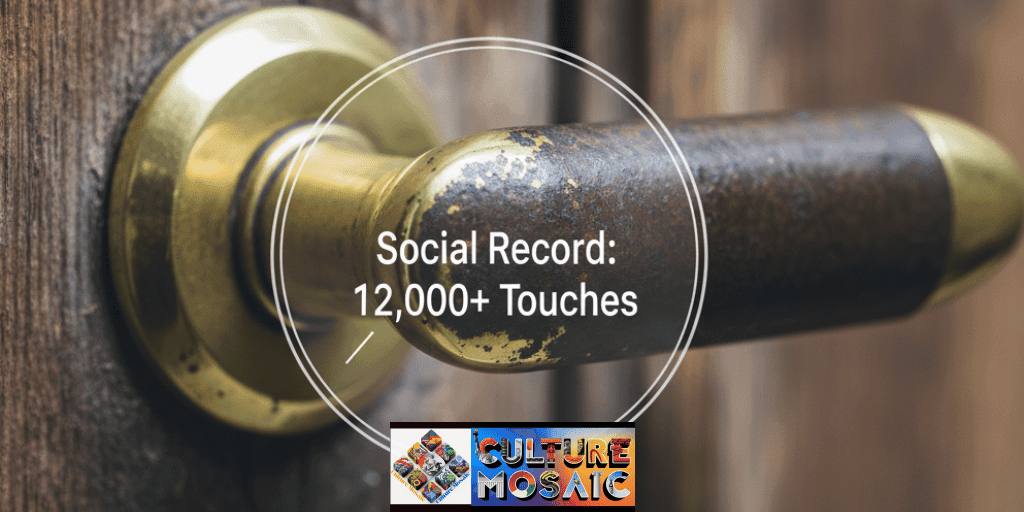
Intentional friction is the core spatial mechanism of socially restorative architecture. It is the deliberate placement of moments where the architecture gently requires two or more people to occupy the same space at the same time. A shared threshold that both people pass through to reach the kitchen. A kettle positioned where two household routes converge.
A staircase that opens onto the communal room rather than a private corridor. These are not accidents. They are precision decisions made by someone who understands that socially restorative architecture does not trap people together — it designs spaces where the encounter becomes the natural thing to do.
The corridor in Scotland worked because the kettle, on that specific wall, at that specific height, was exactly where you would stop if you came from the kitchen and exactly where you would pause if you came from the stairs.
Two routes, one convergence, one warm object that required a moment of stillness. The architecture did not force a conversation. It created a situation in which conversation was the most natural thing in the world. That is socially restorative architecture at its most precise and its most human.
Socially Restorative Architecture and Environmental Sustainability
The environmental argument for socially restorative architecture is, I believe, significantly underexplored in sustainability discourse. Most frameworks for sustainable design focus on embodied carbon, operational energy, and material efficiency.
These matter. But they consistently overlook the most powerful sustainability lever available to a residential designer: building spaces that people genuinely do not want to leave. That lever is socially restorative architecture, and it has been sitting largely outside the sustainability conversation for two decades.
The most sustainable building is one that people want to stay inside. I have believed this for twenty years and watched it confirmed on project after project. When a home applies socially restorative architecture principles with real intelligence — when it creates warmth in the haptic sense, not just the thermal one, when it offers solitude and sociability in calibrated balance, when its materials age with the people who live alongside them — the impulse to consume elsewhere diminishes.
The evenings out that were an escape from an inhospitable interior. The weekend trips that were a search for stimulation the house could not provide. The built environment generates these compensatory behaviours when it fails socially. Socially restorative architecture addresses that failure at source.
The environmental mathematics, compounded across twenty years of household life, are substantial. A family that spends three fewer evenings per week consuming elsewhere — in restaurants, retail environments, entertainment venues — generates a meaningfully different carbon footprint than one whose home drives them outward by failing to meet their social and sensory needs.
Socially restorative architecture is, in this sense, one of the most practically effective sustainability strategies available to residential designers, and it receives almost no recognition in that context.
Biophilic Design Within Socially Restorative Architecture
Biophilic design — the integration of natural materials, living systems, and environmental processes into the built environment — functions, in my practice, as a component of socially restorative architecture rather than a separate discipline. Not because of an abstract aesthetic commitment to nature, but because living systems give people shared objects of attention that do not require a screen to mediate between them.
A large-scale plant that requires collective decisions about water and light. A wood-burning stove that needs to be managed and fed. A kitchen herb garden visible from the table. These are not decorative choices made under the banner of socially restorative architecture. They are social infrastructure — objects that introduce shared responsibility, shared observation, and shared conversation into a domestic environment that might otherwise have none.
I have specced large-scale plants into dozens of projects with exactly this intention, and the social effect is consistent. The plant becomes a shared reference. It becomes a reason to look in the same direction. In a household, that is not a small thing. It is socially restorative architecture working at its most accessible and its most human scale.
The Sensory Audit: Is Your Space Applying Socially Restorative Architecture?

I use a version of this audit at the beginning of every project. It is not a pass-or-fail test. It is a tool for making visible the social structure of a space that its inhabitants have stopped noticing because familiarity has made it invisible.
In a socially restorative architecture project, that initial audit conversation is often where clients first understand what has been quietly missing from their home. Clients who have lived in a house for a decade consistently find things in this audit that surprise them. That surprise is the beginning of a socially restorative architecture conversation.
| Tactile Cues | Does the floor material change when you cross from a communal zone into a private one? | |
| Acoustic Anchoring | Can you hear rain or wind from inside the house without opening a window? | |
| Communal Object | Is there a central object in your home that requires regular shared care — a stove, a large plant, a garden? | |
| Circadian Light | Does natural light move through at least two of your communal rooms across the arc of the day? | |
| Threshold Legibility | Is there a defined entry threshold — a material shift, a level change — that signals the move from outside to inside life? | |
| Seating Orientation | Does your primary seating face inward, toward people, rather than outward toward a screen? | |
| Mnemonic Surface | Does at least one surface in your home carry visible evidence of the people who have used it? |
| DIMENSION | AUDIT QUESTION |
| Tactile Cues | Does the floor material change when you cross from a communal zone into a private one? |
| Acoustic Anchoring | Can you hear rain or wind from inside the house without opening a window? |
| Communal Object | Is there a central object in your home that requires regular shared care — a stove, a large plant, a garden? |
| Circadian Light | Does natural light move through at least two of your communal rooms across the arc of the day? |
| Threshold Legibility | Is there a defined entry threshold — a material shift, a level change — that signals the move from outside to inside life? |
| Seating Orientation | Does your primary seating face inward, toward people, rather than outward toward a screen? |
| Mnemonic Surface | Does at least one surface in your home carry visible evidence of the people who have used it? |
If you answered yes to four or more of these questions, your home already has meaningful socially restorative architecture properties worth understanding and amplifying. If you answered yes to two or fewer, you are living in a space that has been designed for social neutrality — neither supporting nor actively impeding connection.
Every dimension in this audit can be addressed through repositioning, material intervention, or the introduction of a single shared object. Socially restorative architecture does not require a new building. It requires a new set of questions asked of the building you already have.
The Material Archive: How Socially Restorative Architecture Chooses Substances
I am deeply suspicious of materials that resist time. A surface engineered not to be scratched, stained, or worn has been designed to refuse the record of human presence — to remain identical on the day of resale as on the day of first occupation, as if the twenty years of family life that happened between those two dates left no trace worth keeping.
That is not a neutral quality. It is a designed absence, and in socially restorative architecture it is understood as a specific kind of failure.
The materials in the archive below are selected for a single quality above all others: they age in ways that document the people who have lived alongside them. They get better with use, not worse. They tell the truth about the household.
In socially restorative architecture, the material palette is not selected for aesthetic coherence. It is selected for social honesty. Every material decision in socially restorative architecture is, in this sense, a social decision.
For acoustic softening and skin-memory. Linen absorbs sound and story in equal measure.
Absorbent / TactileTo ground the body in the thermal reality of the site. Cold underfoot at dawn; warm by evening.
Thermal / GroundingTo record the history of touch through patina. A handle gripped ten thousand times is a document.
Reactive / TemporalTo carry the narrative of prior use. The grain holds decades; the nail holes hold questions.
Narrative / OrganicTo introduce thermal mass and the presence of deep time. It smells like geology.
Mineral / MassiveTo mark the human scale. Irregularities are evidence that a pair of hands made this thing.
Haptic / Human ScaleDiagram C demonstrates what this means across twenty years. The worn path across a slate floor is not damage — it is the household’s daily routine made permanent. The aged brass handle is not a maintenance problem — it is a social archive that tells you, with complete precision, which door was used most often, which hand gripped it, at what hour of the day.
An expert in socially restorative architecture reads a patinated surface the way a historian reads a primary source. The material has been taking notes about the people who lived here, and it is the only witness that does so without being asked.
Case Studies in Socially Restorative Architecture
The Conversation Pit: A Reappraisal
The sunken conversation pit is a spatial form that socially restorative architecture has been quietly reappraising for the past fifteen years, and for good reason. It was abandoned in the 1980s not because it failed but because it was too honest about its intentions.
It did not pretend to be flexible. It did not claim to be multi-purpose. It said, with complete spatial clarity: this is a place to sit together, close to warmth, without a screen in sight. The decade found this oppressive. Every practitioner working in socially restorative architecture today finds it clarifying.
Built correctly — from cold concrete or rough stone, oriented around a central heat source, with seating that faces inward and a slight descent that creates a bounded and legible territory — the conversation pit remains one of the most socially effective spatial forms available in residential architecture. The geometry makes passive consumption difficult and active engagement easy. That is not a coincidence or an affectation. It is the definition of socially restorative architecture applied to a single spatial decision.
I have introduced versions of the conversation pit into four residential projects over the past decade. In every case the clients’ initial response was uncertain. In every case, within three months of occupation, it had become the most used room in the house.
The architecture led. The behaviour followed. That sequence — design first, then use — is the clearest evidence I know of that socially restorative architecture works. It confirms that socially restorative architecture does not depend on residents understanding it or choosing it. It simply creates the conditions, and human beings do the rest.
Co-Housing in Copenhagen and Aarhus
Scandinavian co-housing has been the most sustained real-world laboratory for socially restorative architecture at the community scale. The mechanisms are consistent across projects: shared kitchens positioned at the natural intersection of private and communal circulation routes, so that residents pass through shared preparation space on the way to anywhere else.
Laundry facilities designed with enough seating and acoustic warmth to encourage waiting and talking rather than dropping and leaving. Tool storage organised as a social space. Gardens maintained on collective schedules that create shared responsibility and regular informal contact.
The Danish Building Research Institute has tracked wellbeing and loneliness indices in these developments against conventional apartment housing in the same cities over extended periods. The results are unambiguous: residents of co-housing developments applying socially restorative architecture principles consistently report higher wellbeing and lower loneliness than residents of architecturally superior but socially inert conventional housing nearby.
The buildings are not exceptional. The social infrastructure embedded within them is doing all the work.
Vernacular Architecture as the Original Socially Restorative Architecture
Every vernacular building tradition that has survived across centuries has survived because it solved the problem of social life within a specific climate and culture. In this sense, vernacular architecture is the original socially restorative architecture — developed iteratively, without professional authorship, in direct response to the question of what spatial forms make human connection sustainable over a lifetime.
The Kashmiri khatamband ceiling draws acoustic warmth downward and creates enclosure that draws families inward through winter. The Moroccan courtyard house organises the domestic programme around a shared outdoor zone that is simultaneously private and communal — protected from the street and open to the sky. The Japanese tokonoma provides a single point of focused beauty within the social heart of the home: a place to look at together, in silence, that requires no words and generates the social presence that shared attention always produces.
Contemporary socially restorative architecture does not copy these forms. It inherits their logic. And that inheritance is the best argument I know for why socially restorative architecture is not a trend. It is a rediscovery. Every culture that has had enough time and enough necessity has arrived, independently, at the same conclusions that socially restorative architecture is now formalising.
How to Begin: Practical Socially Restorative Architecture Strategies
The most persistent misunderstanding about socially restorative architecture is that it requires a large budget, a significant building project, or the luxury of designing from scratch. It does not. Socially restorative architecture is a discipline of questions, not a discipline of means. This is wrong, and I want to address it directly.
The most transformative socially restorative architecture interventions I have delivered in my career have cost almost nothing. The Scotland corridor cost under two thousand pounds. A kitchen repositioning in Bristol that changed how a family of four used their home cost three hundred. The principles are not reserved for the wealthy. They are reserved for the attentive.
Reorient Your Seating — This Afternoon
If your primary seating faces a screen, your sitting room has been designed for passive individual consumption. It is not applying socially restorative architecture. It is applying its opposite. Turn the chairs inward, toward each other, or toward a shared central focus: a table, a fireplace, a window onto the garden. The shift in how people use the room happens within days.
Most families are genuinely surprised by how quickly it changes the texture of their evenings together. This is socially restorative architecture operating without a single structural change to the building.
Move One Object
The kettle. The coat hooks. The place where post arrives or bags land at the end of the school day. These are the hinge points of domestic life — the spots where people reliably stop at predictable moments. Identify the two most consistent daily stopping points in your household’s movement patterns, then find the spatial intervention that brings those moments into the same zone.
Position one shared object at that convergence. You have now applied the central mechanism of socially restorative architecture to your own home, at zero cost. That is how accessible socially restorative architecture can be when you understand what it is actually trying to do.
Introduce One Shared Object of Care
A large plant requiring collective decisions about water and light. A wood-burning stove that needs managing and feeding. A kitchen herb garden visible from the table. Any object demanding shared attention and generating conversation without requiring anyone to initiate it.
The oldest and most reliable social bonding mechanism available to human beings is tending something together — and it is one that socially restorative architecture can specify for any space at any budget level.
Define Your Thresholds
A change of floor material at the transition between communal and private zones — even from one ceramic tile to a different one — is one of the foundational tools of socially restorative architecture. It creates the spatial grammar that socially restorative architecture uses to tell the body where it is and what register it has entered. The investment is minimal.
The social effect, the slight pause, the physical sense of crossing from one kind of space into another, is immediate and durable. This is the cheapest intervention in the socially restorative architecture toolkit, and one of the most consistently effective. Every client I have ever specified it for has asked why it was not part of their original design. The answer, in most cases, is that their original designer was not applying socially restorative architecture principles to the question of threshold.
Architecture as a Response to Loneliness: The Case for Socially Restorative Architecture
I want to close the substantive argument with something the architectural profession does not say often enough, or with sufficient specificity. The case for socially restorative architecture extends well beyond the individual home, and well beyond architecture as a discipline. Loneliness has been recognised by the World Health Organization and by public health agencies across most industrialised nations as a health crisis of the first order.
The epidemiological evidence is unambiguous: chronic loneliness carries health consequences comparable to smoking fifteen cigarettes a day. It is a leading predictor of early death, cognitive decline, and cardiovascular disease. It is not a minor social inconvenience. It is a public health emergency.
The built environment is not the only cause of this crisis. But it is a contributing cause that has been systematically underweighted in housing policy, urban planning guidance, and residential design practice for fifty years. When thresholds were removed in favour of open-plan efficiency, a social choice was being made without being acknowledged as one.
When communal rooms were cut from apartment developments to reduce build cost, a social choice was being made without accounting for its long-term costs. When streets were designed for vehicles and left pedestrians with blank walls and flush facades, a social choice was being made whose consequences continue to compound.
Socially restorative architecture is a specific, material, spatial response to those accumulated choices. Not a utopian one. Not a politically naive one. A practical response that begins with a question any designer can ask at any scale and any budget: what does this space make easier for the people who live inside it? And then the harder question that defines socially restorative architecture as a discipline: is what it makes easier good for them?
The corridor in Scotland was not efficient. It was not frictionless. It was not what the initial brief requested. It was the most socially productive space I have ever designed, and it cost less than a good kitchen tap. That is the argument for socially restorative architecture in its most honest form: the most important design decisions are rarely the most expensive ones. They are the ones that ask the right question at the right moment. And socially restorative architecture is, at its core, a discipline of better questions.
Frequently Asked Questions About Socially Restorative Architecture
The questions below address the core concepts of socially restorative architecture as I encounter them in practice — from clients beginning a first consultation to architects encountering socially restorative architecture as a framework for the first time.
The following questions represent the most common points of confusion and curiosity I encounter when introducing socially restorative architecture to clients, journalists, and other architects. The answers reflect twenty years of practice in socially restorative architecture across every project scale and budget range.
FAQ: Auditing Social Infrastructure
About the Author
Michael Pawlyn
Expert: Socially Restorative Architecture
Michael Pawlyn is a practising architect with over two decades of experience across residential and civic projects in the UK, Scandinavia, and South Asia. His practice, Vane Studio, specialises in high-impact spatial interventions: communal stairs that generate conversation and kitchens designed to foster human connection.
A recognised authority in social infrastructure, Pawlyn has given evidence to parliamentary housing committees and taught design theory at the postgraduate level in Edinburgh and Copenhagen. He maintains that the social consequences of spatial design are the most critical dimension of the built environment.
PROFILE & RESEARCH ARCHIVE →