
 By Marcus J. Holloway
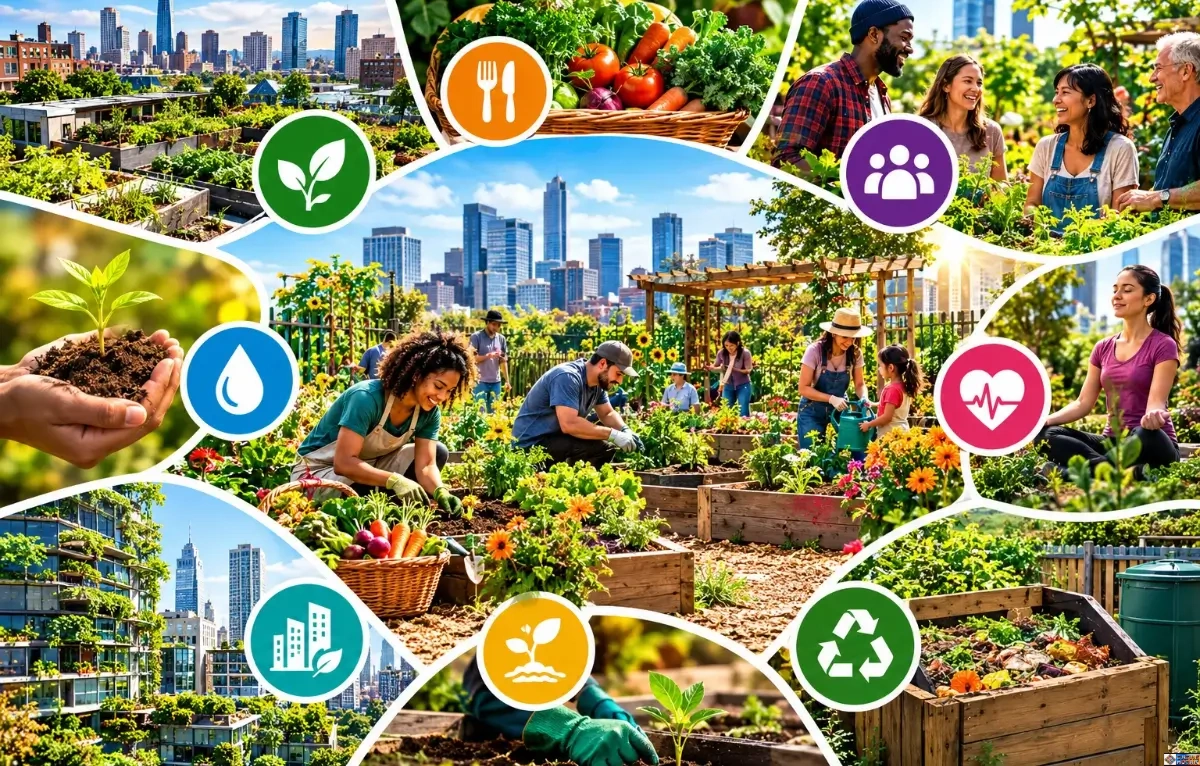
Quick Summary: Urban farming community gardens are shared plots where neighbours grow food, flowers and friendships on land that would otherwise sit idle. Research links them with better mental health, stronger social ties and fresher diets, though the evidence is still maturing and gardens cannot feed a whole city on their own. To start one, secure legal permission to use the land, test the soil for lead, build raised beds if in doubt, choose crops to suit your climate, and write simple shared rules. Below you will find examples, a pros-and-cons table, a step-by-step starter plan and five FAQs.
A community garden is one of the few city projects where a spade, a few seeds and a handful of neighbours can change what a street feels like. If you have ever walked past a fenced, weedy lot and wondered what it could become, this guide is for you. It looks at how urban farming community gardens work, what the evidence says about them, and how to start or join one. It comes from the team at Culture Mosaic, where we write about modern living, civic life and the spaces we share.
The Problem: Dense Cities, Distant Food, Few Places to Meet
Cities concentrate people, money and energy, yet they often leave residents far from the source of their food and from each other. One long-running FAO observation is that long distances and poor infrastructure spoil 10 to 30 percent of produce shipped to cities and towns in fast-growing regions. Meanwhile, a Washington State review of urban agriculture found that growers prize the chance to improve access to fresh local food, build community and support education, but struggle with land and water.
The Pain: When a Neighbourhood Has Space but No Common Ground
You might live in a flat with no garden, a social housing estate with leftover patches of grass, or a street where nobody quite knows the neighbours. Fresh vegetables can be expensive. Empty lots can feel neglected. Loneliness is easy to carry quietly in a crowded place. None of these problems has a single fix, but they share one thing: they are about land, food and connection, which is exactly where a community garden works.
The Solution: Grow Together
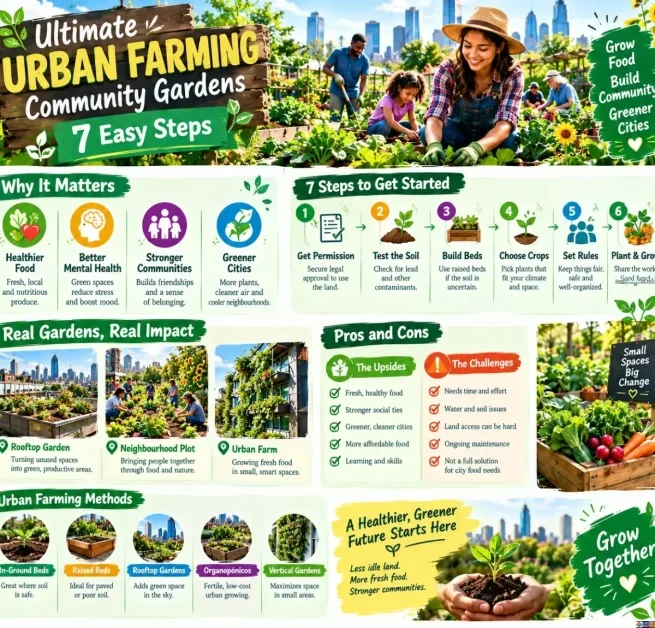
A community garden turns a shared patch into a shared project. The One More Tree Foundation describes these gardens as places where residents grow plants, vegetables and fruit together while improving the look of the area, building social ties and promoting ecological habits. Think of it as grassroots urban greening with a harvest. It also fits wider ideas such as Adaptive Biophilic Urbanism and Socially Restorative Architecture, which treat green, shared space as part of what makes sustainable city living work.
What Is Urban Farming, and How Do Urban Gardens Work?
Urban farming means growing food inside cities, and community gardens are its most neighbourly form. The FAO defines urban and peri-urban agriculture as practices that produce food and other outputs, along with related activities such as processing, distribution and recycling, on land and spaces within and around cities. An FAO specialist puts it more simply as growing plants or livestock in and around cities, usually at small scale for household or community use, while peri-urban farming tends to be larger and commercial.
What Is the Difference Between Urban Agriculture and Community Gardening?
Urban agriculture is the umbrella; a community garden is one kind of it. A systematic review in PLoS ONE describes community gardens as urban green spaces where residents mainly grow vegetables for their own use, alongside neighbours or family. The table below is our plain-language summary of how the two compare.
Urban Farming Methods You Will See
- In-ground beds: simplest, but only suitable where soil tests are clean.
- Raised beds and containers: the usual answer on paved, compacted or doubtful ground.
- Rooftop gardens: the PLoS ONE review lists roof gardens and rooftop farms among the names for community growing spaces.
- Organopónicos and substrate systems: enclosed raised beds filled with organic material, and variants using other media, described in a 1999 Humboldt University paper on Havana.
- Composting and rainwater use: local councils such as Dudley Borough encourage on-site composting and water re-use at gardens.
How Do Community Gardens Actually Work?
Most follow the same pattern. The group secures the site, agrees roles and a watering and care schedule, and keeps learning through workshops, as the One More Tree Foundation recommends. The legal arrangement varies. In New York, for instance, licences on city lots have ranged from one or two years up to four years depending on the agency. Traditional UK allotments differ: individual plots are let to tenants under the Allotments Acts 1908 to 1950, while community gardens are usually run collectively.
How Do Urban Community Gardens Benefit Modern Cities?
The strongest evidence is for mental and social wellbeing. A PLoS ONE systematic review found that community gardeners reported better life satisfaction, happiness, general health, mental health and social cohesion than neighbours who did not garden. A separate review of 15 studies of urban collective gardens found mostly positive links with mental and social health, but mixed results for physical activity and physiological health. Its authors say longer-term studies are needed before causes can be confirmed. So the honest message is encouraging, not magical.
Other benefits reported by practitioners include:
- Social integration: gardens become meeting places for older people, disabled residents and newcomers.
- Skills and education: members learn growing, composting and water-saving habits.
- Greener streets: more planting can help with air quality, urban heat and biodiversity, according to the same foundation.
- Food access: academics argue that gardening may help with social contact, culturally valued activity and food poverty, though those claims were set out as questions for research.
If garden time leaves you wanting more nature indoors, Culture Mosaic has practical guides on How to Create a Biophilic Home, Functional Biophilic Decor for Circadian Health and Somatic Interior Design Principles.
Advantages and Disadvantages of Urban Farming
Community gardens are not a cure-all, and the sources are clear about the limits. An FAO specialist stresses that urban agriculture alone cannot provide enough food to guarantee a city’s food security. The table pairs each upside with the real-world catch.
Urban Farming Examples: Four Stories Worth Knowing
These are the community garden and urban agriculture projects most often held up as models. Each one comes with a lesson.
Todmorden, England: Free Food on Every Corner
Incredible Edible began when two residents, Pam Warhurst and Mary Clear, started growing food in public view for anyone to pick. It rests on three “plates”: community, learning and business. In a 2013 interview, co-founder Pam Warhurst said that 46 percent of local food businesses felt it had helped their sales, and more than 90 percent of residents knew about it. Today the model has spread to hundreds of groups across several countries, though sources differ on the exact count. Lesson: start small, be visible, and make it easy to join. Its “don’t wait for permission” spirit also raises legal questions; for the grey areas of unsanctioned greening, see Culture Mosaic’s explainer on Moss Graffiti Legal Status.
Havana, Cuba: A City Grows Out of Necessity
After the loss of Soviet support, Cuban cities turned vacant lots and rubble into vegetable beds known as organopónicos. Reported figures put Havana’s vegetable output at 272,000 metric tons in 2005, or 240 grams per person per day. An FAO report author says the shortage of seed, fertiliser and pesticide was overcome by shifting to fully organic production. A 2020 field study also flagged a catch: asbestos is commonly used in the bed walls, which may threaten growers and consumers. Lesson: scale is possible, but materials matter.
New York City: The Largest Network, and a Fight to Keep It
New York’s gardens grew from abandoned lots. Today the city has more than 550 community gardens supported by the Parks Department’s GreenThumb programme, plus hundreds of school, public housing and land-trust gardens. In 2022, GreenThumb renovated gardens at three public housing complexes, one more data point for anyone searching for urban farming community gardens 2022 results. The network has also faced threats: when gardens were put up for auction in 1999, the Trust for Public Land bought 63 to save them, and the later settlement protected some gardens but not all. Lesson: secure tenure early, because a beautiful garden on unprotected land can still be lost.
Britain’s Dig for Victory: The Original Mass Movement
Before the Second World War, Britain imported around 55 million tons of food a year. The Dig for Victory campaign encouraged civilians to cultivate gardens and allotments, and, per the Imperial War Museums, by 1943 over 1.4 million people had allotments producing over a million tons of vegetables a year. You can see the original 1942 campaign poster in the IWM collection record, a primary historical source. Lesson: when people see a clear shared purpose, ordinary land becomes productive fast.
How to Start an Urban Farming Community Garden: A Seven-Step Plan
- Gather neighbours. Hold an open meeting so residents can voice ideas and shape the garden together, as the One More Tree Foundation advises.
- Find and secure the site. Look for sunlight, easy access and water. Tools such as 596 Acres’ map of New York city-owned lots show how some cities help residents spot usable land.
- Get permission in writing. See the planning section below.
- Test the soil. See the soil table below.
- Design the space. Plan raised beds, a compost area, a tool store and seating. For layout inspiration, you might browse Culture Mosaic’s Geometric Pattern Design for Beginners, and a blank boundary wall could host a mural: see Organising a Neighbourhood Mural.
- Agree roles and rules. Divide planting, watering and events, and write down how decisions are made.
- Review each season. Check what worked, what failed and who needs support.
Do You Need Planning Permission for a Community Garden?
It depends on what you are doing, so ask before you dig. In England, planning law asks whether a change of land use is material and whether anything you build counts as development. A planning law firm notes that using farmland as allotments usually does not need planning permission, but structures can. A Welsh Government consultation likewise says you do not always need permission to put up allotment structures, though other things may require it. A model council agreement advises always asking the local planning authority about any structure, because rules differ between UK nations. Separately, you will need the landowner’s consent or a licence. This is general information, not legal advice.
Soil Preparation: Test First, Then Build
Urban soil can hold lead and other contaminants, so testing comes before planting. Reassuringly, a 2010 Cornell pilot study of 44 New York gardens found fewer than 10 percent of samples exceeded the 400 ppm state guidance value for lead, and raised beds showed fewer and lower levels. Agencies quote slightly different bands, but the pattern is consistent:
San Francisco’s health guidance recommends clean soil over a barrier in raised beds and lab testing by an accredited laboratory. Outside the US, ask your local council about the site’s land-use history and which labs it recommends.
Crop Selection: Grow What the Group Will Eat
Choose plants that suit your climate and your members’ tastes, and mix vegetables, fruit and flowers for resilience, as One More Tree suggests. If soil is doubtful, extension services advise growing root crops and leafy greens in raised beds filled with uncontaminated soil. Beginner-friendly picks such as herbs, beans, courgettes and tomatoes are general horticultural advice rather than something drawn from one study. Add pollinator flowers so the garden feeds insects as well as people.
Community Engagement and Social Housing Garden Projects
Gardens thrive when someone is clearly responsible for each job. Practical tips from the sources: clear rules, regular communication and involving every stakeholder help with low participation, funding gaps and vandalism; partnering with councils or charities can unlock permits and supplies. Social housing is a natural fit. New York has about 700 gardens on public housing land, though one report notes a single coordinator staffed all of them, which is a reminder to plan support, not only planting.
Sustainable Practices That Raise Productivity and Social Impact
- Compost on site. Councils like Dudley encourage on-site composting and water storage. If you have no outdoor space at home, Culture Mosaic’s guide to Kitchen Scraps Management for Balcony-Free Apartments shows how to collect scraps for the garden.
- Save water. Water access is a recurring threat, so rainwater harvesting is worth planning for from day one.
- Cut waste. Reuse pallets, jars and offcuts; see Zero Waste Home Ideas for more.
- Spread the skills. Run workshops on composting and growing so knowledge outlasts any one volunteer.
Urban Farming Community Gardens Near Me: How to Find One
Start with your city’s own programme. New York residents can look up gardens through the Parks Department’s GreenThumb programme; a local news guide explains its map and how licences work. UK readers can check their council’s allotment and community-growing pages or the Incredible Edible network’s map of local groups. Ask at your library or housing office too.
Your Move: Start the Conversation This Week
Every garden in this guide began the same way: a few people decided an ordinary patch of land deserved a second life. The land is out there, and the longer it sits empty, the more likely it is to be built over, as New York’s auction battles showed. Knock on two doors, ask your council or landlord about a plot, and book a first meeting.
Then bring the harvest home: cook with it (a handy primer is What is Considered Kitchenware?) and let the greenery shape your space, perhaps with ideas from a Modern Heritage Living Room. For more on shared green space and everyday sustainable living, explore Culture Mosaic, and revisit urban farming community gardens as a starting reference for your first meeting.
Urban Farming Community Gardens: Frequently Asked Questions
1. What is urban farming, and how is it different from community gardening?
Urban farming is growing food within and around cities. The FAO describes urban and peri-urban agriculture as including production plus related activities like distribution and recycling. Community gardening is one form of it, where residents share a plot, mostly for their own use and for social benefit. Larger or commercial operations, such as market farms and rooftop businesses, sit elsewhere under the same umbrella.
2. Do you need planning permission for a community garden?
Often not for the growing itself, but structures such as sheds, polytunnels or large fences can need approval, and you always need the landowner’s consent. UK sources advise checking with your local planning authority before building anything, since rules differ between UK nations. Councils may also have policies protecting or encouraging gardens, as in Dudley’s local plan. Treat this as general information and confirm locally.
3. Is food grown in city soil safe to eat?
Usually yes with sensible precautions. Lead is the most common urban soil contaminant, so test first, use raised beds with clean soil where levels are elevated, and wash produce. UGA Extension recommends relocating if lead exceeds 400 ppm, and a Cornell study of 44 New York gardens found most samples fell below that value, with raised beds performing better.
4. What are the advantages and disadvantages of urban farming?
Advantages include fresh local produce, greener streets, skills, and links with better mental and social wellbeing in several systematic reviews. Disadvantages include insecure land tenure, water access and cost, soil contamination, theft or vandalism, volunteer fatigue and limited food output. As the FAO specialist interviewed put it, urban agriculture alone cannot secure a city’s food supply.
5. What are some examples of urban gardening, and how do I find one near me?
Well-known examples include Incredible Edible Todmorden in England, Havana’s organopónicos, New York’s GreenThumb network and wartime Dig for Victory allotments. To find one nearby, search your council’s allotment and community-growing pages, check local noticeboards and libraries, and look for networks such as Incredible Edible. If nothing exists, use the seven-step plan above to start one.
Sources
A note on method: this article synthesises published research, government and institutional documents, and press reports. It contains no original interviews or surveys, and statistics are cited to their original publishers. Check local rules before acting.
- FAO. Urban and peri-urban agriculture.
- FAO specialist interview. Facts & Reports: Urban agriculture, food, jobs and sustainable cities.
- Lampert et al. (2021). Evidence on the contribution of community gardens to physical and mental health: a systematic review, PLoS ONE, and the full text on PubMed Central.
- Tharrey and Darmon. Urban collective garden participation and health: a systematic literature review.
- University of Exeter. Community gardening, health and wellbeing: review protocol.
- Washington State Conservation Commission. Urban Agriculture Report (HB 1552).
- Frontiers in Sustainable Food Systems. Water-resilient urban agriculture.
- Cornell University. The dirt on urban gardens.
- UGA Extension. Urban gardening: assessing soils for contamination.
- Oregon State Extension. Lead in garden soil (EC 1616).
- San Francisco Department of Public Health. Lead hazard guidance for urban gardens and farms.
- Trowers & Hamlins. Converting agricultural land into allotments.
- Welsh Government. Allotments and community gardens consultation (youth version).
- Model allotment agreement, Feb 2024 (Coddenham Parish Council).
- Dudley Borough Council. Local Plan policy DLP65: allotments and community gardens.
- One More Tree Foundation (2024). Community gardens as an example of sustainable urban agriculture.
- Lovefood. Todmorden: the incredible edible English town; Culture Trip. How a community garden project spread across the UK.
- SourceWatch. Organic agriculture in Cuba during the Special Period; Christian Science Monitor (2014). What can urban agriculture do for Latin American cities?; Górna and Górny (2020). Urban agriculture in Havana.
- Columbia University SPS. Supporting and saving New York City’s community gardens; NYU Journalism. GreenThumb settlement coverage; Brooklyn Paper. Community gardens renovated.
- Imperial War Museums. Dig for Victory poster print record and IWM PST 0059 catalogue entry.