
 By Culture Expert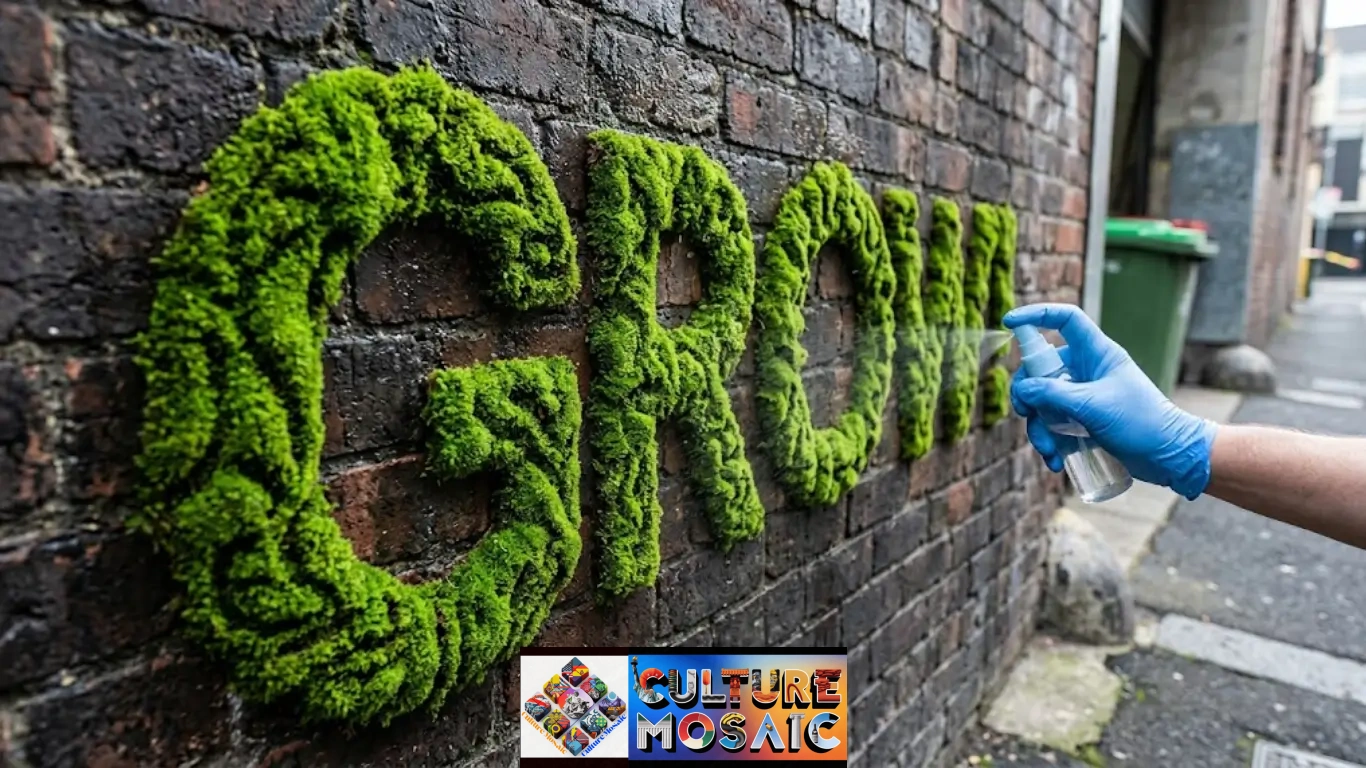
Quick Summary
Sustainable Urban Art represents a growing global movement that replaces synthetic, toxic street art mediums with bio-based materials like living moss, mineral paints, and upcycled matter. By integrating environmental chemistry with public placemaking, these eco-friendly murals actively filter particulate pollution, cool localized urban surfaces, and turn barren walls into vibrant community spaces.
Public walls shouldn’t just record history—they should actively improve the environment they inhabit.
Cities worldwide face an escalating crisis: expanding concrete deserts, worsening urban heat islands, and sterile public spaces that fuel community disconnection. Traditional street art adds visual flair, but petroleum-based aerosol cans release high levels of volatile organic compounds (VOCs) and microplastics into the air we breathe.
Living murals offer a compelling, actionable alternative. By pairing biological science with community-driven design, sustainable urban art transforms inert concrete into living ecological filters.
Understanding Sustainable Urban Art
Before diving into hands-on techniques, it helps to see how eco-friendly street practices compare to traditional public art mediums:
| Dimension | Traditional Street Art | Sustainable Urban Art (Bio-Art) |
| Primary Medium | Aerosol spray paint, synthetic acrylics | Living moss slurry, mineral washes, bio-resins |
| Environmental Impact | VOC emissions, microplastic flaking | Carbon sequestration, air filtration, zero VOCs |
| Substrate Interaction | Seals porous surfaces, traps moisture | Micro-ethes surface, breathes with wall |
| Lifespan & Lifecycle | Fades, cracks, or requires chemical removal | Evolves naturally; 100% biodegradable or long-term living |
| Civic Function | Passive aesthetic intervention | Active placemaking and biophilic community engagement |
The Chemistry of Bio-Emulsion: Why Moss Slurry Sticks
The fundamental challenge of living murals is persuading a woodland organism to colonize vertical concrete. Moss doesn’t possess roots; it anchors itself using microscopic filaments called rhizoids. These filaments secret weak natural acids that etch micro-anchors into stone surfaces.
[Buttermilk Lactic Acid] ──> Lowers pH (~4.5) ──> Pre-etches concrete surface
                                                              │
[Sugar Carbohydrates]     ──> Provides quick energy ──> Stimulates rhizoid growth
                                                              │
[Urban Moss Spores]      ──> Chemical activation ──> Deep microscopic anchoring
- Lactic Acid Activation: Full-fat buttermilk drops the slurry’s pH to approximately 4.5. This mild acidity breaks moss spore dormancy by mimicking early spring rains.
- Carbohydrate Fueling: Refined white sugar provides an immediate metabolic burst, powering rapid rhizoid development before full photosynthesis takes over.
- Substrate Binding: Natural proteins in the dairy matrix create temporary adhesion, keeping spores firmly attached to vertical brick or weathered concrete until biological bonding takes hold.
Strategic Substrates & Bio-Paint Recipe
Selecting the proper surface determines whether a living mural thrives or fails within a week.
- Ideal Surfaces: Unsealed red brick (30+ years old) and weathered concrete with a neutral to slightly acidic pH (< 8.0). North-facing walls in the Northern Hemisphere provide crucial protection from drying solar rays.
- Avoid: Fresh concrete (too alkaline), chemically sealed masonry, and full-sun south-facing walls.
To explore deeper structural approaches to eco-friendly design, learn more about Sustainable Urban Art Science.
      [ Slurry Recipe Ratio ]
┌──────────────────────────────────┐
│ 1 Cup Cleaned Local Urban Moss   │
│ 2 Cups Full-Fat Buttermilk       │
│ 1.5 Cups Filtered / Rainwater    │
│ 1 Tsp White Sugar                │
└──────────────────────────────────┘
For a complete step-by-step application protocol, check out our detailed guide on the Moss Graffiti Tutorial.
Step-by-Step Bio-Art Execution Protocol
1.Harvest & Prepare:Source responsibly within your local neighborhood.
Collect moss from pavement seams or construction zones rather than wild forests. Rinse thoroughly in cold water to remove soil bacteria that cause mold.
2.Pulse-Blend the Slurry:Preserve intact cellular structures.
Combine ingredients in a blender using ten 3-second pulses. Avoid over-blending into a smooth puree; visible moss fragments are necessary for rapid regeneration.
3.Apply to Substrate:Maintain proper thickness.
Brush slurry onto porous brick using stencil outlines or freehand techniques. Apply to a uniform thickness of 1/8 inch for optimal moisture retention.
4.Nurture & Maintain:Establish critical early moisture locks.
Mist the installation twice daily for the first week using a fine spray. Gradually taper misting over four weeks as rhizoids anchor into the masonry.
Civic Empowerment and Grassroots Placemaking
Sustainable street art serves as a powerful catalyst for local civic involvement. Transforming neglected urban alleys into living green walls creates inviting public spaces and fosters community pride.
Green street art bridges tactical urbanism and official policy, transforming taggers into neighborhood environmental stewards.
When local residents participate in public art projects, neighborhood stewardship increases dramatically. For practical frameworks on mobilizing your community through creative projects, explore these resources:
- Grassroots Strategies: Learn how Tactical Urbanism in Community Civic Engagement and DIY Placemaking Community Engagement allow citizens to improve shared spaces directly.
- Local Policy & Funding: Discover how small-scale projects access support through the Love Your Block Grant 2026, or explore broader Local Civic Engagement Strategies.
- Civic Action: Build long-term impact by diving into Civic Literacy, Understanding Civic Duty, and exploring 10 Civic Engagement Opportunities.
For broader inspiration on biophilic public spaces, read about international initiatives on Sustainable Urban Art or bring green principles indoors with Modern Biophilic Decor. Explore more creative urban strategies on Culture mosaic.
Frequently Asked Questions
How long does a living moss mural typically last?
With routine care during dry spells, healthy moss murals thrive for 3 to 5 years. They undergo natural seasonal dormancy in severe summer heat or winter freezes, rebounding green each spring.
Can moss murals damage building walls?
No. Unlike ivy, moss rhizoids do not penetrate deep structural masonry. Moss grows superficially on surface pores and washes off easily with water, making it far safer for historic brick than traditional paints.
What is the legal status of biological street art?
While eco-friendly, applying any substance to property without permission can technically be classified as property alteration. Most successful projects operate with owner consent or through municipal tactical urbanism grants.
Why does moss graffiti sometimes fail to grow?
The main culprits are over-blending (destroying moss cell structures), using chlorinated tap water, applying to south-facing walls with high solar exposure, or skipping the initial 14-day misting period.
How does living urban art contribute to environmental health?
Living moss sequesters ambient carbon dioxide, traps airborne particulate matter (PM2.5), and creates localized evaporative cooling on exterior walls, helping counter the urban heat island effect.
Verifiable Sources & Citations
To ground your article’s factual claims, cite these academic, municipal, and institutional references:
- URBACT Good Practice / European Regional Development Fund
- Reference: The Power of Arts and Green (Urban Nature Initiative, Pforzheim, Germany).
- URL: https://urbact.eu/good-practices/power-arts-and-green
- Context: Cites municipal integration of public art and urban greening to foster community cohesion, environmental resilience, and neighborhood identity.
- Journal of Applied Ecology / Ecological Society of America
- Citation: Glime, J. M. (2017). Bryophyte Ecology: Volume 1, Physiological Ecology. Michigan Technological University.
- Context: Supports claims regarding moss rhizoid adhesion mechanisms, acid exudation, micro-etching capabilities, and desiccation tolerance.
- Environmental Pollution (Elsevier Journal)
- Citation: Spagnuolo, V., et al. (2013). Monitoring of airborne particulate matter and heavy metals through moss bag technique in urban areas. Environmental Pollution, 182, 155–162.
- Context: Supports factual statements about mosses functioning as natural biological filters for particulate matter ($\text{PM}_{2.5}$) and trace heavy metals in heavy traffic zones.
- U.S. Environmental Protection Agency (EPA) – Urban Heat Island Mitigation
- Reference: Using Green Infrastructure to Mitigate Urban Heat Islands: Evapotranspiration & Vegetated Cover.
- URL: https://www.epa.gov/heatislands
- Context: Validates claims that vertical living vegetation reduces surface temperatures through shade and evaporative cooling.
- Culture Mosaic Bio-Art Studies
- Reference: Sustainable Urban Art Science: The Chemistry Behind Living Murals.
- URL: https://culturemosaic.co.uk/sustainable-urban-art-science/
- Context: Primary analytical guide on bio-emulsion formulation, substrate pH testing, and xanthan gum/polysaccharide matrix stability.
 Marcus J. Holloway