
 By Culture Expert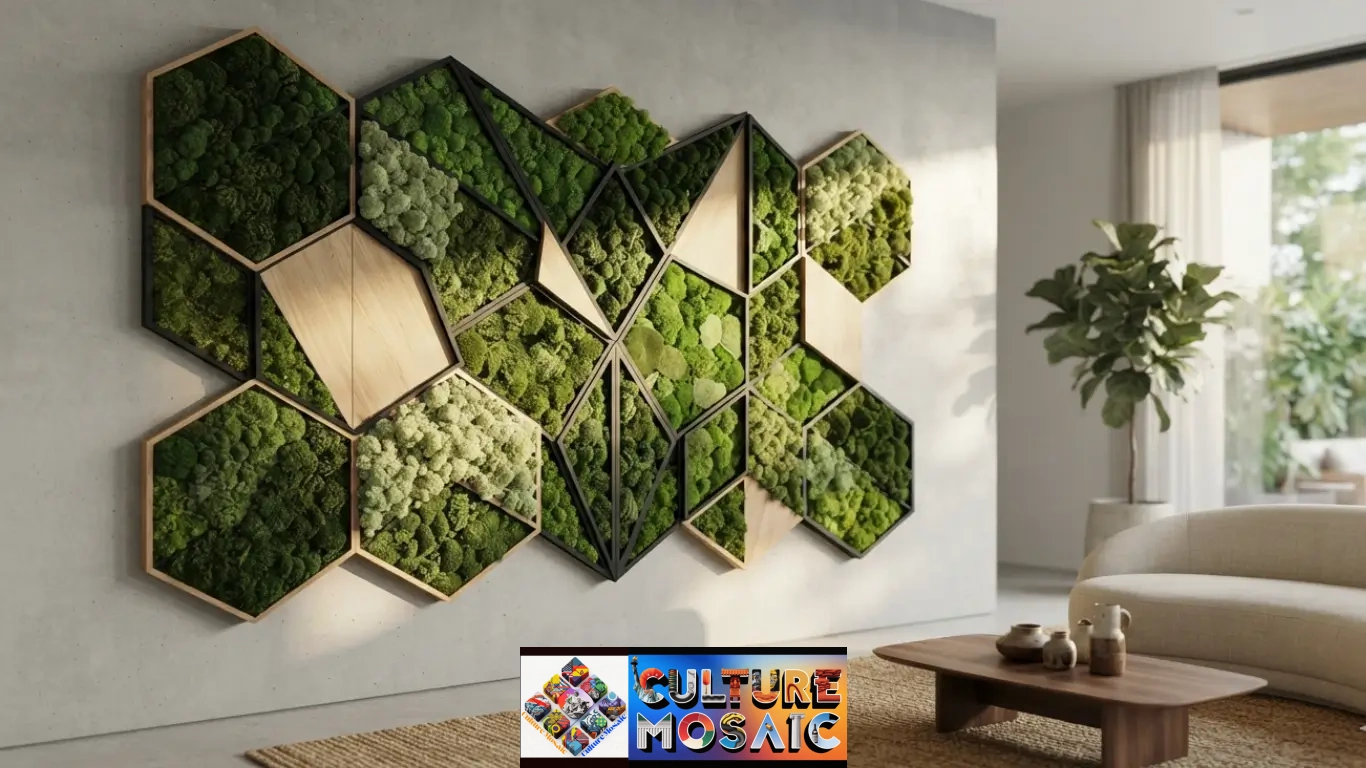
Quick Summary
- Definition: Modern biophilic decor integrates natural, tactile elements—like preserved moss, organic wood, and stone—into spaces using clean, contemporary geometric structures.
- Key Benefits: It provides the psychological benefits of nature exposure while solving indoor light limitations and high-maintenance plant care.
- Core Technique: Combining crisp geometry (chevrons, hexagons, golden spirals) with varying organic textures (reindeer, sheet, and pole moss) creates dimensional wall art that elevates modern interiors.
Living in sterile, concrete environments creates visual fatigue and sensory deprivation. When space is limited or natural light is scarce, traditional indoor plants struggle to survive, leaving room design feeling cold and disconnected from nature. Modern biophilic decor resolves this tension by marrying crisp geometric design with preserved, zero-maintenance natural textures.
┌─────────────────────────────────────────────────────────┐
│              GEOMETRIC STRUCTURE (Order)                 │
│                          +                              │
│             NATURAL TEXTURES (Wildness)                 │
│                          =                              │
│     MODERN BIOPHILIC DECOR (Harmonious Balance)         │
└─────────────────────────────────────────────────────────┘
What Modern Biophilic Decor Actually Is
Modern biophilic decor goes beyond decorative plant arrangements. It is an intentional design approach that embeds natural materials into clean, contemporary architecture. Rather than relying on unstructured organic elements, modern biophilia utilizes geometry to contain and elevate raw textures. Living installations form a key pillar of Sustainable Urban Art, merging eco-conscious design with indoor aesthetics.
What are the 3 main concepts of biophilic design?
- Nature in the Space: Direct, sensory exposure to natural elements (living plants, water features, natural airflow, and sunlight).
- Natural Analogues: Indirect representations of nature through organic materials, biomorphic patterns, textures, and natural color palettes.
- Nature of the Space: Spatial configurations that evoke natural environments, such as views of open vistas (prospect) or cozy, safe enclosures (refuge).
Modern biophilic moss installations focus heavily on Natural Analogues, using preserved natural materials organized within structural frameworks.
       ┌────────────────────────────────────────────────────────┐
       │         THE 3 CONCEPTS OF BIOPHILIC DESIGN             │
       └───────────────────────────┬────────────────────────────┘
                                   │
        ┌──────────────────────────┼──────────────────────────┐
        ▼                          ▼                          ▼
┌───────────────┐          ┌───────────────┐          ┌───────────────┐
│ Nature IN the │          │    Natural    │          │ Nature OF the │
│     Space     │          │   Analogues   │          │     Space     │
│ (Direct Light,│          │  (Textures,   │          │  (Prospect &  │
│ Live Plants)  │          │   Patterns)   │          │    Refuge)    │
└───────────────┘          └───────┬───────┘          └───────────────┘
                                   │
                                   ▼
                       [Modern Biophilic Decor]
Texture Over Color: The Core Strategy
While green is the primary hue, variation in physical texture creates visual depth. Light hits distinct moss structures differently throughout the day, creating natural movement across flat walls:
- Reindeer Moss: Features branching, spongy structures that form dimensional peaks and valleys.
- Sheet Moss: Lies completely flat with a velvet-like appearance, serving as an ideal background base.
- Pole (Mood) Moss: Grows in dense, rounded cushions that provide smooth, pillow-like topography.
5 Precision Moss Patterns for Modern Spaces
┌───────────────────────────────────────────────────────────────────────────┐
│                         5 MOSS PATTERNS MATRIX                            │
├─────────────────┬──────────────────────┬──────────────────────────────────┤
│ Pattern         │ Key Characteristic   │ Best Space Application           │
├─────────────────┼──────────────────────┼──────────────────────────────────┤
│ Hexagon Hive    │ Modular, scalable    │ Open-plan offices & living rooms │
│ Chevron Flow    │ Visual momentum      │ Narrow hallways & entryways      │
│ Concentric      │ Radial balance       │ Bedrooms & meditation zones      │
│ Fibonacci       │ Golden ratio proportions│ Focal walls & innovation hubs │
│ Bento Grid      │ Minimalist negative space│ Contemporary minimalist rooms   │
└─────────────────┴──────────────────────┴──────────────────────────────────┘
1. The Hexagon Hive
Hexagons mimic structures found in honeycomb and basalt formations. Because they tile seamlessly, individual geometric frames can be built over time to cover expanding wall areas without breaking design continuity.
2. The Chevron Flow
Angled chevron patterns create visual momentum. In narrow corridors or long hallways, directional geometric lines filled with varied moss density make tight architectural spaces feel dynamic rather than closed off.
3. The Concentric Circle
Radial rings guide the viewer’s eye inward toward a central focal point. Alternating textures—such as dense pole moss in the center surrounded by ringed sheet moss—create a calm visual cadence suitable for quiet spaces.
4. The Fibonacci Spiral
Following the golden ratio, spiral layouts ground modern interiors in universal mathematical growth patterns. This layout works effectively as a single large focal piece on high-visibility walls.
5. The Bento Grid
Inspired by compartmentalized Japanese design, the Bento grid uses varying rectangular proportions within a primary frame. Leaving select grid sections empty as negative space prevents dense installations from overwhelming small rooms.
Style Comparison: Boho vs. Biophilic
Understanding how modern biophilic decor differs from other nature-inspired styles ensures clear design execution.
| Feature | Boho Design | Modern Biophilic Decor |
| Design Focus | Eclectic, cozy, maximum ornamentation | Well-being, architectural integration, clean geometry |
| Material Palette | Macramé, fringed textiles, rattan, mixed patterns | Preserved moss, raw stone, natural grain wood, architectural metal |
| Color Base | Warm earth tones, rusts, bright jewel accents | Neutral foundations with intentional forest tones |
| Maintenance | Varied (often heavily potted live plants) | Low/Zero (preserved organics, optimized light flow) |
| Spatial Layout | Layered, relaxed, maximalist | Structured, intentional, clutter-free |
Organic Modern Synergy
Organic modern interior design characteristics rely on combining minimalist architecture with warm, raw materials. Integrating biophilic moss art into an organic modern space creates balance by softening crisp architectural lines with rich organic textures. The intersection between plant biology and interior architecture reflects the principles of Sustainable Urban Art Science, bringing rigorous green design into daily living environments.
How Do You Make a Room Look Biophilic?
Transforming a room into a biophilic sanctuary requires a structured approach to lighting, materials, and spatial planning:
- Optimize Light & Views: Position key furniture toward natural light sources and keep windows unobstructed.
- Incorporate Natural Analogues: Install geometric moss art or raw wood architectural elements on primary visual walls. If you want to experiment with living DIY installations before building permanent wall art, follow a step-by-step Moss Graffiti Tutorial.
- Layer Spatial Textures: Pair soft linen or wool textiles with hard natural surfaces like slate or oak.
- Maintain Environmental Range: Ensure indoor ambient humidity stays between $40\%$ and $60\%$ to protect both human comfort and preserved natural materials.
- Establish Visual Relief: Leave intentional negative space around organic art installations to avoid clutter.
For curated furniture pieces and structured timber layouts that complement natural art installations, explore contemporary interior designs at Modern Biophilic Decor. Beyond personal homes, these green installations often appear in shared community centers and public spaces; if you are interested in transforming neighborhood facilities, explore how to get involved in local civic issues online.
Technical Edge Precision & Installation
Professional installations require clean execution between the natural material and the frame border.
┌────────────────────────────────────────────────────────┐
│             STENCIL & ADHESIVE TECHNIQUE               │
├────────────────────────────────────────────────────────┤
│  1. Apply laser-cut wooden stencil onto backing board. │
│  2. Spread adhesive ONLY on the exposed board.         │
│  3. Press moss inward from outer edges.                │
│  4. Lift stencil at a 15-degree low angle.             │
└────────────────────────────────────────────────────────┘
- Rigid Stenciling: Avoid soft paper stencils. Use laser-cut wood or $2\text{ mm}$ rigid board to maintain sharp perimeter boundaries.
- Adhesive Application: Apply botanical-grade, clear-drying flexible adhesive directly to the backing board—never onto the moss directly—to prevent clumping or bleed-through.
- Peel Angle: When removing border guards, peel at a $15^\circ$ angle rather than lifting straight up to preserve precise edges.
Frequently Asked Questions
What is modern biophilic decor?
Modern biophilic decor is a design discipline that integrates natural elements—such as preserved moss, unrefined wood, and stone—into contemporary interiors using clean, structured geometry and minimal clutter.
How long does preserved moss last in wall installations?
With proper environmental conditions, preserved moss installations last between 8 to 10 years. They require no watering or direct sun, needing only occasional light dusting and an ambient indoor humidity level between 40% and 60%.
What is the difference between boho and biophilic design?
Boho design prioritizes an eclectic, maximalist aesthetic using textiles, patterns, and layered ornamentation. Biophilic design focuses on human well-being, structural geometry, natural light optimization, and clean spatial integration.
What are the 3 main concepts of biophilic design?
The three core concepts are Nature in the Space (direct natural elements), Natural Analogues (indirect representations like biomorphic patterns and natural textures), and Nature of the Space (spatial configurations like prospect and refuge views).
How do you make a room look biophilic without living plants?
You can achieve a biophilic aesthetic by installing geometric preserved moss art, using untreated wood and stone, maximizing natural light, incorporating organic textures (linen, wool), and utilizing biomorphic architectural patterns.
References & Further Reading
- Kellert, S. R., & Calabrese, E. F. (2015). The Practice of Biophilic Design. Terrapin Bright Green LLC.
- Ryan, C. O., Browning, W. D., Clancy, J. O., Andrews, S. L., & Kallianpurkar, N. B. (2014). Biotemplates: Patterns for Biophilic Design. Urban Habitats.
- Ulrich, R. S. (1984). View through a window may influence recovery from surgery. Science, 224(4647), 420-421.
 Marcus J. Holloway