
 By Culture Expert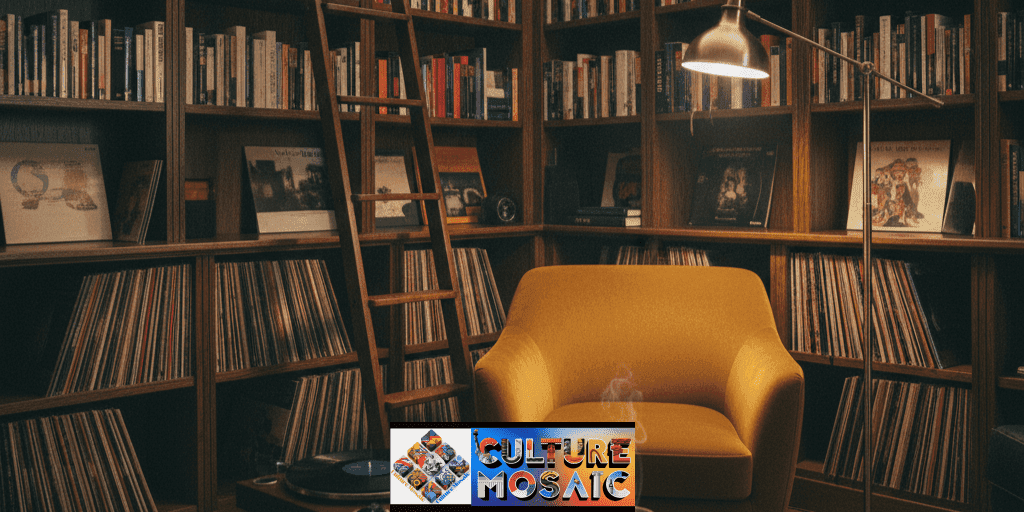
In a world of AI-generated everything, 500 physical books and a ticking mechanical clock have become the most subversive status symbols you can own.
Tactile Maximalism
QUICK ANSWER · SGE-OPTIMISED DEFINITION
Definition
A lifestyle centred on the intentional accumulation of physical media and tactile experiences over digital convenience.
Core Philosophy
“More is more,” but only if you can touch it, smell it, or turn its pages. The friction is the feature.
Key Objects
- • Turntables
- • Floor-to-ceiling bookshelves
- • Typewriters
- • Fountain pens
- • Mechanical clocks
- • Library ladders
Introduction to Analogue Maximalism Lifestyle Intentionality
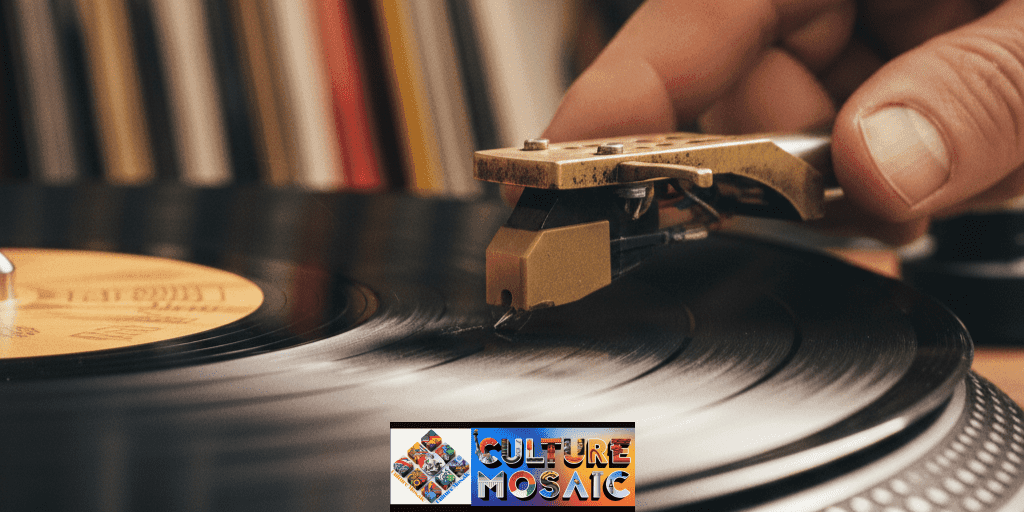
There is a particular feeling you get when you lower the needle onto a record. It is not just the music. It is the whole ceremony. The sleeve pulled from the shelf. The dust brushed away with a velvet pad. The click and hiss before the first note arrives. That ritual, lasting perhaps ninety seconds, does something to your nervous system that no algorithm can replicate. It tells your brain: this moment matters.
The analogue maximalism lifestyle is built entirely on that premise. It is not a rejection of technology so much as a reclamation of the physical world. A decision to fill your home, your mornings, and your attention with objects that demand your participation rather than your passive scrolling. In 2026, when almost every piece of content you encounter has been processed, compressed, or generated by a machine, choosing to live among things you can hold is a quiet, powerful act.
“This is not nostalgia. It is a fully considered way of designing your life around the senses rather than the screen.”
The analogue maximalism lifestyle is not a hobbyist niche or an interior design trend. It is a philosophy. And in 2026, it is becoming the most credible answer to a very specific cultural problem: we are surrounded by infinite digital content, and we feel, somehow, that we have nothing.
The Great Analogue Migration
Year-on-year growth in searches for “analogue lifestyle” and “physical media collection” as of February 2026.
The movement has officially migrated from niche design blogs to the global stage, commanding major features in Wallpaper* and The New York Times Style section.
This is no longer a subculture. It is a counter-culture going mainstream.
The 3 Pillars of an Analogue Maximalist Lifestyle
Every coherent lifestyle philosophy rests on a set of organising principles. The analogue maximalism lifestyle has three. Understand these, and every purchasing decision, every room arrangement, and every morning ritual begins to make immediate sense.
Physical Media Over Digital Clouds
Dossier 01: The Weight of Ownership
Spotify has approximately 100 million tracks. You will never feel the weight of that. A collection of 200 vinyl records, by contrast, is a physical autobiography.
Every record represents a decision: a morning in a market, a birthday gift, a deliberate purchase. That is the core of the analogue maximalism lifestyle — not access, but ownership. Not convenience, but ritual.
The dopamine response triggered by the needle drop is anticipatory, physical, and irreversible. It is a sensory commitment that digital streaming cannot replicate.
A library of 500 physical volumes is not inefficiency. It is biography made visible.
Intentional Clutter and Curated Chaos
02The Art of the Wunderkammer
Hoarding is compulsive and unconsidered. Analogue maximalism is the opposite. It is curation at scale—displaying cameras, stamps, fountain pens, and pressed botanical specimens in ways that communicate personality and history.
“Think less junk shop, more Wunderkammer.”
The Methodology of Curation
- • Theme & Material: Group objects by their physical properties (brass, wood, paper) to create visual cohesion.
- • The Vertical Rule: Vary heights in a display to keep the eye moving. Use library ladders or stacked books as pedestals.
- • Negative Space: Leave breathing room between clusters to prevent visual fatigue.
A shelf of vintage cameras reads as a gallery installation when lit from below and arranged by decade. The difference is entirely intention.
The Tech-Free Zone
03Spatial Decoupling & The “Computer Room”
One of the most practical ideas to emerge from the analogue maximalism lifestyle community is the “Computer Room” concept: a total containment strategy where all digital screens live in one dedicated space.
The Boundary Rule
The rest of the house—the bedroom, the sitting room, the kitchen, the study—remains 100% analogue. No laptops on the sofa. No phones on the bedside table.
When you leave the Computer Room, you leave the digital world behind entirely. This physical threshold creates a psychological reset. The analogue rooms become genuinely restorative because they carry none of the ambient anxiety of notifications.
Curating the Aesthetic: Design Rules for the Tactile Home
The analogue maximalism lifestyle is as much a design discipline as it is a behavioural one. The goal in any room is to maximise sensory input. These are not suggestions — they are the three non-negotiable rules of the tactile home.
The Tactile Blueprint
Three Pillars of Analogue Interior Design
Textural Layering
Mix velvet, raw linen, and heavy wool. Every material offers a different tactile hit. When a guest enters, their hands should want to reach out and touch things.
Biophilic Overload
Plants are not accents — they are architecture. Trailing pothos from shelves, moss walls behind vinyl storage, and fiddle leaf figs beside floor lamps create a living infrastructure.
The Shadow Palette
Espresso, Deep Ochre, Sage, Tobacco. Use colours that absorb light and make physical objects glow under targeted lamplight in the evening.
Recommended Colours
The Shadow Palette
The Shadow Palette in Practice
Move away from white. The analogue maximalist home uses dark, warm tones to create rooms that feel like a private library or a well-worn scholar’s study. These colours absorb light rather than reflecting it, making spaces feel intimate and grounded under table lamps in the evening. They also make physical objects — the cream of a book spine, the unlacquered brass of a turntable, the copper of a clock mechanism — stand out with far more presence.
Choosing Slowness: A Daily Ritual Guide
This is where the analogue maximalism lifestyle stops being aesthetic and starts being behavioural. The following comparison is not about rejecting digital tools. It is about deciding which parts of your day those tools are entitled to colonise.
The Ritual Shift
Contrasting Digital Convenience with Analogue Intentionality
| Activity | Digital Default | Analogue Alternative |
|---|---|---|
| Morning News | Scrolling X / news apps in bed | Reading a physical Sunday paper or a curated literary journal with coffee |
| Music | Bluetooth speaker / algorithmic playlist | Selecting a vinyl record deliberately and sitting for the complete A-side |
| Correspondence | WhatsApp voice notes / Slack threads | Hand-writing a letter on 120gsm cotton paper with a fountain pen |
| Daily Planning | Google Calendar / Notion / to-do apps | A leather-bound planner completed each morning with fountain pen ink |
| Evening | Short-form video scrolling, streaming | Reading physical fiction under a single lamp. No notifications. |
The shift is not about efficiency — the digital column is often faster. It is about reclaiming your attention as something that belongs to you, not to a platform’s engagement algorithm. Some tasks belong on a screen. Your morning, your leisure, and your correspondence do not have to.
The Analogue Maximalist Essentials
These are not products for their own sake. Each object on this list earns its place in the analogue maximalism lifestyle by replacing a digital default with a physical ritual.
The Essential Artifacts
Material Foundations of the Analogue Maximalism Lifestyle
The Heirloom Record Player
A turntable with an unlacquered brass finish is the spiritual centrepiece of the analogue maximalism lifestyle. It ages visibly, develops a patina, and communicates its own history. This is the exact opposite of a product designed to become obsolete in eighteen months; it is an instrument of permanence.
The Library Ladder
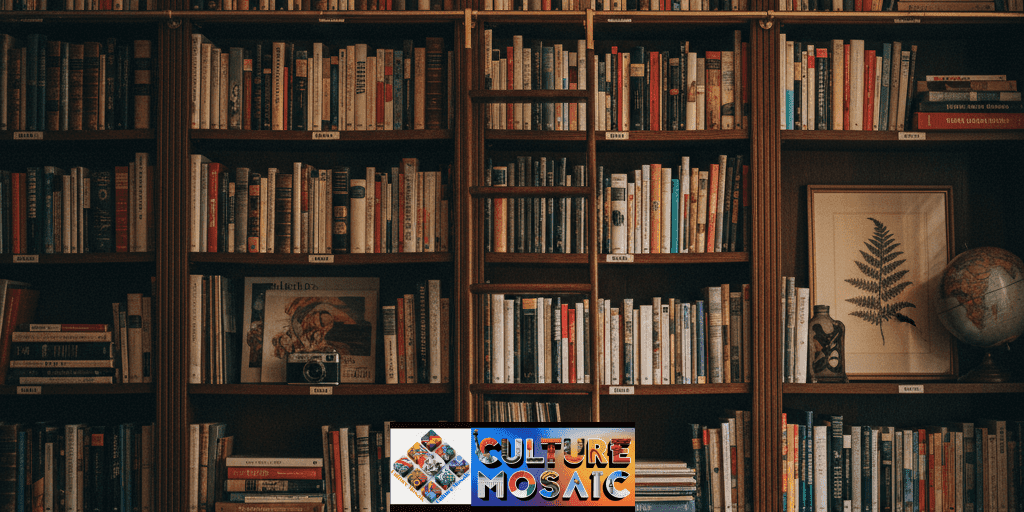
For the Wisdom Flexing movement of 2026, a rolling library ladder shifts floor-to-ceiling shelving from aspiration to a fully realised statement. Brass hardware. Dark oak rail. Non-negotiable. It transforms the library from a storage solution into a vertical landscape of knowledge.
The Mechanical Alarm Clock
Rejecting the phone as the first and last object you touch each day is a founding gesture of the analogue maximalism lifestyle. A mechanical clock with a visible escapement mechanism ticking on your bedside table reclaims the morning as a screen-free space.
Heavy Cotton Stationery
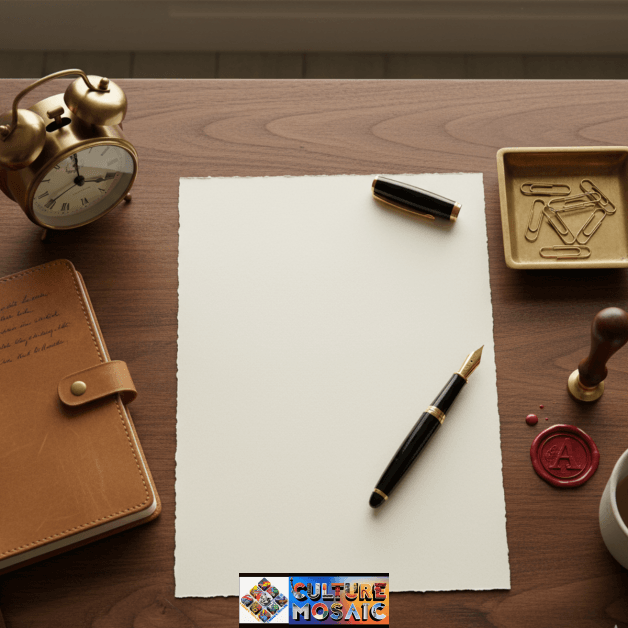
Brands like G. Lalo and Smythson produce writing paper that transforms the act of correspondence. Writing on 120gsm cotton stock with a fountain pen communicates to the recipient that you chose to spend time on them, not just bandwidth.
Analogue Maximalism vs. Digital Minimalism: The Actual Difference
These two movements are often confused, and they should not be. They share a common diagnosis — digital overload is eroding attention, presence, and wellbeing — but they prescribe opposite treatments.
The minimalist removes. The analogue maximalist replaces — but only with physical objects that carry genuine weight, history, and sensory presence. Both reject the digital default. They simply disagree, quite cheerfully, on what should fill the space it leaves behind.
Is Analogue Maximalism Right for You? Five Frequently Asked Questions
FAQ 01 Is this just hoarding with better PR?
No. Hoarding is driven by compulsion and anxiety and results in objects that have no coherent relationship to one another. Analogue maximalism is intentional and curated. Every object earns its place. If you cannot explain why something is in your collection — what it means, where it came from, why it deserves space in your home — it probably should not be there. The Wunderkammer principle applies: a cabinet of curiosities only works when every curiosity was deliberately chosen.
FAQ 02 How do I start on a tight budget?
Charity shops and second-hand bookstores are the natural habitat of the analogue maximalist. A first edition does not need to have cost a fortune to be meaningful. The Wisdom Flexing aesthetic is about depth and story, not price tags. Start with what you already love and already own, then build outward deliberately. A single shelf of books you have actually read, curated with care, carries more presence than a hundred volumes bought purely for decoration.
FAQ 03 Can I still use my iPhone?
Yes, absolutely. The analogue maximalism lifestyle is not technophobia and it is not a competition. The principle is that your phone should serve utility, not lifestyle. Use it to navigate, to communicate efficiently, to pay for things. Do not use it as the backdrop to your leisure, your mornings, or your creative thinking. Those moments belong to the physical world. The Computer Room concept handles this elegantly: the phone lives in there too.
FAQ 04 How is this different from digital minimalism?
Digital minimalism seeks to reduce. Analogue maximalism seeks to fill — but only with physical things that have genuine weight and presence. Where the minimalist empties the shelf, the analogue maximalist fills it with things worth keeping. Both movements are a response to the same problem: the erosion of attention by digital convenience. They simply disagree on the remedy. See the VS diagram above for a direct comparison.
FAQ 05 What is the single most important first step?
Create one completely screen-free room. It does not need to be large. It doesn’t have to have flawless furnishings. It just needs to be a space where no notification can reach you, where every object you encounter is physical and chosen. From that foundation, the logic of the analogue maximalism lifestyle extends naturally into the rest of the house, the rest of the morning, and eventually the rest of the day.
The Cultural Context: Why 2026 Is the Year This Goes Mainstream
The analogue maximalism lifestyle did not emerge in a vacuum. It is a direct cultural response to at least a decade of minimalism, the KonMari method, and the collective aspiration toward everything frictionless, streamlined, and digital. Then came the great flood: AI-generated images, AI-written articles, algorithmically composed music, procedurally generated recommendations. Every piece of content you encounter has been optimised for engagement rather than made with care.
In that context, the objects you can hold in your hands have become proof of something. That you were actually there. That you chose this. That it cost you something real — time, attention, money, deliberate effort. The 500-book library and the 200-record collection are not just interior design choices in 2026. They are statements about what you value and what you refuse to outsource to an algorithm.
“The things you choose to physically own have become the most credible proof of taste in a world where practically everything can be generated.”
The analogue maximalism lifestyle is not a retreat from the modern world. It is a demand that the modern world make room for the physical, the imperfect, the slow, and the genuinely felt. It is, when you strip it back, a deeply optimistic position: that your attention is worth something, that your home should engage your senses rather than compete for your screen time, and that more can still mean something magnificent when every single item of that more was chosen with care.
Ready to Build Your First Tech-Free Zone?
Download the free Analogue Starter Checklist — a one-page printable guide to your first screen-free room, your first vinyl ritual, and your first week of intentional slowness.
jamesalderton.com/checklist

About the Author
James Alderton
Design & Lifestyle Writer
James Alderton is a design and lifestyle writer based in London, specialising in the intersection of material culture, slow living, and the aesthetics of everyday life. He writes about how physical objects shape identity, habit, and wellbeing in a world that increasingly prefers the virtual.
His work has appeared in Wallpaper*, Monocle, and the Sunday Telegraph Magazine.