
 By Culture Expert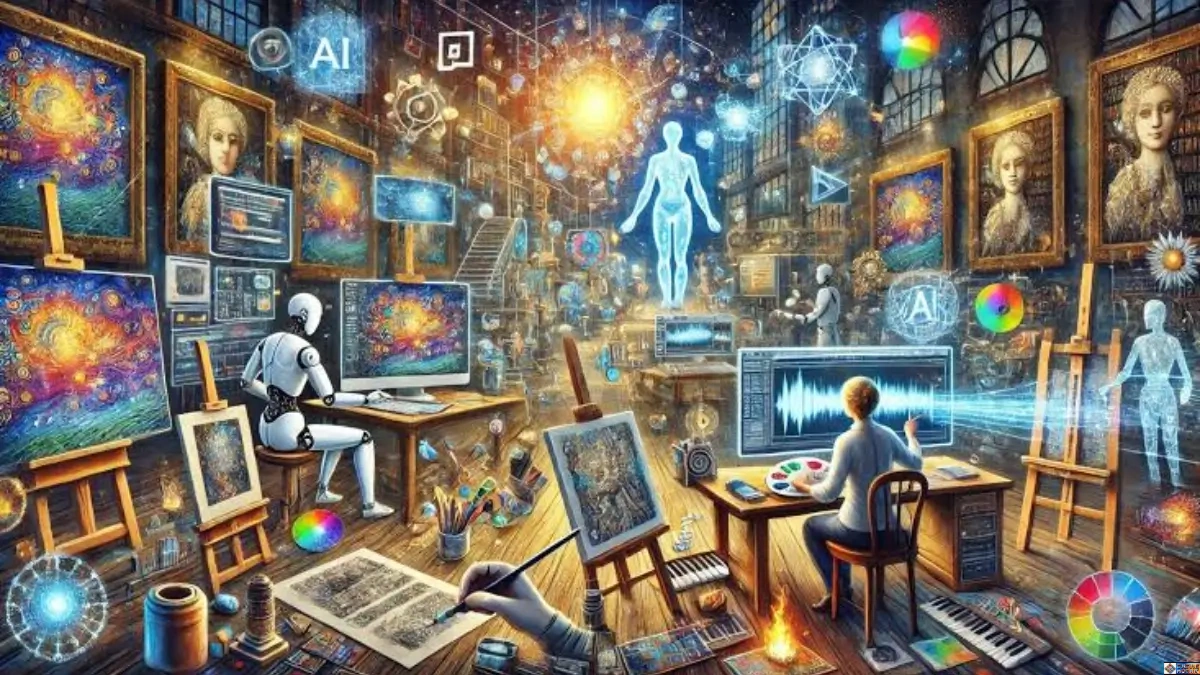
The intersection of AI and Cultural Production has ignited one of the most profound socio-economic and sociological debates of the 21st century. As generative neural networks advance from basic pattern matching to synthesizing photorealistic imagery, orchestral arrangements, and complex prose, they are not merely modifying artistic workflows—they are re-architecting the foundational mechanisms of human expression. By understanding the balance between technological efficiency and human creative intent, creators and institutions can embrace the possibilities of good generative AI in the cultural and creative industries while safeguarding authentic heritage.
The intersection of generative technologies and human expression forces us to confront fundamental questions: What defines creative authenticity when machines can imitate human craft? How do we safeguard indigenous heritage and localized traditions against algorithmic flattening? And how will Modern Society navigate a world where synthetic media saturates daily life?
The Core Dilemma: Devaluation, Homogenization, and the Loss of Human Identity
The rapid deployment of generative AI across creative industries has created a deep systemic problem. Modern Culture relies on creative work to reflect real human experiences, emotional nuances, and historical contexts. However, commercial pressures have led to large language models and diffusion systems being trained on vast volumes of scraped internet data without explicit consent or attribution.
      [ Raw Cultural Datasets & Heritage ]
                       │
              010101010101010101
                       ▼
    [ Algorithmic Processing / Generative AI ]
                       │
         ┌─────────────┴─────────────┐
         ▼                           ▼
[ Positive Outcome ]       [ Downside Risk ]
Digital Heritage           Cultural Homogenization
Preservation & Archiving   & Creative Stagnation
This dynamic introduces two core pain points across the global creative ecosystem:
- Cultural Homogenization and Stagnation: Is AI causing cultural stagnation? Generative models operate by calculating statistical probabilities based on existing data. When algorithms flood digital platforms with probabilistic averages, regional art forms risk being diluted into synthetic uniformity.
- Economic and Identity Displacement: Will AI replace human artists and writers? Writers, illustrators, and traditional performers face market saturation from low-cost synthetic assets. Beyond financial loss, creators see their distinct styles replicated in seconds, threatening their creative agency.
Whether analyzing the deep narrative history of Red Symbolism in Native American Culture or tracking how the Digital Nomad Culture shifts modern labor trends, cultural expression has always depended on lived human context. Synthetic generation lacks genuine consciousness; it produces output based solely on statistical patterns rather than personal experience.
7 Breakthrough Insights Reshaping AI and Cultural Production
To understand how artificial intelligence interacts with contemporary cultural creation, we must evaluate seven key dimensions driving this shift.
1. The Crisis of Authenticity and Creative Ownership
The philosophical debate surrounding AI and artistic authenticity centers on intent and lived experience. When an algorithm synthesizes a musical piece or a visual painting, it executes pattern recognition without emotional awareness or historical understanding.
This shift raises critical legal and economic questions: Can AI-generated art be copyrighted? The US Copyright Office has maintained that works generated entirely by AI without sufficient human control cannot receive copyright protection. As courts evaluate lawsuits involving training data, creators are asking: How are artists fighting back against AI training data? Artists are adopting protective technical tools like Glaze and Nightshade alongside legal strategies to protect their visual signatures from automated scraping.
2. Algorithmic Curation and the Risk of Cultural Flattening
Recommendation systems and algorithmic curation sociology serve as digital gatekeepers. By optimizing for user engagement, these systems often favor familiar, viral media over diverse, localized art forms.
Without intentional intervention, algorithmic curation creates a feedback loop that degrades cultural variety. To counter this, digital archivists are building localized Cultural Cluster databases to preserve regional aesthetics, ensuring independent expressions remain discoverable within global networks.
3. Digital Heritage Preservation and Archival Innovation
While generative expansion introduces risks, digital heritage preservation offers significant benefits when powered by machine learning. Digital archivists use specialized tools to restore damaged manuscripts, reconstruct historical sites in 3D, and translate endangered dialects.
- Language Revitalization: Speech-recognition networks document oral traditions, translating endangered languages into searchable digital archives.
- Artifact Restoration: Algorithms analyze historical design patterns to virtually reconstruct damaged artifacts without altering the original physical items.
Through strategic applications, machine learning supports Cultural Appreciation by making global history accessible to researchers worldwide.
4. The Possibilities of Good Generative AI in Creative Industries
When applied responsibly, AI in art and culture serves as an extension of human creativity rather than a replacement. Creators across sectors use generative tools to streamline technical tasks and expand project scope:
- Visual Arts & Film: Directors produce dynamic storyboards and concept iterations in real time, shortening pre-production cycles.
- Music & Sound Design: Composers generate custom sound landscapes and experimental harmonies while retaining final arrangement and performance control.
- Interactive Storytelling: Game developers create non-linear narratives where digital characters adapt organically to player choices.
| Metric / Dimension | Human Creative Production | AI-Assisted Production |
|---|---|---|
| Emotional Resonance | High (Based on lived experience) | Balanced (Human-directed intent) |
| Production Velocity | Traditional / Manual speed | Accelerated / Iterative execution |
| Copyright Eligibility | Fully Protected | Protected (If human control exists) |
| Cultural Context | Deep / Contextually Grounded | Moderated by human editor |
5. Shift in Global Cultural Tourism and Digital Identity
As digital media becomes increasingly synthetic, audiences actively seek out tangible, authentic cultural experiences. This trend has reshaped global travel, with more people seeking immersive engagement with local heritage.
Current research on the Latest Trends in Cultural Tours shows a growing demand for hands-on workshops, live performances, and community-led heritage walks. Travelers value non-replicable human experiences over automated media, reinforcing the importance of preserving physical cultural spaces.
6. Sociological Impacts on Modern Expression
The broad availability of AI generation tools has changed how communities share and interpret symbolic traditions. From understanding The Meaning of Colors in Different Cultures to tracking shifts in Cultural in USA, automated tools alter how cultural symbols move across borders.
  [ Regional Traditions & Symbols ]
                 │
                 ▼
 [ Synthetic Scaling & Digital Diffusion ]
                 │
                 ▼
 [ Cross-Cultural Exchange & Evolution ]
When algorithms recombine traditional symbols without cultural context, those symbols risk losing their original meaning. Maintaining cultural literacy helps ensure that digital distribution fosters cross-cultural connection rather than superficial commodification.
7. Sustainable Frameworks for Digital Heritage and Creative Labor
To build an equitable creative ecosystem, cultural institutions, tech developers, and policymakers are establishing clearer ethical standards:
- Opt-In Training Models: Ensuring AI developers license training datasets directly from creators with fair compensation.
- Provenance Metadata Tracking: Adopting open standards like the C2PA protocol to embed clear origin data in media files, distinguishing human-made work from synthetic generation.
- Public Policy & Fair Labor Guarantees: Implementing institutional guidelines that ensure human creators retain full attribution and primary creative control across supported projects.
Integrating these practices directly aligns with broader research on How Cultural Systems Relate to Sustainability, protecting creative careers alongside digital innovation.
Navigating the Global Cultural Landscape
To maintain a healthy digital ecosystem, public platforms must balance technological capabilities with human creative oversight. Organizations like Culture mosaic document how diverse societies adapt to technological shifts while preserving their unique traditions.
Understanding regional developments—such as shifts in World Cultural Geography or broader generative AI cultural impact—highlights the importance of keeping human artistic voice at the center of creative industries. Explore resources like Global Cultural Mosaic and Culture Unveiled to learn how heritage practitioners preserve authentic traditions alongside modern technology.
Frequently Asked Questions
1. What are the key cultural impacts of AI on traditional art?
2. Can AI-generated art be copyrighted under current law?
3. How are creators protecting their work from being used as AI training data?
4. Is generative AI causing cultural stagnation?
5. How does AI assist in digital heritage preservation?
References & Credible Sources
- US Copyright Office. (2023). Copyright Registration Guidance: Works Containing Material Generated by Artificial Intelligence. Federal Register, Vol. 88, No. 51.
- UNESCO. (2022). Reshaping Policies for Creativity: Addressing Culture as a Global Public Good. UNESCO Publishing.
- Stanford Institute for Human-Centered AI (HAI). (2024). Artificial Intelligence Index Report 2024. Stanford University.
- Shan, S., et al. (2023). Glaze: Protecting Artists from Style Mimicry by Text-to-Image Models. University of Chicago, USENIX Security Symposium.
- S4ICE. (2024). Modernisation or Destruction: The Cultural Industry in the Age of Artificial Intelligence.