
 By Culture Expert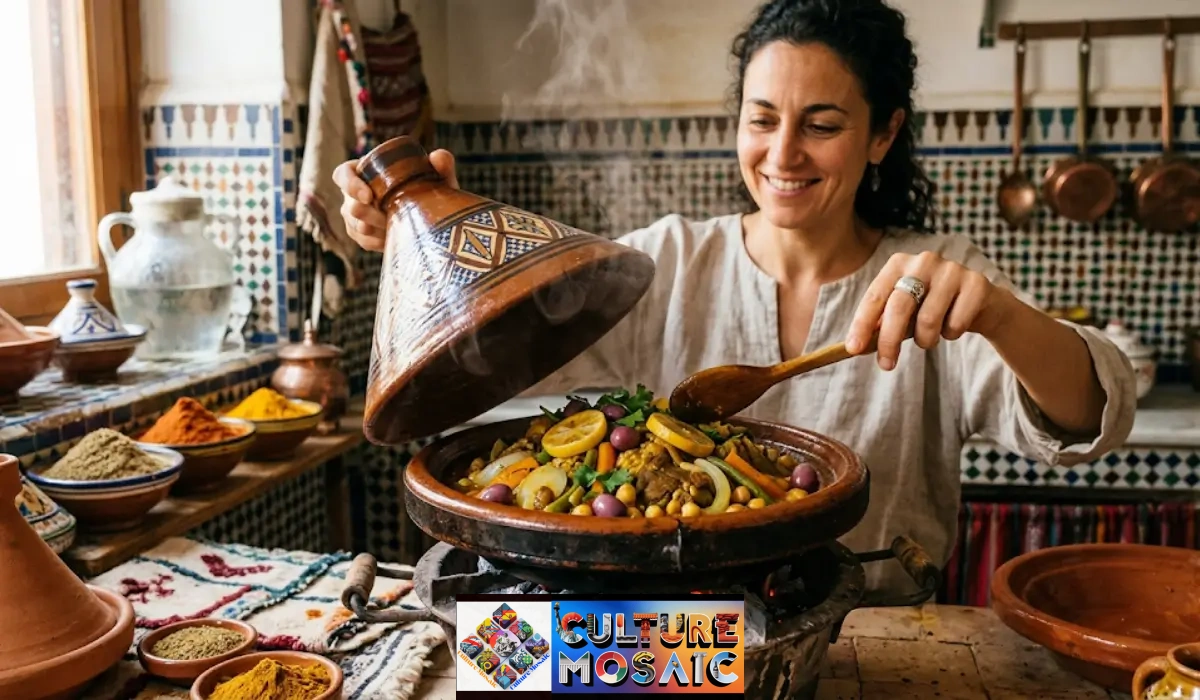
Quick Answer
How to cook traditional Moroccan tagine: layer aromatics, meat, and vegetables in a seasoned clay pot, season with ras el hanout and saffron, add minimal liquid, then simmer low and slow — on the hob or at 150°C in the oven — so the conical lid traps steam and bastes everything back into tender, deeply spiced perfection.
Why Most Home Tagines Fall Flat
I’ve watched a lot of good cooks ruin a tagine. Not through laziness — through impatience. They crank the heat because they’re hungry, or they dump in stock like they’re making a soup, and twenty minutes later the chicken’s dry, the sauce is thin, and the spices taste like they were sprinkled on as an afterthought rather than built into the dish from the first minute.
Here’s the thing nobody tells you when you buy your first clay pot: a tagine isn’t a faster way to cook a stew. It’s a slower one, on purpose. The conical lid is doing something a saucepan lid can’t — condensing steam at its peak and sending it back down onto the food in a constant, gentle rain. That’s what keeps a shoulder of lamb from turning to shoe leather over two hours of low heat. Skip that mechanic, cook it like a casserole, and you’ve just made a mediocre stew in an expensive pot.
I learned to cook tagine properly in a kitchen in Fez, standing over a charcoal brazier that scorched my forearms more than once. What struck me wasn’t the recipe — recipes are everywhere now, including a perfectly good one from this hands-on guide to making a Moroccan tagine that mirrors a lot of what I was taught. What struck me was the rhythm. Onions go in first, always. Spices bloom in fat before anything else touches the pot. Liquid is an afterthought, not a starting point. Get that rhythm right and the dish more or less cooks itself.
It’s the same lesson I keep relearning whenever I write about slow food for Culture Mosaic — the vessel usually matters more than the recipe card. A tagine, a clay comal, a covered brazier; different shapes, same stubborn insistence on time.
What Goes Into an Authentic Moroccan Tagine
So, what are the ingredients for an authentic Moroccan tagine? Fewer than you’d think, and every one of them is doing real work.
Ras el hanout is the backbone — a spice blend whose name literally means “top of the shop,” because traditionally it contained whatever the spice merchant considered his finest stock. No two blends from two different souks in Marrakech will taste identical, and that’s the point. Expect warmth from cinnamon and cardamom, a peppery bite, sometimes rose petal or grains of paradise depending on the vendor.
Preserved lemons are non-negotiable if you want the dish to taste genuinely Moroccan rather than generically North African. Salt-cured for weeks until the rind turns soft and almost translucent, they bring a briny, floral sourness that fresh lemon simply cannot replicate. Use the rind, finely sliced; the pulp is usually discarded or reserved for dressings.
Cured olives — violet or brown, never the bland green supermarket kind — add a bitter, oily depth that balances the sweetness of the onions and any dried fruit in the pot.
Saffron, used sparingly because it’s absurdly expensive even in Morocco, gives colour and a faint honeyed bitterness. A pinch steeped in warm water before it goes in releases far more flavour than threads scattered dry.
Aromatics — garlic, ginger, and a mountain of sliced onion — form the base that Moroccan cooks call the deghmira, a thick, almost jammy sauce that most of the liquid in the pot reduces down into.
Beyond that: cumin, paprika, turmeric, a cinnamon stick, fresh coriander and parsley stems tied together, and whatever protein or vegetables you’re building around. A moroccan tagine vegetarian version leans harder on the deghmira and swaps meat for chickpeas, root vegetables, and dried apricots — and honestly, I think it’s one of the most underrated versions of the dish. The spice work carries it entirely.
Cooking in a Tagine for the First Time: Season the Pot First
If this is your first time cooking in a tagine, do not skip seasoning it. Unglazed clay is porous, and an unseasoned pot can crack the first time it meets direct heat — I’ve had it happen, and it’s a genuinely upsetting sound.
Soak the base and lid in water for a couple of hours, then rub the interior with olive oil and let it dry in a low oven. Some cooks rub the exterior with a cut garlic clove first; I’m not convinced it does much beyond smelling wonderful. After that first seasoning, always start a clay tagine on low heat and increase gradually — thermal shock is what cracks pots, not prolonged cooking.
Step-by-Step: How to Cook Traditional Moroccan Tagine
- Build the base. Warm olive oil in the tagine (or a heavy pan if you’re pre-cooking on the hob before transferring). Add sliced onions and cook them down slowly until soft and faintly golden — this takes longer than you expect, and rushing it is the single most common mistake I see.
- Bloom the spices. Push the onions aside, add ras el hanout, cumin, paprika, turmeric, grated ginger, and crushed garlic directly into the oil. Thirty seconds is enough to wake them up without burning them.
- Layer, don’t stir. This is the part most home cooks get wrong — they treat a tagine like a stir-fry. Instead, arrange the meat in the centre, vegetables around the edge, closest to the heat. Tuck in preserved lemon rind and olives. Add just enough water or light stock to come a third of the way up the pot — not more.
- Cover and commit to low heat. Whether you’re finishing this on the hob or in the oven, the target is a bare simmer, not a rolling boil. The conical lid will do the rest, cycling moisture back down onto the food for one and a half to three hours depending on the cut of meat.
- Resist the urge to peek constantly. Every time you lift the lid, you release the steam that’s doing the actual cooking. Check once, halfway through, and that’s plenty.
- Finish bright. In the last ten minutes, stir through fresh coriander and a squeeze of lemon if the dish needs lifting. Taste for salt — preserved lemon and olives both carry a lot of it, so go gently earlier and adjust here.
- Rest before serving. Five minutes off the heat lets the sauce settle and thicken slightly. Serve straight from the pot at the table; it’s part of the ritual, the same one that shapes how I plan Mexican dishes for a party — build the table around one unhurried centrepiece, and everything else falls into place around it.
Do You Put a Tagine in the Oven or on the Hob?
Both work, and which one you choose says more about your equipment than your ambition. Traditional clay tagines were built for a low charcoal brazier called a majmar, which delivers gentle, even, radiant heat — something a gas ring struggles to replicate without a diffuser. If you’re wondering how to cook traditional Moroccan tagine in oven settings instead, here’s the honest breakdown of each route.
| Method | Best for | Heat management | Typical time | Watch out for |
| Hob (with diffuser) | Unglazed clay tagines, quick weeknight versions | Constant low flame, never medium-high | 1.5–2 hours | Cracking without a heat diffuser; uneven hot spots |
| Oven | Glazed tagines, enamelled cast iron, hands-off cooking | Steady 150°C (300°F), lid on throughout | 2–3 hours | Drying out if the lid doesn’t seal well |
| Clay tagine | Authentic flavour, the mineral “taste of the soil” | Gradual heat increase, never sudden | 1.5–3 hours | Thermal shock cracking; needs seasoning first |
| Dutch oven substitute | Cooks without a tagine, reliable heat retention | Low and steady, hob or oven | 1.5–2.5 hours | No conical condensation; add a splash more liquid |
If you don’t own a clay pot at all, a heavy Dutch oven with a tight lid gets you most of the way there. You lose the specific condensation mechanics of the cone, but the low, slow, moisture-retentive cooking that actually matters survives the swap just fine. I keep both in my kitchen and reach for whichever fits the evening. It’s a trade-off that shows up again and again once you start comparing slow-cooking traditions — the importance of food in Mexican culture rests on much the same idea, that the right vessel and enough patience matter more than any single ingredient.
Where This Sits Alongside Other Slow-Cooked Traditions
Tagine belongs to a much wider family of dishes built around patience — where the cooking vessel itself does half the work. It’s a theme we return to often at Culture Mosaic, whether we’re unpacking a dish built layer by layer, like our guide to Mexican chiles rellenos with rice and beans.
If you’re curious how a completely different culinary tradition handles slow, spice-forward cooking, our piece on how to make Mexican street tacos al pastor is a good next stop — different continent, same instinct to let time and spice do the heavy lifting. And for building out a table beyond one dish, our guide to traditional Mexican chicken dishes with rice follows a similar logic of building a table around one unhurried centrepiece. For a wider lens on the region, what are popular Mexican dishes is worth a read too.
A Note on the History
Most food historians trace the tagine’s origins to the Amazigh people — the indigenous inhabitants of North Africa, often called Berbers, though many prefer their own name for themselves. The pot began as something closer to a portable oven, suited to a nomadic life in the Atlas Mountains and the pre-Saharan plains, where water was scarce and every drop of moisture in a stew mattered.
The earliest written references to something resembling a tagine appear centuries later, during the Abbasid period, and the dish as we know it today carries fingerprints from Arab, Ottoman, Moorish, and eventually French influence — each layer added without erasing what came before. That’s fairly typical of North African food history generally, and it’s why I find it more interesting than cuisines that claim a single tidy origin story.
Frequently Asked Questions
Do you put a tagine in the oven or on the hob?
Either works. A hob needs a heat diffuser and a watchful eye to avoid cracking an unglazed clay pot; an oven set to around 150°C gives more forgiving, hands-off heat but takes slightly longer. Glazed and enamelled tagines tolerate the oven better than raw unglazed clay does.
What are the ingredients for an authentic Moroccan tagine?
At minimum: ras el hanout, preserved lemon, cured olives, saffron, garlic, ginger, and a generous quantity of sliced onion, layered with your choice of meat, fish, or vegetables. Cumin, paprika, turmeric, and cinnamon round out most versions.
How do I season a clay tagine for the first time?
Soak the base and lid in water for a few hours, coat the interior in olive oil, and dry it slowly in a low oven before its first real use. Always increase heat gradually on subsequent uses — sudden temperature changes are what crack unglazed clay.
Can I make an authentic Moroccan tagine recipe without a clay pot?
Yes. A heavy Dutch oven or any pot with a tight-fitting lid will manage the low, slow, moisture-retentive cooking a tagine relies on, even without the specific steam condensation the cone shape produces. Add a touch more liquid to compensate.
Is there a good Moroccan tagine vegetarian version?
Very much so. Swap the meat for chickpeas, root vegetables such as carrot and turnip, and dried fruit like apricots or prunes. The deghmira — that thick onion base — carries most of the flavour, so a vegetarian tagine loses surprisingly little.
References & Historical Sources
- Britannica, “Tagine: Definition, History, Vessel, Stew, Ingredients, and Facts”
- Wikipedia, “Tagine” — earthenware construction and 19th-century Maghreb accounts
- Epicure & Culture, “The Tajine: Morocco’s Pride and Passion” — on Amazigh culinary heritage