
 By Culture Expert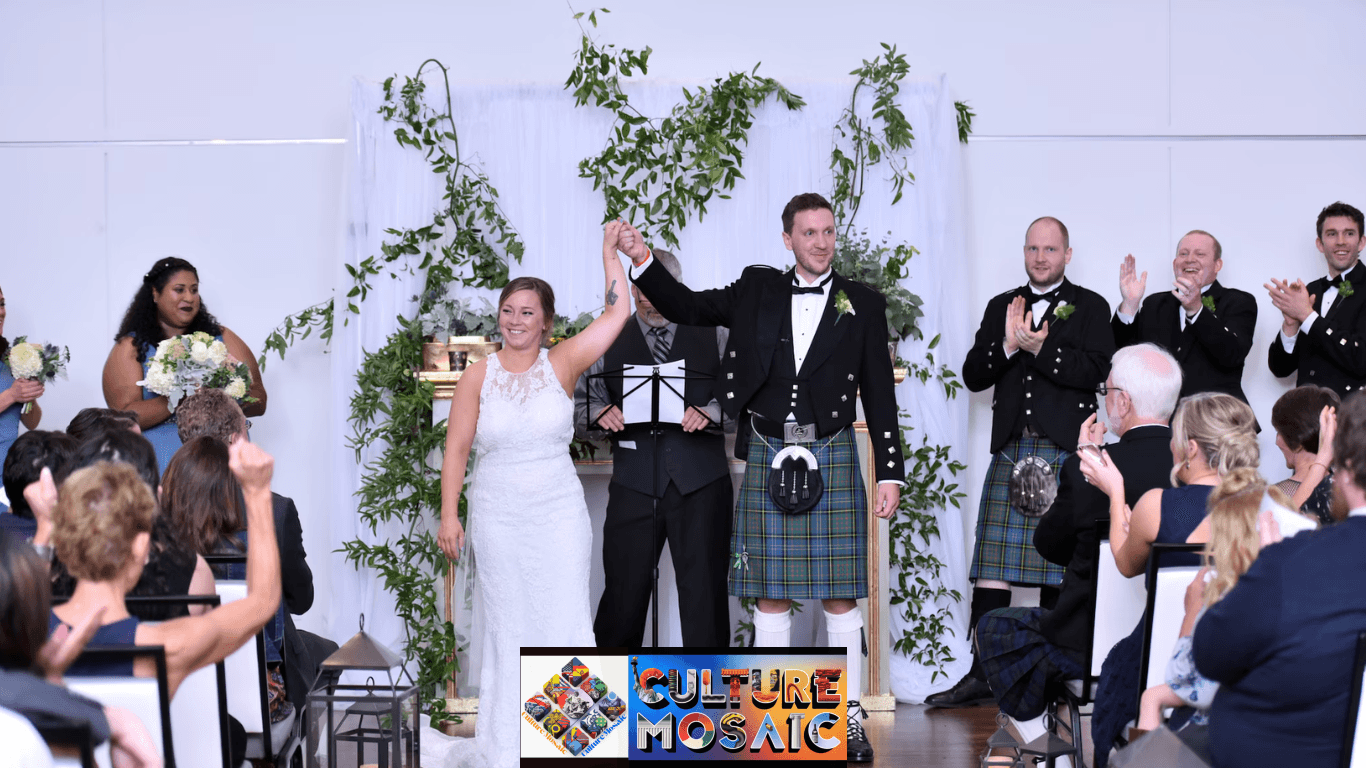
The real stories behind the rituals Irish couples still swear by, and why the ones you skip are the ones you’ll regret.
| About the Author: Dr. Leila Marsh | Cultural Anthropologist, Culture Mosaic Dr. Leila Marsh is a cultural anthropologist who has spent the better part of two decades tracing how ritual survives modernity. She has sat through Connemara ceilidhs at two in the morning, watched brides tie ribbons to Claddagh rings passed down four generations, and interviewed grandmothers in County Clare who still remember when a wedding lasted three days. Her writing for Culture Mosaic focuses on the customs that outlive fashion, the ones people fight to keep even when nobody can quite explain why. Author profile (placeholder link): culturemosaic.co.uk/contact-us |
I once sat next to a bride at a rehearsal dinner in Galway who told me she almost skipped the whole thing. Not the wedding. The traditions. She’d found a Pinterest board of “Irish wedding traditions” the week before, panicked, and nearly scrapped every ritual her grandmother had asked her to include because she didn’t understand what any of it meant. That’s the problem I see constantly. People inherit these customs like heirlooms nobody unwrapped. They know the shape of the box. They don’t know what’s inside.
Here’s the pain of it. You get one day. One. And if you fill it with symbols you can’t explain to your own guests, the whole thing feels hollow by the second toast. I’ve watched couples stand at the altar with a Claddagh ring turned the wrong way, or skip the handfasting cord entirely because a wedding planner called it “outdated,” only to regret it years later when a grandparent asks why the ceremony felt thin. Weddings are short. Regret is long.
So let’s fix that. This is the real story behind Irish wedding traditions, where they came from, why they still matter, and how modern couples are keeping them alive without turning a ceremony into a theme park.
The Roots Run Deeper Than the Guinness
Ireland’s marriage customs didn’t start with a church. Long before Christianity arrived, Celtic tribes were binding couples through handfasting, a literal tying of hands with cord or ribbon during the vows. It’s where the phrase “tying the knot” actually comes from, not a metaphor invented by a greeting card company. The ritual marked a trial period, sometimes a year and a day, before a couple committed further. I find that detail striking. Marriage as something you tested first, rather than something you leapt into blind.
Christianity folded itself around these older customs rather than erasing them, which is fairly typical of how Cultural Marriage Traditions evolve everywhere you look. Rome did something similar with its own household gods and hearth rituals, as I’ve written about in my piece on Ancient Roman Wedding Traditions. Old belief systems rarely disappear. They just change clothes.
Handfasting, Explained Properly
Modern couples have brought handfasting back, and I’m glad. A celebrant wraps ribbon, cord, or even a family tartan around the couple’s joined hands while they speak their vows. Some couples use cords in colors that mean something specific: green for the bride’s family, gold for prosperity, a strand from a grandmother’s own wedding for continuity. It’s tactile. You feel the pull of the cord against your wrist while you’re promising your life to someone. Try getting that from a printed program.
I’ll be blunt. Handfasting is the single most emotionally honest piece of an Irish wedding, and it baffles me that some planners still shelve it as a novelty add-on.
The Claddagh Ring Carries the Whole Point
If you know one symbol from Irish wedding traditions, it’s probably the Claddagh. Two hands holding a heart, topped with a crown. Hands for friendship, heart for love, crown for loyalty. The design traces back to the fishing village of Claddagh in Galway, supposedly created by a goldsmith named Richard Joyce in the late 1600s after he was captured, enslaved, and eventually freed to return home and marry his sweetheart.
How you wear the ring actually says something. Worn on the right hand with the heart facing outward, you’re single. Heart facing inward on the right hand, you’re in a relationship. On the left hand with the heart facing inward, you’re married. It’s a whole language on one finger, and most brides never learn it until someone at the reception corrects them.
What the Blue Dress Really Meant
Everyone assumes white was always the wedding color. It wasn’t, not in Ireland. Blue was the traditional shade for Irish brides long before Queen Victoria made white fashionable across the English-speaking world in 1840. Blue represented purity in Irish custom well before white claimed that job. Some brides today are reviving it, a sash, a garter, even a full blue gown, as a quiet nod to the version of Irish wedding traditions that predates the white dress entirely.
I think this comparison is worth making. Italian wedding traditions for bride lean heavily on green for luck and red for passion, while Ireland’s original color story was about modesty and protection from bad luck, not celebration. Same goal, completely different visual language.
Bells, Horseshoes, and the Fear of Bad Luck
Irish wedding traditions get stitched through with small superstitions designed to ward off misfortune, and I love how specific they get. A bride carries a horseshoe, real or embroidered onto her dress, angled upward so luck doesn’t spill out. Small bells are handed out to guests or sewn into the wedding gown to scare off evil spirits and, depending on who you ask, to remind the couple of their vows during hard years ahead. Rain on the wedding day is considered lucky in Ireland, which is either a wonderfully optimistic reframe or the only sensible way to cope with Irish weather.
Bad weather superstition shows up everywhere once you start comparing cultures side by side. The Himba communities I researched for my piece on red clay tribe wedding traditions treat certain natural elements as similarly protective, just applied to ochre and clay instead of rain and horseshoes. Humans are remarkably consistent about needing a symbol to hold their anxiety.
Irish Wedding Cake, Whiskey, and the Toast That Actually Means Something
Traditional Irish wedding cake is a dense fruitcake soaked in whiskey, sometimes for weeks before the wedding, and it’s brutal in the best way. Dark, boozy, packed with dried fruit that’s been drinking longer than most of the guests. The top tier is traditionally saved, either for the first child’s christening or the couple’s first anniversary, which strikes me as a lovely act of patience in a culture not always known for restraint.
Whiskey shows up again at the reception itself. Guests raise a glass for the “sláinte,” meaning health, and the toast is treated as a genuine wish rather than a formality to get through before dinner. Compare that with the layered, spice-driven reception spreads I covered in Mexican wedding traditions, where food itself becomes the ceremony’s emotional centerpiece. Ireland gets there through drink and a shared word instead.
Where Ireland Sits Among the World’s Wedding Customs
I spend a lot of my working life comparing rituals across continents, and Ireland holds up well against anyone. The Marriage Rituals in Different Cultures Anthropology I’ve studied tend to share three things: a symbol of binding, a gesture toward luck, and a shared meal or drink. Ireland checks every box, just with cord instead of crowns and whiskey instead of incense.
Orthodox ceremonies, for instance, use literal crowns during the vows, a tradition I unpacked in my piece on Crown family wedding traditions? Rome had its own version of the binding gesture too, distinct from handfasting but emotionally identical, which I explored in Roman Wedding Night Ritual. If you want the fuller picture of how these customs stack up globally, I put together a broader piece on the Best Wedding Traditions Worldwide, and there’s also a solid outside primer on Irish wedding traditions worth reading if you want a second source confirming what I’m telling you here.
Modern Couples Are Rewriting the Rules, Carefully
Here’s what I actually see happening on the ground. Couples aren’t discarding Irish wedding traditions. They’re editing them. A same-sex couple I interviewed near Cork used handfasting cords in both families’ tartans, tied by both mothers instead of one celebrant. A bride in Sligo wore her grandmother’s blue garter instead of a full blue dress, a small enough gesture that nobody but her noticed, which was exactly the point. Another couple skipped the whiskey cake entirely because neither of them drinks, and replaced it with a fruitcake soaked in strong tea instead. Still fruitcake. Still soaked. Still theirs.
Here’s my wildcard suggestion, the one most planners won’t mention. Instead of the standard unity candle, some Irish-heritage couples are reviving an older custom of jumping over a broom made from local hedge branches, a nod to older Celtic harvest rites that predate the church wedding entirely. It’s unusual. It’s also one of the more visually striking moments I’ve seen at a modern ceremony, and it costs nothing beyond finding a decent hedge.
If any of this has you second-guessing whether your own ceremony is missing something, that’s worth sitting with rather than rushing past. You don’t get to redo the day. You get to decide, right now, whether the version of Irish wedding traditions you’re building actually means something to you, or whether it’s decoration you’ll forget by the anniversary. For a wider survey of how different cultures have answered that same question, I’d point you toward this overview of What are wedding traditions around the world, and to the broader archive at Culture mosaic, where I keep adding to this research as I go.
FAQs About Irish Wedding Traditions
Why do Irish brides carry a horseshoe?
The horseshoe is meant to trap good luck and keep it close to the bride throughout the ceremony[cite: 1]. It has to be carried point up, not down, or superstition says the luck drains straight out[cite: 1]. Some brides embroider a tiny horseshoe charm into the hem of the dress instead of carrying one outright, which solves the practical problem of holding a horseshoe and a bouquet at the same time[cite: 1].
What does the Claddagh ring actually symbolize at a wedding?
Two hands represent friendship, the heart between them represents love, and the crown above it represents loyalty[cite: 1]. At a wedding the ring is usually turned so the heart faces inward, signaling that the wearer’s heart now belongs to someone[cite: 1]. Grandmothers in Ireland still pass these rings down rather than buying new ones, which is part of why the symbolism carries so much weight beyond the jewelry itself[cite: 1].
Is handfasting a religious ceremony or a secular one?
It started as a pre-Christian Celtic practice, so at its root it’s not religious in the Catholic sense at all[cite: 1]. Modern couples use it in both religious and entirely secular ceremonies because the cord itself doesn’t require any particular belief system, just two people willing to be tied together in front of witnesses[cite: 1]. That flexibility is exactly why it survived this long while other customs faded out[cite: 1].
Why is rain considered lucky at an Irish wedding?
The logic runs that rain washes away bad luck before it can settle on the marriage, and given how often it rains in Ireland, the superstition doubles as a practical coping mechanism[cite: 1]. There’s also an older belief that rain represents fertility and abundance, tying back to agricultural roots where a wet season meant a better harvest[cite: 1]. Either way, nobody in Ireland is cancelling a wedding over weather[cite: 1].
What is traditionally served at an Irish wedding reception?
Whiskey-soaked fruitcake sits at the center of it, dense, dark, and usually made weeks in advance so the flavor has time to settle[cite: 1]. Guests toast with whiskey or Irish stout while offering “sláinte,” and the top tier of the cake is often frozen and saved for the couple’s first anniversary or a future christening[cite: 1]. Modern receptions have widened the menu considerably, but the cake and the toast tend to survive even the most contemporary weddings[cite: 1].