
 By Marcus J. Holloway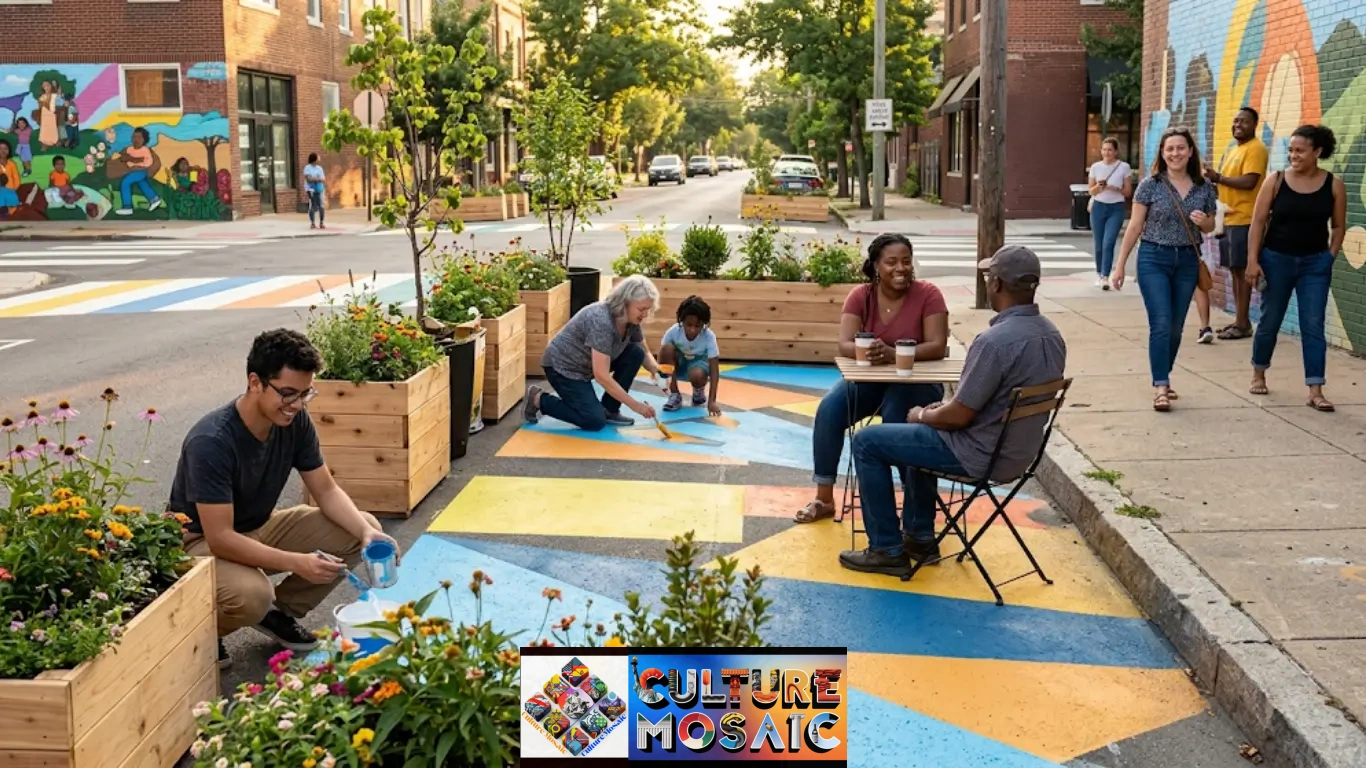
Quick Summary
- What They Are: Micro-civic interventions are hyper-local, low-cost, citizen-led actions—such as guerrilla gardens, pop-up seating, painted crosswalks, or block-level data collection—designed to solve immediate urban challenges without waiting for lengthy municipal approvals.
- Why They Work: By bypassing traditional bureaucratic friction, these small actions build immediate “bonding social capital,” prove concept viability, and force city governments to fast-track long-term infrastructure improvements.
- The Core Mechanism: They shift civic participation from an occasional, top-down voting model to a continuous, bottom-up framework that transforms abandoned spaces into active community hubs.
Why Nobody Is Coming to Save Your Neighborhood
For fifteen years, I worked inside municipal government—starting as a planning intern and eventually serving as a deputy director of community development. Here is the uncomfortable truth about how modern cities operate: by the time a hyper-local neighborhood issue is identified, studied, budgeted, approved, and constructed, the residents who raised the concern have often moved away or given up entirely.
Consider a standard municipal response curve: a resident reports a dangerous intersection where drivers consistently run stop signs. The city council receives the request and directs staff to conduct a traffic study. Six months later, the study is reviewed. If approved, funding is requested for the next fiscal year’s budget, with construction scheduled for the following spring. Total elapsed time: eighteen to thirty-six months.
During that delay, urban alienation deepens and public safety remains compromised. However, a fundamental shift has taken place across urban centers. Communities are increasingly adopting Micro-Civic Interventions—small-scale, agile projects that address Real-World Problems directly at the block level.
Traditional Municipal Planning vs. Micro-Civic Interventions
To understand how hyper-local civic actions alter urban planning trajectories, it is useful to compare traditional top-down development with bottom-up tactical execution.
| Metric | Traditional Municipal Planning | Micro-Civic Interventions |
| Primary Driver | City agencies, external contractors, master plans | Local residents, grassroots organizers, block captains |
| Planning Timeline | 18 months to 5+ years | 24 hours to 2 weeks |
| Average Cost | $50,000 – $1,000,000+ | $0 – $500 |
| Risk Level | High financial capital risk | Low risk; easily reversible or modifiable |
| Public Engagement | Formal public hearings, surveys, official commentary | Direct physical participation, co-creation |
| Policy Impact | Rigid; top-down policy enforcement | Flexible; generates pilot data to shape future policy |
Understanding these distinctions highlights What is the Value of Civic Participation?: it moves citizens from passive consumers of municipal services to active co-designers of their physical environments.
The 7 Proven Micro-Civic Interventions
These seven strategies have been deployed successfully across global cities to enhance neighborhood safety, restore ecological function, and rebuild social trust.
1. Guerrilla Greenery
Vacant, unmaintained lots frequently turn into hubs for illegal dumping and environmental degradation. Guerrilla greenery involves clearing debris and planting native wildflowers, vegetables, or shade flora without formal municipal authorization. Research from the Pennsylvania Horticultural Society demonstrated that greening vacant lots led to documented decreases in local crime rates and self-reported improvements in community safety (South et al., 2018).
2. The Permanent Breakfast
Inspired by open-source public space gatherings in Vienna, a permanent breakfast involves placing a folding table, chairs, and coffee on a public sidewalk or plaza at the exact same time every week. Over time, this recurring presence establishes what sociologists term “third places”—spaces separate from home and work where informal community safety nets are forged.
3. Digital Hyper-Locality
Broad city-wide forums often deteriorate into noise. Utilizing secure, private messaging protocols (such as Signal groups restricted strictly to a single physical block) creates an immediate mutual-aid network. Whether coordinating emergency equipment during power outages or sharing tools, hyper-local digital networks facilitate rapid emergency response faster than centralized systems. Discover more about how these platforms operate via Hyperlocal Digital Deliberation.
4. Citizen-Led Sensor Networks
Instead of relying solely on sparse municipal monitoring stations, residents can pool resources to install low-cost environmental sensors. For instance, communities monitoring air quality or traffic speeds can publish real-time dashboards. This empirical approach shifts public discourse from subjective complaints to undeniable empirical evidence when engaging city officials.
5. Block-Level Participatory Budgeting
While municipal participatory budgeting can be slow, micro-budgeting operates instantly. Neighbors pool small contributions via digital payment apps to fund immediate fixes—such as purchasing a public bench or installing neighborhood lighting. These projects demonstrate how targeted micro-investments strengthen broader Local Civic Engagement Strategies.
6. The Human Library
Isolation remains a major challenge in high-density urban environments. Human Library events allow residents to “check out” neighbors for structured fifteen-minute conversations. Connecting long-time residents with recent immigrants fosters cross-generational dialogue and builds Diverse Civic Harmony.
7. Tactical Urbanism
Tactical urbanism utilizes temporary materials—such as chalk, removable paint, potted plants, and wooden pallets—to test physical street enhancements. The table below illustrates how tactical interventions transition into permanent municipal policies:
Prominent examples of this process include the expansion of protected bike lanes and pedestrian parklets worldwide, demonstrating how Tactical Urbanism in Community Civic Engagement shapes formal urban design.
3 Real-World Case Studies
Park(ing) Day (San Francisco, CA)
In 2005, a San Francisco design studio fed a parking meter, laid down synthetic turf, installed a bench, and created a temporary public park for the duration of the meter’s time limit. This single action expanded into a global annual event and directly informed San Francisco’s official Parklet Program, which has since been adopted by cities globally.
Birch Street Plaza (Boston, MA)
Residents in Boston used temporary markers, milk crates, and portable seating to close a short street segment to vehicular traffic, creating an impromptu pedestrian plaza. Rather than dismantling the setup, city planners monitored usage patterns, validated the safety data, and eventually allocated capital funding to make the pedestrian plaza permanent.
Philadelphia LandCare Program (Philadelphia, PA)
A longitudinal study published in the Proceedings of the National Academy of Sciences (PNAS) examined the systemic greening of vacant urban lots across Philadelphia. The study documented a 29% reduction in gun violence around greened sites, alongside significant decreases in resident stress levels (Branas et al., 2018).
Step-by-Step Implementation Framework
1.Conduct a Block Audit:Phase 1: Week 1.
Walk your immediate neighborhood on foot. Identify localized friction points—such as an unsafe pedestrian crossing, a lack of public seating, or an unmaintained median.
2.Form a Core Micro-Coalition:Phase 2: Week 2.
Recruit 3 to 5 neighbors through direct outreach or hyper-local communication tools. Focus on defining a single, highly achievable intervention.
3.Execute the Intervention:Phase 3: Week 3.
Deploy low-cost, non-permanent materials to address the identified issue within a single day. Ensure the design is safe and accessible.
4.Document and Measure Outcomes:Phase 4: Week 4.
Collect empirical usage data, capture high-resolution imagery, and track resident feedback to measure impact and demonstrate success.
To explore competitive funding mechanisms for these block-level initiatives, consider applying for programs like the Love Your Block Grant 2026.
Managing Obstacles & Risk Mitigation
When executing micro-civic projects, organizers often encounter administrative or social resistance. The table below outlines standard risk scenarios and mitigation protocols:
| Scenario | Primary Risk | Recommended Mitigation Strategy |
| Municipal Removal | Code enforcement issuing cease-and-desist orders | Document safety metrics; invite city planners to inspect the installation; pivot to temporary permits using resources on How Public Feedback Shapes Local Policy. |
| Neighborhood Opposition | Concerns regarding parking loss or noise | Conduct informal door-to-door listening sessions; incorporate design modifications based on feedback; reference guidelines on Why Public Consultation Is Important. |
| Organizer Burnout | Reliance on a single volunteer | Establish rotating responsibility schedules; limit project scopes; foster distributed leadership grounded in Ethical Grassroots Advocacy. |
Frequently Asked Questions
What are 5 examples of civic engagement?
Five prominent examples include:
- Participating in local municipal elections and public hearings.
- Organizing or maintaining block-level micro-civic projects (e.g., guerrilla gardens, community fridges).
- Submitting testimony during public comment sessions—learn more via What Is Public Commentary?.
- Volunteering with grassroots community educational networks, such as programs listed under Volunteer for Civic Education Programs.
- Participating in neighborhood associations or localized advisory boards.
What are the four main types of civic engagement?
The four primary categories are:
- Electoral Engagement: Voting, canvassing, and registering voters.
- Direct Civic Action: Volunteer work, mutual aid, and tactical urbanism.
- Informal & Formal Advocacy: Contacting elected officials, signing petitions, and organizing community rallies.
- Civic Literacy & Learning: Building a foundational understanding of government systems—explored deeply in Civic Literacy and Understanding Civic Duty.
What best describes a benefit of civic participation?
The primary benefit of civic participation is the expansion of social cohesion and public efficacy. When residents participate in shaping their local environment, community safety increases, municipal resources are deployed more accurately, and collective resilience improves during crises.
What does civic engagement mean in modern urban planning?
In contemporary urban design, civic engagement represents a shift from top-down public notices toward active co-design. It emphasizes empowering residents as active contributors in planning, developing, and maintaining their public spaces. Discover additional context through Co-design in urban planning and civic engagement and current Civic Engagement Trends.
How can college students and youth launch micro-civic projects?
Students can launch initiatives by forming campus-community partnerships, conducting local safety or environmental audits, and utilizing small micro-grants to build tactical projects. Review curated options in 10 Civic Engagement Opportunities and explore Civic Engagement frameworks for further guidance.
References & Academic Sources
- Branas, C. C., et al. (2018). Citywide cluster randomized trial of restoring vacant land and its effects on violence, crime, and fear. Proceedings of the National Academy of Sciences (PNAS), 115(12), 2946–2951.
- Lydon, M., & Garcia, A. (2015). Tactical Urbanism: Short-term Action for Long-term Change. Island Press.
- Putnam, R. D. (2000). Bowling Alone: The Collapse and Revival of American Community. Simon & Schuster.
- South, E. C., et al. (2018). Effect of Greening Vacant Land on Mental Health of Community-Dwelling Adults. JAMA Network Open, 1(3), e180298.
- Civic Voice Organization. (2024). Community-Driven Governance Frameworks. See Civic Voice and Vernacular Governance Structures.
- Culture Mosaic Digital Journal. (2026). Global Heritage and Civic Architecture Resource. Explore Culture mosaic and read Why Is Voting Important in Local Elections? alongside Community Activism Strategies.