
 By Culture Expert
A 2026 Strategic Guide for Community Leaders, Local Marketers, and Neighborhood Builders
The World Feels Overwhelming. Your Neighborhood Doesn’t Have To.
The world feels overwhelming right now. Global problems seem impossible to solve, and the daily scroll through international headlines creates a particular kind of helplessness — the feeling that nothing you do at home could ever matter at that scale.
But here is what is genuinely shifting in 2026: people are reclaiming power not by thinking bigger, but by thinking smaller. Deliberately, strategically, and with measurable results.
A hyper local agency is the practice of channeling your civic voice into genuine community action within your immediate neighborhood — typically a 5-mile radius. It is not about ignoring global issues.
It is about understanding that real, verifiable change starts with problems you can see, touch, and actually influence — and that proof of local impact is the fastest path to broader trust.
This is not a soft, feel-good concept. In 2026, hyper local agency has become the most sophisticated form of civic and community marketing strategy available. It is also the most effective.
The Shift: From Awareness to Agency
For years, the civic engagement playbook said awareness is the first step. Read the articles. Share the posts. Stay informed. The assumption was that informed people naturally become active people.
That assumption has collapsed under the weight of content overload. Awareness without a clear action pathway does not create progress — it creates frustration, then cynicism, then disengagement. We are watching that cycle accelerate.
The hyper local agency model breaks that cycle by replacing passive observation with active, physical participation in the five-mile radius around your home. The return on that participation is immediate: you see results within weeks, not election cycles.
You know your neighbors’ names. You have a direct line to the person deciding how your street gets maintained. That specificity is not a limitation — it is a structural advantage.
Why 2026 Is the Inflection Point
Three converging forces are making hyper local agency not just practical but urgent in 2026.
First, AI-generated misinformation has reached local news ecosystems. Fabricated neighborhood rumors, fake council meeting summaries, and AI-written community alerts are circulating in local Facebook groups and neighborhood apps at scale. Communities without a shared verification practice — without what practitioners are calling a Neighborhood Knowledge Bank — are the most vulnerable.
Information hygiene at the local level is now a survival skill, not an optional practice.
Second, participatory budgeting has gone digital-hybrid. What was once a once-a-year community meeting is now a live, API-linked process. Platforms like Social Pinpoint and Consultation Manager allow residents to track exactly where every budget dollar goes in real time.
The barrier to meaningful civic participation has dropped — but only for communities that know these tools exist and how to use them.
Third, the most trusted voices in any community in 2026 are not national media brands or political celebrities. They are what community strategists are calling Hyperlocal Creators — neighbors who show up consistently, verify what they share, and build a track record of results.
The trust premium attached to a recognized, reliable neighborhood presence is higher right now than it has ever been in the modern media era.
The most trusted voice in your community in 2026 is not a news anchor. It is the neighbor who showed up, verified the facts, and got the pothole fixed.
The Three Pillars of a 2026 Citizen
Understanding hyper local agency means building your practice around three core disciplines that transform how you engage with your community. These are not abstract values — they are operational habits.
| Pillar | Definition | The 2026 Goal |
| Information Hygiene | Fact-checking your local news sources, especially AI-generated content circulating in local Facebook groups and community apps | Reduce community polarization by 30% through verified, source-backed local narratives |
| Radical Neighborliness | Engaging with those in your immediate 5-mile radius — in person, not just on apps | Build a hyper-local support network strong enough to function when larger systems fail |
| Participatory Budgeting | Having a direct vote in how local government funds are allocated, using digital-hybrid civic tech platforms | Move from ‘Voice’ to ‘Power’ — from commenting on decisions to making them |
Pillar One: Information Hygiene in Your Neighborhood
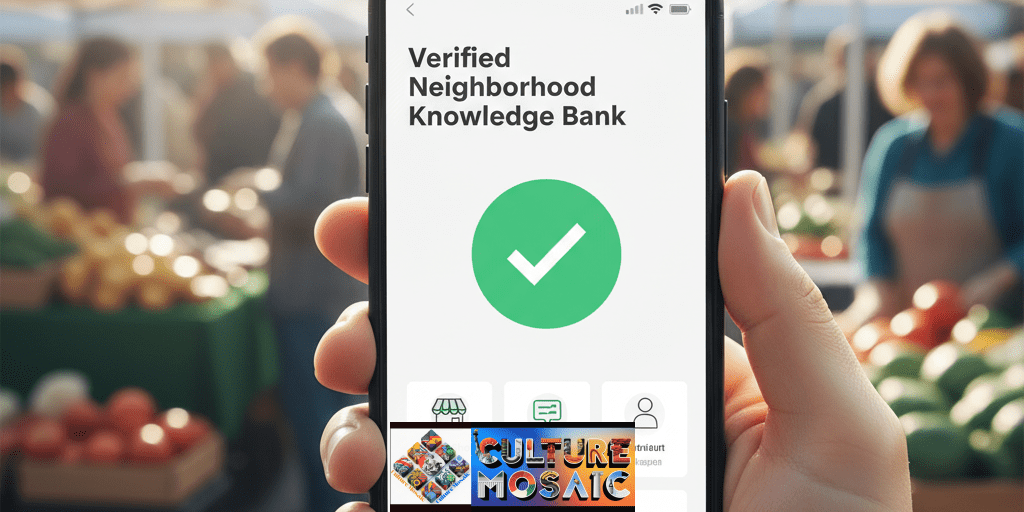
Before you can act effectively in your community, you need accurate information about what is actually happening in it. In 2026, that requirement is more demanding than it has ever been.
Information hygiene means developing a critical, source-first approach specifically for local issues. This is different from national media skepticism because local misinformation is harder to detect — it often comes from real neighbors sharing content they genuinely believe is true. The damage it does is proportionally greater because local communities are smaller and more easily fractured.
The 2026 Truth-Check practice for any neighborhood claim looks like this:
| 2026 NEIGHBORHOOD TRUTH-CHECK PROTOCOL |
| Check for: AI-generated bot rumors in local Facebook groups and NextDoor threads |
| Check for: Verification from your Neighborhood Knowledge Bank — a shared community record |
| Check for: Official confirmation from your local government’s verified digital channels |
| Check for: Cross-reference with at least one local journalist or community newsletter |
| Check for: The source’s track record — consistent, named community contributors earn trust |
The goal of information hygiene is not to become a professional fact-checker. It is to reduce the polarization that tears communities apart by establishing a shared, verifiable foundation of local truth. Communities that share a common fact base make better decisions, faster, with less conflict.
Pillar Two: Radical Neighborliness
This pillar challenges the social isolation that has become the invisible infrastructure of modern life. We are more digitally connected than any generation in history and, simultaneously, more physically isolated from the people who live within walking distance of our homes.
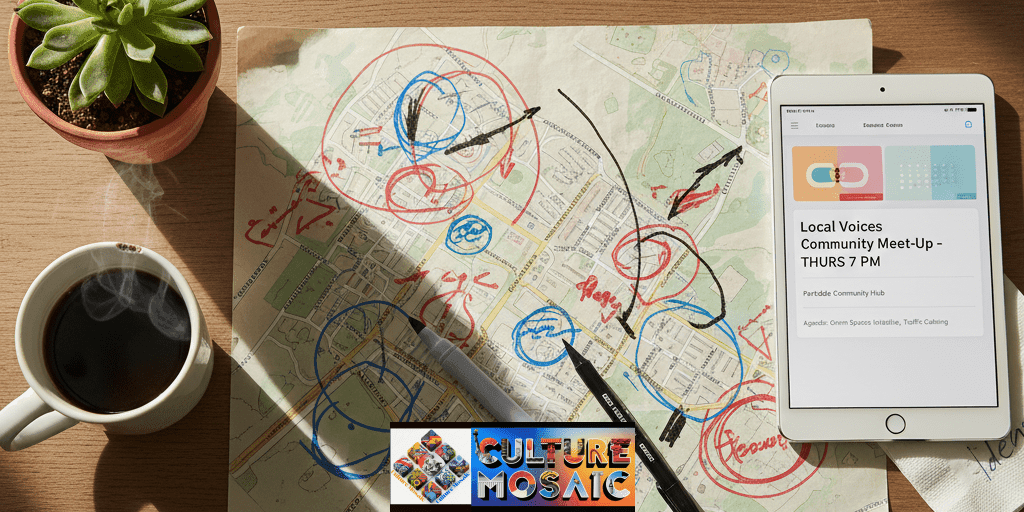
Radical neighborliness is the intentional reversal of that pattern. It means building real relationships with people who share your physical space, even when it is inconvenient or socially uncomfortable. It means knowing your neighbors by name, not just by username.
A hyper local agency thrives when neighbors know each other, check in during difficult times, and collaborate on shared concerns. This is not about forced friendships or mandatory block parties. It is about building a support network that exists in physical reality — one that functions when the power goes out, when a family has a crisis, or when a neighborhood problem needs a real solution rather than a comment thread.
The practical entry points are everywhere: library boards, park clean-up groups, neighborhood watch programs, community gardens, local sports leagues, school parent organizations. The specifics matter less than the consistency. Show up to the same place regularly, and you will have more civic influence within six months than most people accumulate in a decade of online engagement.
Pillar Three: Participatory Budgeting — From Voice to Power
Here is where the language of civic engagement gets honest about power. Most forms of community participation stop at expression: you attend the meeting, you speak your piece, you go home. The decisions still happen in a room you are not in.
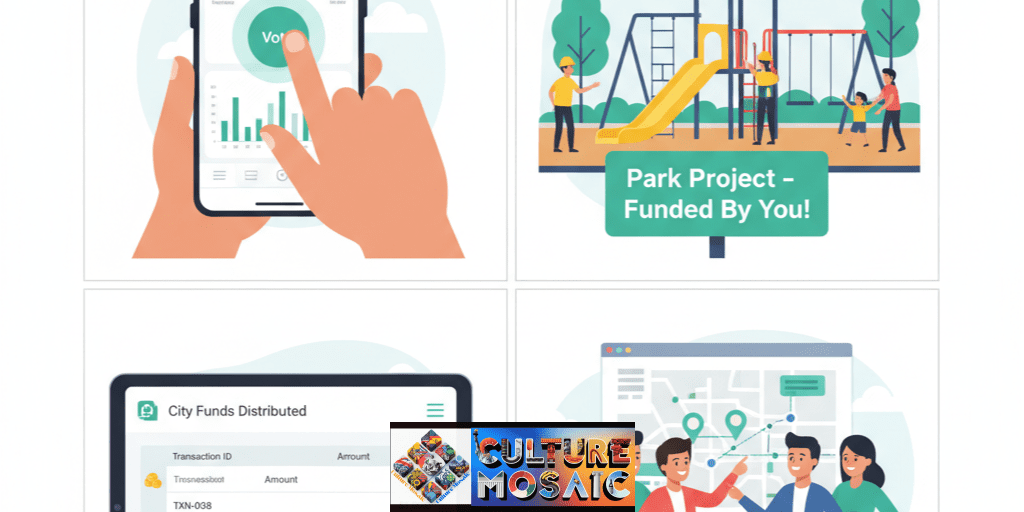
Participatory budgeting changes that structural reality. Through this process, communities can have direct access to public resources — and in many cases, they can actually vote on how those resources will be spent by the local government.
Instead of making all the decisions about public funding behind closed doors, local residents will be allowed to submit proposals for community development projects; participate in discussions about their relative importance; and vote on what budget category to use for each project.
In 2026, this process has become genuinely accessible. Digital platforms like Social Pinpoint and Consultation Manager have built mobile-friendly, API-integrated decision dashboards that allow any resident with a smartphone to track where every dollar goes in real time. You do not need to attend a three-hour Tuesday evening meeting to participate. You can vote on a community playground renovation during your lunch break.
The transformation this creates is not incremental. Having sincere authority to make decisions about things makes a person’s experience of civic engagement very different; all they do is become engaged through the practice of citizenship rather than just participating in it.
Building Your Digital Neighborhood Footprint
In 2026’s search and social landscape, what practitioners are calling digital neighboring has replaced the old backlink model as the primary trust signal for local authority. Digital neighboring means creating a verifiable, consistent civic presence within your local digital ecosystem — and having that presence recognized by other local entities.
Concretely, this means linking to and being mentioned by local libraries, independent small businesses, district council blogs, neighborhood newsletters, and community app networks. It means verifying your civic identity on local Mastodon instances or on the 2026 generation of neighborhood platforms that have replaced the original Nextdoor model with stronger verification and less algorithmic amplification of conflict.
Your digital neighborhood footprint is built the same way your physical reputation is: by showing up consistently, contributing verified and useful information, and being associated with outcomes your community values. The difference is that a strong digital footprint creates discoverability — your neighbors find you when they have a problem that matches your area of contribution.
Three specific practices build this footprint effectively:
- Register on your local government’s civic engagement portal and keep your profile current
- Contribute to and cite your local Neighborhood Knowledge Bank in every civic communication you share
- Build relationships with other local digital entities — the library’s community newsletter, the local business improvement district’s blog, the school board’s parent communication channel
These connections are not just good citizenship. They are the local entity signals that tell AI-assisted search agents in 2026 that your community presence is real, verified, and authoritative.
AI as a Civic Ally: Your Neighborhood’s New Research Tool
AI tools have a genuinely useful role in the hyper local agency model — as long as that role is tool, not oracle. The most practical application in 2026 is civic translation: using AI to convert complex, jargon-heavy government documents into plain-language summaries that real neighbors will actually read.
A 200-page city zoning amendment does not need to remain inaccessible to the residents it affects. An AI assistant can reduce it to a one-page Civic Cheat Sheet in minutes — highlighting the specific parcels affected, the timeline for public comment, and the three most consequential decisions up for community input. You can share that cheat sheet at the next neighborhood meeting, post it in your community app, and suddenly the number of informed voices in the room triples.
The discipline is in verification. AI outputs about local government actions must always be cross-checked against the primary source document. Use AI to make complex information accessible, not to replace the primary document as your source of truth.
That distinction — AI as access tool, not authority — is what separates effective civic technology use from the misinformation patterns it is designed to counter.
The 5-Mile Radius Rule: Why Proximity Is the New Superpower
The 5-mile radius is not an arbitrary metric. It represents the cognitive and logistical threshold at which community relationships become consistently maintainable. Within that radius, you can walk to a problem, recognize the faces you encounter, and maintain the repeated interactions that build the trust necessary for collaborative action.
Beyond that radius, community relationships become abstract. You are advocating for people you do not know about problems you have not personally witnessed in places you cannot easily reach. The energy required to sustain engagement rises exponentially while your ability to verify, act, and see results declines proportionally.
The 5-mile radius is also the perimeter within which your direct civic participation — attending council meetings, showing up to neighborhood events, walking your streets — creates visible, credible presence. In that radius, your consistent physical presence is itself a form of political capital. People recognize you. They factor in your track record. That recognition cannot be manufactured from a distance.
In 2026’s civic resilience framework, communities that have strong 5-mile networks are measurably better at responding to local crises — infrastructure failures, localized economic disruptions, public health events — than communities that rely solely on city-wide or national support systems. The 5-mile radius is not a limitation. It is a resilience architecture.
The Micro-Activism Advantage
Hyper local agency is built on what strategists call micro-activism: small, targeted actions that create ripple effects proportionally larger than their scale suggests. You do not need to organize a march or launch a nonprofit. You need to identify one specific, solvable problem in your immediate area and work with the people closest to it to solve it.
The selection criteria for micro-activism targets are straightforward: choose problems that are visible, specific, and within the jurisdiction of a decision-maker you can actually reach. A dangerous intersection, an abandoned lot with no clear development plan, a local park with broken equipment, a community center that has cut its operating hours — these are the raw material of micro-activism that delivers results.
What makes micro-activism strategically powerful is its compounding effect. Each solved problem builds credibility for the next effort. Each successful outcome attracts new participants. Each visible result is a proof-of-concept that makes the next ask easier.
Within twelve months of consistent micro-activism in a focused area, most practitioners find they have more genuine civic influence than they would have accumulated in a decade of broader, less targeted engagement.
The Rise of the Neighborhood Ambassador
The most influential people in 2026 are not celebrities, not political figures, and not mass-media commentators. They are what community strategists are calling Neighborhood Ambassadors — neighbors who have built a track record of verified information, visible results, and consistent presence in their immediate community.
These individuals function as nano-influencers for their block or district, and the trust premium they carry is, at this point, empirically measurable. A neighborhood ambassador with 200 engaged local followers — people who know them, have seen their work, and trust their verification standards — has more real-world impact per post, per message, and per conversation than a national news anchor with two million passive subscribers.
The reason is structural: trust is built through repeated, verifiable interactions over time, in physical proximity. Neighborhood ambassadors have accumulated that trust through presence. Their audience has personally verified their track record. In a media environment saturated with abstraction and performance, that verification is irreplaceable.
Practicing hyper local agency today is how you become a neighborhood ambassador. The path is not through credentials, connections, or social media strategy. It is through consistent, honest, verifiable contribution to the problems your neighbors care about most.
Decentralized Neighborhood Networks: Protecting Local News from AI Misinformation
The most significant emerging infrastructure for hyper local agency in 2026 is the decentralized neighborhood network — a local, community-controlled information architecture built on platforms like Mastodon and emerging neighborhood-specific federation tools that prioritize verified identity over viral reach.
These networks matter because the alternative — centralized commercial platforms with algorithmic amplification — have demonstrated a systematic failure mode: they surface emotionally charged content over accurate content, creating exactly the polarization that hyper local agency is designed to counteract.
A decentralized neighborhood network operates differently. Membership is typically verified against a local address or civic identity. Content moderation is handled by community members with local accountability rather than remote algorithmic systems. The Neighborhood Knowledge Bank that effective communities are building in 2026 lives within this infrastructure — a shared, community-maintained record of verified local facts that any member can consult and contribute to.
Setting up your community’s participation in a decentralized neighborhood network is not a technical project. It is a civic one. It starts with the same first step as everything else in the hyper local agency model: identifying who in your immediate neighborhood is already doing this work and joining them.
Your Hyper Local Agency Civic Roadmap: Start Before January 1
The most effective time to establish your hyper local agency foundation is before the new year begins — when intentions are high, schedules are still open, and the community groups you want to join are planning their next cycles.
Here is your specific, actionable roadmap. These are not abstract goals. They are concrete actions with measurable completion criteria.
- Identify your local council representative. Write down their name, district number, and direct contact information. Subscribe to their official newsletter or verified social account. This is not optional reading — it is your primary source for decisions that affect your daily life.
- Join one analog community group before January 1. Research the library board, park clean-up organization, neighborhood watch network, or community garden in your area. Make contact this week. Starting the year with a pre-existing commitment is structurally more effective than starting with an intention.
- Commit to one digital fast per week — 2 to 3 hours in which you walk your neighborhood, talk to the people you encounter, and observe your physical environment directly. Ground your civic agency in firsthand experience, not mediated information.
- Register on your local participatory budgeting platform if your municipality has one. If it does not, identify the council member responsible for budget public engagement and put their next community meeting on your calendar.
- Verify your civic identity on one local digital platform. This builds your digital neighboring footprint and associates your online presence with verifiable local community participation.
The 2026 Neighborhood Audit Checklist
Use this checklist to assess where your hyper local agency practice stands today and what your highest-leverage next action is.
| Action | Why It Matters in 2026 | |
| ✓ | Name your city council rep and their district | Your rep controls zoning, parks, traffic — not the president |
| ✓ | Subscribe to one local government newsletter | Primary source beats secondhand app rumors every time |
| ✓ | Verify one neighborhood rumor per week on official sources | AI-generated misinformation is flooding local Facebook groups |
| ✓ | Join one analog community group before January 1 | Physical presence is the trust currency of 2026 |
| ✓ | Attend one participatory budgeting session | You can’t influence what you don’t show up for |
| ✓ | Set one weekly digital fast (2–3 hours) | Grounded observation beats screen-mediated anxiety |
| ✓ | Register your civic identity on a verified neighborhood app | Builds your digital neighboring footprint with real trust signals |
| ✓ | Identify one specific problem in your 5-mile radius | Focused micro-activism creates visible results faster than broad causes |
Case Study: The Eastbrook Road Corridor — A 2026 Hyper Local Agency Success Story
In early 2025, the Eastbrook Road corridor in a mid-sized Midwestern city had three visible problems: a chronically understaffed community library branch threatening to reduce hours, a dangerous uncontrolled intersection with a documented three-year injury history, and a vacant half-acre lot that had accumulated illegal dumping for eighteen months.
None of these problems were new. Each had been raised at city council meetings. Each had been discussed in online neighborhood groups. Each had been the subject of social media complaints that generated engagement but no action. The problems persisted because awareness without agency produces exactly that outcome.
In March 2025, a group of seven neighbors — a retired teacher, a freelance designer, two parents of school-age children, a small business owner, and two recent graduates — formed what they called the Eastbrook Corridor Initiative. They were not a nonprofit. They had no funding. What they had was a shared commitment to the hyper local agency model and, critically, a clear understanding of which specific decision-makers controlled each problem.
Their first three months were diagnostic. They attended every public meeting related to their three target issues. They built a Neighborhood Knowledge Bank — a shared Google document, eventually migrated to a local decentralized platform — that contained verified facts about each problem: injury reports from the intersection, official library budget documents, city records on the vacant lot’s ownership and zoning status.
They shared this document with every neighbor who expressed interest, converting frustration into informed participation.
By month four, their participatory budgeting work had paid its first dividend. Using the city’s Social Pinpoint platform — which they had publicized through their neighborhood network after most residents did not know it existed — they mobilized 340 verified district residents to allocate a portion of the neighborhood improvement budget toward the intersection redesign. The project was approved in the next budget cycle.
The library campaign took a different form. Rather than appealing to the budget process, the Initiative focused on radical neighborliness: they organized a community audit of the library’s actual usage patterns, demonstrating that evening hours had higher per-hour engagement than the administration’s own metrics showed. That data, sourced and verified by community members rather than consultants, changed the conversation. The branch retained full hours.
The vacant lot remained a challenge through late 2025. The ownership question was legally complex. But the Initiative’s Information Hygiene practice proved decisive: when a false rumor circulated that a waste transfer facility had been approved for the site, their Neighborhood Knowledge Bank allowed them to issue a verified correction within four hours, preventing the community panic that would have consumed weeks of productive effort.
By December 2025, the Eastbrook Corridor Initiative had grown from seven members to sixty-three active participants. The intersection redesign was funded and in the design phase. The library had expanded its digital literacy programming. The vacant lot had a community coalition advocating for green space conversion with the city’s formal blessing. And the seven original organizers had been invited to present their model at a regional civic technology conference.
They had no special skills at the start. They had no political connections, no media presence, no funding. What they had was a clear, specific, verifiable focus on problems within their 5-mile radius — and the discipline to do the unsexy, consistent work of hyper local agency until it produced outcomes their neighbors could see with their own eyes.
| KEY TAKEAWAYS FROM THE EASTBROOK CASE |
| Specific targets beat broad causes: three solvable problems, three decision-makers, three clear outcomes |
| The Neighborhood Knowledge Bank stopped a viral rumor in four hours — preventing weeks of lost momentum |
| Participatory budgeting worked because the Initiative publicized a tool residents did not know existed |
| Sixty-three active participants grew from seven: visible results are the best recruitment strategy |
| None of the original seven had credentials, political connections, or prior organizing experience |
The Resilient Neighborhood Model: Why This Matters Beyond Civic Good Feeling
Hyper local agency is not a feel-good framework. It is a resilience infrastructure — and in 2026, resilience is the most practical civic investment available.
We are in an era where global systems demonstrate fragility with increasing frequency. Climate events, supply chain disruptions, economic volatility, and information environment collapse are not abstract future scenarios. They are present realities that communities are navigating right now, with widely varying results.
The variable that most consistently predicts how well a community weathers disruption is not its proximity to government resources or the quality of its infrastructure. It is the density and reliability of its local social network — whether neighbors know each other, whether they have shared decision-making infrastructure, whether they have practiced coordinating without waiting for outside direction.
Resilient neighborhoods do not eliminate larger challenges. They create the local social architecture that determines whether a community can absorb disruption, adapt quickly, and recover on its own terms rather than waiting passively for systems that may take months to respond.
That architecture is built, specifically, through the practices this article describes: information hygiene that creates shared ground truth, radical neighborliness that builds real trust relationships, participatory budgeting that distributes decision-making power, and consistent presence that earns the credibility to lead when leadership is needed.
Hyper local agency is participatory democracy at its most functional scale — the scale where people closest to problems have the strongest voice in solving them, where accountability is direct and visible, and where the results of civic participation are measurable within a calendar year rather than a political generation.
Moving Forward: The Practical Mandate
You do not need permission to practice hyper local agency. You do not need credentials, connections, special training, or a large following. You need three things: an honest assessment of what is actually happening in your immediate area, the willingness to show up physically and consistently, and the commitment to prioritize collaboration and verified information over individual recognition and emotional performance.
The new era of participatory civic voices is not an aspiration. It is already here, being built by neighbors in every city and town who have decided that the 5-mile radius around their home is worth fighting for — specifically, tangibly, and with evidence.
The question is not whether hyper local agency will reshape communities. It is already doing that, in communities that have chosen to embrace it. The question is whether you will be part of that work in your neighborhood.
Start small. Start local. Start now. Your neighborhood is not waiting for a hero — it is waiting for a consistent neighbor. That is a role every one of us can fill.
Frequently Asked Questions About Hyper Local Agency
These are the questions practitioners and community members ask most consistently — answered with the specificity the 2026 civic landscape requires.
| Question | Answer |
| What distinguishes traditional community organizing from hyperlocal agencies? | Traditional organizing often targets awareness and broad coalitions. A hyper local agency targets a 5-mile radius, measurable outcomes, and direct participation in local budget decisions. The difference is specificity — and specificity creates accountability. |
| How much time does hyper local agency actually require? | Start with 2–3 hours per month. One council meeting, one neighborhood walk, one verified news check. As you see results — and you will see them faster than with national activism — your natural investment grows. Agency scales with evidence of impact. |
| If I don’t participate in politics, can I still exercise hyperlocal agency? | Yes, and frankly, it works better when it’s nonpartisan. Fixing a dangerous intersection, launching a community garden, or improving a local library’s digital literacy program are civic acts that transcend party lines. Your neighbors care about results, not affiliations. |
| What if my neighbors aren’t interested in getting involved? | Start without them. Small, visible improvements attract participation faster than any invitation. When people see the pot-holed alley repaved or the vacant lot turned into a community space, they ask how to be involved next time. Success is your best recruitment tool. |
| What role does hyperlocal agency play in broader societal concerns? | Every systemic change that has ever scaled began as a local proof of concept. Resilient, informed, self-governing neighborhoods are the raw material of broader social transformation. You’re not ignoring the big picture — you’re building the foundation it needs to stand on. |
| How do I protect my community from AI-generated misinformation? | The 2026 Information Hygiene practice specifically addresses this. Cross-reference any neighborhood claim against your local government’s official channels and a ‘Neighborhood Knowledge Bank’ — a shared, community-maintained record of verified local facts. If it isn’t sourced, it isn’t true. |
Sources & Civic Tech Entity References
The following tools and platforms are referenced in this article. Links are provided to ground each recommendation in the actual Civic Tech Entity Graph and to support verification of the resources described.
| Tool / Platform | Use in Hyper Local Agency | Official URL |
| Social Pinpoint | Digital-hybrid participatory budgeting and community engagement platform | https://www.socialpinpoint.com |
| Consultation Manager | API-linked civic consultation and budget tracking dashboard | https://www.consultationmanager.com |
| Mastodon (local instances) | Decentralized neighborhood network infrastructure for verified civic identity | https://joinmastodon.org |
Published: 2026 | Author: Marcus Chen |
 Marcus J. Holloway