
 By Culture Expert
Understanding the restructuring of a Midwest steakhouse legend through the lens of civic life, law, and the people who depend on both.
801 Chophouse Chapter 11: Debunking the Closure Myth
Read a bankruptcy headline and your brain fills in the rest. Locked doors. A liquidation notice taped to the glass. Farewell dinner, last call, the end. That instinct is wrong — and understanding why it is wrong matters more than the headline itself.
When 801 Restaurant Group filed for 801 Chophouse Chapter 11 protection, it triggered one of the most misread legal mechanisms in American business law. Chapter 11 of the U.S. Bankruptcy Code is not a death certificate. It is a surgical instrument. It exists specifically to let businesses pause, restructure their obligations, and return to operating viability. Closure is a possible outcome. It is not the intended one.
I’ve watched institutions far more financially distressed than 801 Chophouse walk out of Chapter 11 proceedings in structurally stronger shape than they entered. The law, imperfect as it is, was written for exactly this kind of moment: a brand with real equity, a real customer base, and a debt load that no longer matches the economic environment it is operating in.
801 Chophouse Chapter 11 and the Weight of Civic Rooms
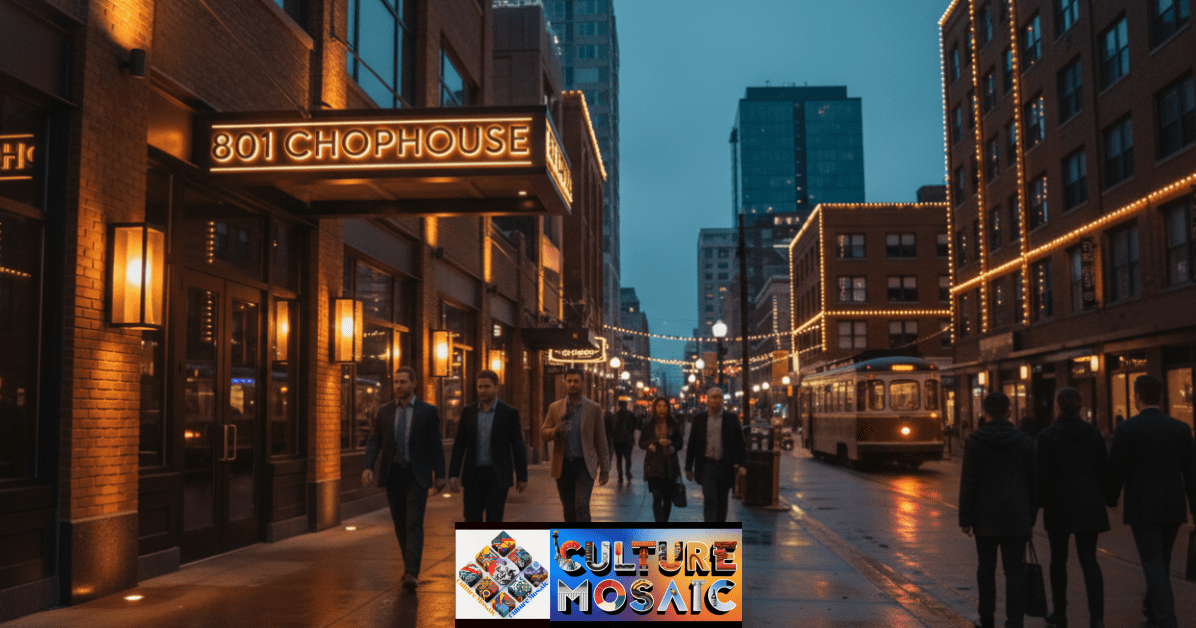
The 801 Restaurant Group did not build a chain. It built rooms. Rooms where Midwest deal-makers sealed contracts over dry-aged prime, where families marked the moments that matter, where the professional class showed up on Friday nights to be somewhere that felt serious. That is a specific kind of gravity that a generic dining concept simply cannot replicate — and cannot be easily rebuilt once it is gone.
That weight matters to culture mosaic because it matters to civic life. The health of a downtown district is not measured only in square footage or tax revenue. It is measured in the institutions that anchor it. The places that make a city feel like itself.
When one of those places files for Chapter 11 protection, the conversation cannot stop at the balance sheet. It has to extend to the community that has, in a very real sense, been quietly subsidizing that institution with loyalty, spending, and identity for years.
The Under-Reported Human Cost of 801 Chophouse Chapter 11

The People Who Never Appear in the Court Filings
I think the most overlooked dimension of any restaurant restructuring is what it means for the people who will never appear in a creditor schedule. The server who has worked the Friday dinner rush for eleven years. The linen supplier three blocks away who built his small business around a single anchor account. The Iowa cattle farmer whose premium cuts have been on the 801 menu since before anyone thought to call it premium.
The Employee Engagement Infrastructure that institutions like 801 Chophouse construct across decades is genuinely difficult to price. It does not appear on any balance sheet. But it is precisely what makes Chapter 11 worth fighting through rather than skipping straight to liquidation.
During Chapter 11 proceedings, employees are classified as priority creditors for unpaid wages. Courts protect that classification with real urgency. Pension obligations are a more layered conversation. But the immediate workforce in an operational Chapter 11 usually keeps working. The shifts continue. The doors stay open.
The Local Supply Chain Effect
A fine dining operation at the scale of 801 Chophouse is a supply-chain anchor. Meat purveyors, specialty produce distributors, wine importers, maintenance contractors, linen and uniform services — all of them carry exposure when a large-volume account files for bankruptcy protection. Unpaid invoices become unsecured claims. Recovery depends on where those vendors sit in the creditor hierarchy and what the reorganization plan ultimately offers them.
This is why the restructuring outcome is not just a legal matter. It is a local economic event with a blast radius that extends well beyond the dining room.
801 Chophouse Chapter 11: The Legal Mechanics That Matter

The Automatic Stay: Court-Ordered Breathing Room
The moment a Chapter 11 petition is filed, something legally significant happens: the automatic stay. Every creditor collection action stops. Lawsuits pause. Foreclosure processes freeze. Repossession attempts halt. This is not a delay tactic — it is a structural feature of the law, designed to give the debtor the space to evaluate its position without the pressure of simultaneous creditor actions compressing every decision.
The debtor-in-possession structure then activates. The 801 Restaurant Group continues to serve guests, pay staff, and run its kitchens — but now does so under court oversight, with a fiduciary duty to creditors baked into every operational decision. First-day motions authorize the ongoing essentials: employee payroll, gift card programs, vendor relationships. Courts approve these quickly because the alternative — immediate operational collapse — damages everyone’s recovery position, including the creditors who would otherwise be pushing hardest.
The Plan of Reorganization: Where the Real Negotiation Happens
The reorganization plan is the document that defines what comes next. It establishes how different classes of creditors will be treated — secured lenders (who hold collateral) generally recover at higher rates than unsecured creditors (trade vendors, landlords carrying unpaid rent, holders of unsecured notes). Creditors vote on the plan. A confirmed plan binds all creditors to its terms, even those who voted against it, provided the court’s legal thresholds are met. This is the cramdown provision, and it is one of the most strategically weighty moments in any Chapter 11 proceeding.
For creditors of 801 Chophouse, the central question is specific: is the reorganized business worth more as a going concern than it would be if the assets were liquidated and sold off? When brand equity is real — and 801’s brand equity is real — the answer is almost always yes. That reality shifts negotiating leverage back toward the debtor.
The 2026 Dining Shift and What It Means for 801 Chophouse Chapter 11
Something has shifted in the way people talk about going out to eat. Flashy excess has lost its cultural purchase. The pandemic, sustained inflation in premium protein categories, and a broader exhaustion with performative consumption have moved the dial sharply. What people want now is craft. Warmth. The sense that someone in the kitchen made a considered choice, not just a profitable one.
This is not unrelated to the broader erosion of shared civic spaces documented in the reporting on Declining Civic Knowledge in US. As communal anchors disappear, the institutions that provide them become proportionally more valuable. A steakhouse is not just a restaurant. Done well, it is a civic room.
The 801 Chophouse brand, if it exits Chapter 11 intact and with clear strategic intent, has a genuine opportunity to reframe itself for this moment. Smaller, tighter menus. Deeper sourcing stories. Interiors that feel settled rather than showy. The financial restructuring and the cultural repositioning can be the same project — and that is precisely what makes this filing more interesting than a standard debt-workout.
Strategic Options for Creditors in the 801 Chophouse Chapter 11 Process
Secured Creditors: Engage Before the Plan Is Drafted
If you hold a secured claim against 801 Restaurant Group assets — real property, commercial equipment, liquor license portfolios — your recovery position is strongest before the reorganization plan is confirmed, not after. DIP financing negotiations and the asset review process are where secured lenders can shape outcomes most directly. Come to the table early. Come with a specific, documented number and a rationale built on asset valuations, not general expectations.
Unsecured Creditors: The Committee Is Your Mechanism
Trade creditors — food suppliers, wine distributors, linen services, smallware vendors — who hold outstanding receivables at the time of filing should move immediately to participate in the unsecured creditors committee if one is constituted. This committee carries formal standing in the proceedings. It receives detailed financial disclosures. It has the ability to actively shape the reorganization plan rather than simply receiving it. The difference between committee participation and passive claim-filing is the difference between having a voice and hoping someone speaks for you.
Gift Card Holders and Diners: Watch the First 72 Hours
Monitor the court docket in the first 48 to 72 hours after filing. First-day orders authorizing ongoing gift card programs tell you definitively whether your balance will be honored. In most operational Chapter 11 cases, they are. But verify. Don’t assume. Courts publish these orders publicly, and they are readable without legal training.
801 Chophouse Chapter 11 and the Cities That Can Shape Its Outcome
There is a version of this story that ends badly. Liquidation. The 801 brand acquired by a private equity firm that hollows it out, retains the name as a licensing asset, and deploys a standardized menu shipped from a central commissary. I have seen it happen to brands with stronger fundamentals than this one. It is not inevitable — but preventing it requires something more than good lawyers.
Local Civic Engagement Strategies matter here in ways that are easy to underestimate. When local business communities, civic organizations, and municipal governments engage with the bankruptcy process — attending creditor meetings, organizing around plans that preserve employment and local presence — they shift outcomes. Courts notice patterns of community investment. Prospective buyers notice community resistance to asset-stripping. Both forms of attention cost money to ignore.
The 801 Chophouse Chapter 11 filing is not only a legal event. It is a civic moment. And how the cities it serves respond will say something real about how seriously they take the institutions that make urban life worth living.
801 Chophouse Chapter 11: Quick Answers for the Community
A scannable reference for the questions that matter most to diners, workers, and local vendors.
| Reader Question | What You Need to Know |
| Is 801 Chophouse closing permanently? | No — Chapter 11 is a restructuring mechanism. Restaurants remain open during proceedings. |
| Are my gift cards still valid? | In most cases, yes. First-day court orders typically authorize continued gift card programs to protect customer goodwill. |
| Will my reservation be honored? | Business continues as normal for diners during Chapter 11 proceedings unless a specific location closes. |
| How long does this process take? | Typically 12 to 24 months from filing to a confirmed reorganization plan, depending on creditor complexity. |
| Can employees lose their jobs? | Employee wages are priority claims. Staff typically continue working. Structural changes may occur later in the plan. |
| Can 801 Chophouse emerge stronger? | Absolutely! Many hospitality brands are turning to Chapter 11 as a strategic move to escape burdensome leases and overwhelming debt. This shift allows them to emerge leaner, more focused, and ready to thrive in a competitive market. It’s a clever way to reinvent themselves and embrace new opportunities! |
 Marcus J. Holloway