
 By Culture Expert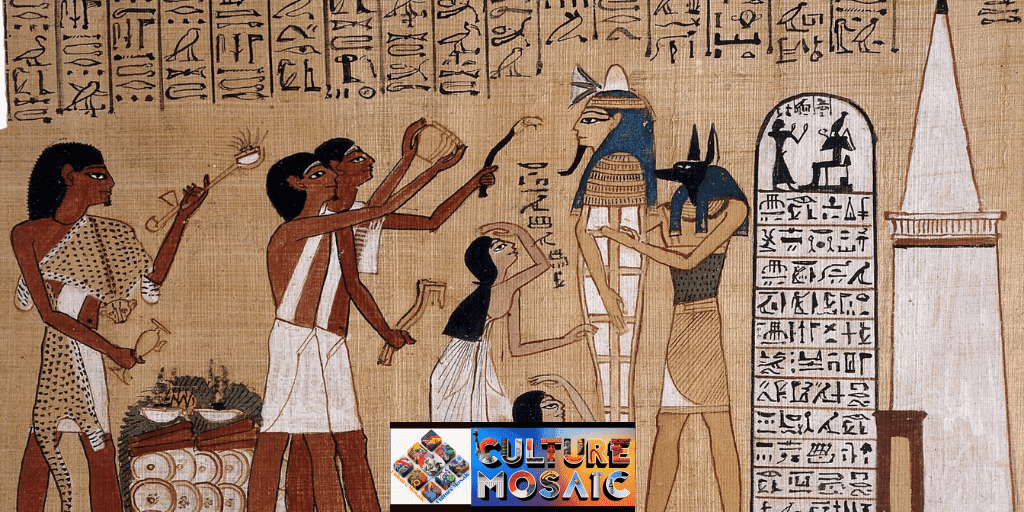
Egyptian Concept of Life After Death: Decoding the Architecture of Eternity
I’ve stood inside enough Egyptian tombs to know that the first thing you notice isn’t the gold. It’s the stillness. A particular kind of weighted silence that feels less like absence and more like something has been held there, intentionally, across three thousand years. Most visitors assume ancient Egyptians were preoccupied with death. That’s the wrong read entirely.
The Egyptian concept of life after death was not a morbid fascination with dying. It was a fierce, sophisticated insistence on living—on ensuring that consciousness, identity, and moral memory survived the biological interruption that we call death. Every tomb painting, every spell carved into a sarcophagus lid, every meticulously bandaged finger points toward the same idea: existence is worth fighting for, even—especially—after you’re gone.
Death, in this framework, was an interruption. A threshold. Cross it with the right preparation, the right ritual architecture, the right moral record, and you would emerge on the other side as an Akh—an eternal, transfigured being dwelling among the imperishable stars. Fail the crossing, and you would simply cease to be. Not punishment. Erasure.
The stakes could not have been higher. Which is exactly why the Egyptians built one of the most intricate afterlife systems any civilisation has ever devised. To understand it, you have to start with the self.
The Anatomy of the Soul: Five Components, Not One
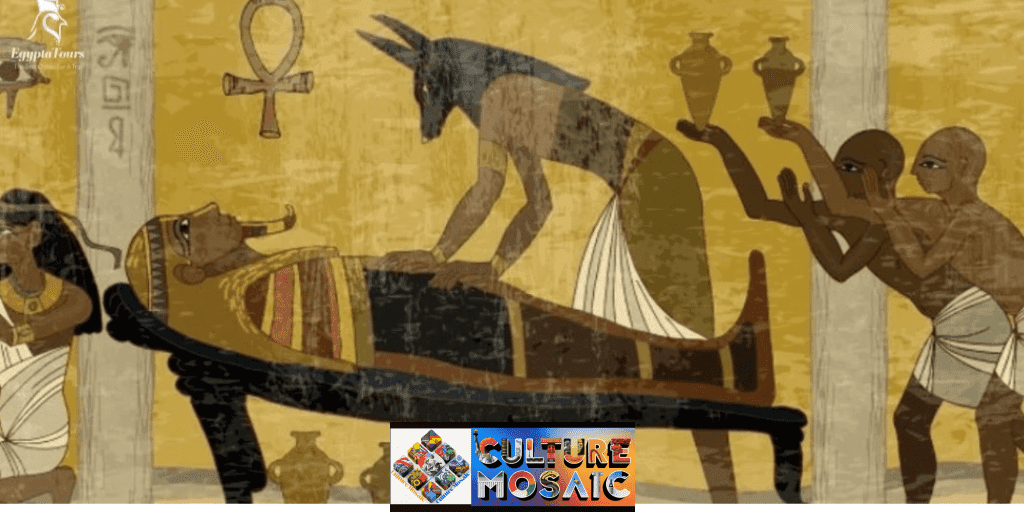
Modern Western thinking tends to treat the soul as a single, unified thing. The ancient Egyptians found that reductive. They believed the self was a composite—a cluster of five distinct spiritual elements that together constituted a complete human being. Each component had its own function, its own vulnerability, and its own role in the drama of the Egyptian concept of life after death.
| Component | Egyptian Name | Function |
|---|---|---|
| The Heart | Ib | Moral record; the witness at divine judgment |
| The Life Force | Ka | Vital spark; requires food offerings after death |
| The Personality / Soul | Ba | Mobile spirit; travels by day, returns to body by night |
| The Shadow | Sheut | Inseparable presence; a spiritual silhouette |
| The True Name | Ren | Secret identity; to speak it aloud was to sustain existence |
What’s striking here isn’t just the complexity—it’s the practicality. The Ba needs to travel. The Ka needs feeding. The Ren needs protection from being spoken by enemies. This wasn’t poetic abstraction; it was a working system, and the tomb was its infrastructure.
The Ib: Your Heart Is Your Witness
Of all five components, the heart—the Ib—carried the most weight. Literally. Egyptians believed it was the seat of intellect, memory, and moral character. When you stood before Osiris, your Ib would speak on your behalf. It would either corroborate your claims to have lived virtuously, or it would betray you.
This is why embalmers left the heart inside the chest during mummification while discarding the brain entirely. The brain, in Egyptian thinking, was essentially a packing material. The heart was the whole point.
The Ka and the Problem of Hunger
The Ka—the life force, the vital double—was the component that required the most maintenance after death. Without regular food offerings, the Ka would weaken and eventually dissipate. This explains the extraordinary provisioning inside elite tombs: bread, beer, beef, roasted fowl, linen, oils, wine, and sometimes entire model boats with miniature crews ready to sail the deceased to their harvest.
Poorer families couldn’t sustain daily offerings, so they relied on written formulas—the Offering Formula—that magically activated sustenance from the text itself. An ingenious workaround.
Mummification: Spiritual Engineering, Not Embalming
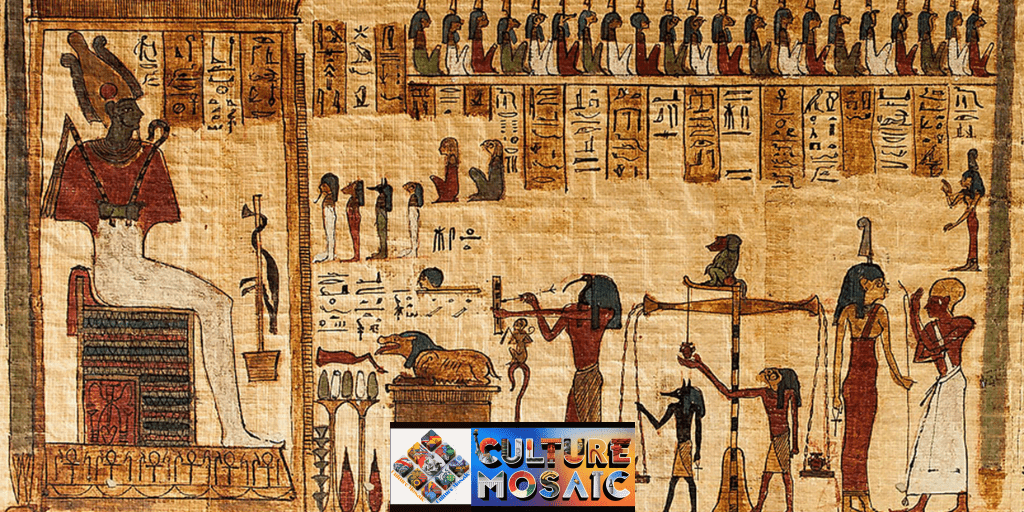
Because the Ka and Ba were both tethered to the physical body—they needed to recognise it, return to it, recharge inside it—the Egyptian concept of life after death placed enormous weight on preserving the corpse. Let it decay, and the soul would lose its anchor. The Egyptians called this catastrophe the second death: not just biological death, but total spiritual annihilation. There would be nothing left.
Mummification, then, was not medical. It was liturgical. A sacred process lasting exactly seventy days, carried out by specialist priests in a purification tent called the Ibu, following procedures handed down and refined over two millennia.
The Seventy-Day Process
- Evisceration and organ preservation (Days 1–15): Internal organs were removed through a flint-blade incision in the left flank. The lungs, liver, stomach, and intestines were treated separately and stored in four Canopic Jars, each protected by one of Horus’s four sons. The brain was drawn out through the nostrils with a hook and discarded. The heart stayed.
- Natron dehydration (Days 16–50): The body was packed inside and out with natron—a naturally occurring salt-carbonate mixture found in dry lake beds. For approximately forty days, the natron drew every trace of moisture from the tissues, leaving a hard, sterile, durable physical structure.
- Resin, oils, and wrapping (Days 51–70): The desiccated body was rubbed with antibacterial tree resins and aromatic oils, then wrapped in hundreds of yards of fine linen. Priests inserted protective amulets—gold djed pillars, green jasper heart scarabs, carnelian tyet knots—between the linen layers at specific anatomical points, each one designed to guard against a particular metaphysical threat during the afterlife journey.
For the full scholarly picture on ancient Egyptian funerary papyri and their relationship to physical preservation, the funerary papyri collections at Culture Mosaic offer a genuinely unsettling window into how these textual and material systems intersected—papyri recovered from within the wrappings themselves, speaking directly from the moment of interment.
The Duat: A Geography of the Underworld
After being buried, the deceased did not simply awaken in paradise; they had to journey there first. Their path led through the Duat, a complex mythological landscape that was part underworld, part sky, and partly something that doesn’t easily fit into either category.
The Duat was not a gentle place. Ancient texts describe rivers of fire, boiling lakes, walls of solid flint, and a succession of guarded gates, each defended by a monstrous entity armed with knives who demanded the correct password before stepping aside. Miss a password, stumble at a gate, and the journey ended badly.
The Book of the Dead: A Practical Survival Guide
The solution was characteristically Egyptian: bureaucratic, meticulous, and written down. Elite burials included a personalised papyrus scroll known as the Book of the Dead—more accurately translated as the Spells for Coming Forth by Day. The scroll was not scripture in any devotional sense. It was operational.
It contained 192 recorded spells, arranged in rough sequence to match the stages of the Duat journey. Spell 125—the most famous—provided the script for the Hall of Two Truths. Other spells offered the passwords to specific gates, protective invocations against particular demons, and instructions for transforming into different animals when evasion was tactically preferable to confrontation.
Wealthier clients commissioned custom versions with their name already inscribed. The working class used mass-produced versions with blank spaces left for the buyer’s name. Even in the afterlife, the Egyptians had a tiered service model.
The Chamber of Dual Realities: The Heart’s Judgment Day
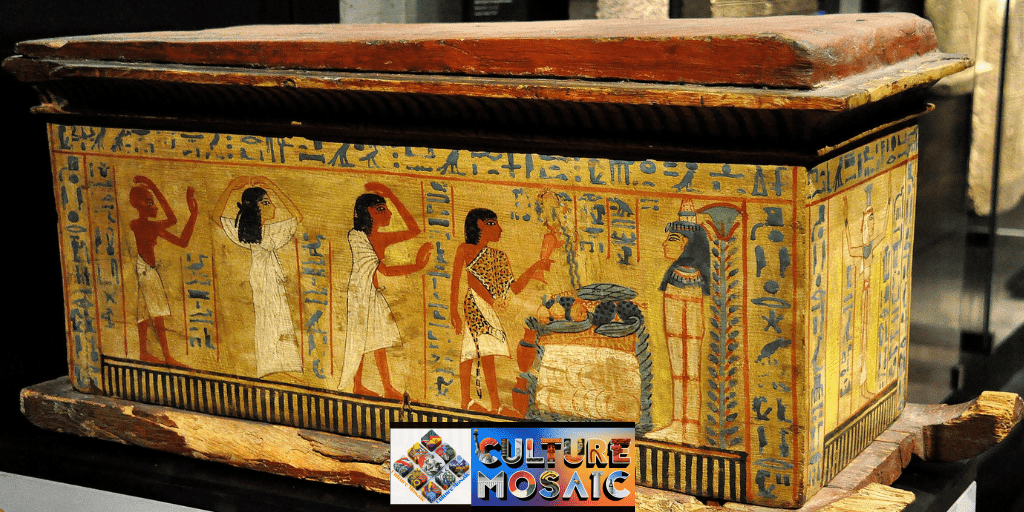
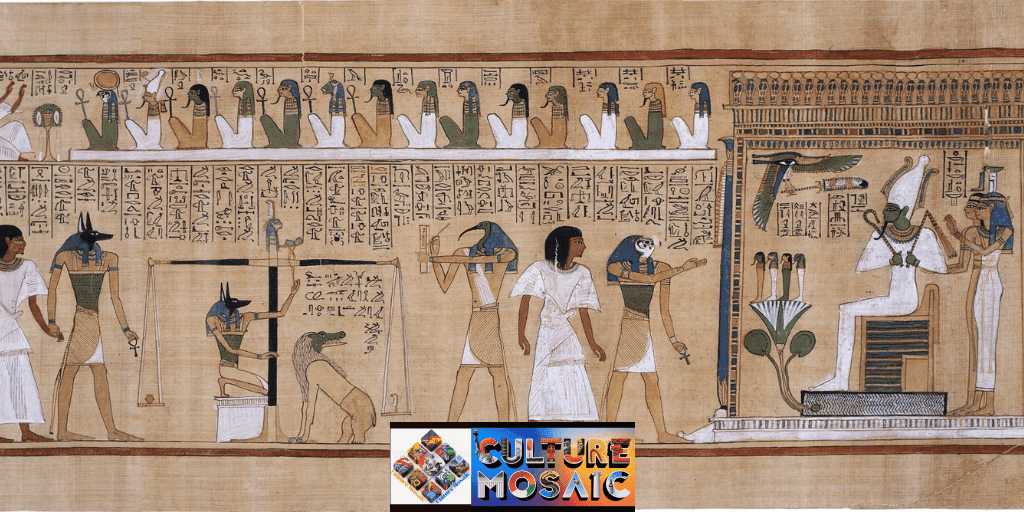
The culminating ordeal of the Egyptian concept of life after death was a judgment scene that has fascinated scholars, artists, and onlookers for centuries. In the Hall of Two Truths—a vast, columned chamber deep within the Duat—the deceased faced Osiris, the lord of the underworld, and his assembled court of forty-two divine judges.
The ceremony had two parts.
The Negative Confession
First, the deceased recited the Negative Confession: a list of forty-two sins they had not committed, addressed to each of the forty-two judges by name. ‘I have not stolen. I have not killed unjustly. I have not spoken lies. I have not caused grief to others. I have not falsified the scale.’ The specificity of the list tells you exactly what ancient Egyptian society considered transgressive—which is to say, it reads as a surprisingly modern ethical document.
The Scale of Anubis
Then came the scale. Anubis, the jackal-headed god of embalming, placed the deceased’s Ib on one side of a golden balance. On the other side sat the feather of Ma’at—the cosmic principle of truth, justice, and balance that underpinned all of Egyptian civilisation.
Thoth, the ibis-headed god of wisdom and record-keeping, stood to one side with a reed pen, prepared to write down the verdict. Forty-two divine assessors watched. And crouching just behind the scale was Ammit—a composite monster, part crocodile, part lion, part hippopotamus—waiting.
If the heart balanced perfectly against the feather, the individual was declared ma’a kheru—’true of voice.’ Horus led them into the presence of Osiris, and they were granted entry to Aaru, the Field of Reeds.
If the heart was heavier than the feather—weighted down by unresolved wrongdoing, unacknowledged cruelty, and moral imbalance—Ammit lurched forward and swallowed it. The soul was erased. It was not condemned to a hell but simply gone, leaving no trace.
“The Egyptians did not fear hell. They feared nothing—the absolute cessation of being, scrubbed from the record of existence.”
— Dr. Amara Osei
The Field of Reeds: What Paradise Actually Looked Like
Aaru—the Field of Reeds—was not a cloudlike abstraction. The Egyptians were too practical for that. Paradise, in their imagining, looked exactly like the Nile Delta at its most abundant: wide rivers, lush fields of emmer wheat and flax, date palms, waterfowl, warm light. Everything you loved about earthly life, minus the disease, famine, conflict, and grief.
The dead would farm. They would sail boats. They would sit with family members who had crossed over before them. The Egyptian concept of life after death wasn’t a vague spiritual reward—it was a recognisable, detailed continuation. A second Nile, without the flood damage.
Shabti Dolls and the Logistics of Eternity
There was, apparently, one catch. In Aaru, the deceased might be called upon to perform agricultural labour on behalf of the divine estate. This prospect troubled even the virtuous, which is why tombs were furnished with Shabti dolls—small mummiform figurines, sometimes hundreds of them, each one inscribed with a spell that would animate it to perform the work in the deceased’s place.
Elite tombs contained 365 Shabtis, one for each day of the year, plus thirty-six overseers to manage them. The Egyptians didn’t just imagine eternity; they staffed it.
Class, Access, and the Democratic Afterlife
One of the persistent misconceptions about the Egyptian concept of life after death is that it was exclusively available to pharaohs and the wealthy elite. The archaeological record tells a more interesting story.
During the Old Kingdom, a form of divine transformation called the Osirian resurrection was reserved for royalty. By the Middle Kingdom, a process scholars call the ‘democratisation of the afterlife’ had occurred: funerary texts, rituals, and the promise of Aaru became accessible to any Egyptian who could demonstrate moral worthiness—regardless of social class.
Working-class burials in the desert relied on the hot, dry sand to preserve the body naturally—a form of mummification that predates the elaborate priestly procedures by thousands of years. These individuals depended on communal religious rites, oral spells, and the basic fairness of Osiris’s scales. The heart, after all, was the great equaliser. No amount of wealth could tip it if it was genuinely light.
Osiris, Isis, and the Mythological Foundation of Resurrection
The Egyptian concept of life after death had a theological anchor story: the myth of Osiris. Osiris was a good king who was murdered by his jealous brother Set, dismembered, and scattered across Egypt. His wife Isis gathered the pieces, reassembled him, and briefly resurrected him long enough to conceive their son Horus. Osiris then descended to rule the underworld as its eternal lord.
This myth was not just theology—it was a template. The deceased was ritually identified with Osiris throughout the mummification process. Priests addressed the corpse as ‘the Osiris [name].’ The resurrection of Osiris became the promise extended to every person who underwent the proper preparation: you can be put back together. You can continue.
The Role of Isis Magic in Funerary Ritual
Isis, whose magical knowledge was considered without equal in the Egyptian pantheon, was the patron goddess of mummification. Texts describe her and her sister Nephthys as kite-birds, hovering over the body, breathing life back into it with the wind from their wings. Amulets depicting Isis in this winged form were among the most commonly placed protective objects in the linen wrappings—a material reminder that the most powerful magical intelligence in the cosmos was watching over the crossing.
Canopic Jars and the Preservation of the Whole Self
The four Canopic Jars deserve more than a footnote. Each jar housed one of the major organs and was protected by one of the four sons of Horus—Imsety (liver), Hapy (lungs), Duamutef (stomach), and Qebehsenuef (intestines). The jar lids were carved as the heads of these four protective deities: human, baboon, jackal, and falcon respectively.
This wasn’t just hygiene.It was a theological statement: the body was kept whole across multiple vessels, distributed but protected, and ready for reconstitution when the soul needed it. The Egyptian concept of life after death insisted on the integrity of the complete self. Nothing could be lost. Everything had to be accounted for.
The Pyramid as Resurrection Machine
The pyramids are the most visible expressions of the Egyptian concept of life after death, and also the most misunderstood. They were not simply tombs. They were engines—precisely oriented, architecturally calibrated devices designed to facilitate the pharaoh’s transformation into a star.
The Pyramid Texts, the oldest religious corpus in the world, are carved into the burial chambers of Fifth and Sixth Dynasty pyramids at Saqqara. These spells originated centuries before the Book of the Dead. Many of them address the pharaoh’s ascent directly: spells for crossing the sky, for joining the imperishable circumpolar stars, for becoming one with Ra’s solar barque on its eternal journey.
Stellar vs. Solar Afterlife Traditions
There’s an important distinction within Egyptian funerary theology that’s often collapsed into a single narrative. Early royal tradition emphasised a stellar afterlife—joining the circumpolar stars that never set, becoming genuinely imperishable. Later traditions, particularly from the New Kingdom, emphasised a solar afterlife—the deceased joining Ra’s barque and cycling through the underworld each night before rising again at dawn.
These two traditions coexisted, sometimes in the same tomb, sometimes in the same text. The Egyptians were not troubled by this apparent contradiction. They were building a system capacious enough to hold multiple truths simultaneously.
Funerary Literature Beyond the Book of the Dead
The Book of the Dead tends to dominate popular accounts of the Egyptian concept of life after death, but it was one text in a longer lineage of funerary literature.
- Pyramid Texts (c. 2400 BCE): The oldest religious corpus in the world. Carved inside Old Kingdom royal pyramids at Saqqara.
- Coffin Texts (c. 2100 BCE): Adaptations of the Pyramid Texts, painted inside Middle Kingdom coffins, extending elite afterlife access beyond royalty.
- Book of the Dead (c. 1550 BCE): Papyrus scrolls, highly personalised, carried by New Kingdom individuals across the social spectrum.
- Amduat (c. 1500 BCE): ‘That Which is in the Underworld’—a nocturnal map of the twelve hours of the night through which Ra’s solar barque travelled, available primarily in royal tombs.
Each text was a refinement, an expansion, a redistribution of access. The through-line was constant: the Egyptian concept of life after death required knowledge, and knowledge had to be written down.
Ma’at: The Cosmic Law That Made the Afterlife Possible
Ma’at is often translated as ‘truth’ or ‘justice,’ but neither word quite captures it. Ma’at was the principle of cosmic rightness—the correct order of things, the harmony that held the sun on its path and the Nile within its banks. The gods depended on Ma’at as much as humans did.
Living in accordance with Ma’at wasn’t just a moral aspiration. It was a survival strategy. Every honest transaction, every just ruling, every act of charity or restraint added weight to the Ib in the right direction—keeping it light enough to balance against the feather. The Egyptian concept of life after death was, at its core, an ethical system.
This is the thing that most surprises students encountering it for the first time: the ancient Egyptians built a cosmological framework in which personal morality had direct, measurable, metaphysical consequences. The scale doesn’t lie. The feather doesn’t negotiate.
The Opening of the Mouth: Animating the Dead
One of the most important rituals in the entire Egyptian funerary sequence was the Opening of the Mouth ceremony, performed at the tomb entrance on the day of burial. A priest in the mask of Anubis touched the mummy’s face with a series of ritual implements—including a sacred adze, a serpent-headed blade, and a finger of the deity—reciting spells that reactivated the senses.
The ritual restored the deceased’s ability to breathe, eat, drink, speak, and perceive—the basic functions the Ba needed to operate in the afterlife. Without it, even a perfectly mummified body with a full tomb inventory was spiritually inert. The Opening of the Mouth was the ignition.
Why Tomb Paintings Worked as Real Provision
Here’s something that I think gets underplayed in popular accounts: the Egyptians believed that two-dimensional images possessed genuine ontological force. A painted jar of beer was not a symbol of beer. It was beer, made real by the ritual context of the tomb and the words inscribed beside it.
This is why tomb walls are covered not just with scenes of offering, but with scenes of daily life—hunting, fishing, harvesting, music, feasting. Each scene was a form of magical insurance. If the material offerings ran out, the images would sustain the Ka indefinitely. The painting was the provision.
Amulets: Portable Magic for the Dead
Between the linen layers of a mummy, priests could place hundreds of individual amulets, each one targeting a specific vulnerability in the afterlife journey. The heart scarab was the most critical—a large green jasper beetle inscribed on the reverse with Spell 30B from the Book of the Dead, commanding the heart not to speak against its owner during judgment.
Other commonly found amulets include the djed pillar (stability and endurance), the tyet knot associated with Isis (protection and blood magic), the was sceptre (power), the ankh (life), and the wedjat eye of Horus (healing and protection). Together, they constituted a full-body spiritual armour system, layered on at specific anatomical points.
The Culture Mosaic archive on ancient Egyptian material culture traces how these amulet traditions evolved from the Predynastic period through to the Late Period—a fascinating record of which anxieties persisted and which were resolved over three thousand years of religious development.
The Legacy of the Egyptian Concept of Life After Death
It’s hard to overstate how thoroughly the Egyptian concept of life after death shaped subsequent religious thought across the Mediterranean world. The emphasis on moral accountability, post-mortem judgment, and bodily resurrection reappears in Hellenistic mystery cults, in early Jewish thought, in Christianity, and in Islam—not always traceable to direct Egyptian influence, but shaped by centuries of cultural contact along trade routes, military campaigns, and intellectual exchange.
The figure of Osiris—murdered, dismembered, resurrected—is one of the oldest resurrection narratives in recorded human history. The moral scales of Anubis predate by a millennium the similar weighing imagery found in later traditions. The Egyptian concept of life after death was not just a belief system. It was a cultural export that changed how much of the world thinks about death, accountability, and what comes next.
What Modern Egyptology Has Revised
Contemporary scholarship has substantially revised older readings that portrayed Egyptian religion as static and monolithic. We now understand it as a dynamic, regionally varied, historically contested tradition with significant internal debates. Different priesthoods in different cult centres held genuinely different views on the nature of the soul, the geography of the Duat, and the mechanics of resurrection.
The Egyptian concept of life after death was, in other words, a living theology—one that argued with itself across centuries while maintaining certain core commitments: the soul is composite, the body matters, moral conduct has cosmic consequences, and existence is worth preserving beyond every apparent ending.
Practical Tips for Researchers and Enthusiasts
If you’re approaching the Egyptian concept of life after death as a researcher, a student, or someone who simply finds it gripping, here are five orienting principles.
- Read primary sources alongside secondary scholarship. The Book of the Dead in translation (Faulkner’s edition remains authoritative) is genuinely accessible and will reframe everything you’ve read about it secondhand.
- Visit collections, not just images. The physical scale and presence of a mummy or a Canopic chest doesn’t translate to photographs. The British Museum, the Louvre, and the Egyptian Museum in Cairo hold collections that reward extended examination.
- Be precise about dating. ‘Egyptian’ spans three thousand years. Funerary practice in the Old Kingdom is substantially different from New Kingdom or Late Period practice. Always ask: which dynasty, which region, which social class?
- Distinguish emic from etic readings. Emic means how Egyptians understood their own system. Etic means how outside scholars have categorised it. Both are useful; conflating them is where interpretive errors enter.
- Follow the amulets. The amulet typology is one of the clearest windows into what Egyptians were actually anxious about at different periods. Which protective symbols proliferate when, and where, tells you a great deal about lived religious experience versus official theology.
Frequently Asked Questions: The Egyptian Concept of Life After Death
What is the Egyptian concept of life after death?
The ancient Egyptian concept of life after death held that death was a transition, not an ending. With the right ritual preparation—mummification, proper burial, and moral integrity—a person’s soul could survive divine judgment and enter the Field of Reeds, an eternal paradise mirroring the Nile Delta at its most abundant.
Why was mummification so important to the Egyptian afterlife?
Because two key components of the soul—the Ka and the Ba—were both tethered to the physical body and needed to recognise it to function. Without a preserved body, the soul had no anchor. Egyptians called the alternative the ‘second death’: not damnation, but complete spiritual erasure.
What happened during the Weighing of the Heart?
In the Hall of Two Truths, Anubis placed the deceased’s heart on a golden scale balanced against the feather of Ma’at. A balanced heart meant entry to paradise. A heart heavier than the feather was devoured by Ammit—part crocodile, part lion, part hippopotamus—resulting in total annihilation.
Could ordinary Egyptians access the afterlife, or only pharaohs?
By the Middle Kingdom, the afterlife had been ‘democratised’—access was no longer restricted to royalty. Working-class Egyptians relied on natural desert mummification, communal religious rites, and the fundamental fairness of Osiris’s scales. The heart, as the sole evidence of moral character, was the great equaliser.
What was the Field of Reeds?
Called Aaru in ancient Egyptian, the Field of Reeds was the paradise awaiting those who passed judgment. It looked like the Nile Delta at peak abundance: wide rivers, lush wheat fields, date palms, warm light, and the company of loved ones—but free of hunger, disease, and sorrow. A very Egyptian vision of eternity: practical, familiar, and worth working for.
Five Scholarly Best Practices for Each Key Question
1. Studying the Egyptian Concept of Life After Death
- Always contextualise texts by dynasty and region—practices in Memphis differed from Thebes.
- Cross-reference funerary texts with archaeological evidence rather than treating either as definitive.
- Use Faulkner’s Book of the Dead translation for primary-source grounding.
- Track the development from Pyramid Texts through Coffin Texts to Book of the Dead as an evolving, democratic arc.
- Note regional deity variants: what Osiris meant in Abydos differed from his role in Memphis’s theological system.
2. Understanding Mummification’s Spiritual Logic
- Treat mummification as liturgical, not medical—each stage had a corresponding textual spell.
- Study the Canopic Jar iconography to understand the four sons of Horus and their protective assignments.
- Read the Opening of the Mouth ceremony texts to understand what mummification was meant to ‘activate.’
- Note that natron was not just practical—its solar associations made it theologically appropriate.
- Recognise that simpler burials (natural sand mummification) operated within the same theological framework as elite procedures.
3. Interpreting the Weighing of the Heart
- Read Spell 125 of the Book of the Dead in full—it is the complete script for the Hall of Two Truths, including the precise wording of the Negative Confession.
- Study all 42 Negative Confession declarations as an ethical archaeology of New Kingdom Egyptian society: what people swore they had not done tells you exactly what they feared, and what their neighbours could accuse them of.
- Examine Ammit’s composite anatomy carefully—crocodile, lion, hippopotamus. Each animal was an apex predator in the Egyptian symbolic system. The beast was not arbitrary; it was designed to be the most terrifying thing an Egyptian mind could assemble.
- Understand Ma’at not just as ‘truth’ but as the active structural principle sustaining cosmic order. Without Ma’at, the sun would not rise, the Nile would not flood on schedule, and the gods themselves would lose coherence. The feather was not a metaphor; it was the whole system in miniature.
- Compare this judgment scene with later Abrahamic traditions—particularly the Islamic concept of the Mizan (the scale) and the Christian Last Judgment—to trace the extraordinary deep history of moral accountability theology across three millennia of Mediterranean religious exchange.
4. Approaching Class and Afterlife Access
- Study the Democratisation of the Afterlife as a documented historical process tied to political decentralisation in the Middle Kingdom.
- Read coffin texts from non-royal burials to see how theological content was adapted for wider use.
- Examine predynastic desert burials to understand natural mummification before the priestly system formalised.
- Note that the Offering Formula was a mass-access substitute for expensive physical tomb provisioning.
- Resist anachronistic class readings—Egyptian social stratification was real, but the afterlife system genuinely insisted on moral rather than economic qualification.
5. Researching the Field of Reeds and Egyptian Paradise
- Read Book of the Dead Chapter 110 for the fullest textual description of Aaru.
- Study the Amduat for the solar underworld tradition that ran parallel to the Osirian Field of Reeds.
- Examine Shabti doll inscriptions—the spells on them are among the most direct surviving expressions of what Egyptians expected paradise to involve.
- Compare the Field of Reeds with Mesopotamian underworld geography to understand what makes the Egyptian vision unusually optimistic.
- Trace how Aaru imagery influenced Hellenistic Elysium traditions in later Greek religious thought.
Further Reading and Resources
For extended coverage of ancient Egyptian funerary culture and material heritage, explore the full archive at Culture Mosaic. Our deep-dive into the ancient funerary papyri recovered from Egyptian mummy wrappings offers a detailed examination of one of the most revealing intersections of textual and physical preservation in the archaeological record—texts meant to travel with the dead, found still folded inside the linen.
For the foundational academic overview of the Egyptian concept of life after death, the Wikipedia article on Ancient Egyptian Afterlife Beliefs provides a solid entry point before moving to primary scholarship.
Recommended scholarly reading: R. O. Faulkner’s The Ancient Egyptian Book of the Dead; Jan Assmann’s Death and Salvation in Ancient Egypt; and John Taylor’s Journey Through the Afterlife: Ancient Egyptian Book of the Dead (British Museum Press). Each approaches the material from a different disciplinary angle—textual, anthropological, and archaeological respectively—and together they give you the full picture.
 Dr. Marcus Hale