
 By Marcus J. Holloway
QUICK SUMMARY
- Real Structural Movement: Social Change in Modern Society refers to tangible, durable shifts in how humans organize work, family life, civic duty, and governance—not temporary internet trends.
- Three Interlocked Drivers: Macro transformations are driven simultaneously by rapid technological acceleration, shifting economic realities, and evolving cultural norms.
- 5 vs. 6 Classifications: While traditional sociology outlines five primary models of societal movement, modern analysis recognizes technological disruption as a distinct sixth category.
- Street-Level Agency: While sweeping global forces shape our environment, localized civic participation remains the single most powerful lever individuals have to direct how these changes unfold locally.
I still remember the moment the reality of modern transformation hit me with absolute clarity. I was standing outside a corner shop in a small industrial town, watching a teenager pay for snacks with a quick wave of their phone while an older gentleman carefully counted out coins from a leather purse. Two generations, one counter, one shared space—and a silent cultural divide you could almost touch. That brief encounter captured macro-level transformation in miniature: it wasn’t an abstract textbook concept, but the lived, everyday reality of a society undergoing rapid structural realignment.
Here is the core challenge of our era: millions of people experience macro shifts as forces happening to them rather than around them. Household budgets stretch differently under changing labor models, long-time neighbors feel increasingly distant, and community cohesion can feel fragmented by digital boundaries. If you have felt disconnected by how quickly civic norms have shifted over the past decade, you are not imagining it.
The encouraging reality is that societal movement follows observable patterns. When we understand the underlying mechanics driving Social Change in Modern Society, we cease to be helpless bystanders and regain our sense of civic agency.
What Is Social Change in Sociology?
Stripped of dry academic jargon, what is social change? At its core, it is any lasting alteration in how a collective group structures its social institutions, cultural values, and daily behaviors—spreading widely enough to establish a new normal rather than remaining an isolated anomaly.
When scholars examine what is social change in sociology, the definition focuses on systemic structural shifts over time. Sociologists analyze changing family dynamics, economic stratification, evolving labor standards, and modified power structures.
It is vital to distinguish structural transformation from individual choice:
- Individual Choice: A single professional deciding to leave an office job to work independently.
- Structural Social Change: Millions of professionals shifting to remote work simultaneously, forcing commercial real estate markets, labor laws, municipal transit networks, and municipal tax systems to adjust permanently.
Social change occurs when millions of private, everyday decisions cross a critical tipping point to create a new collective landscape.
What Are the Key Drivers of Social Change?
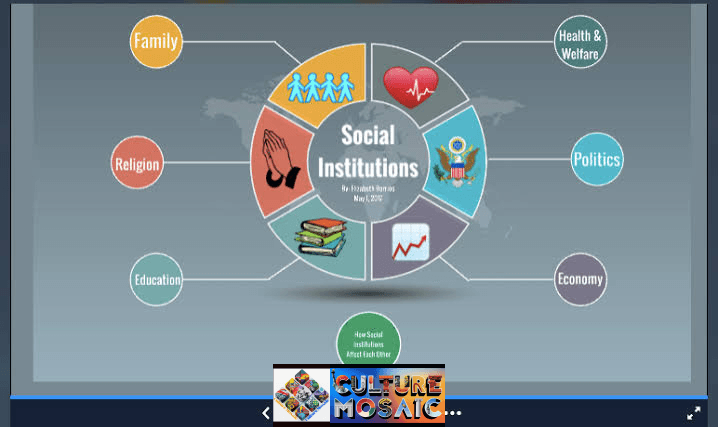
While theoretical models vary, three core forces drive the vast majority of societal shifts today. Importantly, these forces rarely act in isolation; they continuously reinforce each other.
1. Technological Causes
Technology acts as the primary accelerator in contemporary life. Smartphones, algorithmic media, and artificial intelligence do not merely offer faster tools—they redefine human interaction, dating norms, market structures, and political deliberation. Today, tools enabling Hyperlocal Digital Deliberation allow neighborhood groups to organize, deliberate, and coordinate solutions within hours, bypassing legacy institutional bottlenecks.
2. Economic Causes
Economic realities quietly reshape structural behavior. The continuous transition toward service- and technology-oriented economies alters regional housing markets, urbanization patterns, and workforce demographics. Higher costs of living have led younger demographics to adjust household formation timelines. Furthermore, adults are continually adapting through alternative educational paths and ongoing skill acquisition to remain resilient in shifting labor markets.
3. Cultural Causes
Cultural values evolve gradually, but their long-term impact on daily life is profound. Shifting expectations surrounding work-life balance, gender roles, and community obligations mean modern households function under entirely different assumptions than those of previous decades. Even fundamental social habits—from local volunteering to family mealtime routines—have evolved as individuals actively re-evaluate how to maintain interpersonal connection despite demanding schedules.
| Driver Dimension | Primary Catalyst | Real-World Impact on Daily Life |
|---|---|---|
| Technological | Automation, hyper-connectivity, AI platforms | Accelerated communication, altered cognitive habits, remote collaboration |
| Economic | Transition to knowledge economies, housing costs | Delayed household formation, shifting career trajectories, urban mobility |
| Cultural | Evolving values around autonomy and community | Redefined social roles, changing civic expectations, new forms of activism |
What Are the Five Types of Social Change? (And the Sixth)
Classical sociological literature routinely categorizes macro movements into five distinct frameworks. When evaluating what are the five types of social change, traditional academic research outlines the following:
- Evolutionary Change: Slow, multi-generational shifts, such as multi-decade demographic aging or gradual secularization.
- Revolutionary Change: Rapid, sweeping transformations of political, legal, or social systems.
- Cyclical Change: Recurring patterns of expansion, realignment, and reorganization (similar to long-term economic cycles).
- Structural Change: Fundamental updates to how core societal institutions function, such as the rise of dual-income family structures.
- Cultural Change: Shifting social beliefs, ethical frameworks, and behavioral expectations across generations.
The Modern Sixth Category: Technological Structural Shift
Contemporary sociologists frequently expand this taxonomy. When analyzing what are the six types of social change, modern scholars isolate Technological Change as its own distinct category rather than treating it merely as a sub-component of structural evolution. Because digital networks, artificial intelligence, and automated systems modify human communication and cognition at unprecedented speeds, isolating technology offers a much clearer analytical lens.
What Did Karl Marx Say About Social Change?
Understanding contemporary sociological frameworks often requires examining their historical roots. A frequent reference point in academic inquiry is: What did Karl Marx say about social change?
Marx argued that social change is fundamentally driven by conflict between economic classes—specifically the tension between those who own the means of production (the bourgeoisie) and those who provide labor (the proletariat). In Historical Materialism, economic structures form the “base” of society, which dictates the “superstructure” (laws, culture, religion, and governance).
While modern sociologists incorporate broader cultural and technological factors beyond strict class struggle, Marx’s core insight remains influential: economic transformations inevitably force profound shifts in social power, institutional rules, and daily human relationships.
Contemporary Examples of Social Change Happening Today
Theory provides structure, but direct observation reveals how these forces impact our lives. If you are searching for practical social change in modern society examples—or trying to answer what are the social changes happening in society today—four major shifts stand out:
- Hybrid and Distributed Work: Flexible work environments represent a permanent structural shift in employment markets, directly influencing urban planning, public transport reliance, and local commercial districts.
- Evolving Family and Household Dynamics: Average household sizes continue to decline while marriage ages rise globally, leading to diverse household models that diverge from traditional 20th-century norms.
- Institutional Shift toward Local Action: While trust in large national institutions has faced headwinds, citizens are re-channeling their focus toward neighborhood resilience. People are actively adopting Local Civic Engagement Strategies to make a direct, tangible impact in their immediate communities.
- AI Integration and Human Cognition: Rapid advancements in generative AI and automated systems are prompting widespread public discussions regarding job roles, critical thinking habits, and authentic human interaction.
The 7 C’s of Social Change
For individuals and grassroots groups seeking to lead positive transformations, understanding theoretical causes is only half the equation. The 7 C’s of Social Change (developed under the Social Change Model of Leadership Development) outline the core values necessary to create meaningful, value-driven impact:
- Consciousness of Self: Awareness of the beliefs, values, and attitudes that motivate one to take action.
- Congruence: Thinking, feeling, and behaving with consistency, authenticity, and honesty toward others.
- Commitment: The passion, intensity, and persistence that drives collective energy forward over time.
- Collaboration: Working together across diverse perspectives to multiply impact and foster shared ownership.
- Common Purpose: Working with shared aims and values towards mutually agreed-upon community goals.
- Controversy with Civility: Welcoming diverse viewpoints and addressing disagreements with respect and open dialogue.
- Citizenship: Active civic responsibility that connects individual action to broader community well-being.
Why Your Local Street Still Matters
Rapid societal shifts do not render individual effort irrelevant; they make localized engagement far more critical. Much of today’s meaningful social adaptation occurs at the street level, well below the radar of national headlines.
Active civic involvement is evolving through innovative neighborhood approaches. Communities are developing strong Civic Literacy and putting Ethical Grassroots Advocacy into practice to address local needs.
Understanding the true Value of Civic Participation reinforces a simple truth: macro trends do not dictately determine our local reality. Participating in local initiatives, engaging in community dialogue, and building strong neighborhood bonds remain the primary ways individuals shape how broader societal transformations take root in daily life. Explore the broader work at Culture Mosaic to discover tools for strengthening local community resilience.
Frequently Asked Questions
What is social change in sociology, in the simplest possible terms?
It is a broad, lasting transformation in how a society structures its institutions, cultural norms, and shared behaviors. Sociologists distinguish it from personal individual decisions because it is collective, structural, and durable over time.
What are the main types of social change?
Traditional sociological frameworks identify five main types: evolutionary, revolutionary, cyclical, structural, and cultural. Contemporary research typically adds technological change as a distinct sixth category to account for modern digital transformation.
What are some real-world examples of social change occurring right now?
Key current examples include the global transition toward hybrid work, changing household demographics, the integration of AI into daily workflows, and the rise of digital tools for local civic coordination.
What did Karl Marx contribute to the study of social change?
Karl Marx posited that social change is primarily driven by economic factors and class conflict. He argued that shifts in how goods and services are produced inevitably transform societal laws, cultural values, and political power structures.
How should I structure a “Social Change in Modern Society” essay?
Start with a clear definition, identify one or two primary drivers (technological, economic, or cultural), support your main arguments with credible data (such as demographic or employment statistics), examine real-world examples (like remote work or civic trends), and conclude by analyzing how individuals retain local agency despite sweeping macro shifts.
Key Historical & Academic References
- Britannica Academic: Social Change Overview & Sociological Theory.
- Office for National Statistics (ONS): Social Capital and Community Cohesion in the UK.
- Pew Research Center: Public Attitudes Toward Technology, Work, and Societal Shifts.
- National Centre for Social Research: British Social Attitudes Survey Datasets.
- Frontiers in Psychology: Toward a Psychology of Social Change: Structural & Individual Dimensions.
 Culture Expert