
 By Culture Expert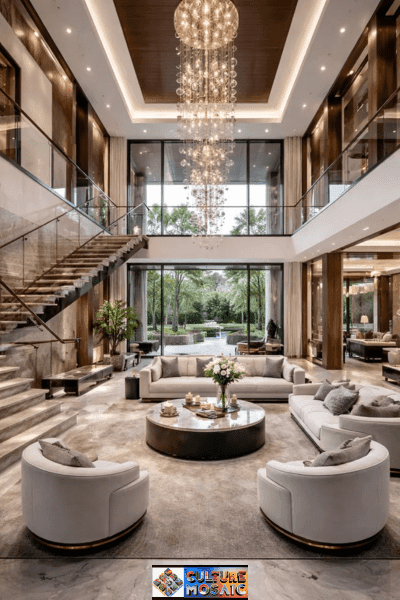
The Quiet Revolution in High-End Living Spaces
The definition of high-end residential design has shifted — and I find the direction genuinely exciting. For decades, traditional luxury meant accumulation: heavy brocades, gilded surfaces, monolithic arrangements that favoured formal presentation over human comfort. I spent years watching clients arrive with vision boards and leave with rooms that looked like hotel lobbies and felt like neither.
What replaced all that is more interesting. Modern luxury modern living room furniture strips away superficial ornamentation and replaces it with material integrity, architectural geometry, and tailored functionality. True luxury is no longer about how much you can display. It is about how effortlessly a space performs, breathes, and feels to the person actually living inside it.
This is my blueprint for staging, selecting, and investing in contemporary foundational pieces — drawn from fifteen years of procurement work across London, Dubai, and New York. For the broader lifestyle philosophy underpinning these choices, the piece on What Is Modern Lifestyle on Culture Mosaic frames the cultural shift that makes this design language legible.
Secret 1: Master the Architecture of Space Before You Buy Anything
Why Proportion Comes Before Product
I tell every client the same thing before they reach for a showroom appointment: put the tape measure away. Or rather — take it home first. The most persistent error in luxury procurement is selecting a piece in isolation, without understanding how it will occupy the actual volume of the room. Scale calibration is not a stylistic preference. It is the foundational discipline.
Contemporary modern luxury modern living room furniture relies heavily on low-slung silhouettes, continuous horizontal lines, and asymmetrical layouts that allow the architecture of the home to stay visible. The furniture should not compete with the room. It should complete it.
The Three Structural Pillars of a Contemporary Layout
When I assess a space for the first time, I evaluate capacity across three registers:
- Architectural modularity: Oversized, deep-seated sectionals that can be reconfigured for both intimate evenings and large-scale entertaining. Look for structural frames in kiln-dried hardwood with premium down-wrapped memory foam cores. These are engineering decisions as much as aesthetic ones.
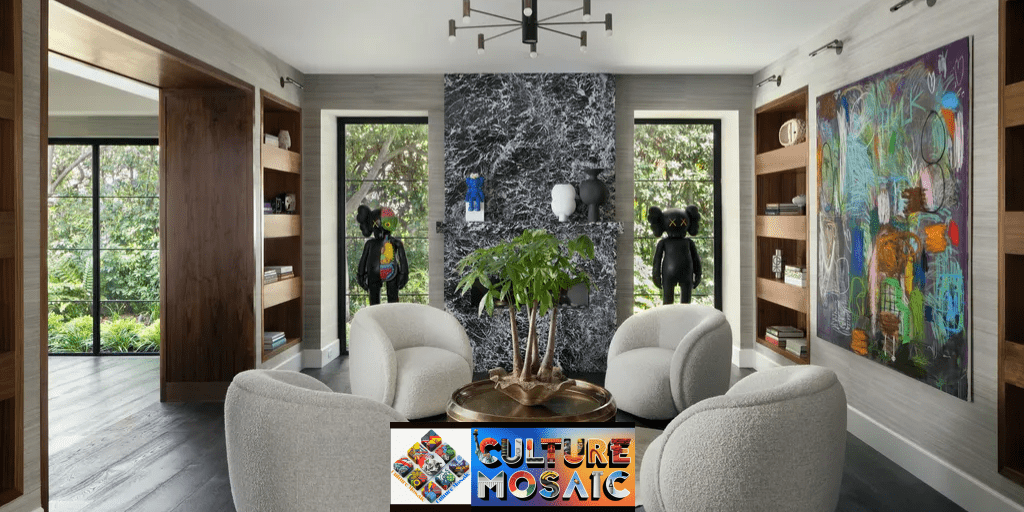
- Material juxtaposition: The deliberate pairing of opposing textures creates visual depth without clutter. Matte sandblasted travertine coffee tables alongside high-gloss lacquered accents. Brushed warm metallic bases beside buttery, aniline-dyed Italian leather. The contrast performs the decorative work that applied ornament used to do.
- Floating structural configurations: Furniture with slender, recessed leg profiles or cantilevered bases generates an impression of weightlessness. Light passes continuously beneath the pieces. The room appears larger — not because of a trick, but because it breathes properly.
For context on how these spatial strategies evolved historically, I find the analysis of Modern Heritage Living Room design genuinely illuminating — it traces the thread from formal arrangement to the current open-plan vocabulary.
Secret 2: Invest in Material Integrity, Not Brand Recognition
The Material Performance Matrix
I have watched clients pay premium prices for pieces that looked extraordinary in the showroom and began deteriorating within two years. The cause is almost always identical: they bought a name, not a material specification. In my procurement pipeline, every major acquisition is evaluated against what I call a material performance matrix before a single order is placed.
| Material Configuration | Architectural Focus | Tactile Experience | Target Performance |
|---|---|---|---|
| Full-Aniline Italian Leather | Patina & natural grain development | Ultra-soft, breathable luxury | Generational durability |
| Bouclé & High-Pile Chenille | Dimensional warmth & texture | Cosy, deeply inviting comfort | High tactile visual depth |
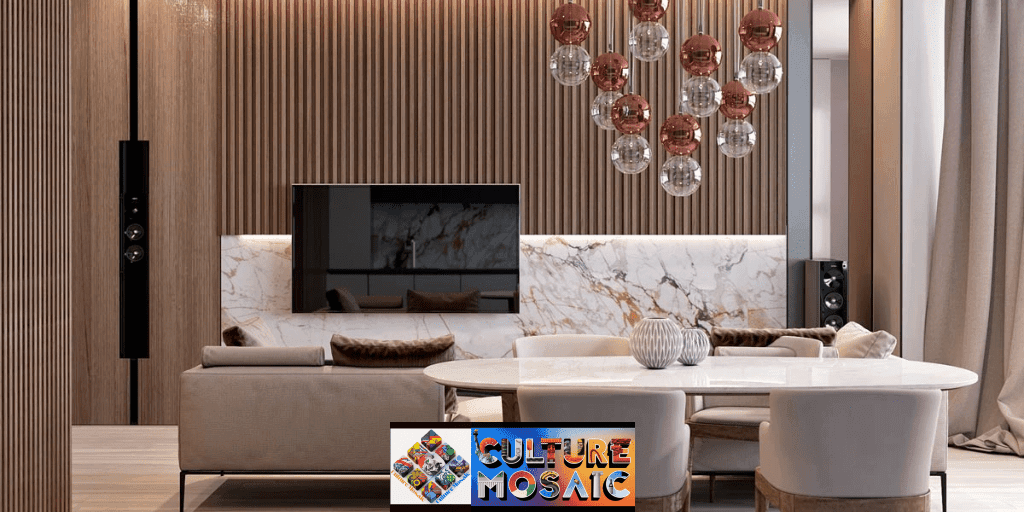
| Travertine & Calacatta Marble | Organic sculptural geometry | Cool, heavy stone texturing | Sculptural anchoring points |
| Brushed Bronze & Aged Brass | Structural framing & accents | Sleek, low-sheen metallic edge | Refined linear definition |
| Oiled European Oak | Warmth & material continuity | Smooth, slightly resinous grain | Longevity with patina gain |
What Material Specifications Actually Reveal
Material choices in modern luxury modern living room furniture are durability contracts, not decoration decisions. Full-aniline Italian leather develops a patina that genuinely improves with age — but only if the tanning process used no pigment coating. That is verifiable from the supplier’s technical documentation. If they cannot provide it, the specification is unconfirmed.
Bouclé weaves offer extraordinary tactile warmth and visual depth. But the pile density determines whether the fabric holds its structural profile over a decade of use. I always request material data sheets. Any supplier operating at a genuine luxury tier can produce them without hesitation.
The provenance question is worth exploring historically too. Catherine the Great’s Furniture offers a striking study in how material sourcing has always been the true differentiator in elite residential environments — long before brand names existed to obscure it.
Secret 3: Curate Flow, Form, and the Discipline to Leave Space Empty
The Conversational Layout Principle
One of the most persistent errors in high-end residential work is treating the living room as a furniture exhibition. Every surface becomes a statement. Every corner hosts a piece. And the result, paradoxically, is visual noise rather than luxury.
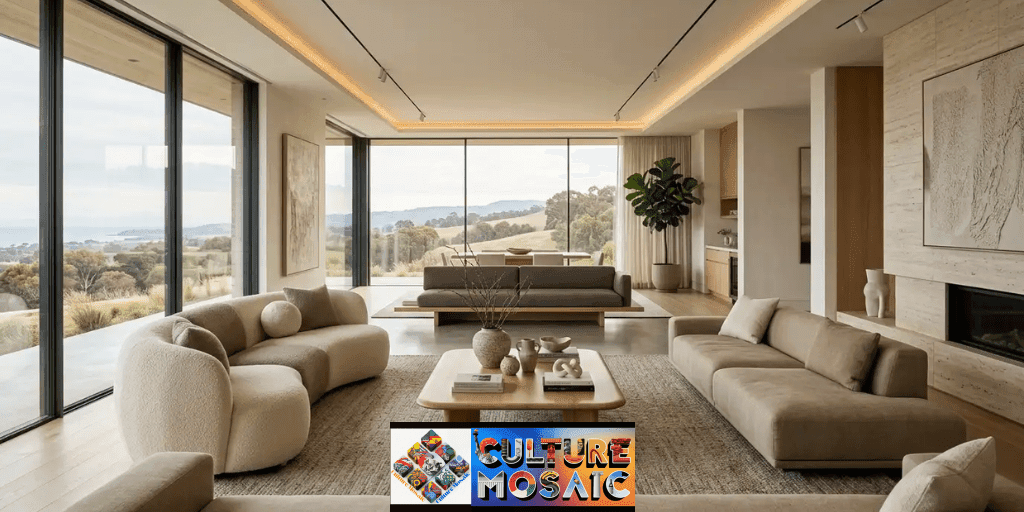
In a truly well-executed space built around modern luxury modern living room furniture, each piece is given room to register. The sofa, the accent chair, the console — each functions as a sculptural element within a cohesive arrangement. The editing is as important as the selection. What you choose not to install matters as much as what you do.
Practical Arrangement Strategies
- Pull seating inward: Float foundational pieces at least two feet from the walls to create intimate islands rather than institutional perimeters. A sofa that floats reads as a design decision. Pushed flat against a wall, it reads as furniture storage.
- Anchor with scale rugs: Custom-bound silk or long-staple wool area rugs should extend past the boundary of all seating pieces. The rug defines the zone. The furniture inhabits it. Without this ground plane, even exceptional pieces look unmoored.
- Resist the urge to fill: In a high-ceiling room, one oversized statement piece in modern luxury modern living room furniture will perform better visually than four medium-sized alternatives competing for dominance. Restraint is the luxury decision.
- Wildcard move: Commission a single bespoke object with no functional peer in the room — a hand-cast concrete side table, a blown-glass floor lamp, a hand-thrown ceramic vessel the size of a small child. The friction between that one idiosyncratic piece and the surrounding restraint creates exactly the tension that makes a space feel genuinely inhabited rather than perfectly staged.
“True modern luxury does not announce itself through loud colours or aggressive silhouettes. It registers through flawless proportions, programmatic clarity, and materials so precisely crafted that they compel you to touch them.”
— Amanda Sterling, Interior Architect & Luxury Residential Consultant
Secret 4: Treat Lighting as Furniture — Because It Is
Why Illumination Strategy Is Non-Negotiable
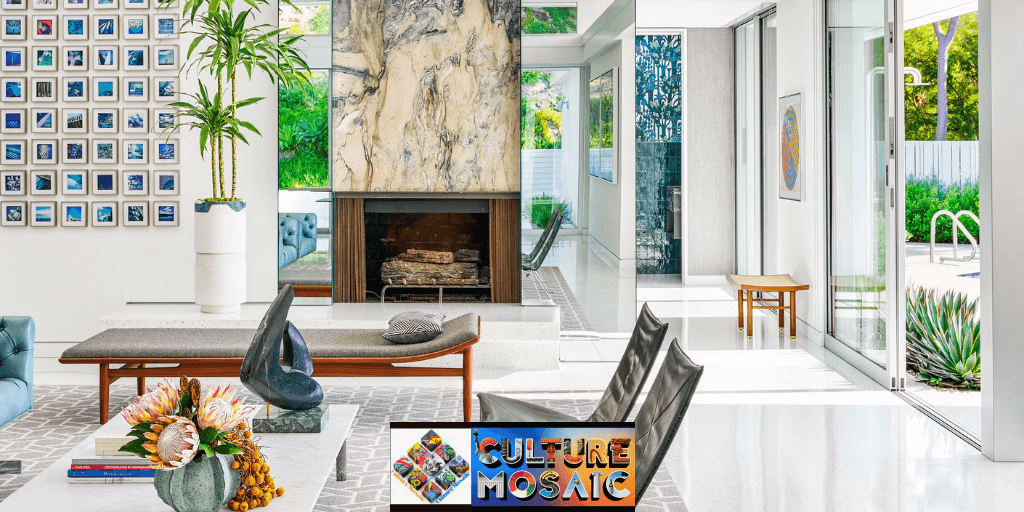
I will say something that sounds obvious and is almost universally ignored: lighting is the most important furniture decision you will make. Not solely because of aesthetics, but because light determines how every other material in the room is perceived by the person standing inside it.
Travertine under 6500K overhead illumination looks cold and institutional. That same travertine at 2700K, lit at an oblique angle from a floor lamp two feet away, looks archaeological — warm, tactile, storied. The stone has not changed. The light has. This is why programmatic invisibility in your lighting infrastructure is worth significant investment.
The Low-Level Layered Lighting Framework
For any space anchored by modern luxury modern living room furniture, I specify a layered, low-level framework built on four principles:
- Architectural recessed sources: Set to 2700K to 3000K, dimmable to ten percent, positioned to skim wall surfaces and accentuate texture rather than flood the room with even illumination. Even illumination is what airports have.
- Floor and table lamps at conversation height: Roughly 40 to 55 inches at the shade. These create pools of warm light that visually anchor the seating zone and establish the psychological register of the room as domestic rather than commercial.
- Under-furniture or plinth lighting: A floating credenza with concealed LED strips beneath it reads as measurably lighter than its actual mass. This is the furniture equivalent of biophilic integration — weightlessness achieved through light, not material reduction.
- Wildcard specification: Commission a single hand-blown Murano pendant — an actual atelier piece, not a reproduction — and let it function as the only true statement in the room. Everything else becomes the quieter setting for that one object. The quality of light it throws is almost incidental. The spatial presence it generates is not.
Secret 5: Build a Pre-Purchase Verification Protocol
What the Checklist Actually Protects You From
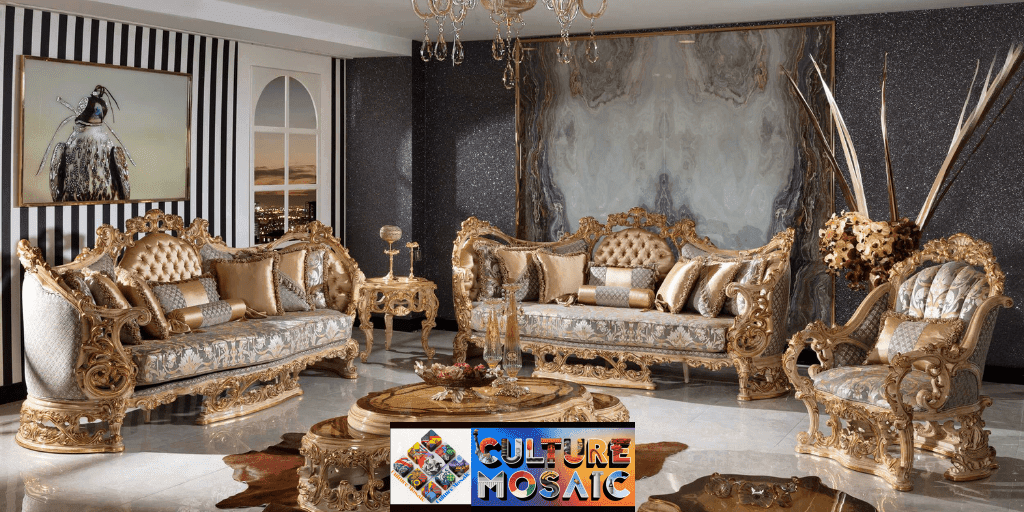
This is the part that separates clients who build extraordinary rooms from those who build expensive ones. In the modern luxury modern living room furniture category, the difference between a genuine investment and a costly mistake is almost always a matter of specification verification — conducted before the order is placed, not after the delivery lorry leaves.
For an extended look at what investment-grade curation looks like in practice, the modern luxury modern living room furniture editorial at Elle Decor remains one of the sharpest visual reference points in the category.
Current Trends Defining the Category Right Now
What I Am Watching in Active Client Projects
The lines I track most carefully in modern luxury modern living room furniture sit at the intersection of material authenticity and technological discretion. These are the directions I see gaining traction with sophisticated clients:
- Warm minimalism: The cold Scandinavian-inflected minimalism of the last decade has given way to something warmer and more materially complex. Oiled oak, raw linen, hand-thrown ceramic accent pieces. The geometry stays restrained. The palette shifts toward sand, tobacco, and warm clay. The overall effect is less gallery, more inhabited archive.
- Quiet luxury over loud branding: The visible logo and the recognisable designer signature are losing ground to unmarked, category-defining objects whose quality is evident only to those with the vocabulary to read it. Clients are actively moving away from individual hero pieces toward coherent rooms.
- Biophilic material integration: Unprocessed stone surfaces, cork acoustic panels, and living plant walls integrated into built-in millwork are appearing across every price tier. The ambition is materials that suggest biological systems — growth, erosion, mineral formation — rather than industrial production.
- Programmatic invisibility: The most sophisticated technology integration I encounter is the kind you simply cannot locate. Wireless charging flush with the travertine surface. Speakers recessed into upholstered wall panels. HVAC diffusers dissolved into ceiling shadow gaps. The room performs impeccably, and you have no idea how.
FAQs About Modern Luxury Modern Living Room Furniture
FAQ 2 — What sofa depth is appropriate for a genuinely luxurious lounge experience?
Standard sofas average 36 to 38 inches in total depth. That is adequate for upright, conversation-oriented seating. For a true luxury lounge profile — the kind that makes a room feel like somewhere you actually want to spend an entire evening — I look for deep-seat configurations measuring 40 to 44 inches, paired with a seat height of 15 to 17 inches from the floor. That geometry encourages the posture of relaxation rather than readiness.
- • Confirm seat depth, not overall depth: Suppliers sometimes list these interchangeably. They are not the same measurement. The relevant figure is the usable depth from the front of the cushion to the back support surface.
- • Test seat height against your own knee height: In a showroom, not against a published specification. Bodies are not standardised; sofas are.
- • Pair deep seating with firmer back cushioning: A very deep seat with very soft back cushioning produces posture collapse rather than relaxed support. The two specifications must be calibrated together.
- • Ensure all sectional modules share an identical seat height: Variation of even half an inch across module joins creates a patchwork visual plane that reads immediately as a procurement error.
- • Wildcard specification: Consider a chaise end unit with an integrated adjustable lumbar bolster — not a standard cushion, a designed bolster. It completes the lounge logic of the piece and also serves as a discreet reading posture solution.
FAQ 3 — Are performance fabrics acceptable in modern luxury modern living room furniture?
Not only acceptable — in many project contexts, they are the correct specification. Modern textile engineering has advanced to the point where solution-dyed acrylics and high-performance linens are genuinely difficult to distinguish from natural luxury fibres at surface contact. The key is selecting performance textiles designed for the residential luxury tier, not contract furnishing applications.
- • Specify solution-dyed acrylic: Piece-dyed performance fabric is vulnerable to UV fading. Solution-dyed fibres carry colour through the full cross-section of each thread, eliminating this risk at source.
- • Request a physical swatch before committing: The hand feel is the differentiator. You cannot assess this from a photograph or a product description, however detailed.
- • Verify the rub count against use intensity: Match the Martindale or Wyzenbeek rating to the specific seating zone’s expected use. A primary sofa and an occasional accent chair carry very different demands.
- • Pair performance upholstery with natural material accents: A performance-fabric sofa alongside a full-grain leather accent chair reads as intentional material contrast, not compromise.
- • Wildcard specification: Crypton Home weave is used in a subset of luxury residential projects and offers near-industrial stain resistance with a hand feel close to fine linen. Almost nobody in the showroom will mention it. It is worth asking for by name.
FAQ 4 — How should I scale a coffee table relative to my sofa configuration?
The two-thirds rule is the professional standard: the central coffee table should measure roughly two-thirds the total length of your sofa or primary seating run. Height is equally critical — it should sit flush with, or no more than two inches below, the seat cushion height. This maintains an unbroken horizontal plane from sofa to table that defines the spatial coherence of the lower register.
- • Measure usable sofa length, not frame length: Account for arm width at both ends. The usable seating length is what governs the visual relationship, not the manufactured overall dimension.
- • Scale upward for high-ceiling rooms: In spaces with ceiling heights above ten feet, sizing the coffee table at three-quarters the sofa length helps anchor the zone proportionally against the vertical volume.
- • Avoid round tables in very wide rooms: In rooms wider than fifteen feet, the absence of a strong horizontal line leaves the seating zone visually unmoored. Round tables work beautifully in compact, intimately scaled environments.
- • Source marble or travertine tops from a single block: The continuity of veining across an uninterrupted slab registers immediately — even to clients who cannot articulate precisely why.
- • Wildcard specification: Commission a coffee table in hand-hammered bronze with a honed Calacatta marble insert. There is no reasonable cost-benefit justification for this choice except that it is genuinely extraordinary, and it will outlast every other piece in the room by a generation.
FAQ 5 — What genuinely distinguishes authentic modern luxury furniture from a well-made replica?
This is the question I wish every client asked before committing their procurement budget. The differentiators are material authenticity and execution precision — two qualities that are difficult to fake at close range, even when they photograph convincingly at a distance.
- • Check the underside of stone tops: Engineered stone composites show a uniform, slightly repetitive pattern on close inspection. Natural single-block stone does not. Turn the piece over before you agree to the price.
- • Look for natural grain variation in leather: Genuine full-grain leather shows natural variation across the hide surface. Uniformity signals corrected or bonded leather — a surface treatment applied over lower-grade material.
- • Assess the weight of case goods: Authentic luxury furniture is substantially heavy and precisely balanced. A credenza that lifts easily is under-specified regardless of its finish quality.
- • Inspect mitred edge junctions: Use a torch and look at the corner junctions of case goods. Any visible gap indicates CNC tolerance failure or fitting shortcuts. Zero gap is the standard. It is achievable. Insist on it.
- • Request production provenance documentation: Established European ateliers carry traceable production records. If the supplier cannot produce them, the provenance claim is unverified. Full stop — and non-negotiable at this price tier.
View all articles: culturemosaic.co.uk