
 By Culture Expert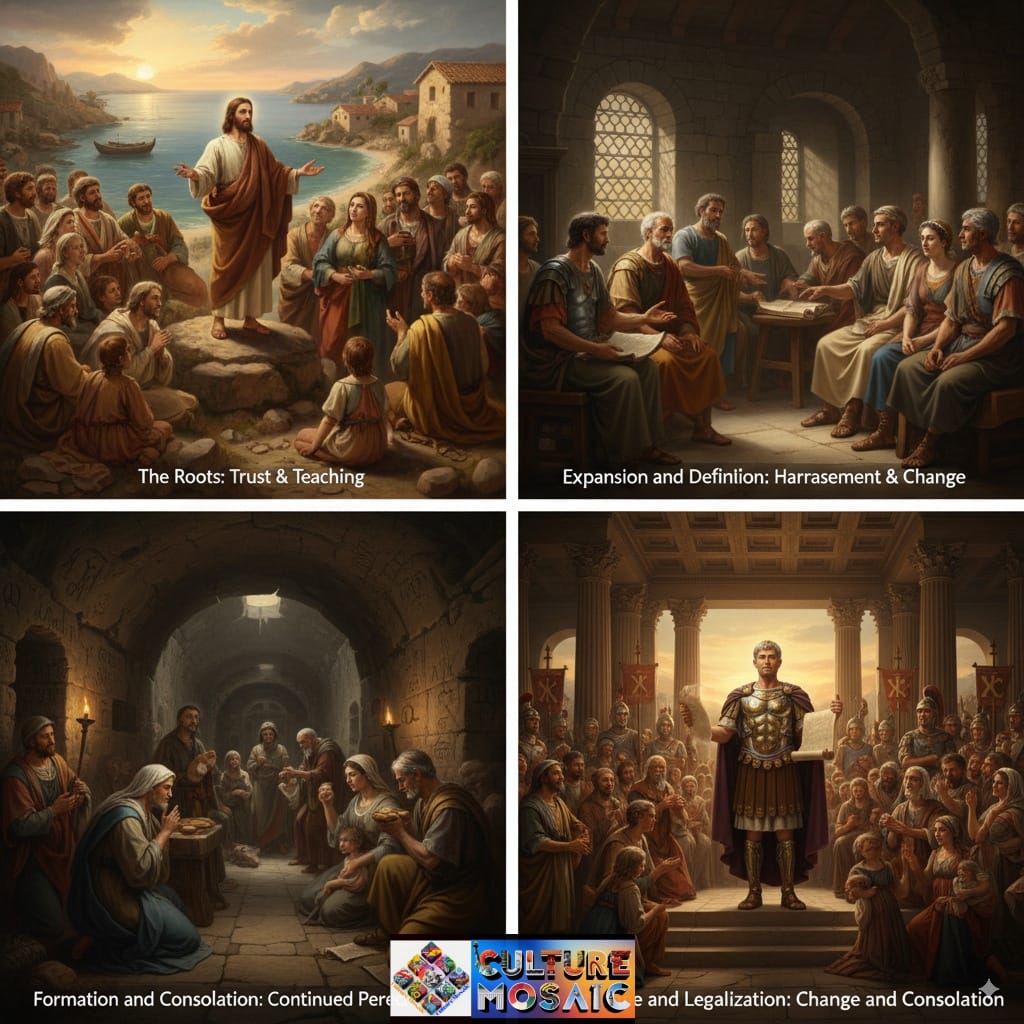
How and When Was Christianity Founded? Christianity did not emerge overnight. In the first century, it began as a small Jewish religious movement in Palestine and eventually grew into the world’s largest religion, shaping civilizations and touching billions of lives. To truly understand when Christianity was “established,” we need to look beyond simple dates and explore a compelling narrative of trust, persecution, and transformation.
Historical Settings: Palestine in the first century
How and When Was Christianity Founded: To understand the origins of Christianity, we must consider the context of first-century Palestine under Roman rule. Jewish communities lived under foreign occupation, and their religious and cultural identities were constantly challenged. Different Jewish groups responded in various ways: the Pharisees focused on strict adherence to religious practices, the Sadducees collaborated with the Roman authorities, and revolutionary groups like the Zealots advocated for armed resistance against the oppressors.
In this complex world, a Jewish preacher from Nazareth, a small town in Galilee, stepped onto a stage that had never been seen by most people. The moment was set for something unprecedented.
Jesus of Nazareth: Key Information

How and When Was Christianity Founded: Historical scholars, irrespective of their religious beliefs, generally agree that Jesus of Nazareth was a real person who lived in first-century Palestine. Born around 4-6 BCE (the dating system we use today was created centuries later and includes some errors), Jesus grew up in a working-class family in Galilee.
Around 30 CE, Jesus began his public ministry. For nearly three years, he traveled throughout Palestine, teaching through parables, which his followers considered miraculous. He drew both devoted disciples and fierce opposition. His message emphasized radical social teachings focused on the love of God, the coming of the kingdom of God, and the care of the poor and marginalized.
Roman authorities viewed Jesus as a potential political threat, leading to his crucifixion around 33 CE. For most movements, this would signify the end. However, something extraordinary happened that further transformed an extraordinary event.
Revival and birth of the Christian movement

How and When Was Christianity Founded: Three days after Jesus’ cross, his followers claimed something that changed everything: Jesus had risen from the dead. In the resurrection, this belief became the cornerstone of Christianity and turned a group of frightened, scattered disciples into bold engineers.
The insights provided by figures such as Peter and James (the brother of Jesus) led to the declaration that Jesus was more than just a teacher or prophet. They believed that the Jewish scriptures foretold the coming of the Messiah, referred to as Christ in Greek. Jesus taught that through his death and resurrection, he had conquered sin and death, offering eternal life to all who believed in him.
This is when we can say that Christianity was actually “established”, although it emerged slowly rather than appearing in a single moment. The resurrection experience created a new religious movement, which is inherent in Judaism, that will eventually be completely different.
Defining the First Christians
How and When Was Christianity Founded, How and When Was Christianity Founded
How and When Was Christianity Founded: In the initial days after Jesus’ crucifixion, the question of who could be called a “Christian” was less about labels and more about a shared lived experience. The earliest followers didn’t refer to themselves as “Christians” in our modern sense—terms like “the Way” or simply “disciples” were more common, as reflected both in early scripts and the evolving languages of the region.
So, what actually marked someone as part of this new movement? At first, the line was drawn by a profound, personal conviction that Jesus was the Messiah foretold in Jewish scriptures—supported by a belief in his resurrection. This was more than casual admiration: those early followers believed that Jesus had conquered death, and their lives reflected a radical reorientation around his teachings and the hope his resurrection seemed to offer.
Key Early Criteria
- Experience of the Resurrection: The defining moment was a personal or communal conviction that Jesus had risen from the dead. This belief energized groups who, only days before, were hiding in fear.
- Continued Jewish Identity: Many of the earliest followers still considered themselves Jews, following Jewish customs and fulfilling religious obligations, while also holding this new and extraordinary belief about Jesus.
- Emphasis on Lived Transformation: Early followers experienced a change in how they saw the world—shaped by Jesus’ teachings, especially care for outcasts and hope for the coming kingdom of God.
- Role of Women: Notably, women such as Mary Magdalene played a pivotal role. Accounts describe her as among the first to witness the resurrection and as a leader among Jesus‘ followers, making her central to the story’s beginning.
- Community and Shared Practice: Gathering to share meals, prayers, and stories about Jesus became a hallmark of the group, reinforcing their bond and distinguishing them from other Jewish communities.
It wasn’t necessarily theological precision that made someone a “Christian” at this early stage. Rather, it was this experiential, transformative belief—anchored in the resurrection—that bound together fishermen, tax collectors, and even those on society’s margins. Over time, as the message spread and identities sharpened, “Christian” would become a distinct term. But in the chaos and awe of those first days, belonging was defined by faith in what had happened—not by a new name.
Paul’s revolutionary influence

How and When Was Christianity Founded? After Jesus, no one influenced early Christianity more than Paul of Tarsus. Initially a staunch opponent of Christians, Paul underwent a dramatic conversion around 35 CE while traveling to Damascus. He then became the most effective missionary and a leading architect of Christian theology.
Paul’s groundbreaking insight was that Christianity was not exclusively for the Jews. He argued that Gentiles (non-Jews) could become Christians without first converting to Judaism or adhering to Jewish laws, such as circumcision and dietary restrictions. This decision, which was supported by the Apostolic Council in Jerusalem around 50 CE, opened Christianity to the entire Roman world.
Through his missionary travel and letters to early Christian communities, Paul established churches in the Mediterranean Sea and developed many religious structures that still define Christianity. His writing creates an important part of the new rule.
Early church development and challenges
How and When Was Christianity Founded: The first few centuries of Christianity were marked by both rapid development and acute oppression. Christians faced doubts with Roman authorities, who saw them as a dangerous cult and refused to worship the Roman gods or accept the divinity of the emperor.
The major harassment occurred under emperors such as Nero (64 CE), Decius (249-251 CE), and Diocletian (303-311 CE). Thousands of Christians died for their belief, martyrs whose stories inspired others to join the movement.
Despite harassment, Christianity spread throughout the Roman Empire. By 300 CE, Christians likely made up about 10–15% of the empire’s population. He held local churches led by the bishop, developed specific worship practices, and began to create official principles.
Whatever the new rule occurred during these early centuries, the writing and compilation of the compilation of 50–150 CE, with most books.
Constantine and Christianity Change
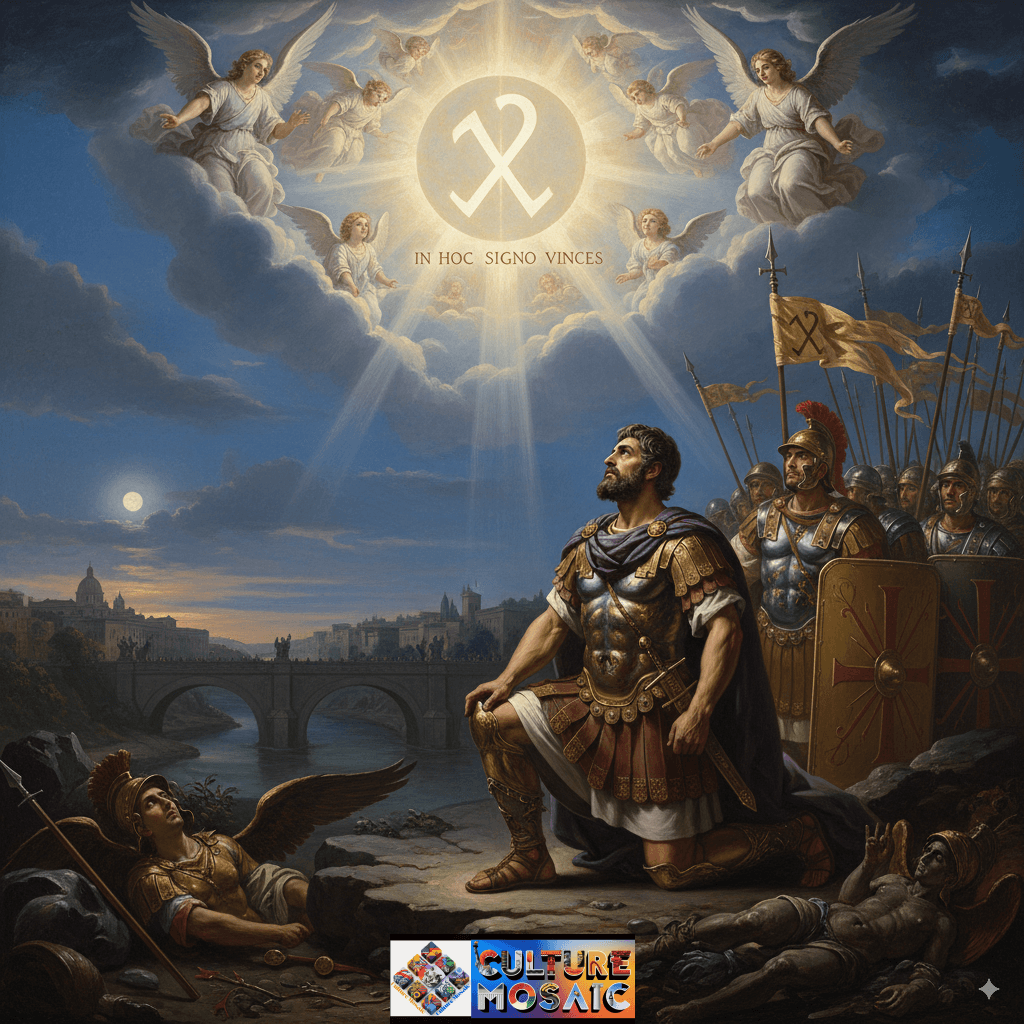
How and When Was Christianity Founded? The most significant turning point occurred in 312 CE when Emperor Constantine converted to Christianity before the Battle of the Milvian Bridge. The following year, he issued the Edict of Milan, which provided religious tolerance throughout the empire and effectively ended the oppression of Christians.
The Conversion of Constantine did more than protect Christians; it amplified Christianity within the imperial state. He called the council of Nicaea in 325 CE to address religious disputes and establish an integrated Christian principle. Up to 380 CE, Emperor Theodosius made Christianity the official religion of the Roman Empire.
This change from persecuted minority to royal religion fundamentally changed the character and influence of Christianity.
Major pioneering development
As Christianity decided and encountered various cultures and philosophical traditions, early Church leaders worked to define and defend the main beliefs. Major religious development includes:
- The Trinity:** The doctrine that God exists in a divine essence as three persons: the Father, the Son, and the Holy Spirit. This concept was formally established at the Council of Nicaea and has been discussed in later councils.
- Nature of Christ:** There has been debate over whether Jesus was fully divine, fully human, or both. This debate gave rise to the theory of the avatar, confirming that Jesus is both completely God and completely man.
- Holy Scripture and Tradition:** There is an ongoing discussion about which writings should be included in the biblical canon and how Holy Scripture should be interpreted in light of the traditions of the Church.
- Salvation:** Understanding how Jesus’ death and resurrection provide salvation involves various religious explanations that influence Christian denominations today.
Modern relevance of Christianity
How and When Was Christianity Founded: Today, Christianity remains the world’s largest religion, boasting more than 2.4 billion followers across numerous denominations. Its effect is more than religious circles, which in the whole history have the shape of size, literature, science, philosophy, law, and size of social movements.
Modern Christianity faces several challenges similar to those encountered by the early church. These include questions about how faith should engage with contemporary culture, what it means to follow Jesus in today’s world, and how Christians should respond to issues of sorrow, injustice, and moral dilemmas.
The story of the founder of Christianity reminds us that this global religion began with a small group of people who believed that something extraordinary was happening in Palestine in the first century. Whether you share that belief or not, the historical effect of that belief still shapes our world.
Look forward: How and When Was Christianity Founded
How and When Was Christianity Founded: Understanding the origin of Christianity helps us to appreciate both its historical importance and ongoing relevance. As a global belief, as a Jewish religious movement, from its humble beginning, the founding story of Christianity suggests how powerful thoughts, dedicated individuals, and historical conditions can align to create permanent changes.
The question “When was Christianity established?” A simple answer is not because Christianity emerged through a process rather than a single founding event. But it makes its story more notable, marked by gradual development, belief, conflict, and change.
FAQs About How and When Was Christianity Founded
1. Was Jesus a real historical person?
Most historians, including non-Christian scholars, agree that Jesus of Nazareth was a real historical person who lived in Palestine in the first century. Although they can debate the details of her life and the claims made about her, Jesus’ existence as a historical person is widely accepted in academic circles.
2. When was Christianity really different from Judaism?
The split between Christianity and Judaism developed gradually rather than suddenly. Key events in this process include Paul’s Mission to the Gentiles (30s-60s CE), the destruction of the Temple in Jerusalem in 70 CE, and various Rabbinic decisions made in the late first and second centuries. Most scholars indicate that significant changes in methods occurred between 70 and 135 CE.
3. How reliable are the sources describing the emergence of early Christianity’s new regime?
The newly created rule documents were written within decades of the incidents they describe, making them valuable historical sources. However, since they were written by believers for believers, historians examine them carefully. They compare these documents to other ancient sources and archaeological evidence to gain insights into early Christian history.
4. Why did Christianity spread so fast in the Roman Empire?
Several factors contributed to the development of Christianity. The Roman road system facilitated travel, while the Greek language provided a common means of communication. Additionally, existing Jewish communities offered early support for the new faith. The messages of Christianity appealed to various social classes, and the church’s care for both members and outsiders attracted many followers. Furthermore, royal support significantly accelerated this growth.h.
5. How were the early Christians different from modern Christians?
Early Christians shared core beliefs about Jesus’ divinity and resurrection with modern believers, but their practices and circumstances differed. They often met in homes, faced regular harassment, and lived in hopeful anticipation of Jesus’ imminent return. At that time, they had not yet developed the many religious distinctions and institutional structures that characterize modern Christianity.
 Dr. Marcus Hale