
 By Culture Expert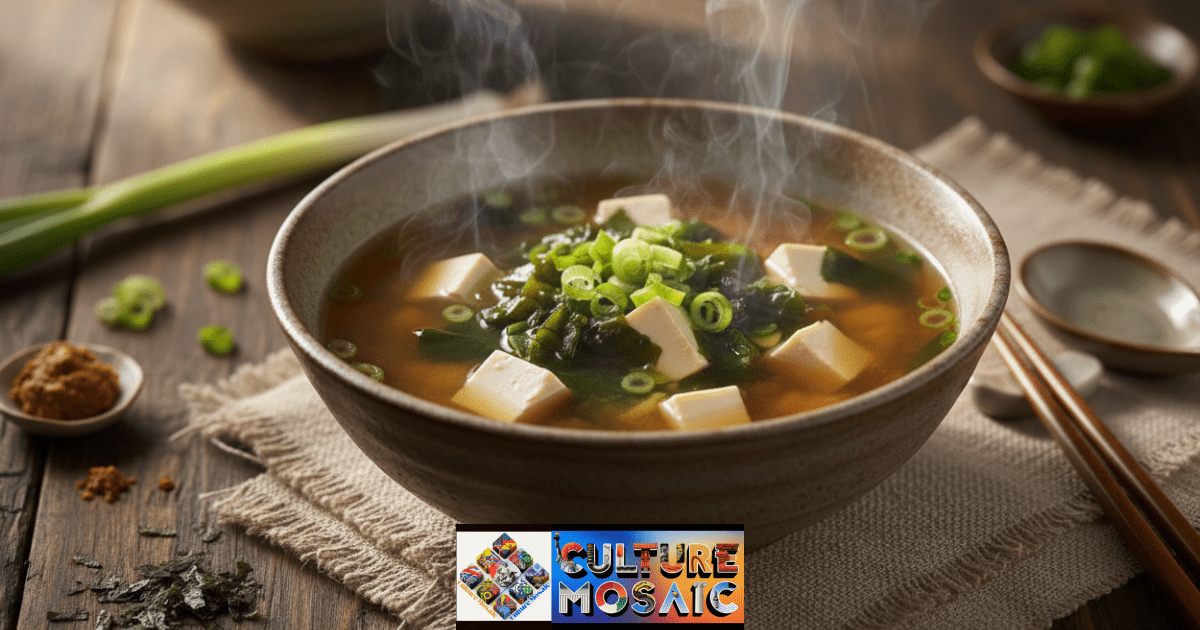

I remember the first time I had proper miso soup. Not the dusty instant packet kind. Real miso soup, made with hand-stirred hatcho paste and dashi broth that had been coaxed from kombu for twenty minutes. It tasted like the ocean had warmed up and invited you in. That bowl — unassuming, steam curling off the surface — quietly started shifting how I thought about food as fuel.
So when people ask me what is miso soup benefits, I don’t reach for a bullet list. I tell them a story. Because this broth has been doing quiet, remarkable work in human bodies for over a thousand years, and it deserves more than a nutritional data sheet.
What Is Miso Soup, Exactly?
Miso soup is a traditional Japanese broth made by dissolving miso paste — a fermented blend of soybeans, salt, and a mold culture called koji — into dashi stock. The result is a salty, umami-forward liquid that anchors Japanese meals at breakfast, lunch, and dinner. Not as a side dish. As a constant.
The paste itself is the thing worth understanding. Fermentation can run anywhere from a few weeks to three years. The longer it sits, the darker and more complex it gets. White miso (shiro) is mild and faintly sweet. Red miso (aka) is assertive, earthy, almost mineral. Both carry the same core health architecture. Understanding what is miso soup benefits starts with understanding what fermentation actually does to a soybean.
The Nutritional Profile Behind What Is Miso Soup Benefits
Here is what a standard 240ml serving of miso soup typically delivers — and why each element matters.
| Nutrient | Amount (per serving) | Key Role |
|---|---|---|
| Protein | ~6g | Muscle repair, enzyme synthesis |
| Probiotics | Live cultures (if unpasteurised) | Gut microbiome balance |
| Vitamin K2 | Moderate | Bone density, cardiovascular health |
| Manganese | ~0.5mg | Antioxidant defence |
| Copper | ~0.2mg | Nerve function, collagen production |
| Zinc | ~1.1mg | Immune regulation |
| Isoflavones | ~20–40mg | Hormonal balance, anti-inflammatory |
| Sodium | ~630mg | Electrolyte (moderate intake advised) |
This isn’t a supplement list. It’s a bowl of soup. That’s the point that gets me every time.
What Is Miso Soup Benefits for Your Gut Health?
The fermentation process produces live beneficial bacteria — primarily Lactobacillus and Aspergillus oryzae strains — that survive into the finished paste. When that paste hits warm (not boiling) water and reaches your digestive tract, those microbes go to work. Think of them as tiny janitors for your intestinal lining.
I’ve written before about how Somatic Seasoning approaches flavour as something the body physically registers, not just the palate. Fermented foods like miso sit right at that intersection — they change how your gut communicates with your brain. The research on the gut-brain axis keeps reinforcing this: a more diverse microbiome correlates with lower anxiety, better mood regulation, and sharper cognitive function.
A 2019 study published in Beneficial Microbes found that regular miso consumption was associated with improved intestinal bacterial diversity among Japanese adults. That’s not trivial. Diversity is what your gut actually needs. One strain of probiotic in a capsule is no match for the complex microbial community that a fermented whole food delivers.
What Is Miso Soup Benefits for Digestion Specifically?
Beyond probiotics, miso contains digestive enzymes produced during fermentation. These enzymes — proteases, amylases, lipases — help break down proteins, starches, and fats before your own digestive system even has to try. For people who struggle with bloating or sluggish digestion, this pre-digestive work is genuinely useful. It’s one reason miso soup is traditionally served at the start of Japanese meals. Not decoration. Function.
Immune Support — A Core Part of What Is Miso Soup Benefits
Zinc, copper, and manganese all sit in miso’s nutritional profile, and all three are directly involved in immune regulation. Zinc alone plays a role in over 300 enzymatic reactions in the body, and even mild deficiency is linked to weakened immune response. Miso delivers a meaningful dose without asking you to swallow a tablet.
Then there are the isoflavones. These plant compounds — genistein and daidzein being the two heavyweights — have demonstrated anti-inflammatory and immunomodulatory properties in clinical research. A 2020 paper in Nutrients highlighted their potential in modulating cytokine production, which is the body’s signalling language during immune response. That matters particularly as we understand more about chronic low-grade inflammation as the root of so many modern diseases.
What Is Miso Soup Benefits in the Context of Antioxidant Protection?
Miso contains melanoidins — brown pigment compounds created during fermentation — which have shown notable free-radical scavenging activity in laboratory studies. Free radicals cause oxidative stress, which accelerates cellular ageing and underpins conditions from cardiovascular disease to neurodegeneration. Melanoidins aren’t glamorous. They don’t get their own wellness trend. But they’re doing real work in that bowl.
Cardiovascular Health and What Is Miso Soup Benefits
Here is where I have to be honest about the sodium elephant in the room. A standard serving of miso soup can contain 600 to 900mg of sodium. For someone already managing hypertension, that’s worth tracking. But the picture isn’t as simple as “high sodium equals bad for the heart.”
A landmark study from Tohoku University followed over 40,000 Japanese adults and found that those who consumed miso soup daily had lower rates of cardiovascular mortality — even accounting for sodium intake. The researchers pointed to the counterbalancing effects of potassium (from seaweed and tofu commonly added to the soup), isoflavones, and the overall fermentation-derived compounds.
I’m not suggesting you ignore sodium. I’m saying the food exists in a context, and miso soup has a context that synthetic sodium sources simply don’t.
What Is Miso Soup Benefits for Bone Health?
Vitamin K2 is criminally underappreciated. Most people know about vitamin D and calcium for bones, but K2 is the compound that actually directs calcium into bone tissue rather than arterial walls. Natto — another fermented soy product — is the richest known food source of K2. Miso contains it too, particularly the longer-fermented varieties.
This is part of why Heritage Cooking Techniques that rely on extended fermentation weren’t just about flavour development. They were producing nutritional complexity that modern food processing has largely stripped away. Traditional Japanese women, who consumed miso regularly, showed lower rates of osteoporotic fractures in several epidemiological studies — even with lower overall calcium intake than Western counterparts.
Mental Clarity and What Is Miso Soup Benefits Through the Gut-Brain Axis
There’s a reason the gut is sometimes called the second brain. Roughly 95% of the body’s serotonin — that mood-stabilising neurotransmitter — is produced in the gastrointestinal tract. When your gut bacteria are thriving and diverse, the signals they send upward through the vagus nerve support cognitive clarity, emotional regulation, and stress resilience.
I’ve explored this theme through the lens of Somatic Food Memory before — the idea that certain foods don’t just nourish the body in the moment but carry embodied memory and physiological familiarity. Miso soup fits that framework strikingly well. Its effects on mood and mental steadiness are not anecdotal in Japan. They’re cultural expectation.
What Is Miso Soup Benefits for People Under Chronic Stress?
The adaptogenic qualities of fermented soy — particularly its ability to modulate cortisol response through gut microbiome shifts — are beginning to attract serious scientific attention. A 2021 randomised controlled trial in Frontiers in Nutrition found that participants consuming fermented soy products reported statistically significant reductions in perceived stress over eight weeks. A warm bowl in the morning isn’t a cure. But it’s not nothing, either.
Cancer Risk Reduction — What the Research Says About What Is Miso Soup Benefits
This is territory where I choose my words carefully. Miso soup does not cure or prevent cancer. Full stop. However, the research on isoflavones — specifically their interaction with oestrogen receptors — has consistently shown inverse associations with hormone-driven cancers in observational studies.
Japanese women, who consume significantly more dietary isoflavones than Western women, have historically shown lower breast cancer incidence. The relationship is not one-to-one, and genetic factors play a role. But the signal is consistent enough across multiple large-scale studies that it warrants attention and continued research. The Food as Medicine Recipes philosophy takes this seriously — food isn’t medicine, but it can be a profoundly capable health tool.
What Is Miso Soup Benefits for Skin Health?
Copper, zinc, and the amino acids derived from fermented soy protein all contribute to collagen synthesis. Collagen is the structural protein that keeps skin firm and elastic, and its production declines steadily after the age of 25. Miso doesn’t reverse ageing — nothing does — but its nutritional components genuinely support the cellular machinery that maintains skin integrity.
There’s also the matter of ceramides. Soy-derived compounds have been shown to support the skin’s natural barrier function, reducing transepidermal water loss. You’ll find ceramide extracts in expensive serums. They exist, more elegantly, in a bowl of soup.
What Is Miso Soup Benefits Compared to Other Fermented Foods?
Sauerkraut, kimchi, kefir, kombucha — the fermented food world is rich. Each has its own microbial signature and nutritional character. I’ve written in depth about Traditional Sauerkraut Fermentation and how it compares to East Asian fermentation traditions. Miso is distinctive because it delivers protein, probiotics, and a broad mineral profile simultaneously. Most fermented beverages are probiotic-forward but nutritionally thin by comparison. Miso is doing more work with fewer ingredients.
Who Should Be Cautious About What Is Miso Soup Benefits?
The sodium content is the primary concern for those with kidney disease or salt-sensitive hypertension. Low-sodium miso varieties exist and are worth seeking out. People with soy allergies are obviously excluded — though the fermentation process does reduce some allergenic proteins, it doesn’t eliminate the risk entirely.
Thyroid conditions deserve a brief mention. Soy isoflavones can, in very high doses, interfere with thyroid hormone synthesis. At the levels found in one or two daily servings of miso soup, this is not a clinical concern for most people. But anyone on thyroid medication should have a conversation with their physician.
How to Incorporate Miso Soup Into Your Daily Routine
Start with breakfast. That’s what the Japanese do, and there’s something quietly powerful about beginning the day with a warm, mineral-rich broth rather than cold cereal or a rushed cup of coffee. Add wakame seaweed for iodine and fucoidan. Add silken tofu for protein. Finish with sliced spring onions for a sharp green contrast.
Never boil the paste. Stir it in after you’ve removed the pot from the heat. Boiling destroys the live cultures and enzymes — the very elements that make answering “what is miso soup benefits” so interesting in the first place. This is a lesson in Ancestry-Driven Cooking: traditional preparation methods existed for reasons science is still catching up to explain.
Frequently Asked Questions About What Is Miso Soup Benefits
Is it okay to drink miso soup every day?
For most healthy adults, yes. Daily consumption is the norm in Japan, where miso soup has been eaten at multiple meals for centuries. The main watchpoint is sodium — if you’re managing blood pressure, opt for low-sodium miso and balance with potassium-rich additions like seaweed and tofu. One or two bowls daily is generally well within safe limits.
Does miso soup actually contain probiotics?
Unpasteurised miso paste does contain live bacterial cultures. The key is to not boil it — adding miso to boiling water kills those cultures. Stir the paste into warm broth (below 60°C) to preserve the probiotic benefit. Many commercial miso pastes, particularly in Western markets, are pasteurised, which extends shelf life but eliminates live cultures.
Can miso soup help with weight management?
It can be a genuinely useful tool. The combination of protein, umami satiety signals, and warm broth volume tends to reduce overall caloric intake at a meal. A 2020 study in Appetite found that high-protein broths consumed before meals led to measurably lower food intake. Miso soup isn’t a weight loss treatment, but it fits well into a mindful eating pattern.
What type of miso is healthiest?
Each variety has its strengths. White miso (shiro) is lower in sodium and milder in flavour — good for daily use. Red miso (aka) is richer in antioxidants and has a more complex fermentation profile due to longer aging. Mixed miso (awase) balances both. If gut health is your primary interest, unpasteurised varieties of any type will deliver more live cultures.
Is miso soup suitable for people who are pregnant?
Generally yes, in moderate amounts. The isoflavones in miso have been subject to scrutiny in pregnancy, but at dietary levels (as opposed to supplement doses), they are considered safe by most major health bodies. Sodium remains the main consideration. As with any dietary question during pregnancy, a conversation with a qualified healthcare provider is the right move.