
 By Culture Expert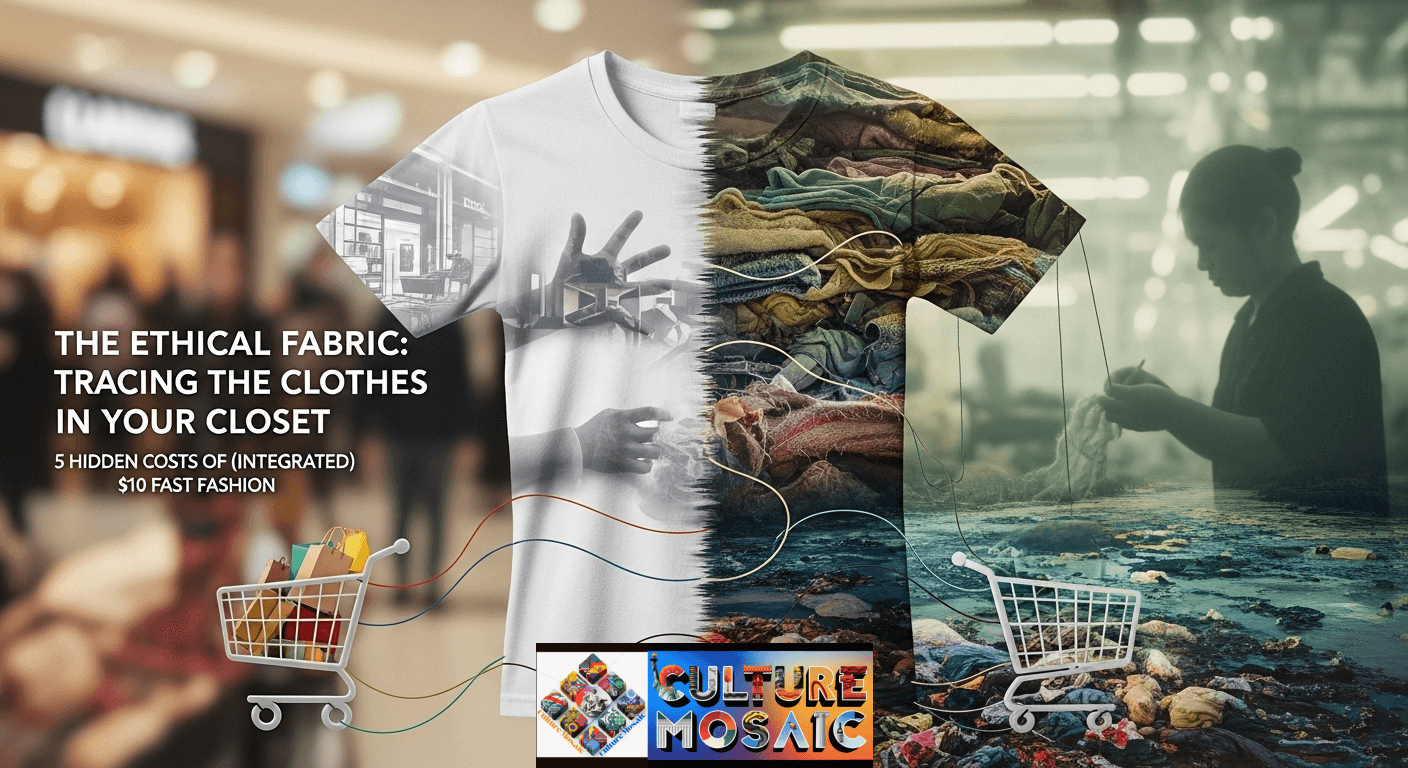
The $10 T-Shirt: What Your Bargain Really Costs
The Ethical Fabric: You are scrolling through your phone, and there is a cute T-shirt for $ 10. free shipping. Two-day delivery. You click “Buy Now” without another idea. But have you ever wondered how a garment can travel thousands of miles, can pass through dozens of hands, and still cost less than your lunch?
The answer lies in a complex global supply chain, where real costs are not measured in dollars – it is measured in human life, environmental decline, and moral agreement that most consumers never see.
This is the story of moral fabric: an untold journey from the cotton fields to the closet, and understanding this thread matters more than ever.
From Cotton Field to Factory Floor: Mapping the Supply Chain
The Beginning: Where Your Clothes Are Born
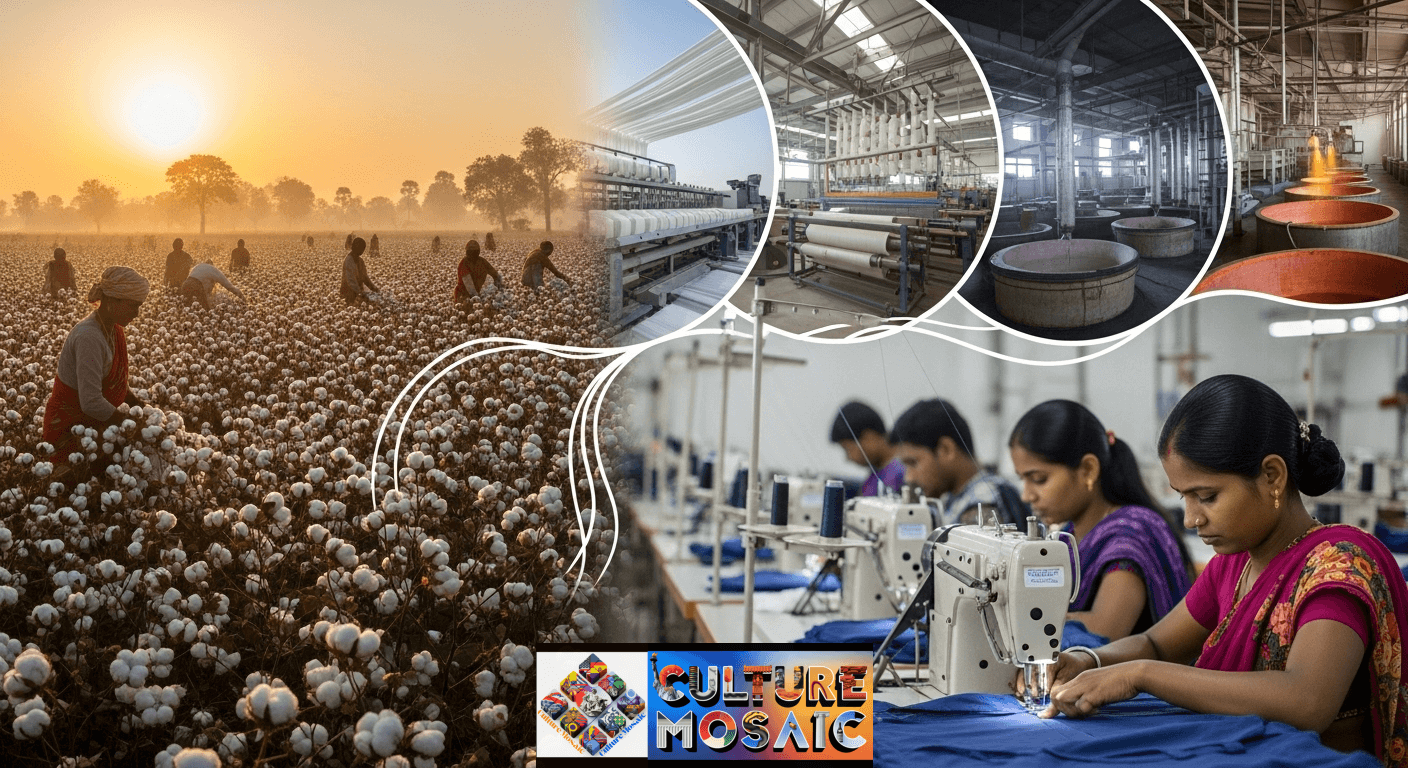
Most of the fashion textile starts its journey in countries such as India, Bangladesh, Uzbekistan, or China, where cotton grows abundantly and labor costs are remarkably low. A cotton picker in rural India can earn as little as $ 2-3 per day, and can work under the sun, scorching 10–12 hours for cutting raw materials which will eventually become your weekend wardrobe.
The cotton then goes to spinning mills, where it turns into yarn, then to weaving factories, dyeing plants, and finally to cut-end-sev factories. Each step involves different workers, different countries, and often, various moral violations that easily ignore brands for rock-bottom prices.
The Human Face Behind the Fabric
Meet Reshma, a 28 -year -old garment activist in Dhaka, Bangladesh. She wakes up at 5 in the morning, leaves her two children with her mother, and one hour goes to a factory, where she will spend the next 12-14 hours sewing seams on fashionable clothing for American shops. His monthly salary? Around $ 95 is sufficient to cover the fare, food, and the basic needs of her children.
Reshma is one of the about 4 million dress workers in Bangladesh, a country that supplies about $ 35 billion annually to Western markets. She represents the invisible workforce that promises rapidly “more for less fashion”. Her story is not unique – it is ideal in the industry, manufactured to exploit the world’s weakest workers.
The Environmental Thread: Pollution Woven Into Every Stitch
Water, Waste, and Toxic Dyes
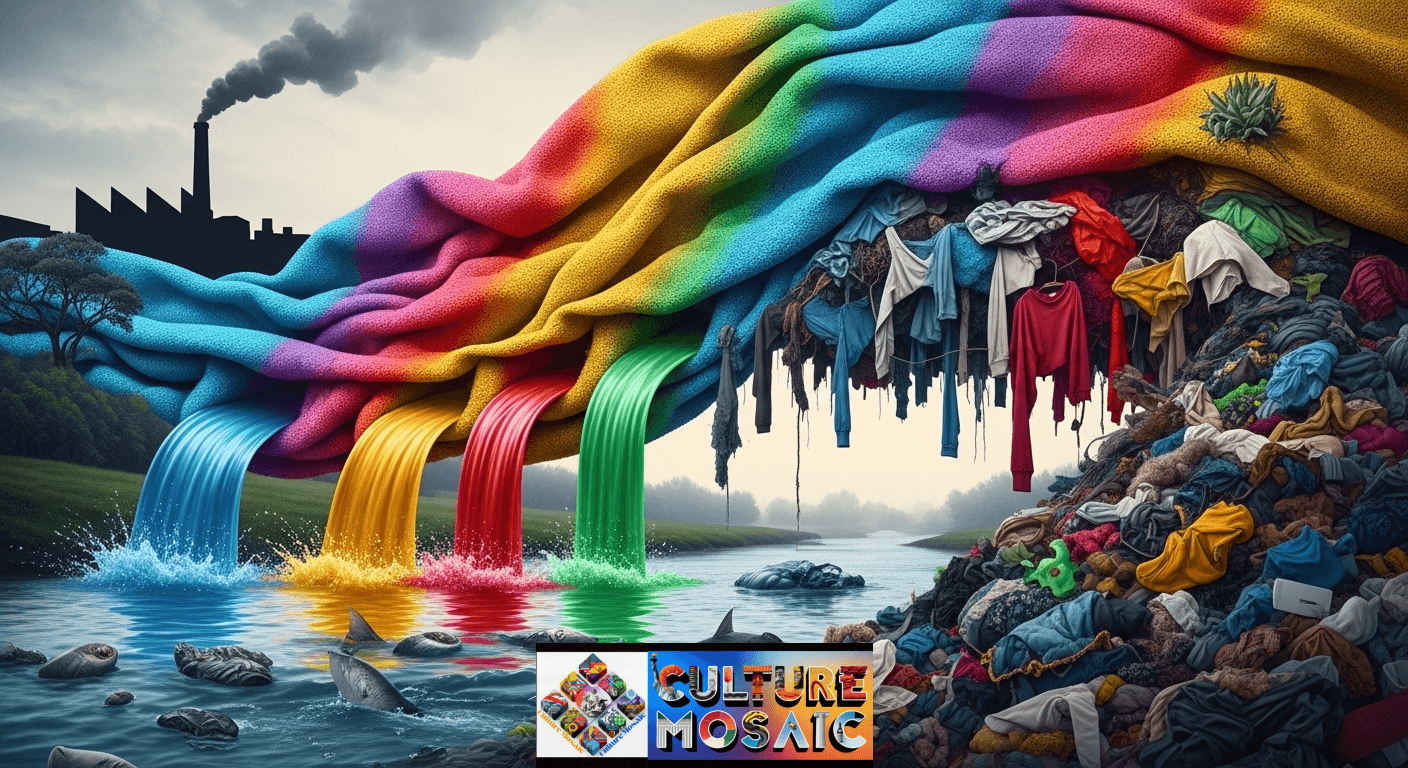
The Ethical Fabric: The fashion industry is the second largest water consumer globally and is responsible for about 8–10% of global carbon emissions. A pair of jeans requires about 2,000 gallons of water to produce, which a person drinks in seven years.
But water consumption is just the beginning. Cloth dyeing is the second largest pollutant of clean water worldwide. In countries like China, India, and Bangladesh, rivers run vibrant blues, reds, and greens from nature, but are dumped directly into waterways by textile factories from untreated chemical waste. These toxic chemicals do not just disappear; They contaminate drinking water, destroy aquatic ecosystems, and cause serious health problems for local communities.
The Landfill Problem: Where Fashion Goes to Die
Americans discard 11.3 million tonnes of textiles annually, equivalent to approximately 2,150 items of clothing every second. Less than 15% rejected textiles are recycled or donated, and even donated fabrics often end up in developing countries, where they overwhelm local markets and recycling infrastructure.
Countries like Ghana and Kenya have become dumping grounds for unwanted clothes from the West. Acra, the contaminated markets in Ghana, receive about 15 million used clothes every week, but about 40% reach such a bad situation that they immediately leave, creating large-scale textile waste mountains that already stress the waste management systems by further burden.
The Recycling Myth: Why “Sustainable” Fashion Isn’t Always What It Seems
The Reality of Textile Recycling Infrastructure
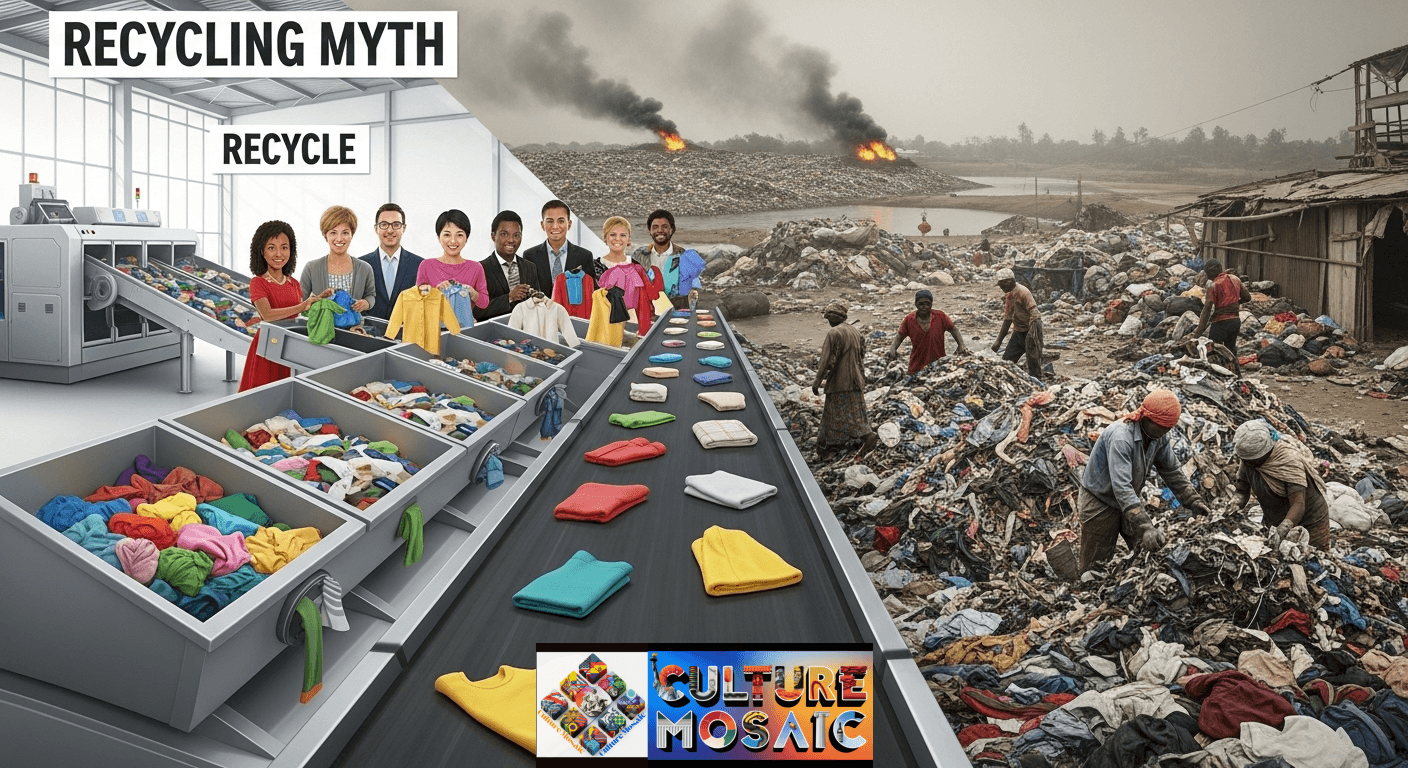
The Ethical Fabric: While many fashion brands’ in-store collections face their recycling programs with compartments and stability reports, the reality of textile recycling is very low. Most collected clothing cannot be effectively recycled due to mixed fiber content-your specific “durable” bamboo-cotton-polyster mix is almost impossible to separate and recycle with current technology.
In developing countries, where most of this textile waste ends up, the recycling infrastructure is almost non-existent. Manual sorters work under dangerous conditions, lift through mountains of clothing rejected without proper safety equipment, come in contact with chemicals, and are paid minimal wages. Very damaged fabrics for resale are often burnt or buried, leading to toxic chemicals in the air and soil.
The Innovation Gap
Technical solutions for textile recycling exist – chemical recycling processes can break down some clothing into raw materials for new fabrics. However, these technologies are expensive, not yet scalable, and remain inaccessible for developing countries that are fashion-conscious. The gap between developed-world innovation and developing-world implementation means that well-intentional stability efforts often fail to address the original problem.
Greenwashing: When “Ethical” Is Just Good Marketing
Decoding Sustainability Claims
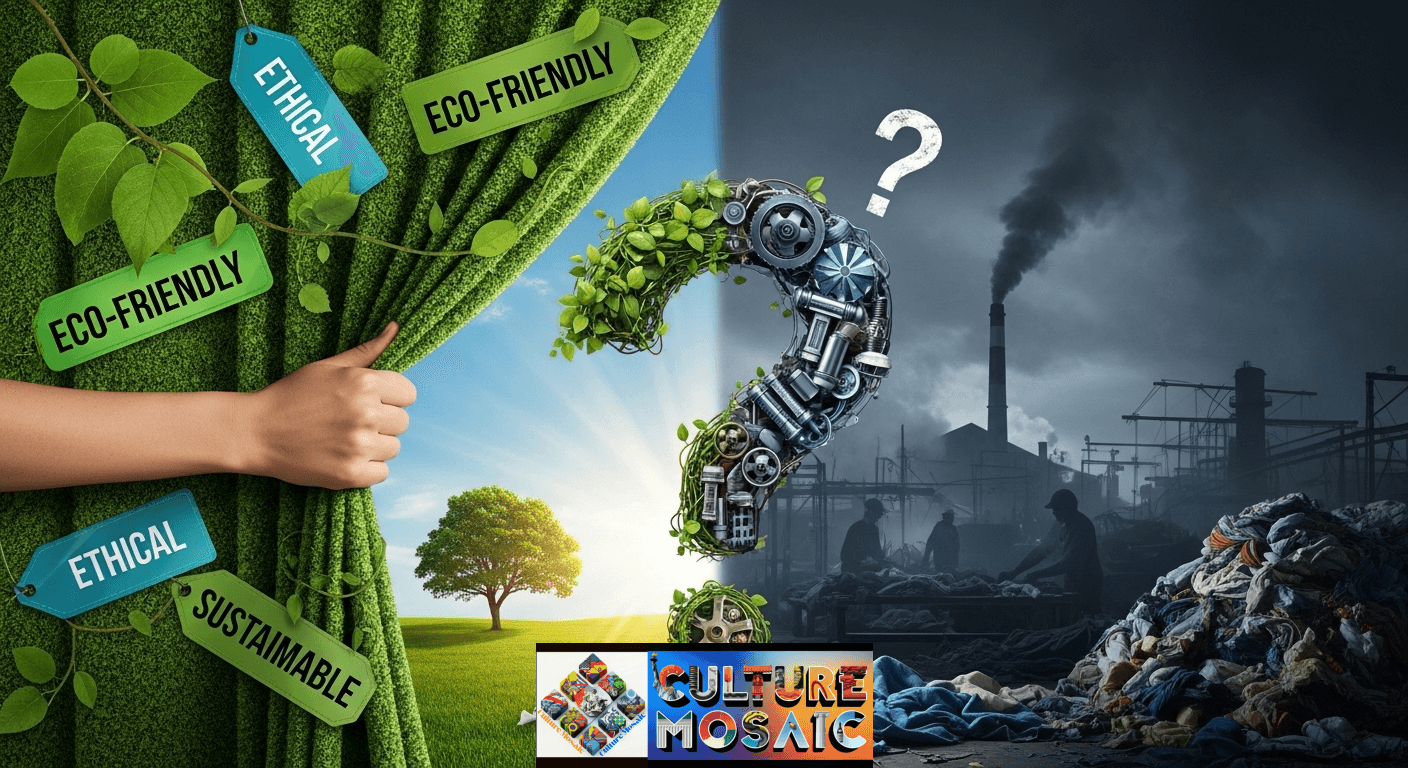
Walk into any major retailer, and you will be bombarded with “conscious collections,” “eco-friendly lines,” and “sustainable fashion” labels. But how many of these claims are under investigation? The uncomfortable truth is that many examples of greenwashing are- to mark the strategies designed to make companies environmentally responsible without making concrete changes in their practices.
A brand may promote a “durable” collection that represents just 2% of its total production, continuing business-like general practices for the remaining 98%. Or they will highlight the use of organic cotton without mentioning synthetic colors, exploitative labor, or carbon-intensive shipping that remain unchanged.
The Certification Confusion
Certifications like “Fair Trade,” “GOTS” (Global Organic Textile Standard), and “Bluesign” do provide meaningful verification of ethical and environmental standards, but they’re not foolproof. Some brands obtain certification for specific products or facilities while maintaining problematic practices elsewhere in their supply chain. Others use vague, unregulated terms like “eco-friendly” or “natural” that sound impressive but mean virtually nothing.
Major Brand Accountability
Several major US fashion retailers have faced criticism for sustainability claims that don’t match their practices. Fast fashion giants have launched “conscious” collections while simultaneously increasing overall production volumes—a mathematical impossibility for true sustainability. Others have committed to ambitious environmental goals decades in the future while showing minimal progress in the present.
The problem isn’t just false advertising; it’s that greenwashing allows companies to capitalize on consumer desire for ethical fashion without actually transforming the exploitative systems that make fast fashion profitable.
The True Cost: Connecting Your Closet to Global Impact
Economic Threads to the US Market
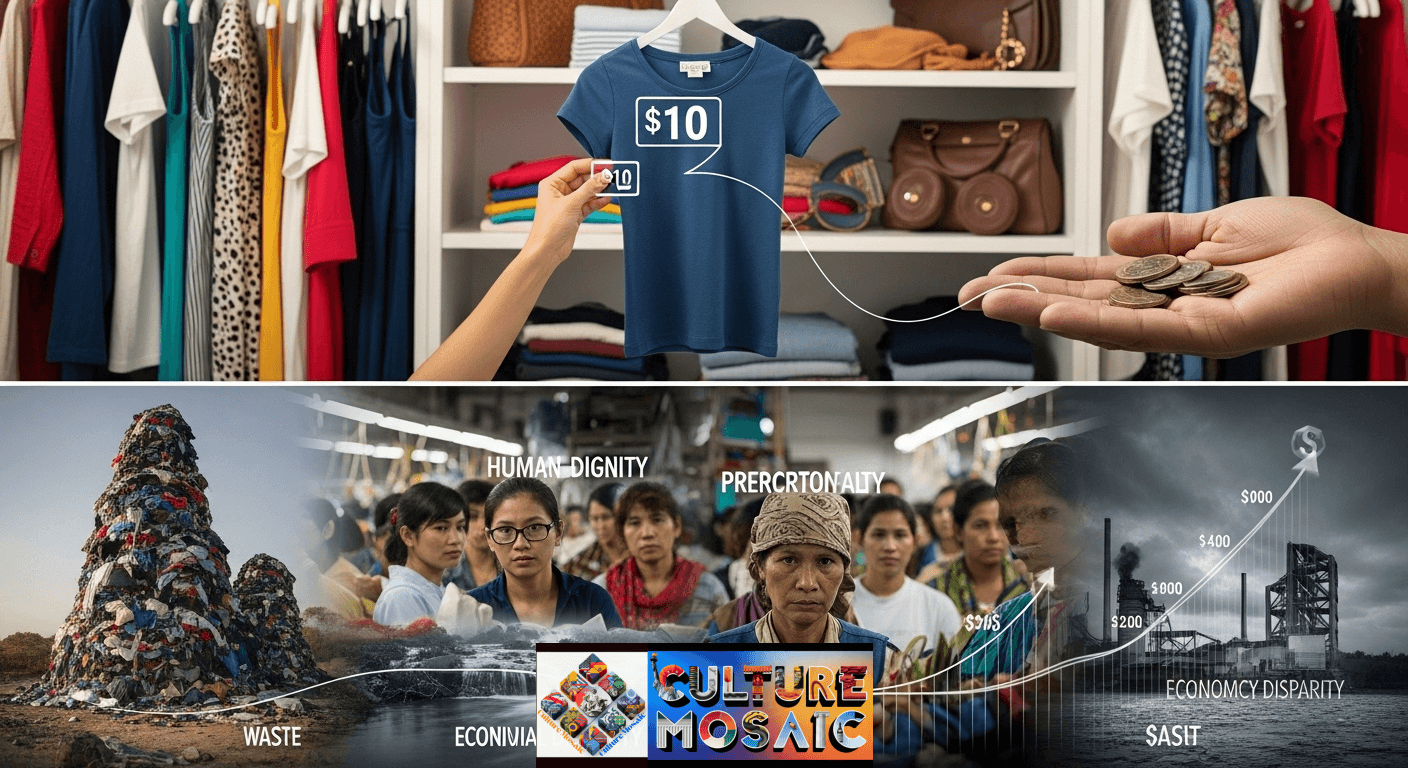
Your $10 t-shirt exists because of a carefully calculated economic formula that prioritizes corporate profit over human dignity. When you purchase that shirt, approximately $0.18 goes to the worker who made it. The remaining $9.82 is divided among material costs, factory owners, middlemen, shipping, marketing, retail markup, and ultimately, shareholder profits.
This economic model depends on maintaining poverty wages in manufacturing countries. If Reshma and her fellow workers were paid a living wage—enough to afford necessities, healthcare, and education for their children—that $10 shirt would cost significantly more. The entire fast fashion business model would collapse.
The Ripple Effect of Consumer Choices
Every purchase is a vote for the kind of world we want to live in. When we choose fast fashion’s disposable clothing, we’re voting for a system that:
- Perpetuates poverty wages and dangerous working conditions for millions of workers
- Dumps toxic chemicals into the water supplies of vulnerable communities
- Creates mountains of textile waste in countries least equipped to handle it
- Prioritizes quarterly profits over long-term environmental and social sustainability
Conversely, when we choose to buy less, buy better, support truly ethical brands, or embrace secondhand fashion, we’re voting for a different system—one where fashion doesn’t cost the earth or exploit the vulnerable.
What You Can Actually Do: Beyond Awareness to Action
Shift Your Shopping Mindset
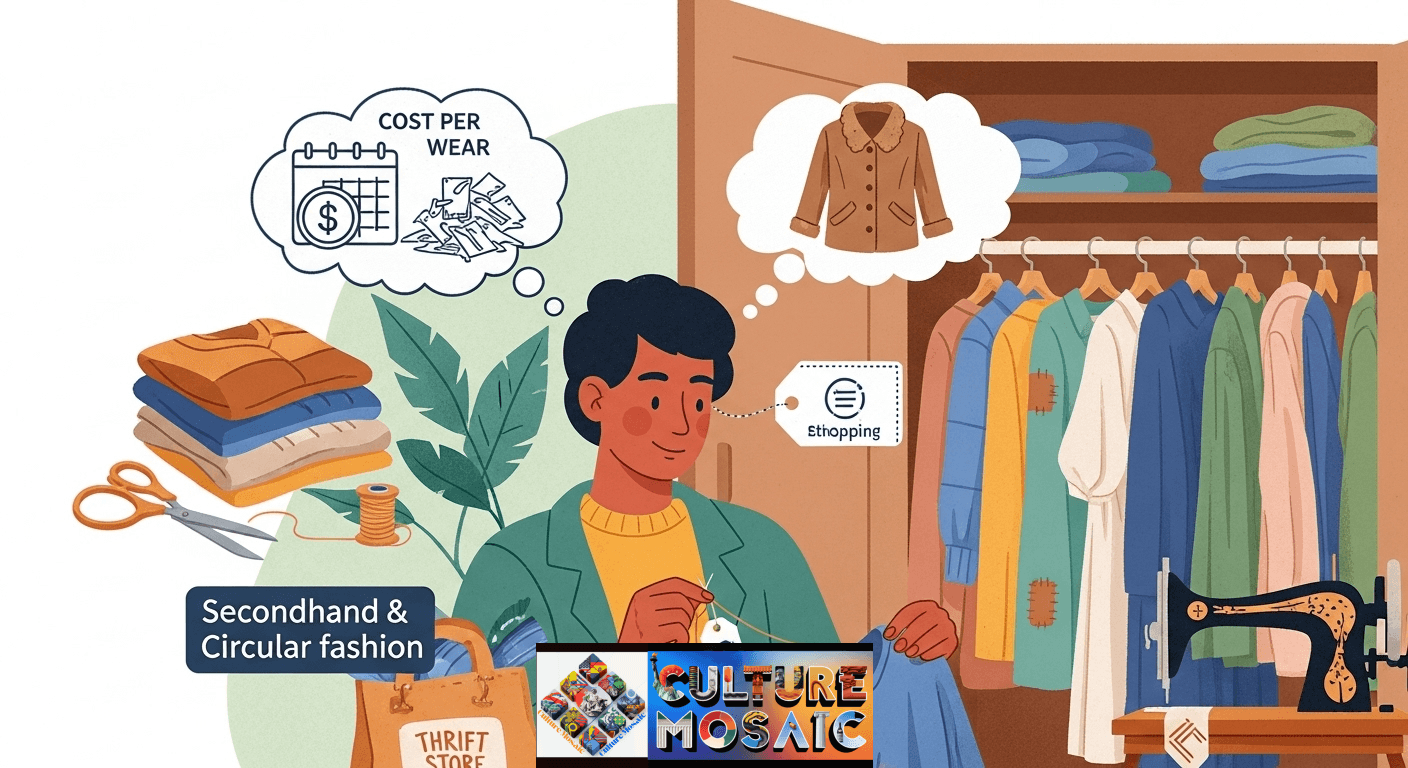
The most sustainable garment is the one already in your closet. Before buying anything new, ask yourself: Do I really need this? Will I wear it at least 30 times? Can I repair, upcycle, or reimagine something I already own instead?
Embracing a “cost per wear” mentality rather than a “lowest price” mentality transforms how you shop. That $100 ethically-made jacket you’ll wear for 10 years is ultimately cheaper and more sustainable than five $20 fast fashion jackets you’ll discard after a season.
Support Genuinely Ethical Brands
Look for brands with transparent supply chains that can tell you exactly where and how their garments are made. Seek out certifications from reputable third-party organizations. Support companies that pay living wages, use environmentally responsible materials and processes, and demonstrate long-term commitment to ethical practices—not just sustainability marketing campaigns.
Some brands to consider include Patagonia (with its robust repair program and supply chain transparency), Eileen Fisher (with take-back and recycling programs), and Everlane (known for “radical transparency” about costs and factories), though always do your own research as practices evolve.
Embrace Secondhand and Circular Fashion
Thrifting, vintage shopping, and clothing swaps extend garment lifecycles and reduce demand for new production. Online platforms have made secondhand shopping more accessible than ever, offering everything from high-end designer pieces to everyday basics.
Additionally, learn basic repair skills—sewing on a button, mending a seam, or darning a hole can extend a garment’s life by years andreduces your environmental footprint significantly.
Demand Corporate Accountability
Contact your favorite brands and ask about their supply chain practices, worker wages, and environmental impact. Support legislation that requires supply chain transparency and holds companies accountable for labor and environmental violations. Your voice as a consumer matters, especially when joined with others demanding change.
The Future of Fashion: Innovation and Responsibility
Emerging Technologies and Business Models
The Ethical Fabric: The fashion industry is at a crossroads. Innovative technologies like mycelium leather, lab-grown silk, and closed-loop recycling systems offer glimpses of a more sustainable future. Rental and subscription-based fashion models reduce ownership and waste. Blockchain technology promises improved supply chain transparency.
However, technology alone won’t solve the ethical problems embedded in fashion. True change requires a fundamental shift in business models, consumer behavior, and societal values—prioritizing people and planet alongside profit.
The Role of Regulation
Voluntary corporate responsibility has proven insufficient. Governments worldwide are beginning to implement regulations requiring supply chain transparency, environmental impact reporting, and accountability for labor violations. The EU’s proposed regulations on fast fashion and extended producer responsibility represent significant steps forward, though much more is needed.
Your Role in the Fashion Revolution
The Ethical Fabric: The fashion revolution won’t be televised—it’ll be worn. Every time you choose quality over quantity, ethical over exploitative, and conscious consumption over mindless accumulation, you’re participating in transforming one of the world’s most harmful industries.
Understanding the ethical fabric that connects your closet to cotton fields, factory floors, and waste mountains across the globe is the first step. The second step is action: voting with your wallet, demanding transparency, embracing sustainable practices, and recognizing that fashion should never cost someone their dignity, health, or future.
FAQs About The Ethical Fabric
Q: How can I tell if a brand is genuinely ethical or just greenwashing?
A: Look for third-party certifications (Fair Trade, GOTS, B Corp), transparent supply chain information including factory locations and wages, comprehensive sustainability reports with measurable goals and progress, and consistent ethical practices across the entire brand—not just select “conscious” collections. Be skeptical of vague claims and seek brands that welcome scrutiny and questions about their practices.
Q: Is buying secondhand clothing actually better for the environment?
A: Yes, significantly. Buying secondhand extends the lifecycle of existing garments, reducing demand for new production and keeping textiles out of landfills. A secondhand purchase eliminates the water consumption, chemical pollution, and carbon emissions associated with manufacturing new clothing. However, be mindful that excessive consumption—even of secondhand items—still contributes to overall waste when those items are eventually discarded.
Q: What’s a “living wage” in garment-producing countries, and why don’t workers receive it?
A: A living wage is the minimum income necessary for a worker to afford necessities, including food, housing, healthcare, education, and savings—not just survival. In Bangladesh, for example, the minimum wage for garment workers is approximately $95 monthly, while the estimated living wage is $214 monthly. Workers don’t receive living wages because the fast fashion business model depends on extreme cost-cutting, and brands pressure suppliers to reduce prices, which is accomplished by suppressing wages.
Q: Can fast fashion ever be sustainable?
A: The term “sustainable fast fashion” is largely an oxymoron. True sustainability requires reducing consumption, extending product lifecycles, and using environmentally responsible materials and processes—all of which contradict fast fashion’s business model of rapid production, trend cycling, and disposable clothing. While fast fashion companies can make incremental improvements (better materials, improved labor conditions, recycling programs), fundamental sustainability requires moving away from the fast fashion model entirely.
Q: What happens to clothes donated to charity or dropped in recycling bins?
A: Approximately 10-30% of donated clothing is sold in charity shops in the donating country. Another 10-20% is recycled into industrial rags or insulation material. The majority—50-70%—is exported to developing nations where it’s resold in secondhand markets. However, up to 40% of these exported garments are in such poor condition that they’re immediately discarded, creating waste management crises in countries least equipped to handle them. Very little donated clothing is actually recycled into new textiles due to technological and economic limitations.