
 By Culture Expert
Who Is the Most Famous Artist? A Global Reckoning Across Time
I get asked this question more than almost any other. Who is the most famous artist? It sounds simple. It isn’t. Fame in art doesn’t work the way fame works in pop music or sports. It layers. It accumulates. It shifts depending on whether you’re standing in a museum in Florence, scrolling a feed in Seoul, or bidding at Christie’s in New York. The honest answer is: it depends entirely on how you define the word ‘famous.’
Still. There are names that keep surfacing no matter where you look or how you ask the question. And then, sitting above all of them, there is one figure so singular that even asking who is the most famous artist without naming him first feels slightly dishonest. His name is Leonardo da Vinci.
Why the Question ‘Who Is the Most Famous Artist?’ Has No Single Answer
The problem is the word ‘famous.’ Do you mean the artist most studied in schools? The one whose work commands the highest prices? The one whose name a taxi driver in Jakarta would recognise? Or the one with 140 million Spotify listeners in May 2026? These are four entirely different answers, and they’re all defensible.
I’ve spent years teaching art history, and the question of who is the most famous artist is the one that never gets old. It forces you to confront what society actually values. Not what critics value. Not what academics value. What people value. That distinction matters more than most art historians want to admit.
Leonardo da Vinci: The Undisputed Anchor
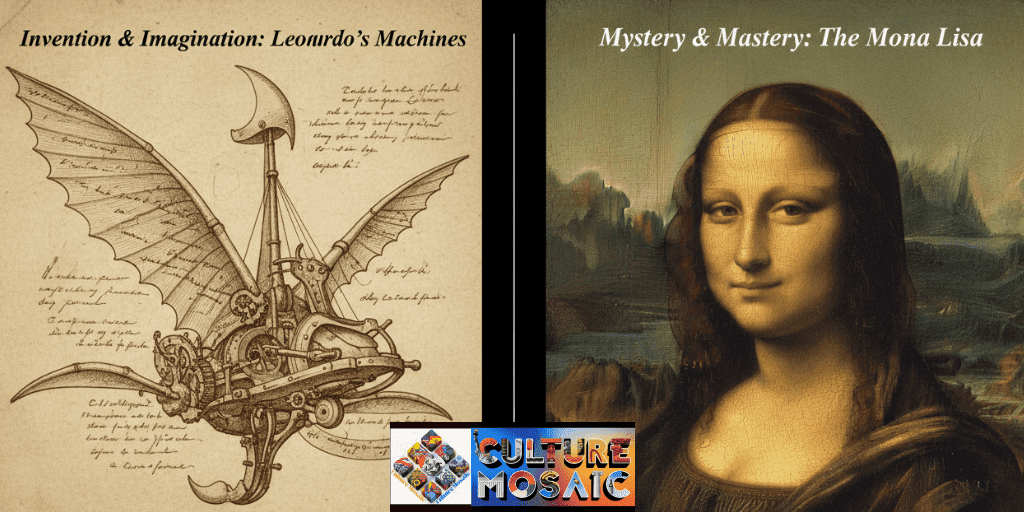
If you had to give one name, across every era and every culture, the answer is Leonardo da Vinci. The painter of the Mona Lisa. The architect of The Last Supper. The man who filled notebooks with flying machines five centuries before the Wright brothers. He isn’t just the most famous artist in history. He may be the most famous human being in history who wasn’t a military conqueror or a religious founder.
The Mona Lisa receives roughly six million visitors a year at the Louvre. It is the most visited painting on earth. If you want to understand why, read our full breakdown of the cultural and financial weight behind it.
For a deeper understanding of his captivating visual language, see our article on Leonardo da Vinci’s paintings, which explores the sfumato technique and the visual philosophy that made his work nearly impossible to replicate.
What Made Leonardo Different From Every Other Painter
Most great artists are great at one thing. Leonardo refused that bargain. He was a painter, yes. But he was also a sculptor, an anatomist, a civil engineer, a botanist, and a military strategist. His sketchbooks contain the first accurate drawings of the human heart. He designed a rudimentary helicopter. He wrote backwards in mirror script, possibly to protect his ideas from casual eyes.
That breadth is part of why he remains the answer to who is the most famous artist. He isn’t just a painter. He’s a symbol of human possibility. Schools teach him. Scientists quote him. Tech CEOs invoke him. No other artist in history occupies that kind of cultural real estate across that many disciplines.
Picasso: The Architect of the Modern Art Market
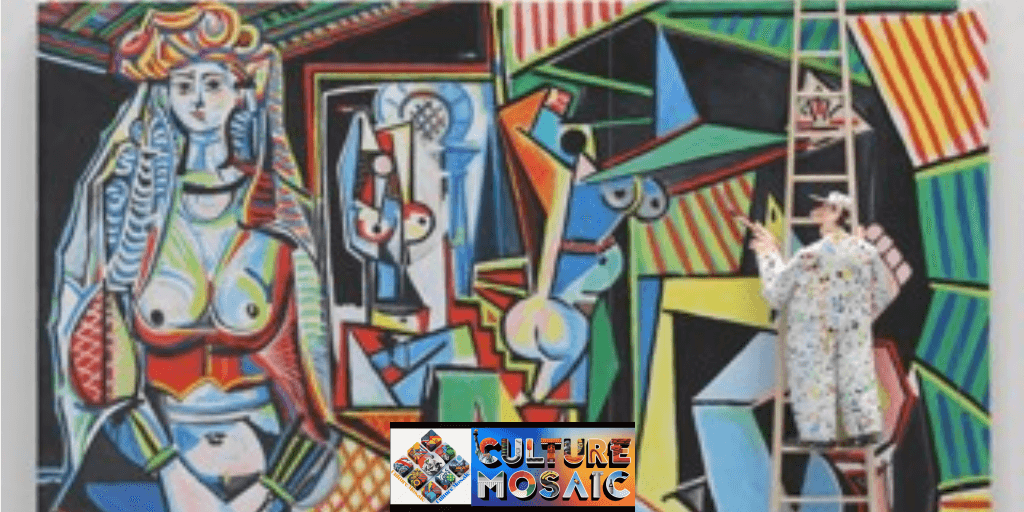
If Leonardo is the historical anchor, Pablo Picasso is the modern market’s foundation. When people ask who is the most famous artist of the 20th century, Picasso is usually the answer before the sentence finishes. His Guernica is the most politically potent painting of the last hundred years. His Blue Period work is some of the most emotionally raw painting ever made. And his late output, often dismissed by critics, now sells for tens of millions.
We covered the peace symbol that made him a global figure in our piece on Dove Picasso. It’s worth reading if you want to understand how one drawing became a permanent fixture in political protest worldwide.
Michelangelo, Rembrandt, and Van Gogh: The Eternal Shortlist
Any honest answer to who is the most famous artist has to account for this shortlist. Michelangelo gave us the Sistine Chapel ceiling and the David. Both are visited by millions annually. Both have been reproduced so many times they feel like part of the air. Rembrandt’s self-portraits changed how Western culture thought about introspection. Van Gogh’s Starry Night is arguably the most reproduced painting in the world after the Mona Lisa.
What’s striking about all three is how different their fame looks. Michelangelo is institutional. He belongs to the Church, to Florence, to marble. Rembrandt is psychological. His fame lives in the quiet weight of a face lit from one side. Van Gogh is emotional. His story, the madness, the ear, the letters to Theo, is as famous as his paintings. People feel him. That’s a different kind of fame from Leonardo, and it’s arguably harder to manufacture.
Gustav Klimt and the Decorative Canon
One name that often surprises people in this conversation is Gustav Klimt. The Kiss is, by some metrics, the most commercially reproduced artwork in Europe. It appears on more mugs, posters, and phone cases than any comparable painting. Our guide to The Kiss Gustav Klimt examines why this piece struck such a universal nerve and what Klimt’s gold-leaf obsession tells us about desire and surface.
How Do We Measure Artistic Fame in 2026?
Here is where it gets genuinely complicated. The question of who is the most famous artist looks different in 2026 than it did in 1996. The internet collapsed the hierarchy. Museum attendance still matters, but so does search volume, social media reach, NFT auction records, and Spotify streams. Fame is now multi-channel in a way that would have been structurally impossible for even a decade-ago art world to process.
I think about it in four tiers. The Legacy Masters, those are da Vinci, Michelangelo, Picasso. Their fame is geological. It doesn’t move quickly, but it doesn’t erode either. Then there are the Institutional Stars like Yayoi Kusama and Jeff Koons, whose fame is validated by museum retrospectives and blue-chip auction results. Below that, the Urban Icons like KAWS, whose reach lives between gallery walls and streetwear drops. And finally, the Streaming Sovereigns like Justin Bieber and Taylor Swift, whose ‘artistry’ is contested by purists but whose fame metrics dwarf everyone else alive.
Fame Comparison: Who Is the Most Famous Artist by Category (2026)
*Data curated for Culture Mosaic as of May 2026.
The Fame Quadrant: Institutional Validation vs. Digital Reach
The scatter plot below displays twelve artists mapped across two axes. Vertical is institutional validation: museum retrospectives, auction records, curriculum presence. Horizontal is digital reach: streaming numbers, search volume, social media footprint. The most interesting names are the ones that sit close to the centre, where both forces are pulling at once.
Yayoi Kusama: The Living Standard for Fine Art Fame
In contemporary fine art, the question of who is the most famous artist alive almost always lands on Yayoi Kusama. Her 2026 retrospectives in Basel and Shanghai drew crowds that rivalled blockbuster museum shows. Her ‘Infinity Rooms,’ mirrored chambers filled with suspended lights that seem to stretch into infinity, have been photographed by millions of visitors who had no prior interest in conceptual art.
That is a remarkable thing. Kusama made polka dots and pumpkins into one of the most recognisable visual signatures on earth. She did it through sixty years of relentless output and a personal story, her voluntary psychiatric hospitalisation in Tokyo, her obsessive relationship with repetition as a coping mechanism, that gives her work a kind of biographical gravity that most contemporary artists never achieve.
The Digital Sovereign: Justin Bieber’s 2026 Claim
If fame is measured purely by reach, then the most famous artist alive in May 2026 is not a painter. It’s Justin Bieber. Following a career-redefining Coachella performance, Bieber reached a peak of over 140 million monthly Spotify listeners, the highest figure in the platform’s history. His comeback narrative, built around singles like ‘Daisies’ and ‘Walking Away,’ pushed him ahead of Taylor Swift and Bad Bunny in raw streaming terms.
I know that will irritate people who want this conversation to stay inside gallery walls. But if we are genuinely asking who is the most famous artist in the world right now, ignoring the person that 140 million humans chose to listen to this month seems like intellectual bad faith. Fame has always been about who people actually pay attention to, not just who critics approve of.
The Mona Lisa Question: Is the Most Famous Painting Also the Most Famous Artist?
One way to answer who is the most famous artist is to ask: whose single work is most famous? By that metric, Leonardo wins again. The Mona Lisa is more than just a painting. It’s a cultural shorthand for art itself. It’s the painting that gets stolen in heist films and reproduced on T-shirts and debated in philosophy classrooms. If you want to understand what makes it so strange and powerful, our piece on How Much Is the Mona Lisa Worth puts the financial and cultural numbers side by side in ways that will likely stop you mid-sentence.
Fame Across Cultures: Who Is the Most Famous Artist Outside the Western Canon?
One honest caveat in this whole conversation: the Western art historical canon is a real and persistent bias. When most English-language sources answer who is the most famous artist, they draw from a very specific European and American tradition. But artists like Hokusai, whose Great Wave off Kanagawa is arguably the most reproduced image in Japanese art history, command fame that is staggering in scope. Zhang Daqian, the Chinese master painter and forger, is another figure whose influence runs so deep in East Asian art markets that Western collectors often don’t fully understand it.
I think this is changing. The 2026 art fair circuit, with major events in Seoul, Shanghai, and Abu Dhabi growing in stature, is redistributing the definition of whose work counts as culturally central. In ten years, answering who is the most famous artist may look very different if you ask someone in Beijing rather than someone in London.
The Zeitgeist Pioneers: Mulgil Kim and Zhou Song
Fame in 2026 is also being claimed by artists who represent something genuinely new. Mulgil Kim’s ‘Contemporary Surrealism’ work has attracted collectors who are part of the wider ‘Slow Down’ cultural movement, a deliberate resistance to digital acceleration. Zhou Song uses oil painting to explore AI and algorithmic thinking. Both are names that matter to readers of Culture Mosaic precisely because they bridge art history and the present moment without being nostalgic about either.
Why Pop Stars Enter the ‘Most Famous Artist’ Conversation
This is a tension worth sitting with. When we at culture mosaic cover figures like Michael Jackson alongside Renaissance masters, we’re acknowledging something real: the word ‘artist’ has always been contested. Jackson’s choreography, visual language, and album architecture were genuinely artistic in the fullest sense of the word. Our deep dive on Best Michael Jackson Songs approaches his catalogue the same way an art critic would approach a painter’s body of work, with attention to evolution, intention, and lasting influence.
The same logic applies to Taylor Swift, whose songwriting craft and visual storytelling have been analysed by musicologists and cultural critics with exactly the same seriousness one would bring to a Picasso retrospective. Fame doesn’t sort neatly into high and low. It never has.
The Top 10 Most Famous Artists in History: Where Critical Consensus Lands
For a more structured look at the painters who changed everything, our full ranking of the Top 10 Best Painters Artists walks through the canonical figures who shaped Western visual culture from the Renaissance through the 20th century. It’s the kind of list that generates arguments, which is precisely the point.
What that ranking makes clear is that artistic fame is cumulative. It builds across generations of critics, educators, collectors, and ordinary people who stand in front of a painting and feel something they can’t quite name. The most famous artist is whoever has generated the most of that feeling, across the most people, across the most time. By that measure, Leonardo still sits at the top. But the race is always running.
Cultural Crossover: When Art History Meets Celebrity
One thing I’ve noticed in the last few years is how often art history bleeds into celebrity culture in unexpected ways. Consider the profile of Sheena Catacutan BINI: a profile of a pop figure whose visual aesthetic draws heavily on archival and art historical references. That kind of cross-pollination is becoming more common. The most famous artists of the next decade may emerge from exactly this space, where fine art literacy meets platform-era reach.
Fame is no longer a single lane. It’s a road system. And the most interesting artists in 2026 are the ones building bridges between lanes that used to have no connection at all.
Frequently Asked Questions
Who Is the Most Famous Artist?
Q1: Who is universally considered the most famous artist in history?
Leonardo da Vinci. His Mona Lisa is the most visited painting on earth, and his name is recognised across virtually every culture and educational system. No other artist combines that level of visual recognition with cross-disciplinary intellectual prestige. Runners-up include Michelangelo, Picasso, and Rembrandt, but Leonardo’s global footprint has no rival.
Best Practices for Researching Historical Fame:
- Look at museum attendance data rather than just auction records to see public value.
- Cross-reference Western sources with global scholarship for a less biased picture.
- Distinguish between centuries of accumulated fame and current digital search volume.
- Read the artist’s own writings; Leonardo’s notebooks reveal a mind beyond painting.
- Consider the “reproduction factor”—the most famous works are the most parodied and referenced.
Q2: Who is the most famous living artist in 2026?
In fine art, Yayoi Kusama holds the strongest claim, backed by major 2026 retrospectives in Basel and Shanghai. In terms of raw fame across all disciplines, Justin Bieber’s 140 million monthly Spotify listeners make him statistically the most listened-to artist alive. The answer depends on whether you’re asking about fine art fame or global pop fame.
Best Practices for Tracking Living Fame:
- Monitor annual results from Christie’s, Sotheby’s, and Phillips for fine art indicators.
- Track retrospective schedules at major institutions like the Tate or Basel.
- Use real-time transparent metrics from Spotify, Apple Music, and YouTube for music.
- Follow art fair programming in Shanghai and Seoul to see where taste is set.
- Read secondary market analysis from firms like Art Basel to separate speculation from presence.
Q3: Is Pablo Picasso more famous than Leonardo da Vinci?
In raw name recognition, they are roughly equivalent. However, Leonardo edges ahead because of the Mona Lisa—it anchors his name in a way no single Picasso work matches. Picasso leads in market dominance and 20th-century influence, but Leonardo wins the cross-cultural, cross-century recognition contest.
Best Practices for Comparing Historical Fame:
- Use Google search volume as a proxy for global name recognition.
- Check international school curricula; curriculum presence is a deep indicator of institutional fame.
- Compare how many major institutions hold their work as “permanent anchors.”
- Assess market volume over ten-year periods, ignoring single auction outliers.
- Apply the “taxi driver test”: would a random person in a non-Western city recognize the name?
Q4: Does ‘most famous artist’ include musicians and performers?
This is a genuine debate. While traditional art history limits “artist” to visual practitioners, broader cultural discourse includes musicians and performers. If we include all disciplines, fame metrics shift dramatically toward pop figures. Today, most critics use a contextual definition depending on the audience.
Best Practices for Defining Artist Context:
- Always specify the discipline to avoid circular arguments.
- Acknowledge that the word “artist” has expanded significantly in the last 50 years.
- Use “visual artist” when specifically referring to painters or sculptors.
- Recognize that figures like Taylor Swift are now analyzed with scholarly rigor.
- Read cultural criticism that bridges both worlds (e.g., Dave Hickey).
Q5: What is the most famous artwork by the most famous artist?
By almost any measure, the Mona Lisa by Leonardo da Vinci. It draws six million visitors annually, has been stolen, parodied, and debated more than any other work. Its subject’s smile has generated more scholarly writing than entire art movements. It is the closed answer for “most famous artwork.”
Best Practices for Understanding the Mona Lisa:
- Read Giorgio Vasari’s original 1550 account for a Renaissance perspective.
- Understand the 1911 theft, which front-paged the painting globally and sparked its fame.
- Study the sfumato technique—the blurring of edges that remains difficult to replicate.
- Consider its small size; the gap between expectation and reality is a cultural phenomenon.
- Follow the identity debate (Lisa Gherardini vs. idealised composite) to see its staying power.
 Dr. Julian Thorne