
 By Culture Expert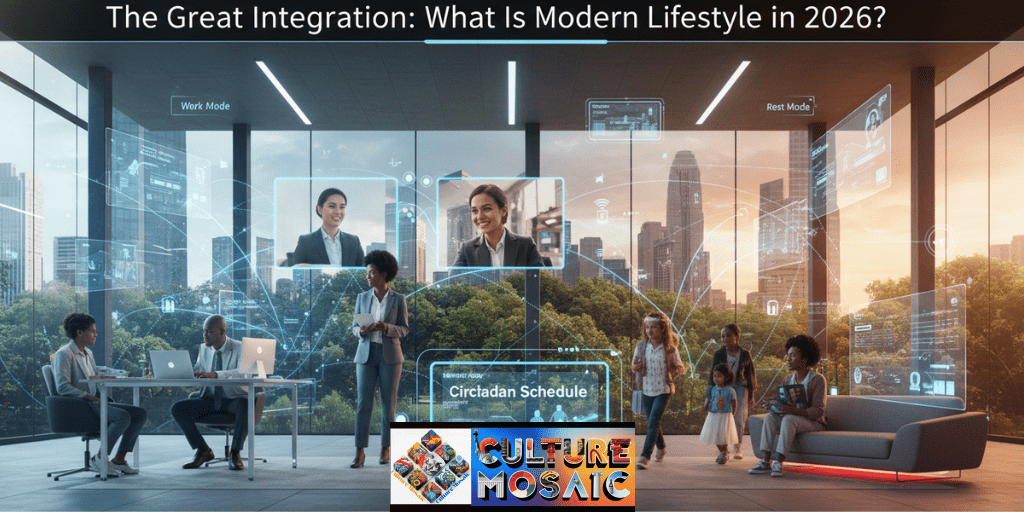
What Is Modern Lifestyle? Essential Trends for Intentional Living in 2026
Here’s what no one tells you about modern life: the hardest part isn’t the pace. It’s the negotiation. Every morning you’re quietly bargaining between the phone on your nightstand and the herb you’re trying to keep alive on the balcony. Between the algorithm and the afternoon walk. Between convenience and some older, quieter thing you can’t quite name.
So what is modern lifestyle, really? Not the Instagram version, and not the think-piece version either. I think it’s best understood as a conscious effort to integrate high-tech convenience with low-tech wellness — and the friction between those two poles is where most of us actually live.
This isn’t abstract. It shows up in how we design our homes, choose our neighborhoods, eat our meals, and measure success. It’s civic, it’s personal, and it’s shifting faster than most cultural frameworks can track.
What Is Modern Lifestyle? A Working Definition
At its core, the modern lifestyle is a daily negotiation between autonomy and connection, between global access and local rootedness. It’s defined less by what we own and more by the systems we’ve chosen to participate in — or deliberately opted out of.
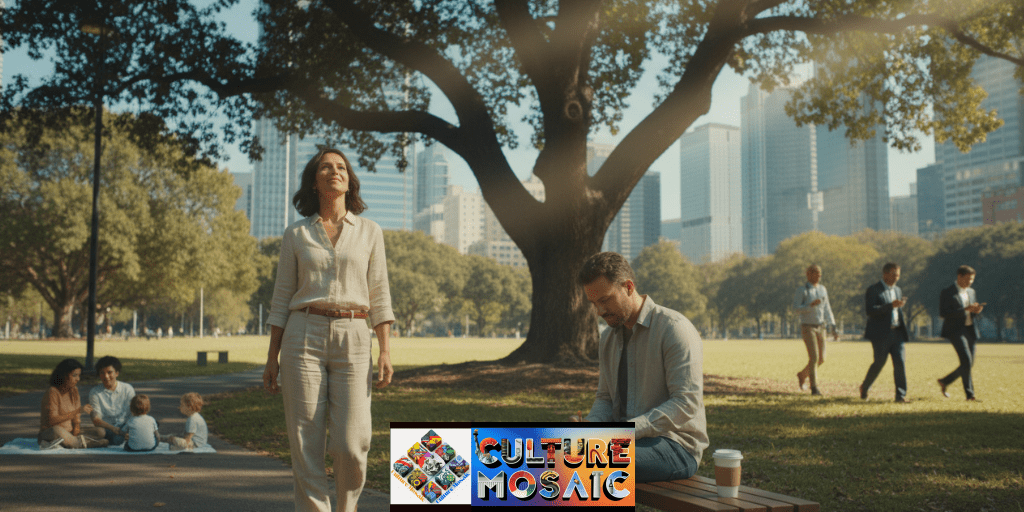
Where traditional lifestyles were shaped by geography, religion, or inherited occupation, the modern version is chosen. That’s both its power and its weight. You get to decide. But deciding, constantly, is exhausting. Which is why so much of what defines modern life in 2026 is actually about simplification — finding structures that reduce the cognitive tax of endless choice.
The Shift Away from ‘Busy’ as a Status Symbol
The 2010s worshipped busyness. Calendar density was proof of importance. That era is over. I’ve noticed, particularly in conversations with people in their 30s and 40s, a quiet rejection of that logic. The new status symbol is margin — time that isn’t accounted for. The ability to take a Tuesday afternoon walk without guilt.
This shows up in research too. Studies on urban well-being consistently find that perceived time pressure is more strongly correlated with worse health outcomes than actual work hours. The modern lifestyle, at its most aspirational, is an attempt to reclaim time as a resource rather than a metric.
The New Urban Blueprint: 15-Minute Cities and the End of the Commute
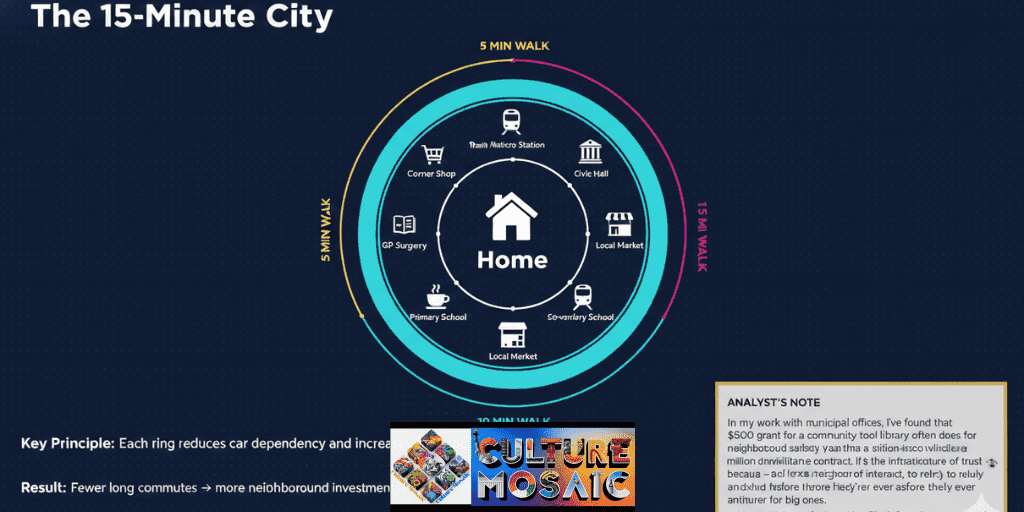
From my work in civic infrastructure, I can tell you this: nothing shapes daily life more reliably than urban planning. What does a modern lifestyle look like without considering the city we navigate through?
Micro-Civic Interventions and the 15-Minute City
The 15-minute city concept — where everything you need is a short walk or cycle away — has moved from urban theory into actual policy in cities from Paris to Melbourne. Local grant programs like Love Your Block in the US are funding exactly this kind of neighbourhood-scale transformation: pocket parks, community gardens, shared tool libraries.
Urban Planning Diagram — How the 15-Minute City Works
Corner Shop • Café • Primary School • Park
GP Surgery • Library • Local Market • Co-working Space
Train/Metro Station • Secondary School • Civic Hall
Key Principle: Each ring reduces car dependency and increases daily social contact.
Result: Fewer long commutes → more neighbourhood investment → stronger civic trust.
The result is a quieter but meaningful change in what is modern lifestyle day-to-day. People are running errands on foot, knowing their neighbours again, and spending less time in cars. It’s not utopia. But it’s noticeably different from the sprawl-and-commute pattern of the previous generation. For a deeper look at how the Modern American Lifestyle is navigating this shift, it’s worth reading that piece in full.
The Work-From-Third-Space Movement
The office didn’t die. It just moved. The professional modern lifestyle increasingly plays out in co-working social clubs, library study rooms, and neighbourhood cafés with reliable Wi-Fi. These third spaces function as community infrastructure. They generate the low-level social contact that remote work otherwise strips out. Many cities are beginning to fund them as civic amenities rather than leaving them to the market alone.
Sustainable Intentionality: Defined by What We Refuse
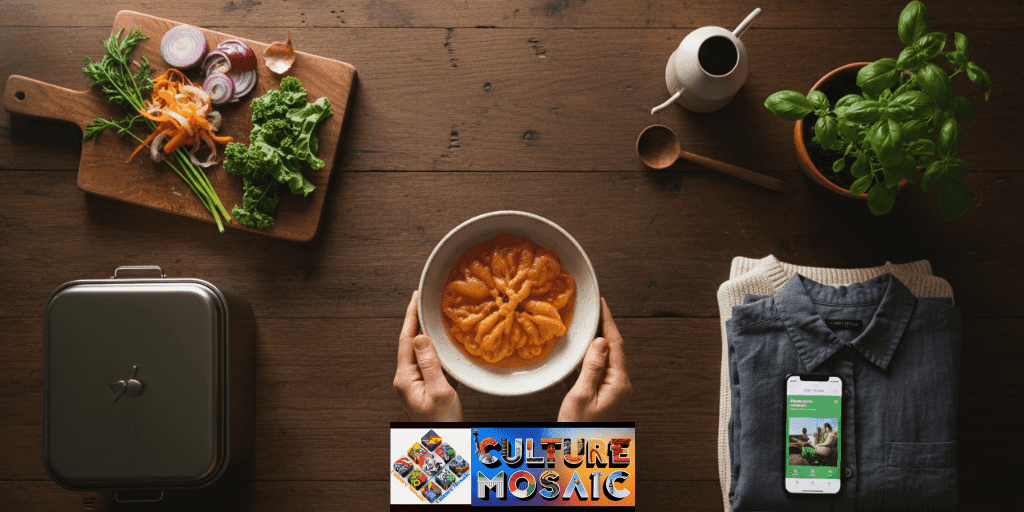
One of the stranger features of the modern lifestyle is that refusal has become a defining act. What you don’t buy, don’t eat, don’t click on — these negatives carry real meaning now.
Conscious Consumption and Slow Fashion
The slow fashion movement has moved decisively past the niche. Second-hand platforms, clothing rental services, and capsule wardrobes are no longer countercultural — they’re practical. The underlying logic is the same across food, fashion, and electronics: buy fewer things, but buy them better. Repair rather than replace. Know the origin of what you consume.
Kitchen Scraps and Urban Waste Management
Practical sustainability looks less heroic than the marketing suggests. In most urban kitchens, it means a compost caddy on the counter, cooking with the whole vegetable, and knowing your building’s recycling rules. For anyone curious about fitting this into a small-space kitchen, the question of what is considered kitchenware is worth revisiting — because the tools you choose shape the habits you build.
The Wellness Multiplier: From Reactive Healthcare to Proactive Design
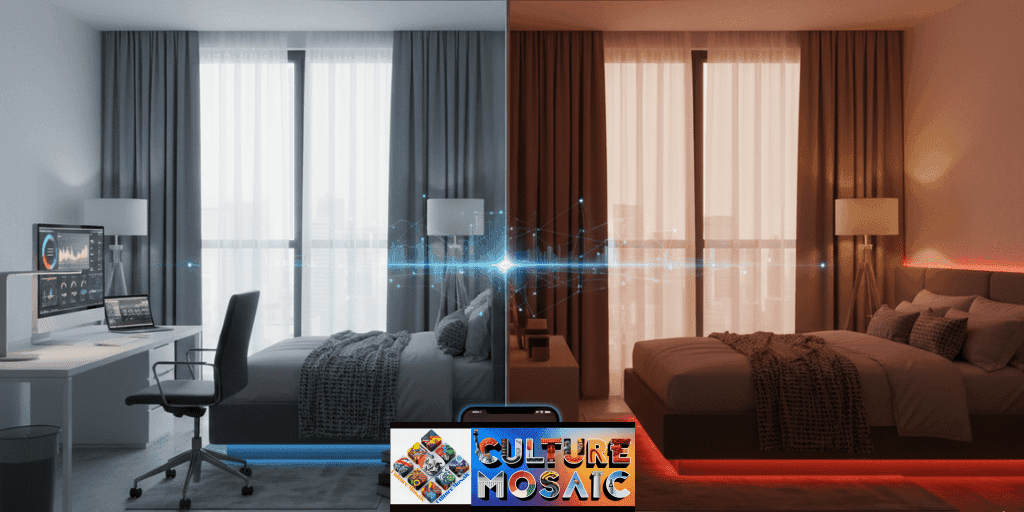
Healthcare used to be something that happened to you. Modern lifestyle thinking, at its most ambitious, treats wellness as something you build into the daily architecture of your life before anything goes wrong.
Digital Minimalism and Scheduled Analog Hours
This is where what is modern lifestyle gets genuinely complicated. The devices that connect us also fragment us. The research on declining civic knowledge and social cohesion points, consistently, to chronic low-grade screen saturation as a contributing factor. The response isn’t technophobia — it’s scheduling. Analog hours, morning pages, walks without headphones. Small structural choices that restore interior quiet.
Restorative Architecture at Home and in the City
The design of spaces has measurable effects on how we feel. Circadian lighting that shifts with the day, access to natural materials, views of greenery — these aren’t luxuries. They’re increasingly understood as health infrastructure. For practical guidance, circadian lighting for small modern apartments is a good starting point.
The broader idea of spatial decoupling for home — separating work, rest, and social life into distinct zones even within small spaces — has become a genuine design discipline. And the modern heritage living room represents another response: bringing warmth, material depth, and continuity into spaces that technology alone makes feel cold.
2010s vs. 2026: How the Modern Lifestyle Has Actually Changed
The differences aren’t always dramatic. But they’re consistent enough to be meaningful.
| Feature | The 2010s Lifestyle | The 2026 Modern Lifestyle |
|---|---|---|
| Connectivity | Always-on, globally focused | Intentional-on, hyper-local focus |
| Work | Office-centric, commute-driven | Flexible, community-hub integrated |
| Success Metric | Accumulation and speed | Resilience and connection |
| Home Life | Privacy-focused, inward-facing | Civic-engaged, neighbour-aware |
| Wellness Approach | Reactive (treat when broken) | Proactive (design before breakdown) |
Analysis of shifting cultural frameworks, 2010–2026.
The Civic Integration Self-Assessment
How integrated is your modern lifestyle, really? Ask yourself these four questions:
- How often do you interact with neighbours you didn’t already know?
- Can you name a local initiative or community project within a mile of your home?
- How much of your daily life — errands, work, food — happens within 15 minutes of home?
- Do you have scheduled time offline — no screens, no alerts?
If most of your answers are ‘rarely’ or ‘never,’ that’s not a verdict — it’s a starting point. One local habit added per month compounds faster than you’d expect.
Why Modern Lifestyle Is Really About Trust
I keep coming back to this, and I think it’s the thing most lifestyle writing misses: what is modern lifestyle at its deepest level is a question about trust. Trust in systems, in neighbours, in institutions, in yourself.
The modern lifestyle isn’t built from gadgets. It’s built from accumulated small decisions that signal, to yourself and to the people around you, what you value. The herb garden. The walking commute. The local grant application. The phone left in another room during dinner. None of these things are radical. Together, they constitute a life that has a legible shape.
The ‘Data Point’ Argument for Living Well Together
From a civic infrastructure perspective, every person who lives this way is a kind of argument. A proof of concept. That hyper-local community investment works. That intentional design reduces stress. That connection is a better return on time than content consumption.
You’re not just building a modern lifestyle for yourself. You’re contributing, quietly, to the evidence that people can live better, together. That’s not nothing. In fact, in 2026, that might be the most counter-cultural act available to any of us.
Frequently Asked Questions: What Is Modern Lifestyle?
1. What is modern lifestyle and how does it differ from traditional lifestyles?
The modern lifestyle is a chosen, designed way of living that integrates technology, health awareness, and civic participation. Traditional lifestyles were largely inherited — shaped by geography, family structure, and religion. The modern version is self-authored, creating greater freedom but also requiring deliberate design.
Five defining practices:
- • Choose community intentionally rather than inheriting it through geography.
- • Design daily routines around energy and wellbeing, not just productivity.
- • Use technology selectively, with scheduled offline periods each day.
- • Prioritise local civic participation over purely global digital connection.
- • Measure success by resilience and relationship quality, not accumulation.
2. How does technology shape what is modern lifestyle today?
Technology is both the defining feature and central tension of modern lifestyle. It enables remote work and global connection but also contributes to distraction and social fragmentation. The healthiest approach treats technology as a utility: use it when it serves you, switch it off when it doesn’t.
Five digital wellness practices:
- • Set defined analog hours each day — no phone, no screens.
- • Use app timers to audit where your attention actually goes each week.
- • Choose communication tools that encourage depth over volume.
- • Separate work devices from personal ones, physically if possible.
- • Review your digital habits quarterly, the same way you’d review finances.
3. What role does community play in defining modern lifestyle?
Community is increasingly understood as infrastructure, not a bonus. Research on loneliness and health outcomes consistently shows that proximity and participation are foundational to a functioning modern life.
Five community practices:
- • Join or start a neighbourhood group — even a small one.
- • Use a co-working space rather than isolating at home every day.
- • Attend one local civic meeting or community event per month.
- • Develop relationships with local business owners and food producers.
- • Contribute to a shared local resource — a tool library, a garden, a mutual aid group.
4. How does sustainable living fit into what is modern lifestyle?
Sustainability has moved from ideology to practice in the modern lifestyle. The defining shift is from virtue signalling to systems thinking — building habits that make sustainable choices the default rather than the exception.
Five sustainable practices:
- • Adopt a one-in, one-out rule for clothing and household goods.
- • Learn your local food seasonality and shop accordingly.
- • Reduce food waste by cooking with the whole ingredient.
- • Choose repair over replacement for electronics and appliances.
- • Track your household energy and water use quarterly.
5. What does wellness mean in the context of modern lifestyle?
Wellness in the modern lifestyle is proactive, not reactive. It’s the recognition that stress, poor sleep, and social disconnection are design problems as much as personal failures — and that the solution is structural.
Five structural wellness practices:
- • Treat sleep as a non-negotiable system, not a variable you cut from.
- • Design your physical space to separate work, rest, and social activity.
- • Schedule restorative activities — walks, reading — the way you schedule meetings.
- • Build in regular social connection that doesn’t involve screens.
- • Review your stress sources annually and remove or reduce one each time.