
 By Culture Expert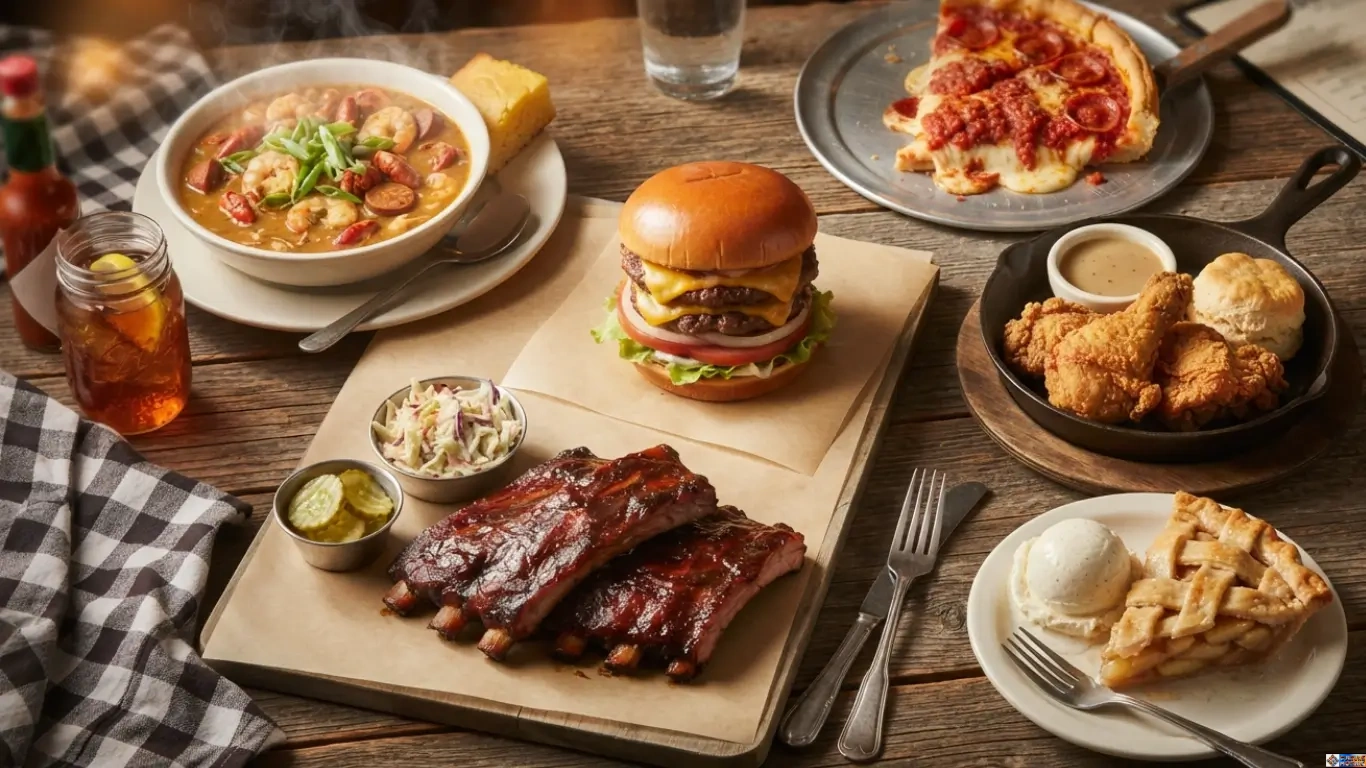
USA Famous Dishes represent far more than fast-food shortcuts or casual convenience. They form a vast, multi-layered culinary tapestry shaped by centuries of Indigenous foodways, transatlantic migrations, regional climates, and local adaptation. From the low-and-slow pit barbecue of the American South to the wood-planked salmon of the Pacific Northwest, authentic American food culture reflects a diverse network of regional traditions.
The Misconception: Unpacking the American Palette
Global perception frequently reduces traditional American cuisine to mass-produced burgers, processed cheese slices, and pre-packaged snacks.
This narrow view overlooks the profound complexity of North American gastronomy. When regional foodways are flattened into drive-thru stereotypes, home cooks lose sight of the deep cultural history behind dishes like Louisiana Gumbo, South Carolina Hoppin’ John, and New England Clam Chowder.
American food culture is a living archive of human movement. Indigenous agricultural foundations—such as corn, squash, and wild rice—merged with West African culinary techniques, Iberian bases, French classicism, and Asian cooking methods to create dishes rooted in time and place.
To explore more about global food traditions and regional heritage, visit Culture Mosaic.
Regional Breakdown of Iconic American Cuisine
To understand famous dishes in America, the country must be explored through its distinct regional hubs. Each region reflects a unique balance of geography, native ingredients, and historical settlement patterns.
| US Region | Primary Historical Influences | Iconic Dish | Core Flavor Profile |
|---|---|---|---|
| The South & Gulf Coast | West African, French, Choctaw, Spanish | Louisiana Gumbo & Jambalaya | Dark roux, filé powder, smoked pork, holy trinity (onion, celery, pepper) |
| New England & Mid-Atlantic | Wampanoag, British Colonial, Italian | Clam Chowder & NY-Style Pizza | Salt pork, milk/cream, shellfish, thin-crust yeast dough, fermented tomato |
| Texas & The Southwest | Mexican, Native American, German/Czech | Central Texas Smoked Brisket | Low-and-slow oak smoke, coarse salt, heavy cracked black pepper |
| The Midwest & West Coast | Scandinavian, German, Asian, Hispanic | Cedar-Plank Salmon & Deep Dish | Fresh seafood, soy-citrus glazes, slow-braised corn fed meats, thick tomato-cheese pie |
The American South: Deep History and Complex Roux
Southern culinary traditions represent some of the oldest and most complex foodways in the United States. Dishes like Gumbo and Jambalaya demonstrate the powerful contributions of West African cooks who introduced okra, braising methods, and rice cultivation to the Gulf Coast. Joined by Native American filé (ground sassafras leaves) and French roux foundations, these dishes represent true regional fusion.
Similarly, Southern fried chicken traces its lineage back to Scottish skillet-frying combined with West African seasoning techniques and palm-oil frying practices. For a broader look at how regional traditions develop across global cultures, read about Hispanic Cultural Foods.
New England & Mid-Atlantic: Maritime Staples and City Classics
Along the northeastern coast, food traditions developed around cold-water seafood and European colonial methods. New England Clam Chowder—a cream-based stew rendered with salt pork, tender clams, and potatoes—was originally crafted by 18th-century sailors and coastal communities.
Further south in New York and Philadelphia, late 19th-century European immigration birthed city-defining staples. Neapolitan immigrants adapted traditional pizza to high-heat coal deck ovens, creating the wide, foldable New York-style slice. In Philadelphia, Italian and Jewish butchers laid the groundwork for the Philly Cheesesteak: thinly shaved ribeye cooked fast on a flat-top griddle with melted cheese.
Texas & Southwest: Fire, Smoke, and Border Traditions
In Texas and the Southwest, cooking methods revolve around open flames and slow smoke. Central Texas barbecue was shaped by German and Czech butcher shops in the 19th century, who used native post oak wood to smoke unsold cuts of beef brisket.
This area also marks the intersection of Indigenous farming and Mexican border cooking. For a detailed guide on iconic smoked meat preparations, check out USA Famous Dishes.
Ancestral Roots & Traditional Cooking Techniques
Understanding iconic regional US dishes requires looking at the core techniques that define them:
- Pit-Smoking & Low-and-Slow Barbecue: Hardwoods like hickory, mesquite, and oak are burned down to coals to transform tough cuts of meat into tender, smoky barbecue over 12 to 18 hours. Discover how historical methods preserve flavor in our overview of Heritage Cooking Techniques.
- Roux Building: Cooking equal parts flour and fat over low heat—ranging from a light blonde roux for chowders to a dark mahogany roux for Creole stews—creates texture and deep umami bases.
- Fermentation & Curing: From traditional Carolina vinegar-pepper sauces to historic sourdough starters born in the Pacific Northwest, natural preservation techniques remain foundational.
To explore how communal eating patterns preserve cultural memory through food, explore Dining Rituals and Somatic Food Memory.
Simple Ways to Prepare Traditional American Dishes at Home
You don’t need a commercial smokehouse to bring authentic American regional flavors into your daily meal planning:
- Master the Holy Trinity: Base your stews and rice dishes on equal parts finely diced onion, celery, and green bell pepper sautéed slowly in oil or butter.
- Build a Custom Spice Rub: Move away from store-bought seasonings. Combine coarse kosher salt, cracked black pepper, smoked paprika, garlic powder, and cayenne for an authentic barbecue base.
- Use Cast Iron cookware: Sear meats, bake cornbread, and fry chicken in heavy cast iron to retain even heat and develop an authentic golden crust.
To explore traditional approaches to seasonal and sustainable cooking, read about Regenerative Heritage Recipes.
Frequently Asked Questions About USA Famous Dishes
What is the most famous dish in the US?
While regional preferences vary, the hamburger is widely recognized as the most iconic American dish globally. Originating from German immigrant roots and popularized at turn-of-the-century state fairs, it has evolved into a centerpiece of American casual dining.
What food is originally from America?
Foods indigenous to the Americas include maize (corn), wild rice, cranberries, pumpkins, blueberries, peanuts, turkey, and various squash varieties. Native American agricultural techniques using these ingredients laid the groundwork for modern North American cuisine.
What are the top 10 most popular American dishes?
The top 10 most popular dishes typically include:
- Hamburgers / Cheeseburgers
- Southern Pit Barbecue (Pulled Pork & Beef Brisket)
- Fried Chicken
- New England Clam Chowder
- Louisiana Gumbo
- Buffalo Wings
- Macaroni and Cheese
- Philly Cheesesteak
- New York-Style Pizza
- Apple Pie
How did immigration shape iconic regional US dishes?
Immigration is the single largest factor in shaping American foodways. Enslaved African cooks introduced crucial ingredients, seasoning methods, and rice-farming knowledge to the South. European immigrants brought baking, butchery, and cheese-making practices, while Asian and Hispanic immigrants introduced wok techniques, chili cultivations, and complex spice profiles that define West Coast and Southwestern kitchens.
What are some easy USA famous dishes to make for dinner at home?
Beginner-friendly dishes include Classic Southern Fried Chicken, New England Clam Chowder, One-Pot Chicken Jambalaya, Baked Macaroni and Cheese, and Classic Beef Burgers prepared on a hot cast-iron skillet.
References & Academic Sources
- Smithsonian Institution: Foodways: Exploring Regional American Food Cultures.
- Library of Congress: American Memory: Historic American Cookbook Collection.
- Oliver, Sandra L. Food in Colonial and Federal America. Greenwood Press.
- Johansens Food & Travel Archives: US Food: Iconic Dishes and Where to Eat Them. Read Online Reference.