
 By Culture Expert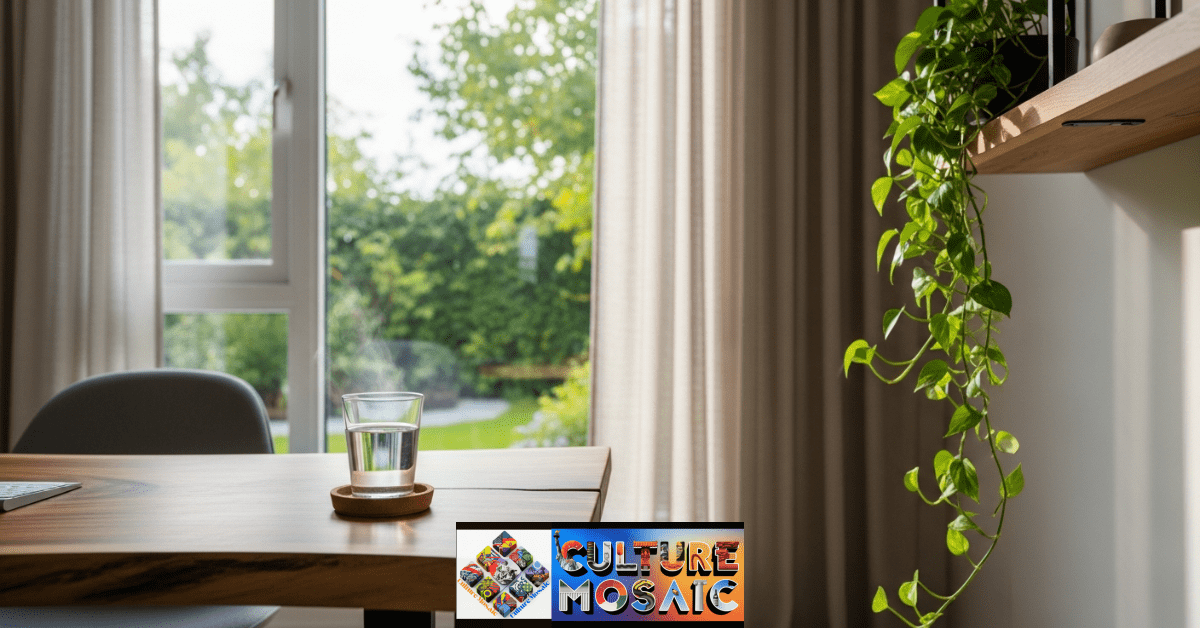
How to Create a Biophilic Home: Our biology hasn’t changed in 50,000 years, but our habitat has. If you feel cabin fever in your own living room, it’s not the walls—it’s the lack of life. I’ve spent fifteen years helping people understand that we’re not just decorating anymore. We’re restoring our internal equilibrium, one intentional choice at a time.
Here’s what I’ve learned: The average person spends 90 percent of their time indoors, yet our brains are hardwired for landscapes we no longer see. This disconnect manifests as mental fatigue, persistent stress, and that nagging feeling that something is off. When clients come to me exhausted despite getting enough sleep, I know exactly what’s missing. Their homes have become sensory deserts.
Creating a biophilic home isn’t about buying expensive furniture or filling every corner with plants. It’s about understanding how your nervous system responds to specific patterns, textures, and spatial cues that signal safety and restoration. Let me show you how.
The Science: Attention Restoration Theory

I always start here because once you understand this, everything else clicks into place. Your brain operates with two types of attention, and knowing the difference changes how you design your space.
Directed attention requires effort and focus. It’s what you use when answering emails, navigating traffic, or solving problems. This attention depletes quickly, leaving you mentally exhausted. Involuntary attention happens effortlessly when your mind is gently captured by natural elements—the sway of leaves, the texture of bark, patterns in clouds.
Environmental psychologists Rachel and Stephen Kaplan discovered that exposure to natural environments allows directed attention to rest and recharge. When you look at nature, your brain shifts into effortless attention, giving your cognitive resources time to recover. Studies show this leads to a 20 percent improvement in cognitive performance.
I’ve watched this play out hundreds of times. A client rearranges their desk to face a window with a tree view. Within days, they report feeling less drained after work. It’s not placebo. It’s biology.
The Fractal Secret
Here’s where the science gets fascinating. Not all patterns reduce stress equally. Fractals—those self-repeating patterns in trees, clouds, and mountains—trigger both aesthetic pleasure and measurable physiological stress reduction.
Your visual system evolved to process these mid-range fractals with ease. Researchers call this fractal fluency, and 95 percent of people prefer fractal images over simplified ones. This preference shows up by age two, which tells you it’s hardwired, not learned.
When you look at leaf veins or wood grain, your brain effortlessly processes the pattern, triggering alpha brain waves associated with relaxation. Research shows exposure to natural fractals can reduce physiological stress by up to 60 percent.
This is my favorite hack to share: Staring at a blank white wall drains you. Gazing at a botanical print with visible fractal patterns restores you. Same amount of time, opposite effect. The fractal dimension matters more than most designers realize.
The 3 Pillars of Your Home Sanctuary: How to Create a Biophilic Home
How to Create a Biophilic Home: After years of trial and error, I’ve distilled biophilic design into three pillars that work together to restore your equilibrium. Think of them as the foundation for everything else.
Direct Nature: The Life Support
This is actual living nature in your space. Real plants aren’t decoration—they’re active participants in your environment. Studies show that spaces incorporating biophilic principles can reduce indoor pollutants by 20 percent, but the benefits go deeper than air quality.
Direct nature includes potted plants, herbs on your windowsill, small water features, and even the breeze through an open window. It’s bird sounds outside, the smell of fresh eucalyptus, and the gentle movement of leaves. This pillar engages your senses directly with living systems.
The hack I give everyone: Start with one plant in your sight line while you work. Not across the room. Right there, where your eyes naturally rest when you look up from your screen.
Indirect Nature: The Texture Palette
When you can’t bring in actual nature, you bring in nature’s language. Wood, stone, natural fibers, and organic patterns speak to your nervous system in a dialect it inherently understands.
Varying textures draws biophilic design into spaces without requiring major renovation. Woven upholstery, smooth ceramics, rough linen, warm wood—each texture adds sensory richness that synthetic materials simply cannot replicate.
This includes wooden furniture, stone accent pieces, linen curtains, wool rugs, cork surfaces, and ceramic vessels. It’s artwork depicting natural scenes, botanical prints with fractal complexity, and colors borrowed from landscapes you love.
My go-to affordable swap: Replace one plastic item per month with a natural material version. A wooden cutting board instead of plastic. A ceramic soap dish instead of acrylic. Small changes compound.
Space and Logic: The Prospect and Refuge
This principle explains why you instinctively feel at ease in certain spaces and uneasy in others. Prospect and refuge theory tells us humans prefer environments where we can see without being seen—an evolutionary inheritance from our savanna-dwelling ancestors.
Prospect means unobstructed views, elevated vantage points, and visual connectivity. Refuge means cozy nooks, alcoves, enclosed seating, and spaces where you can observe without being observed.
Think of a window seat with cushions. It provides refuge (the enclosed nook) with prospect (the view outward). This combination triggers a deep sense of safety your conscious mind might not even register. I’ve seen people immediately relax when they sit in a well-designed prospect-refuge corner for the first time.
The 5-Step Protocol to a Biophilic Home: How to Create a Biophilic Home
Now for the practical implementation. These five steps translate the science into changes you can make this week, not next year. I use this exact protocol with every client.
Step 1: The Light Audit
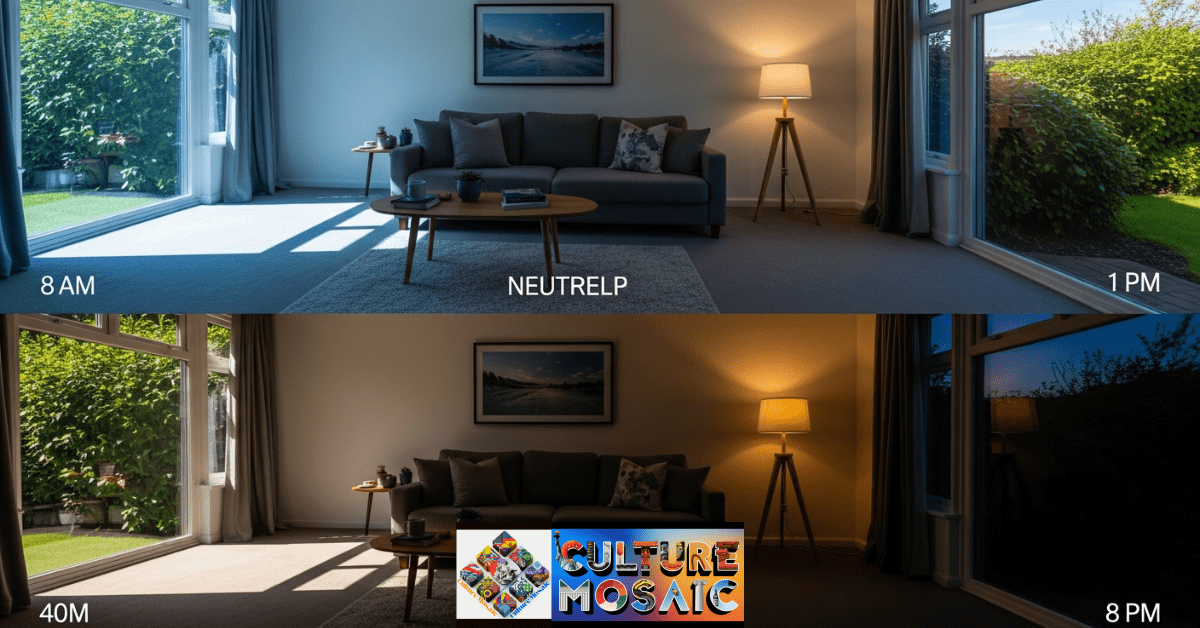
Light drives your circadian rhythm, which regulates sleep, mood, and cognitive function. Implementing circadian lighting that follows your body’s natural rhythm improves productivity by day and sleep by night. This is the highest-impact change you can make, and it costs nothing.
Walk through your home at different times of day. Which spaces get morning light? Where does afternoon sun fall? Move your workspace to maximize exposure to natural light, particularly in the morning.
If you can’t move your desk, try this hack I use constantly: Position a mirror to bounce natural light toward your work area. Replace heavy curtains with sheer panels that allow light while maintaining privacy. Consider warm-toned bulbs (2700K) for evening spaces to signal wind-down time to your body.
The investment is minimal. The impact is immediate. My clients notice improved alertness during the day and better sleep within the first week.
Step 2: Material Honesty
Swap cold plastics for living materials like cork, timber, and wool. Your sensory system knows the difference between laminate and real wood, between synthetic and natural fiber. I see this recognition happen unconsciously in every project.
Start small. Replace one plastic item with a wooden version. Add a jute rug under your coffee table. Switch to linen curtains or wool throw blankets. Choose bamboo, cork, or ceramic for surfaces you touch frequently—cutting boards, coasters, desk organizers.
Materials I recommend for maximum impact at low cost: bamboo (grows fast, affordable), cork (renewable, warm to touch), linen (gets softer with age), jute (inexpensive, textured), and ceramic (timeless, tactile).
Natural materials regulate humidity and temperature more effectively than synthetic alternatives, creating a more comfortable microclimate. But honestly, the biggest benefit is how they feel under your hands. The significance of tactile feedback is often underestimated, yet it holds a profound impact that cannot be overlooked.
Step 3: Fractal Layering
Use botanical prints or organic patterns to mimic the visual complexity of the forest floor. Remember, mid-range complexity provides maximum stress reduction. I’m talking about the branching of a tree or the curve of a fern, not geometric abstracts.
Look for artwork, textiles, or wallpaper featuring natural patterns. A single large botanical print with visible leaf veination provides more fractal benefit than ten pieces of abstract geometric art. Layering helps—combine a plant with a woven basket on a wooden table. Each element adds fractal depth.
My favorite budget hack: Nature is all about curves, soft edges, and imperfections. Choose furniture with organic shapes instead of hard angles. Add cushions with varied patterns. Place a piece of driftwood on your shelf. Visit thrift stores for natural fiber textiles.
The goal is visual richness your eye can wander through without effort, just like walking through a forest. When I get this right, clients tell me their spaces suddenly feel calm without knowing why.
Step 4: Acoustic Masking
Urban noise—traffic, neighbors, sirens—triggers your stress response. It’s constant low-level activation that drains your resources even when you think you’ve tuned it out. I learned this the hard way in my first city apartment.
A small tabletop fountain does more than look nice. The sound of moving water provides acoustic masking, drowning out stressful urban noise with a pattern your brain interprets as safe. Water sounds create a soothing atmosphere that shifts your nervous system from alert to calm.
Can’t do a fountain? I recommend a white noise machine with nature sounds—rainfall, forest ambiance, ocean waves. Open windows when possible to allow natural sounds in. Even playing gentle nature sounds while you work makes a measurable difference.
Budget option: There are free apps with high-quality nature soundscapes. Play them through a small speaker. I’ve used this hack in countless client homes. The change is subtle but cumulative.
Step 5: The Oxygen Anchor
Select plants not just for looks, but for sensory engagement. The senses of scent and touch are just as important as sight. After testing dozens of plants in various conditions, these are my high-impact, low-maintenance recommendations:
Snake plant: Converts carbon dioxide to oxygen at night. Place one in your bedroom for improved air quality while you sleep. Nearly indestructible.
Pothos: Thrives on neglect, cascades beautifully, and removes indoor air pollutants. I put these in every client home because they succeed where other plants fail.
Lavender or rosemary: Engage your sense of smell. Organic essential oils like pine, cedar, or lavender diffused for 30 to 60 minutes are especially beneficial first thing in the morning and last thing at night.
Herbs on the kitchen windowsill: Basil, mint, or thyme provide fresh scent and the satisfaction of harvesting something you grew. This engages you with the growth cycle in a way decorative plants cannot.
Position plants within your sight line while working. Research shows having a plant visible from your desk improves focus and reduces fatigue. The key is regular visual contact, not quantity. Three strategically placed plants outperform ten random ones.
Touch matters too. Stroke a lamb’s ear plant or brush your hand across ornamental grass. These tactile experiences engage your sensory system in ways looking alone cannot provide.
Creating Your Prospect-Refuge Corners: How to Create a Biophilic Home
Every home needs at least one space embodying both prospect and refuge. I make sure each client has this, and it becomes their favorite spot without fail.
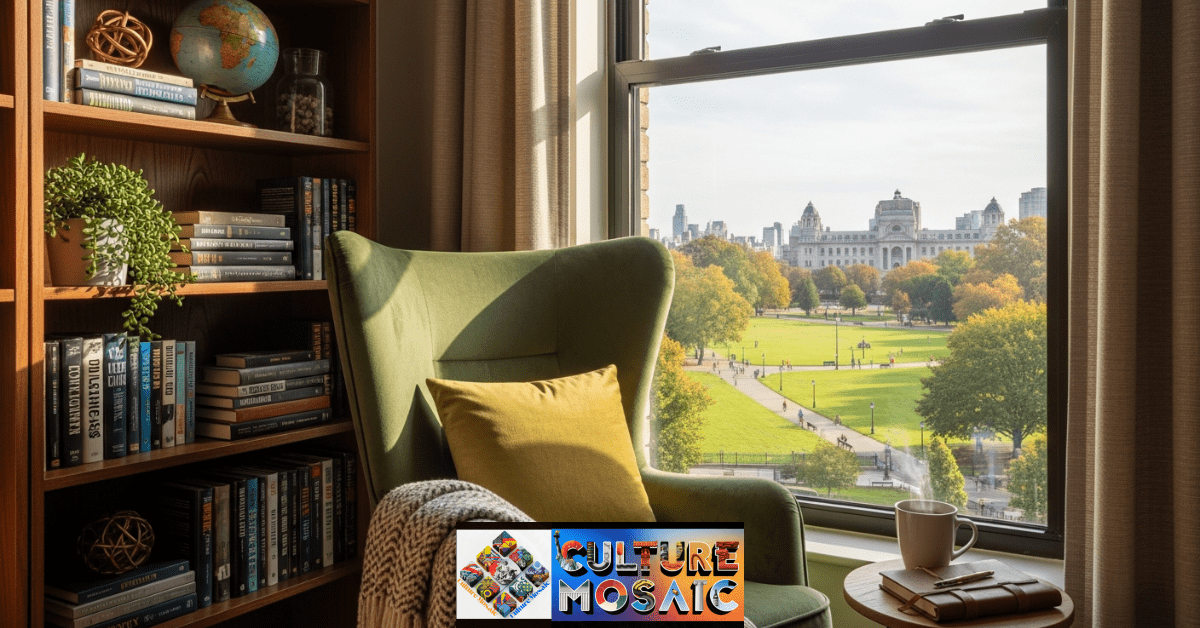
Identify a spot near a window—ideally with a view of greenery or at least sky and clouds. Add a comfortable chair that encloses you slightly. A high-backed chair or one with wings provides that refuge quality. Position it so you can see out and observe the space behind you. A corner works perfectly.
Add layers. A soft throw blanket signals comfort. A small side table holds your tea. A reading lamp creates a pool of warm light. Perhaps a plant nearby. This becomes your restoration station—the place you retreat when mental resources feel depleted.
The beauty of prospect and refuge is your nervous system responds automatically. You don’t need to think about it. You’ll simply find yourself naturally gravitating to this spot when you need to recharge. I watch this happen with every single client.
The Circadian Lighting Shift: How to Create a Biophilic Home
Breathing fresh air improves immune function and mood, and aligning your indoor lighting with natural rhythms does the same for your sleep-wake cycle. This isn’t about expensive smart bulbs. It’s about being intentional with what you already have.
Morning: Open all curtains. Spend your first 15 minutes awake near a window if possible. Use brighter overhead lights. This signals wake-up time to your body.
Afternoon: Natural light is ideal. If you work under artificial light, take breaks near windows. Even five minutes helps.
Evening: Switch to lamps instead of overhead lights. Use warm-toned bulbs (2700K or lower). Dim them if possible. Consider amber bulbs in bedroom lamps. This signals wind-down time.
This simple shift reinforces your body’s natural rhythm, improving sleep quality and daytime alertness. I’ve seen it eliminate the need for sleep supplements in numerous clients.
Color as Nature’s Language: How to Create a Biophilic Home
A natural color palette isn’t confined to greens and browns. Think about your favorite natural environment. Is it the beach with sand and blue? The desert with warm ochre? The forest with deep greens?
Choose your palette based on landscapes that restore you personally. Your nervous system responds to these color associations even when you’re not consciously thinking about it. Research shows green lowers heart rate, but other nature-inspired colors provide benefits too.
The sky offers soft morning pink to deep evening purple. Water gives every shade of blue and green. Stone provides the full spectrum of grays, taupes, and browns. Use these as your guide rather than following design trends that feel disconnected from nature.
I tell clients to pick one landscape they love and pull colors directly from photos of that place. It creates instant coherence.
The Maintenance Reality
Here’s what I tell everyone upfront: A biophilic home requires some maintenance. Plants need watering. Natural materials need care. But this maintenance itself becomes part of the restoration process.
Watering plants isn’t a chore when you realize what’s happening. You’re touching soil, smelling earth, watching water soak in. Same with wiping down a wooden table—your hand learns the grain, feels the warmth. These moments pull you out of your head and into your senses. That’s the point.
Start with one thing. Seriously, just one. A single plant near where you work. Or swap that plastic utensil holder for a ceramic one. Or pull a chair up to your brightest window. Watch what happens. Then add the next thing.
Why This Matters Now: How to Create a Biophilic Home
Look, I’m not being dramatic when I say we’re running on empty. You know the feeling—you get enough sleep but wake up tired. You finish work and can’t focus on anything. Your brain feels like a browser with 47 tabs open.
That’s not you failing. That’s modern life outpacing human biology. WHO calls stress the biggest health threat of our century, and honestly, they’re right. Your home should push back against that. Not just be a place to collapse, but somewhere that actually restores you.
I’ve been doing this work for fifteen years, and here’s what I know: when your space includes the patterns and materials your nervous system evolved with, something shifts. You sleep better. Think clearer. Feel less on edge. It’s not magic—it’s biology finally getting what it needs.
Start Today: How to Create a Biophilic Home
Forget perfect. Forget those Instagram home tours that make you feel inadequate. You don’t need marble counters or a wall of fiddle-leaf figs.
Walk through your place right now. Which room gets morning sun? That’s where you want to be when you wake up. See that plastic soap dispenser? Swap it for ceramic next time you’re at Target. Got a corner near a window? Throw a cushion there and call it your thinking spot.
Pick one hack from this guide. One. Do it this week. Your body will tell you if it’s working—you’ll feel it before you can articulate it. Then do the next thing.
I’ve walked hundreds of clients through this. Here’s what always happens: they change one small thing. Then another. Then they start noticing what their home was missing. Six months later, they can’t believe they lived any other way.
Creating a biophilic home isn’t about checking boxes or following design rules. It’s about listening to what makes you feel steady and building toward that. Your biology knows what home should feel like. Let it show you.
Frequently Asked Questions About How to Create a Biophilic Home
What’s the most important element for beginners trying to create a biophilic home?
Natural light. Move your desk near a window and add one plant where you can see it while working. That’s it. I’ve had clients email me a week later saying they feel different, less drained. It costs nothing and changes everything about how your day feels.
Do I need expensive materials to create a biophilic home?
God, no. Last month I helped someone transform their apartment for under $100. Jute rug from HomeGoods, two pothos plants, a wooden spoon rest instead of the plastic one. Small stuff adds up fast. The science works the same whether you spent $50 or $5,000. Your nervous system can’t tell the difference between FSC-certified teak and a secondhand wooden chair.
How many plants do I really need?
Stop counting plants and start thinking about where you look. One snake plant on your desk beats twenty plants scattered around rooms you barely use. I tell people to start with three: one where you work, one where you sleep, one where you eat. If those three stay alive and you want more, great. If not, those three are doing plenty.
Can I create biophilic design in a small apartment?
Small spaces are actually easier because every choice matters more. I’ve done studios where a mirror bouncing light from the one window, three plants, and swapping the polyester curtains for linen made the whole place feel different. Vertical planters work great when floor space is tight. Honestly, small apartments force you to be strategic, which usually means better results.
How long before I notice the effects?
Most people feel something within a few days—better mood, less afternoon crash. Real changes to focus and sleep take about two weeks. But here’s the thing: you might not notice consciously at first. You’ll just realize you’re sleeping better or your Sunday anxiety isn’t as bad. Give it a month before you decide if something’s working.