
 By Culture Expert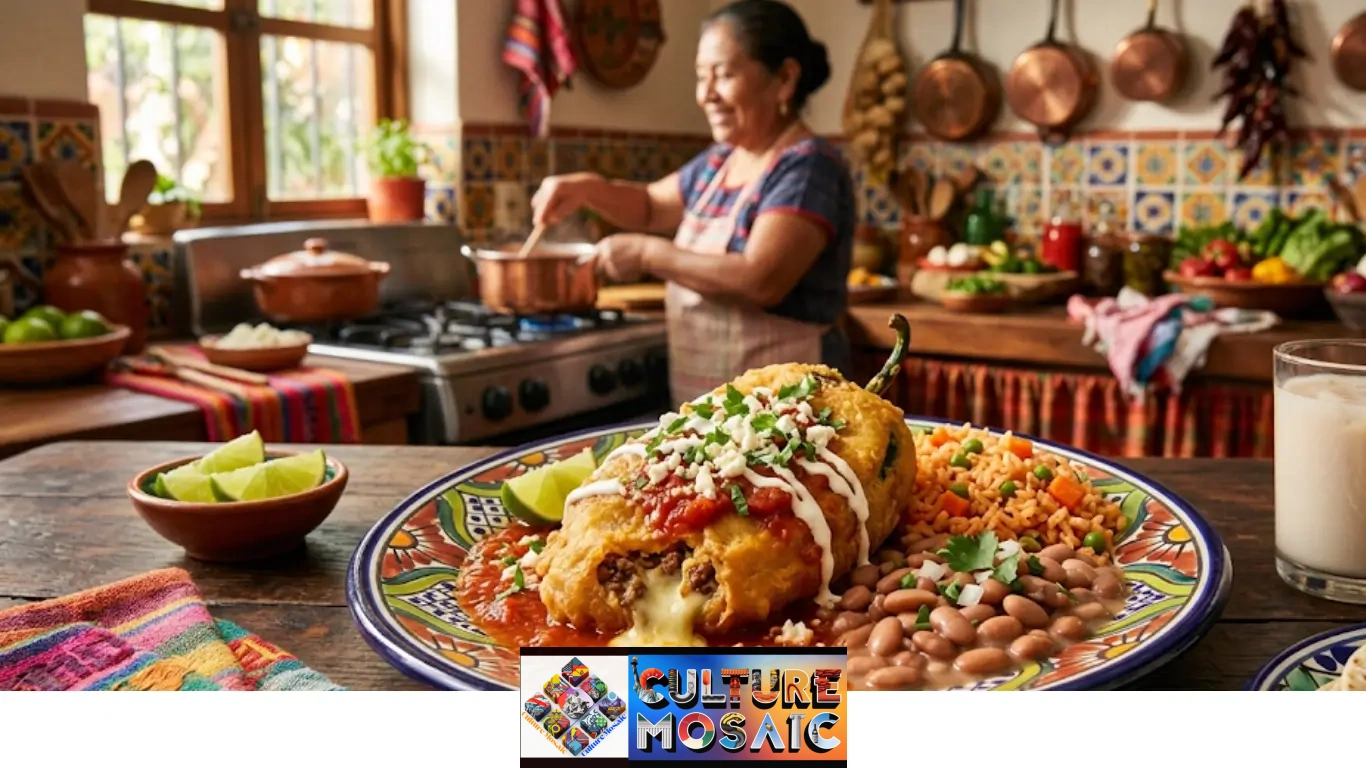
Quick Summary
| What it is: Mexican chiles rellenos with rice and beans is a classic combination built around a roasted, cheese-stuffed poblano pepper, coated in a light egg batter, fried until golden, and plated alongside seasoned Mexican rice and a pot of simmered beans. Chiles rellenos in English: it translates literally to “stuffed peppers” or “stuffed chiles. Is chile relleno vegetarian? Yes, the classic cheese-stuffed version is vegetarian. Meat-stuffed versions exist too, so always check the filling. Best cheese: Oaxaca cheese or a good melting Monterey Jack. Queso fresco is used, but it won’t stretch the way Oaxaca cheese does. Spice level: Mild to medium in most kitchens. Poblanos are gentle peppers, though heat can vary pepper to pepper. Time needed: About 90 minutes start to finish, including roasting, stuffing, frying, and cooking the rice and beans. Make-ahead friendly: Yes. Roast and stuff the peppers a day ahead, then batter and fry just before serving. |
I’ve stood over a hot comal more times than I can count, and I still remember the first time a chile relleno fell apart on me mid-fry. The batter slid right off, the cheese oozed into the oil, and I ended up with a sad, naked pepper floating in a pan of scorched egg. If that’s happened to you, you’re not alone, and it’s not really your fault. Most recipes skip the two or three details that actually matter.
Why Chiles Rellenos with Rice and Beans Trips People Up
Here’s the problem. Search “chile relleno recipe” and you’ll get a dozen versions that all skip something critical: how to dry the pepper properly, how to whip the egg whites so the batter actually clings, or how to get the rice fluffy instead of gummy. You follow the steps, and somewhere between the frying pan and the plate, it falls apart. Literally.
I get why that’s frustrating. You’re not lazy or hopeless in the kitchen. You just haven’t been shown the parts that matter. A dish this iconic deserves better than a rushed blog recipe with stock photos and no real explanation of why each step exists.
So here’s what I want to do. I’m going to walk you through Mexican chiles rellenos with rice and beans the way I actually make them at home — roasted poblanos, stretchy melted cheese, a batter that stays put, and rice and beans that taste like someone’s abuela made them. No shortcuts that ruin the dish, just the real technique explained plainly.
What Is a Chile Relleno, Exactly?
Chiles rellenos in English simply means “stuffed chiles.” The dish starts with a poblano pepper — dark green, wide-shouldered, mild in heat — that’s roasted over an open flame until the skin blisters and blackens. That charred skin gets peeled away, leaving behind a smoky, tender pepper with just enough structure to hold a filling.
Traditionally, the pepper is stuffed with cheese (queso relleno) or a spiced ground meat and raisin mixture (picadillo). It’s then dipped in a fluffy egg batter — whipped whites folded with yolks — and fried until the outside turns golden and slightly crisp while the inside stays molten. Most versions are finished with a light tomato sauce ladled over the top.
Is this dish authentic to one region? Not exactly. Variations show up across central and southern Mexico, with Puebla often credited as the dish’s spiritual home, since poblano peppers themselves take their name from that state.
What’s the Difference Between a Chile Relleno and a Chile Poblano?
This trips a lot of people up, and honestly, I don’t blame them. A chile poblano is simply the raw ingredient — the pepper itself, unroasted and unstuffed, sold in the produce section. A chile relleno is the finished dish: that same poblano roasted, peeled, stuffed, battered, and fried. Think of it the way you’d think of “tomato” versus “marinara sauce.” One’s the raw material. The other’s what you make with it.
Is Chile Relleno Vegetarian?
The traditional cheese version — queso relleno — is vegetarian, and it’s the version most home cooks and restaurants default to. The filling is usually Oaxaca cheese, sometimes blended with a bit of Monterey Jack for stretch. That said, picadillo-stuffed chiles rellenos, filled with seasoned ground beef or pork, are common too, especially around the winter holidays. If you’re cooking for a vegetarian guest, always ask which filling is being used, because both versions look nearly identical once they’re fried and sauced.
Are Chiles Rellenos Very Spicy?
Not usually, and this surprises a lot of first-time eaters. Poblano peppers rank low on the Scoville scale, generally between 1,000 and 2,000 units — for comparison, a jalapeño can run five times hotter. Most of what people taste in a chile relleno is smoky char and melted cheese, not heat. Occasionally you’ll get an outlier pepper with real kick, since poblano heat varies more than most cooks expect, but as a dish, this one is built for flavor over fire.
What Are Some Variations of Chile Relleno?
Once you understand the base technique, the filling and sauce become a playground:
- Queso relleno – the classic cheese-stuffed version, usually with Oaxaca or Monterey Jack.
- Picadillo relleno – ground beef or pork simmered with tomato, raisins, and warm spices like cinnamon and clove.
- Baked chile relleno – skips the deep fry entirely, layering roasted peppers with egg and cheese in a casserole dish, closer to a frittata.
- Chile relleno en nogada – a Puebla specialty served around Mexican Independence Day, topped with a walnut cream sauce and pomegranate seeds to mirror the colors of the Mexican flag.
- Seafood relleno – shrimp or crab folded into the cheese filling, popular along the Gulf Coast.
- The wildcard version – smoked poblanos, stuffed with a mix of Oaxaca cheese and roasted corn, finished under the broiler instead of fried. It’s not traditional, but it’s a genuinely good weeknight shortcut when you don’t want to deal with hot oil.
If you want to go deeper on the broader landscape of dishes this one belongs to, our guide on What Are Popular Mexican Dishes and our roundup of What Are 20 Mexican Foods both put chiles rellenos in context alongside the rest of the country’s regional cooking. And for anyone curious why a single pepper carries this much cultural weight, our piece on the Importance of Food in Mexican Culture gets into it.
Baked Chile Relleno Recipe: The Lighter Route
A baked chile relleno recipe swaps the frying oil for an oven, layering roasted, stuffed poblanos in a dish with beaten eggs and a bit of milk, then baking until set — closer to a savory bread pudding than a fried dish. It’s the version I make on a weeknight when I don’t want to babysit a pan of hot oil. Several well-known home-cooking sites, including a widely shared baked chile relleno recipe from Pioneer Woman, follow this same basic layered structure: roasted peppers, shredded cheese, an egg-and-milk custard poured over the top, baked at 350°F until puffed and golden. It’s not the traditional method, but it’s genuinely good, and it’s far more forgiving for a weeknight dinner.
What Is Mexican Beans and Rice Called?
In Spanish, the pairing is usually just called arroz y frijoles, though depending on the region and how the two are cooked together, you’ll also hear arroz a la mexicana for the rice on its own — tomato-based, cooked with garlic, onion, and a touch of chicken stock until it turns a warm reddish-orange. The beans served alongside are typically frijoles de la olla (pot beans, simmered whole) or frijoles refritos (refried beans, mashed and fried with a bit of lard or oil). Together, rice and beans form the backbone of a proper Mexican plate — not a side dish so much as a second half of the meal.
How to Make the Best Chiles Rellenos: The Technique That Actually Works
I’ll be blunt: most recipes fail people at three specific points. Get these right and everything else falls into place.
First, dry the peppers completely before battering. After roasting and peeling, poblanos hold a surprising amount of moisture. Pat them dry, inside and out, with paper towels. Wet skin is the number one reason batter slides off in the fryer — it just won’t cling to a damp surface.
Second, whip the egg whites to soft peaks before folding in the yolks. This is the part most home recipes rush or skip. A properly whipped batter is airy and slightly thick, almost like a loose meringue. That structure is what lets it grip the pepper and puff up golden instead of sliding into the oil in a thin, greasy layer.
Third, dredge in flour before dipping in batter. A light coating of flour on the dried, stuffed pepper gives the egg batter something to grab onto. Skip this step and you’re basically asking the batter to stick to a wet, slick surface — which it won’t.
Why Does the Egg Batter Fall Off the Chiles When Frying?
This is the single most common frustration, and it almost always comes down to one of three things: the pepper wasn’t dry enough, the pepper wasn’t dredged in flour first, or the oil wasn’t hot enough when the pepper went in. Oil that’s too cool means the batter soaks up grease instead of setting immediately, which lets it slip. Aim for oil around 350–360°F, tested with a thermometer or by dropping in a bit of batter — it should sizzle and rise right away, not sink and sit.
What Is the Best Cheese to Use for Chiles Rellenos?
Oaxaca cheese is the traditional choice, and for good reason. It’s a semi-firm, stringy cheese, pulled and rolled during production, similar in texture and stretch to a fresh mozzarella. When it melts, it goes stringy and gooey in the way you want from a stuffed pepper. Monterey Jack is the easiest substitute if Oaxaca isn’t available near you, since it melts smoothly without turning greasy. Queso fresco, on the other hand, doesn’t melt the same way — it softens but stays somewhat crumbly, so it’s better suited to garnishing than stuffing.
Can Chiles Rellenos Be Made Ahead of Time?
Yes, with a bit of strategy. Roast, peel, and stuff the peppers up to a day in advance, then store them covered in the refrigerator. Hold off on battering and frying until just before serving — that step really does need to happen fresh, since the batter loses its structure if it sits. The rice and beans hold up well made a day ahead too, and both reheat cleanly with a splash of water or broth stirred in.
Authentic Chile Relleno Recipe: Mexican Chiles Rellenos with Rice and Beans
This is the full, step-by-step version — Mexican chiles rellenos with rice and beans recipe style, built the way it’s made in kitchens across central Mexico, adapted for a home stove.
Ingredients
For the chiles rellenos:
- 6 large poblano peppers
- 8 oz Oaxaca cheese, shredded or pulled into strips (Monterey Jack works as a substitute)
- 4 large eggs, separated
- 1/2 cup all-purpose flour, plus extra for dredging
- 1/4 teaspoon salt
- Vegetable oil, for frying (enough for about 1/2 inch depth in the pan)
For the tomato sauce:
- 4 medium tomatoes, roughly chopped
- 1/4 white onion
- 1 garlic clove
- 1/2 cup chicken or vegetable broth
- Salt to taste
For the Mexican rice:
- 1 1/2 cups long-grain white rice
- 3 tablespoons vegetable oil
- 1 cup tomato sauce or 2 fresh tomatoes, blended
- 1/4 white onion, finely chopped
- 2 garlic cloves, minced
- 2 1/2 cups chicken or vegetable stock
- 1 carrot, diced small (optional)
- Salt to taste
For the beans:
- 2 cups dried pinto beans (or 2 cans, drained, for a shortcut)
- 1/2 white onion
- 2 garlic cloves
- 1 bay leaf
- Salt to taste
- 2 tablespoons lard or oil, for refrying (optional)
Method
Step 1 — Roast and peel the poblanos. Char the peppers directly over a gas flame or under a hot broiler, turning until the skin blisters and blackens on all sides, roughly 8–10 minutes. Transfer them to a bowl, cover tightly with plastic wrap, and let them steam for 15 minutes — this loosens the skin. Peel off the charred skin under running water or with your fingers, leaving the pepper whole. Make a small slit down one side and carefully remove the seeds and membrane, keeping the stem intact.
Step 2 — Dry the peppers thoroughly. Lay them on paper towels and pat both the inside and outside completely dry. This step is not optional — skip it and your batter won’t stay on.
Step 3 — Stuff the peppers. Fill each pepper with shredded Oaxaca cheese, being generous but not overstuffing to the point the slit won’t close. Press the opening gently shut.
Step 4 — Make the tomato sauce. Blend the tomatoes, onion, and garlic until smooth. Cook the puree in a saucepan over medium heat with a splash of oil for about 8 minutes, then stir in the broth and simmer another 10 minutes. Season with salt and keep warm.
Step 5 — Whip the batter. In a clean, dry bowl, beat the egg whites with a pinch of salt until they hold soft peaks. Gently fold in the egg yolks one at a time until just combined — don’t overmix, or you’ll knock the air out.
Step 6 — Dredge and batter. Roll each dried, stuffed pepper lightly in flour, tapping off the excess. Dip it into the whipped egg batter, coating it fully.
Step 7 — Fry. Heat about 1/2 inch of oil in a heavy skillet to 350–360°F. Carefully lower each battered pepper into the oil, seam-side down first. Fry for 2–3 minutes per side, until golden brown and puffed. Drain on a wire rack or paper towels.
Step 8 — Make the rice. Rinse the rice under cold water until the water runs mostly clear, then drain well. Heat the oil in a saucepan over medium heat and toast the rice, stirring often, until it turns pale golden, about 5 minutes. Add the onion, garlic, and carrot if using, and cook another minute. Stir in the blended tomato and cook until it darkens slightly, about 3 minutes. Add the stock and salt, bring to a boil, then cover and reduce to a low simmer for 18–20 minutes. Remove from heat and let it rest, covered, for 5 minutes before fluffing with a fork.
Step 9 — Cook the beans. If using dried beans, soak overnight, then drain. Combine beans, onion, garlic, and bay leaf in a pot with enough water to cover by two inches. Simmer, partially covered, for 60–90 minutes until tender, adding salt only in the last 20 minutes of cooking. If refrying, mash a portion of the cooked beans in a hot pan with a bit of the lard or oil until they reach a thick, spreadable consistency.
Step 10 — Plate and serve. Ladle warm tomato sauce over each fried pepper. Serve alongside a scoop of rice and a portion of beans, garnished with crumbled queso fresco, a drizzle of Mexican crema, and a few cilantro leaves if you like.
Serving Suggestions
A wedge of lime on the side brightens the whole plate. Warm corn tortillas make this a proper meal you can scoop with your hands. If you’re building out a bigger spread, our guide to Mexican Dishes for Party has more ideas for rounding out the table, and for anyone tracking what’s trending in the wider food world right now, our Mexican Cuisine News roundup covers the latest shifts worth knowing about.
Frequently Asked Questions About Mexican Chiles Rellenos with Rice and Beans
What are some variations of chile relleno?
Beyond the classic cheese-stuffed version, you’ll find picadillo relleno (ground meat and spices), baked versions that skip the fryer, chile relleno en nogada with its walnut cream sauce for Mexican Independence Day, and regional seafood versions along the coast. Each keeps the roasted-poblano base but changes the filling and finish.
What is Mexican beans and rice called?
Most Spanish speakers simply say arroz y frijoles. The rice on its own, cooked with tomato and garlic, is often called arroz a la mexicana. Beans might be frijoles de la olla (whole, simmered) or frijoles refritos (mashed and fried).
What’s the difference between a chile relleno and a chile poblano?
A chile poblano is the raw pepper. A chile relleno is the finished, stuffed, and fried dish made from that pepper. One’s an ingredient, the other’s a recipe.
How to make the best chiles rellenos?
Dry the peppers completely after peeling, whip your egg whites to soft peaks before folding in the yolks, and dredge in flour before dipping in batter. Those three details separate a relleno that holds together from one that falls apart in the pan.
Can chiles rellenos be made ahead of time?
Yes. Roast and stuff the peppers up to a day ahead and refrigerate them. Batter and fry just before serving, since the egg coating needs to go on fresh to hold its structure.
Sources
2. Poblano, Wikipedia (Puebla origin and Scoville heat range)
3. Scoville Scale, Wikipedia (measurement methodology)
4. Chiles En Nogada: Mexican Independence Day Tradition, NPR