
 By Culture Expert
The Vintage Revival Fashion Movement: How We Embrace the Past to Redefine the Future of Style
“The most dangerous thing in fashion right now is a garment that costs almost nothing to make and looks it six months later.”
There is a particular smell to a well-kept vintage wool coat. Something between cedar and cold storage and time itself. I have pulled hundreds of them off rails at markets in Portobello, Clerkenwell, and the Marais, and that smell never stops meaning something. It means someone bothered. It means the thing was made to last and, against the odds, it did.
That is the quiet argument at the centre of vintage revival fashion. Not just that old clothes look good. But that they represent a standard of construction the modern market has largely stopped trying to meet. And a growing number of people, from first-time charity-shop browsers to serious collectors spending five figures on archival runway pieces, have noticed.
The extent of the situation has become impossible to overlook. What was a subculture twenty years ago is now a dominant economic force reshaping how luxury houses commission collections, how digital platforms are built, and how an entire generation has decided to define personal style. The question worth asking is not whether vintage revival fashion matters. It plainly does. The more interesting question is why it matters so much, right now.
Why Right Now? The Three Pressures Behind the Revival
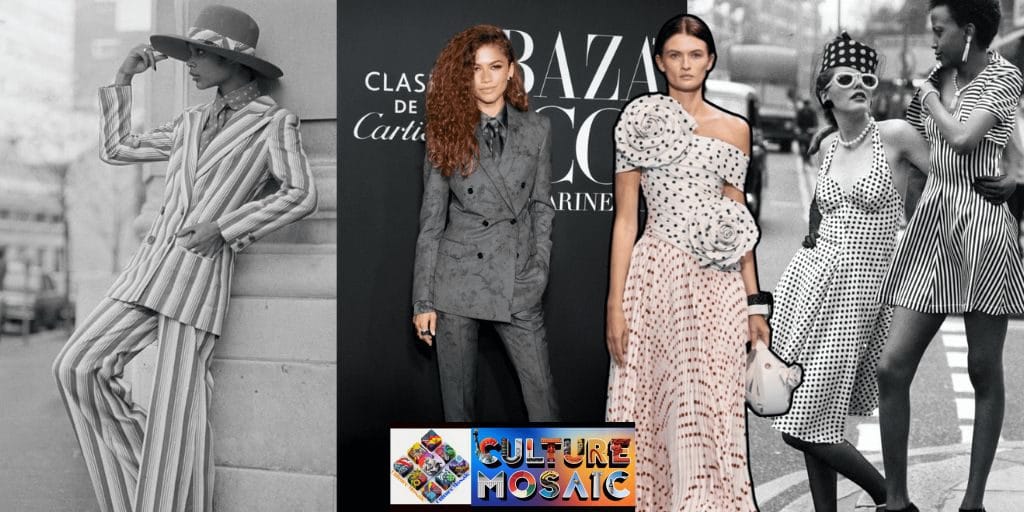
Fashion revivals are not random. They happen when cultural conditions make the past feel more useful or more honest than the present. In my experience, what is driving the current moment in vintage revival fashion is three distinct pressures operating at the same time.
The Collapse of Style Individuality Under Algorithmic Trends
Scroll through any major fast-fashion retailer’s new arrivals and you are looking at the same fifteen silhouettes, reformatted across thirty colourways. Trend algorithms are extraordinarily efficient at identifying what is selling and reproducing it at scale. What they cannot produce is something that feels genuinely singular.
A well-chosen archival piece does that. It has a history that cannot be fabricated. You cannot buy exclusivity from a brand running a production run of forty thousand units. You can find it in a 1972 Biba blouse with the original hang tag still attached, or a pair of unwashed Japanese selvedge jeans from a mill that shut down fifteen years ago. The essence of this matter lies in that level of detail.
The Honest Gap in Construction Quality
This one is less romantic but more important. Before the mid-1990s, the structural economics of clothing production meant that even mid-market garments were built with a durability the modern equivalent simply does not match. Natural fibre weighting. Reinforced seams. Hardware with real heft. Linings that were actually finished.
I have sat with collectors who can date a garment to within five years just by holding the fabric. Not from arcane knowledge, but from the straightforward physical reality that textiles from different eras have different weight, hand, and density. The gap between a 1980s wool gabardine suit and a modern polyester-blend equivalent is not subtle. It is easily understandable for anyone who is paying attention.
Wearing Old Clothes as an Environmental Position
The climate conversation has changed what luxury signals. A decade ago, wearing something new and expensive communicated status. Now, in certain circles, buying new at all requires a degree of justification. The most credible environmental choice in fashion is not buying a slightly-less-bad new garment. It is not buying a new garment at all.
Vintage revival fashion has become, for a generation of consumers who take this seriously, the cleanest possible expression of that position. The garment already exists. The carbon cost is sunk. Choosing to wear it rather than discard it is straightforwardly better. And it turns out that straightforwardly better, worn with some style intelligence, can also look extremely good.
The Key Eras in Vintage Revival Fashion: What Each One Actually Offers

Not every decade commands the same kind of collector attention or cultural resonance. The eras currently driving the vintage revival fashion market have distinct characteristics that explain why they work so well as references, both for individual dressers and for the luxury designers who raid their own archives each season.
The 1970s: When Tailoring Had Theatre
Sharp lapels. Dagger collars. Trousers cut with a precision that makes modern wide-legs look approximate by comparison. The 1970s produced tailoring that was simultaneously structured and loose-feeling, which is a technically difficult thing to achieve and one reason contemporary interpretations rarely quite land it.
The colour palette from this era, all amber, burnt sienna, olive, and tobacco, has a warmth that photographs beautifully and ages well on actual skin. The high school subcultures that drove the 2016 fashion trends first brought these references back into mainstream circulation, layering vintage pieces against contemporary basics in a way that made the juxtaposition feel current rather than costume.
The 1990s: Minimalism That Actually Had Opinions
The 1990s get described as minimalist, which is accurate but misses the mood. It was minimalism with a slight edge of aggression. The silhouettes were clean but the fabrics were substantial. Leather that weighed something. Knitwear that was deliberately deconstructed rather than accidentally unravelling. Suiting that fitted loosely but was cut with genuine intention.
What makes 1990s archival pieces so usable now is their flexibility. A well-cut 1990s blazer moves between contexts without effort. It works on a Tuesday morning and it works at an opening. That kind of cross-context utility is something contemporary fashion struggles to design in deliberately.
Y2K and the Early 2000s: The Rehabilitation of Maximalism
The Y2K revival has been the noisiest cycle of the last five years and the most culturally polarising. Technical nylon. Logo saturation. Metallics used without irony. Silhouettes that refer to a moment when fashion was genuinely optimistic about technology and the future in ways that, in retrospect, feel both endearing and slightly delusional.
The best Y2K archival pieces hold up because they were made with the same structural honesty as the other eras. The worst early-2000s reproductions fail because they imitate the surface without understanding the construction. Distinguishing between the two requires time and careful attention.
How Contemporary Designers Are Using Vintage Revival Fashion as Raw Material
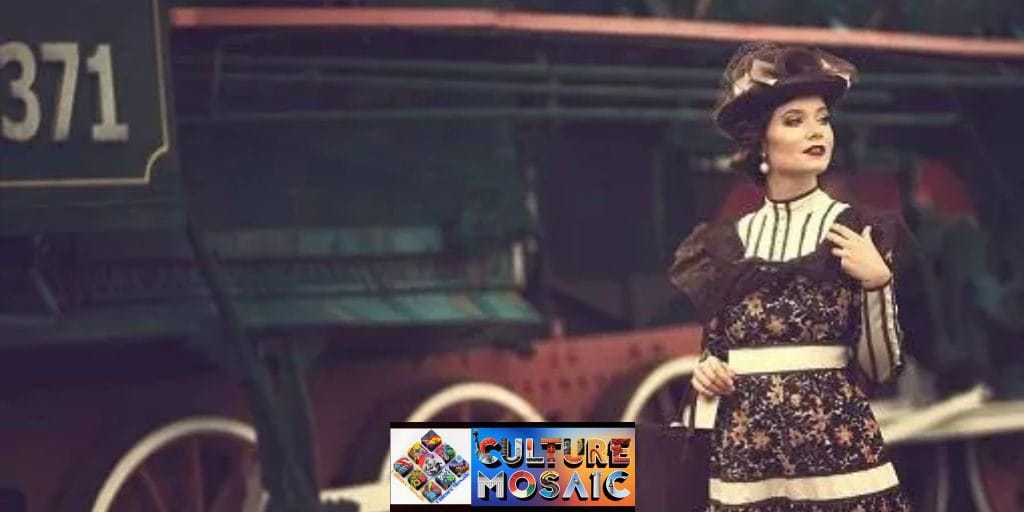
The relationship between contemporary luxury design and archival fashion has become one of the most interesting creative conversations in the industry. I say conversation deliberately. The best designers are not copying old work. They are arguing with it.
Archive Research as a Design Discipline
The major luxury houses have invested seriously in their physical archives, and you can see it in the output. Hardware proportions revived from thirty-year-old prototypes. Textile weights sampled from archival bolts rather than current supply chains. Silhouettes reconstructed from pattern archives rather than approximated from photographs.
This is not nostalgia. It is a form of material intelligence. The brands that do it well use the archive as a standard to argue against as much as one to reproduce. Understanding what regenerative cotton benefits can bring to new production is part of the same conversation, an attempt to build garments now that will age the way archival pieces do, with distinction rather than degradation.
Heritage Aesthetics and the Neo-Romantic Turn
Beyond the major houses, a wave of independent designers has developed what might be called a post-romantic relationship with the past. Poetcore Heritage Fashion draws from Victorian and Edwardian tailoring traditions but strips away sentimentality, arriving at something that feels grounded in history without being imprisoned by it. The construction methods are old. The sensibility is now.
Similarly, Neo Heritage Fashion has emerged as a codified design position that applies archival construction logic to contemporary materials. The result, when it works, is a garment that carries the authority of something built to last without looking like it belongs in a period drama.
Colour as a Temporal Signal
One dimension of vintage revival fashion that does not get enough analysis is colour. The palettes that characterised specific eras are not arbitrary. They reflect the dye technologies available, the cultural mood, and the kinds of interiors those garments were designed to move through. Getting the colour right is part of what makes a genuine archival piece feel coherent, and part of what makes a reproduction feel slightly wrong even when the silhouette is accurate.
For those thinking about how colour works as a strategic decision in dressing now, the analysis of Lucky Colors to Wear for New Year’s 2026 offers a useful entry point into the cultural psychology behind specific hue choices.
Building a Vintage Revival Wardrobe: What Actually Works

I want to be straightforward about this. Building a wardrobe rooted in vintage revival fashion takes longer than buying new clothes. It requires developing a specific kind of attention that most people do not have when they start. The good news is that the education is enjoyable, and the mistakes along the way are usually cheap.
Learn to Read the Interior of a Garment
The outside tells you what something looked like. The inside tells you what it is. Construction tags, where present, carry country of manufacture, fibre content, and care instructions that help date a piece. Zipper mechanisms, particularly vintage RIRI and YKK configurations with their distinctive pull weights and finishing, are reliable chronological markers. Seam allowances, lining construction, and button attachment methods all carry information.
Spend time with garments before you spend money on them. Handle the fabric. Look at the stitching under natural light. Open the seams slightly to see the allowance. This is not preciousness. It is how you develop the eye that makes you a good buyer rather than an expensive one.
The Balance Between Archival and Contemporary
Wearing vintage revival fashion without looking like you have raided a film wardrobe is a question of calibration. One strong archival piece, grounded by contemporary pieces with clean, neutral cut, is usually more interesting than head-to-toe vintage. A 1980s power jacket against modern slim-cut trousers. An archival silk slip over a contemporary fitted long-sleeve. The contrast is what creates the tension that makes an outfit worth looking at.
Practical guides help here. The detail in How to Style Men’s Trench Coats is a good example of how a classic heritage garment can be worn with enough contemporary grounding to feel current. And the recent rehabilitation of the capri pant silhouette is a case study in how archival proportions re-enter the mainstream, first ironically, then earnestly, and finally as something people simply want to wear.
Preservation Is Not Optional
Archival garments are physical objects with finite lifespans. How you store them determines how long they last. Cedar blocks or sachets deter moths without the chemical residue of mothballs. Canvas garment bags over plastic, always: plastic traps moisture and accelerates fibre degradation. Acid-free tissue paper for folded knits and delicate fabrics. Professional cleaning from someone who understands vintage construction rather than a standard dry cleaner who will press everything flat regardless.
The investment in preservation infrastructure is not an afterthought. It is what separates a serious collection from a pile of beautiful things quietly falling apart.
The Vintage Revival Fashion Market: Investment, Platforms, and Value
The commercial infrastructure around vintage revival fashion has shifted considerably in the last decade. Specialist digital platforms have made the market globally searchable in ways that were unimaginable when the trade was conducted entirely through physical fairs, market stalls, and word of mouth.
That accessibility is largely positive. It has democratised discovery and made provenance research faster. But it has also created a market for competent reproduction that has made authenticating pieces more demanding. If you are spending serious money, buy from specialists with documented track records. Their fees reflect genuine expertise, not just curation.
Which Pieces Appreciate and Why
Not everything old becomes valuable. The pieces that appreciate consistently share specific characteristics: rarity at the point of original production, documented provenance, exceptional condition, and a connection to a designer or manufacturer with a lasting cultural legacy.
In practice this means: rare luxury luggage from houses with established archives. Designer collaborations that were commercially limited on original release. Mid-century British and Italian tailoring from documented makers. Unworn or barely-worn denim from Japanese and American manufacturers during peak selvedge production. The category matters less than the condition and the story.
Where Vintage Revival Fashion Is Heading
The structural forces driving the vintage revival are not temporary. The environmental critique of disposable production is getting louder, not quieter. The algorithmic homogenisation of trend culture is accelerating, which makes genuine archival specificity more distinctive, not less. And the generation currently coming into serious purchasing power has grown up in a digital culture that archives everything, which means they approach fashion history with a level of granular knowledge that previous generations simply did not have.
I think what changes is the texture of the conversation rather than its direction. Vintage revival fashion will continue to pull design vocabulary from the past. But the most interesting work happening now, and I include the Neo Heritage Fashion movement and the Poetcore Heritage Fashion current in this, is not looking backward out of nostalgia. It is looking backward because the past built things that lasted, and that is a standard worth arguing for.
FAQs About Vintage Revival Fashion
1. What is vintage revival fashion, and how does it differ from retro style?
Vintage revival fashion refers to the authentic sourcing, wearing, and cultural recontextualisation of garments that were originally produced in a past era, typically defined as at least twenty years ago. The revival dimension is important: it describes not just possession of old clothes but a contemporary sensibility applied to them, the decision to wear a 1975 suede coat in 2026 in a way that is clearly intentional rather than accidental.
Retro style is different. It describes newly manufactured clothing designed to approximate the look of a previous period. A retro blouse from a current high street brand imitates the surface of the 1970s. A genuine vintage piece carries the construction, the material weight, and the specific cultural moment of the 1970s. The distinction sounds like a collector’s pedantry. In practice it is the difference between a photograph of a meal and a meal.
Five best practices for understanding the distinction:
- Examine interior labels: pre-1990s garments often carry fibre content and country-of-origin labelling that follows superseded regulatory formats.
- Study the hardware: zipper mechanisms, press studs, and buttons from specific manufacturing eras have physical characteristics that reproduction pieces rarely replicate exactly.
- Feel the weight: natural fibre garments from peak production eras carry a density that modern reproductions do not match economically.
- Research the house or maker: understanding who was producing what, and when, contextualises everything you handle.
- Spend time with specialist dealers: their knowledge base is the fastest shortcut to developing your own eye.
2. Why is the twenty-year fashion cycle accelerating?
The traditional model held that it took roughly twenty years for an era to accumulate enough nostalgic distance to feel worth reviving. The logic was that you needed a generational gap, people who were too young to remember the original moment experiencing it as discovery rather than déjà vu.
Social media has effectively abolished that gap. Every aesthetic moment from the last three decades is permanently archived and immediately searchable. A teenager in 2026 has the same access to 2004 runway coverage as to last week’s shows. This means the raw material for revival is always available, and trend cycles are compressing accordingly. We are currently seeing genuine revivals of eras from twelve to fifteen years ago, which would have seemed too recent a decade back.
Five best practices for navigating accelerated cycles:
- Build from a personal style anchor rather than following each cycle: understand what genuinely suits your body and context, then use trends selectively.
- Invest in pieces that have already survived one revival: their durability is demonstrated.
- Use trend acceleration as intelligence rather than instruction: understanding what is currently being revived helps you anticipate what arrives next.
- Build relationships with dealers who can contextualise what they are seeing in live market conditions.
- Think in decades rather than seasons. The economics of archival fashion reward patience.
3. How does vintage revival fashion shape luxury runway collections?
The influence runs deeper than most press coverage acknowledges. The most sophisticated creative directors are not simply referencing the past aesthetically. They are conducting genuine archival research, commissioning pattern reconstructions from historical documents, sampling textile weights from original bolts, and using the archive as a technical standard against which to measure current production.
This has a practical effect on the collections. Silhouettes carry a structural memory that purely contemporary design often lacks. Hardware proportions feel authoritative rather than arbitrary. The result, when it works, is clothing that feels considered in a way that purely forward-looking design sometimes does not.
Five best practices for following luxury archive influence:
- Study a house’s archive releases alongside their current collections to identify which historical threads each creative director is pulling.
- Follow creative director tenures: each brings specific archival obsessions that shape the house’s aesthetic direction for years.
- Read the technical credits in press releases, where historical textile and hardware references are sometimes made explicit.
- Attend retrospective exhibitions where possible: the physical presence of archival garments is information that photography cannot carry.
- Read cultural criticism around major collections rather than just style coverage, which tends to stay at the surface level.
4. Which vintage pieces hold the highest long-term investment value?
The honest answer is that investment value in vintage fashion is specific and unforgiving. Age alone does nothing. The pieces that appreciate reliably share a combination of rarity at original production, exceptional condition, documented provenance, and a connection to a maker or cultural moment with lasting significance.
In practical terms: rare luxury luggage with established house provenance. Designer collaborations that were commercially limited on original release. Mid-century tailoring from British and Italian manufacturers with documented craft histories. Unworn or barely-worn denim from Japanese selvedge mills and American manufacturers during their peak production decades. Condition outweighs almost everything else at auction. A genuinely rare piece in poor condition will consistently underperform a slightly-less-rare piece that was properly stored.
Five best practices for building investment-grade vintage:
- Prioritise condition above category: even genuinely scarce pieces lose value rapidly if poorly preserved.
- Document acquisitions from the start: photographs, purchase receipts, and provenance notes all contribute to future resale value.
- Focus on makers and manufacturers rather than aesthetics: understanding who produced genuinely distinguished work is more durable intelligence than following style cycles.
- Store correctly from day one: cedar, canvas, acid-free tissue, and reasonable climate control are not luxuries for serious collections.
- Build relationships with specialist auction houses who can provide honest valuations and current market intelligence rather than just estimates to encourage consignment.
5. How do I begin building a vintage revival wardrobe without specialist knowledge?
Start with what you already understand. Your own proportions. The contexts you dress for. The garments you reach for most. Vintage revival fashion is not about accumulating impressive objects. It is about building a relationship with clothing that rewards attention and resists disposal. Beginning with a single well-made archival piece in a category you already wear, a coat, a jacket, a pair of well-cut trousers, and learning everything you can about that piece is more useful than buying broadly before you have developed any judgement.
The physical market is still the best classroom. Touching hundreds of garments at a rail develops an eye and a hand that online browsing, however extensive, does not replicate. Dealers who take their work seriously enjoy talking about it. The conversation is part of the education.
Five best practices for beginners:
- Start in physical markets before buying online: tactile education is irreplaceable and the stakes for mistakes are lower.
- Ask dealers about construction and provenance: the good ones will tell you more than you expected, and their knowledge is part of what you are paying for.
- Set a clear per-piece ceiling and hold to it until you have made enough buying decisions to trust your own judgement.
- Learn basic garment care before you invest in anything significant: the preservation knowledge needs to come before the acquisition, not after.
- Follow specialist independent dealers who publish educational content: it is consistently better than what the general style press produces on the subject.
Further Reading on Culture Mosaic
For more on the cultural and design dimensions of heritage style, read our coverage of Neo Heritage Fashion and Poetcore Heritage Fashion. For the environmental case behind circular dressing, see Regenerative Cotton Benefits. For practical wardrobe guides, start with How to Style Men’s Trench Coats and Where Can I Buy Capri Pants.