
 By Culture Expert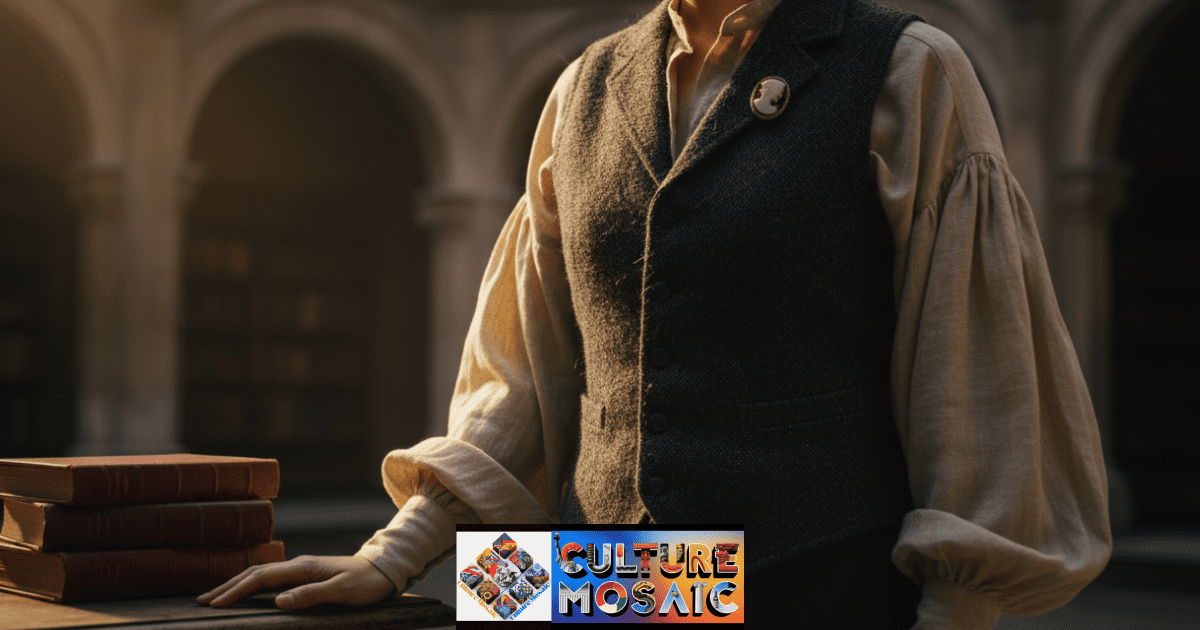
The New Verse:
Decoding Poetcore
Heritage Fashion
Where ancestral weave meets the contemplative soul.
Fashion, at its most honest, has always been a form of autobiography. In 2026, people want their wardrobes to read like poetry — not a press release.
omething shifted in how we dress. After years of Academic Core — the stiff blazers, the neatly pressed Oxford shirts, the careful performance of intellectual credibility — a quieter and more introspective sensibility began gathering momentum. Clothes stopped being costumes worn for an audience and started becoming companions for solitude. That shift has a name now: Poetcore Heritage Fashion.
It is not simply vintage dressing. It is not costume drama. Poetcore Heritage Fashion sits at the intersection of literary romanticism and artisanal textile tradition — a way of dressing that feels as if the garments themselves hold memory, as if they were inherited rather than purchased, worn-in rather than worn-out. The clothes feel genuinely alive.
This piece unpacks the full landscape: its historical roots, defining design principles, target audience, and why it is carving out such a compelling niche within the broader conversation around Neo Heritage Fashion and the Fashion Trends 2026 shaping how we dress right now.
Historical Roots of Poetcore Heritage Fashion
To understand where Poetcore Heritage Fashion comes from, you need to travel back to the Romantic poets of the early 19th century. Think of Lord Byron’s deliberately open collar, Mary Shelley’s ink-stained cuffs, or the way the Pre-Raphaelites dressed their muses in loosely gathered medieval gowns that rejected the industrial corset outright. These were not aesthetic choices made carelessly — they were philosophical statements worn on the body, expressing a principled resistance to the mechanised and uniform world gathering around them.
The same instinct runs through the Arts and Crafts Movement of the 1880s, where William Morris championed hand-loomed fabrics and vegetable dyes as a direct rejection of factory production. It echoes in the 1970s folk revival, and more recently in the Regenerative Textile Traditions that have built steady momentum over the past decade. Poetcore Heritage Fashion inherits all of this. It simply translates it for 2026’s specific emotional climate, where the authenticity of material and intention matters more than label recognition.
From Academic to Poetic: The 2026 Shift
For much of the early 2020s, Academic Core and its close relatives dominated the cultural conversation — Ivy League blazers, structured loafers, the studied coolness of someone who appears to have just emerged from a seminar on 19th-century French literature. It was beautiful but calculated. Curated rather than lived-in. There was always a sense that the clothes were performing for someone.
Poetcore Heritage Fashion does not dress for the room. It dresses for the self — for the quiet hour, the solitary walk, the dog-eared notebook left open on a windowsill.
The pivot toward Poetcore Heritage Fashion reflects a genuine change in what people want clothes to do for them emotionally. Consumers aged 22 to 38 are gravitating toward garments that carry the feeling of personal history. Thrifted tweed worn before. Linen that creases with its own kind of dignity. Knitwear that genuinely improves after a few washes. The goal is not to look like a character from a novel. The goal is to feel more completely like a person.
A Tactile Gallery: Fabrics That Tell Stories
The fabrics driving Poetcore Heritage Fashion are chosen for their provenance as much as their hand. Each carries a traceable lineage — the kind of Geographic Fingerprinting of Heritage Fibers that distinguishes an authentic Harris Tweed from a high-street approximation. Hover over each textile study below to reveal its history and heritage context.
18th Century Manchester rib weave, originally worn by English mill workers. Reimagined in 2026 with wide-wale cuts, unfinished hems, and raw-edge patch pockets. Durability worn as aesthetic conviction.
Hand-woven on the Outer Hebrides since the 1840s and protected by Act of Parliament. The 2026 poetcore interpretation pairs it with raw silk or antique lace — a deliberate textural collision. Rough meeting tender is the entire point.
Velvet’s roots reach medieval Florence — worn for ceremony and mourning in equal measure. In poetcore it arrives in dusty midnight tones: inky charcoal, oxblood, bruised violet. Weighted and atmospheric by deliberate design.
The Silhouette: Anti-Fit and Voluminous Sleeves
The silhouette of Poetcore Heritage Fashion refuses the tailored precision of its academic predecessor. Where the scholar dresses to command a room, the poet dresses to move freely within one. Anti-fit is the governing principle: coats fall past the hip, trousers gather at the ankle, sleeves billow at the wrist before drawing into a gathered cuff. Nothing is strained. Everything breathes.
Bishop Sleeves and the Language of Volume
The bishop sleeve — full and generous through the body, drawn close at the wrist — is one of the defining silhouettes of this movement. It appears in Victorian mourning dress, Pre-Raphaelite paintings, and late Renaissance portraiture. In 2026 it translates into blouses, dresses, and structured coats where the volume at the arm creates a quiet drama that remains somehow deeply intimate. Paired with a long woollen skirt or wide-leg trouser in a matching tonal shade, the full look becomes quietly monumental without appearing theatrical.
Proportions lean long and layered throughout: a floor-length skirt beneath a cropped spencer jacket, an oversized knit over a pleated midi dress, a structured frock coat worn open over everything. There is also a pronounced interest in the “handmade silhouette” — visible seams, hand-finished edges, a subtle asymmetry that signals a human, not a factory, made this garment.
The Palette: Mineral Calm Tones for 2026
Colour in Poetcore Heritage Fashion is never loud. The palette draws from natural pigments — earthy ochres from manuscript illumination, the stone walls of old libraries, the faded burgundy of well-loved book cloth. The defining 2026 tones have been named “Mineral Calm,” and they communicate entirely in whispers.
The Art of Near-Matching
The poetcore approach to colour is tonal rather than precisely matched. A parchment blouse does not need to match a parchment coat exactly — a slight variation in depth creates visual interest while preserving the meditative cohesion of the full look. Deep oxblood worn against inky charcoal is a favourite 2026 pairing: rich, sombre, and lit from within like candlelight seen through dark glass. Forest green alongside worn umber reads like the inside of an October churchyard — which is precisely the atmosphere this aesthetic reaches for.
The Haptic Details: Brooches, Doilies, and Laced Accessories
If the silhouette is the poem’s structure and the palette its mood, then the details are its specific vocabulary — the images, the line breaks, the unexpected word choices that make you stop and re-read a stanza. Poetcore Heritage Fashion is extraordinarily particular about its accessories. They are always tactile, always charged with history, and never decorative afterthoughts. They are the emotional centre of the look.
The Cameo Brooch Revival
The brooch has moved decisively from grandmother’s jewellery box to the front of the trend conversation. Cameos, Victorian mourning brooches, Art Nouveau enamel pins — they are being worn singly on a lapel or clustered in small constellations across a shawl collar.
The critical distinction is that each brooch must appear chosen rather than purchased: an estate sale discovery, an inherited piece, a gift whose story you can trace. Collections that telegraph mass production miss the point entirely. The provenance — real or carefully implied — is inseparable from the effect.
Lace Insertions and Textile Archaeology
Doily lace, antique collar lace, and crocheted trim are being incorporated not as ironic references but as genuine structural elements. A cotton blouse gains a panel of repurposed Victorian bobbin lace at the cuff. A heavy wool overcoat is lined with faded floral cotton, the lining deliberately left slightly visible at the hem.
For context on why these fabrics carry such cultural and emotional charge, the V&A Museum’s lace collection — spanning five centuries of European needlepoint and bobbin traditions — is as illuminating a starting point as any.
Garments are made to look as though they have been carefully altered and re-altered across different periods of a life — which, increasingly, they actually have been. The most compelling pieces in this space feel genuinely archaeological: layered, repaired, and still improving with age.
Hardware, Chains, and Found Objects
Beyond brooches and lace, the finer hardware details complete the haptic language of Poetcore Heritage Fashion. Antiqued brass buttons. A fine watch chain looped through a waistcoat pocket. A velvet ribbon tied at the collar in a loose bow rather than a proper knot. Small enamelled or ceramic buttons sourced from old sewing tins. These details reward close attention — they are noticed only by people who are genuinely looking, which is precisely the right audience for this aesthetic.
The Target Audience for Poetcore Heritage Fashion
The person drawn to Poetcore Heritage Fashion is not necessarily a poet — but they are almost certainly a reader. They take long walks without a particular destination, keep physical notebooks, and have grown tired of the performative “intellectual” aesthetic that dominated the early 2020s. They want something with more emotional weight and considerably less Instagram-readiness.
Demographically, the core audience spans ages 22 to 42, skewing toward individuals with some connection to the arts, humanities, or creative industries. But it is also finding enthusiastic adopters among people who simply want to slow their relationship with clothing down. Sustainability drives much of this shift — the emphasis on heritage construction techniques, natural fibres, and garments designed to last decades resonates deeply with people genuinely disillusioned by fast fashion cycles.
Fluid Across Gender Lines
One of the most quietly radical qualities of Poetcore Heritage Fashion is how genuinely it transcends binary gender dressing. The anti-fit silhouette, the emphasis on fabric over body shape, the prioritisation of comfort within elegance — all of this makes the aesthetic accessible across gender identities without effort or contrivance.
The “poet shirt” in particular — a voluminous linen or silk blouse with gathered bishop sleeves and a loose open neck — is being worn across genders with complete conviction. Nobody appears to be making a statement. They simply look like themselves, which is the rarest and most valuable quality any garment can offer.
How It Differs: Brand Positioning Within Heritage Fashion
Poetcore Heritage Fashion occupies a distinct and defensible territory within the broader heritage conversation. Traditional heritage brands — Barbour, Belstaff, old-school Burberry — position around function, provenance, and social class signalling. Cottagecore leans into pastoral nostalgia with a playful, idealised energy. Academic core performs intellectual aspiration. Each of these aesthetics is fundamentally outward-facing, oriented toward how the wearer appears to others.
Poetcore is categorically different because its reference point is internal rather than external. The ideal consumer here is not dressing to signal group membership. They are dressing to feel more completely like themselves. That distinction — emotional authenticity over social performance — is the sharpest and most durable brand differentiator any label operating in this space can build a long-term strategy around.
Brand Positioning Strategies Worth Watching
The labels finding real traction are leaning into provenance storytelling — naming the weavers, mapping the textile origins, documenting the finishing processes in detail. They are investing in slow-release collections of eight to twelve pieces rather than two seasonal drops per year.
They are building communities around independent bookshops, literary estates, and working artists rather than conventional influencers. Their communication style is essayistic: long-form newsletters, lookbooks that read like short fiction, social content that quotes poetry as naturally as it shows clothes.
The Culture Mosaic editorial team has tracked several emerging labels in this space closely. The ones doing it well share a single conviction: the story of how a garment was made is inseparable from why it is worth wearing.
Five Questions About Poetcore Heritage Fashion
Why Poetcore Heritage Fashion Matters Right Now
There is something genuinely countercultural about dressing slowly and deliberately in an era of algorithm-driven micro-trends. Poetcore Heritage Fashion is, at its foundation, a vote for permanence in a disposable world — for garments that accumulate meaning over time, for fabrics that improve with age, for an aesthetic built around the interior life rather than the social feed.
Those requirements are also exactly why it will not be for everyone. But for those it speaks to — and that number is quietly growing — it speaks with a directness and emotional depth that trend-driven aesthetics rarely achieve. In a culture still learning to value the slow and the lasting, that feels less like a fashion moment and more like the beginning of something genuinely worth paying attention to.
Elara Fairfax is a London-based fashion historian and cultural critic with over a decade of writing at the intersection of literary culture, craft traditions, and contemporary dress. She contributes regularly to independent fashion journals, has lectured on Victorian textile heritage at the V&A, and maintains a borderline unhealthy relationship with vintage Harris Tweed. Her work focuses on fashion as autobiography — what we choose to wear as a window into how we choose to live.
View full profile and archive at Culture Mosaic →